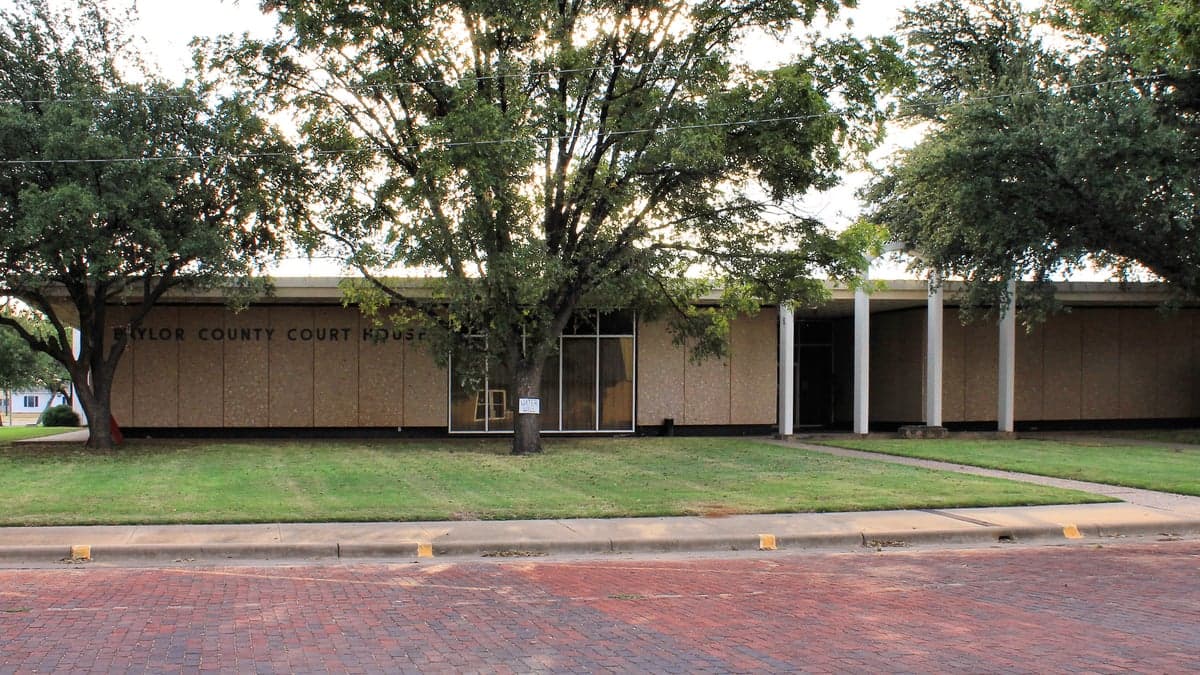
Photo: Wikipedia
Strategic Assessment of Seymour, TX
Strong survivability profile. Good buffer from population centers, with manageable environmental and tactical risks.
What does the Strategic Assessment tell us?
Our Strategic Assessment grades tactical survivability of an area. Major population centers, military targets, fallout zones, natural disasters, and border exposure all drive risk — lower exposure means a more defensible position in a crisis.
This is heavily inspired by Joel Skousen's Strategic Relocation book. Highly recommended you checkout the book ($)What does this tell us?
Our Strategic Assessment grades tactical survivability of an area. Major population centers, military targets, fallout zones, natural disasters, and border exposure all drive risk — lower exposure means a more defensible position in a crisis.
This is heavily inspired by Joel Skousen's Strategic Relocation book. Highly recommended you checkout the book ($)Strategic Pillars
Key Distances
Regional Safe Places
Below is our recommended "safe zones" in Texas and the surrounding area based on our strategic heuristics. For most people, it's unrealistic to live in a “safe zone” full-time due to work, family or other personal reasons. They tend to be more rural. However, many of these areas are perfect for second homes and retreat properties that double as a vacation home or even a short-term rental.

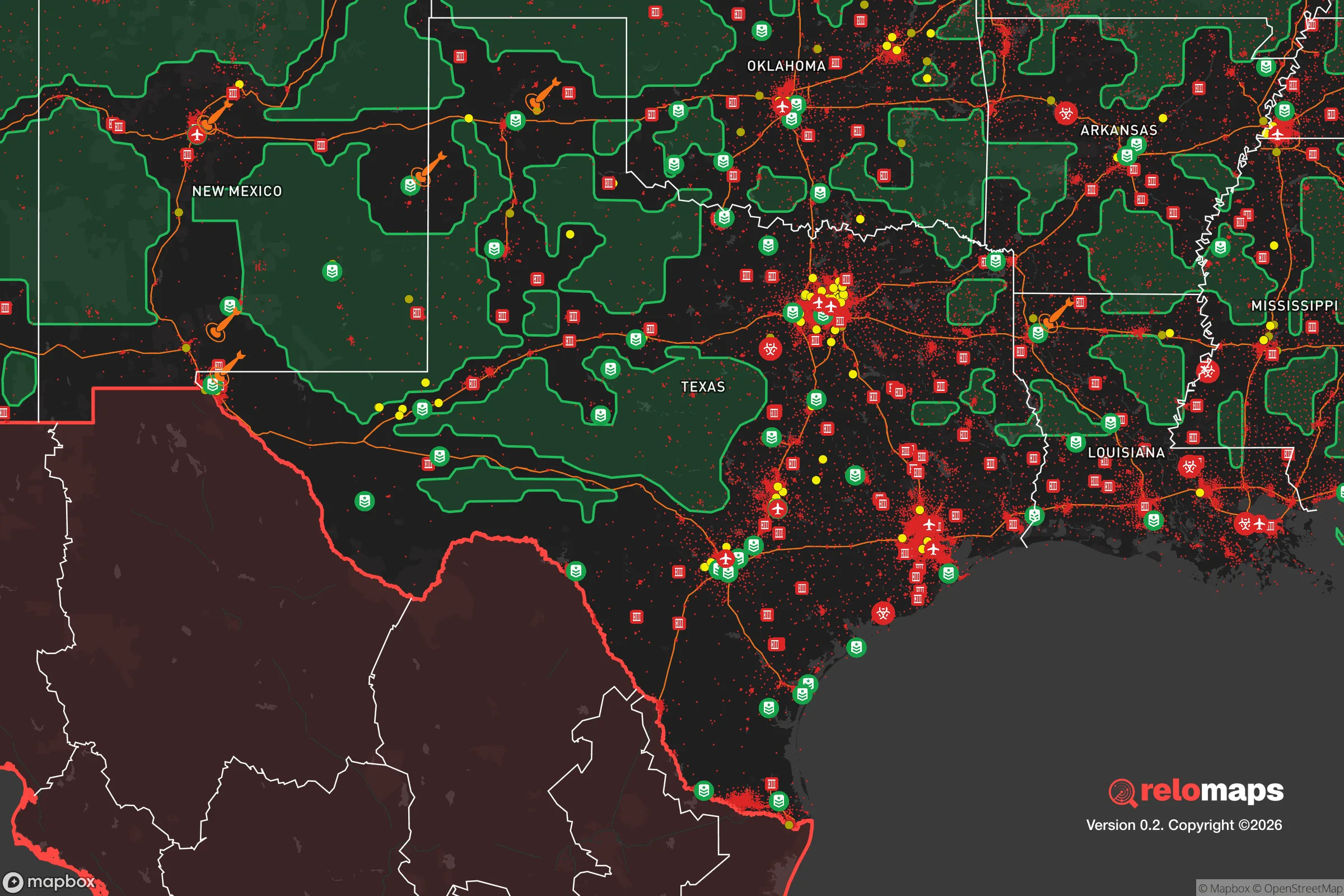


Important Note: For informational purposes only. This does not mean nothing bad ever happens in the green zones. Please use common sense. This is based on public data and modeled with AI. We tried to take a conservative approach but mistakes happen. We update this regularly as new information becomes available.
Solar Generator Recommendations
Backup power matters more here than in safer locations. We've picked three solar generators across budgets and capacity tiers — start with the budget unit if you only need a few essentials, or step up if you want to run a fridge and HVAC for days at a time.
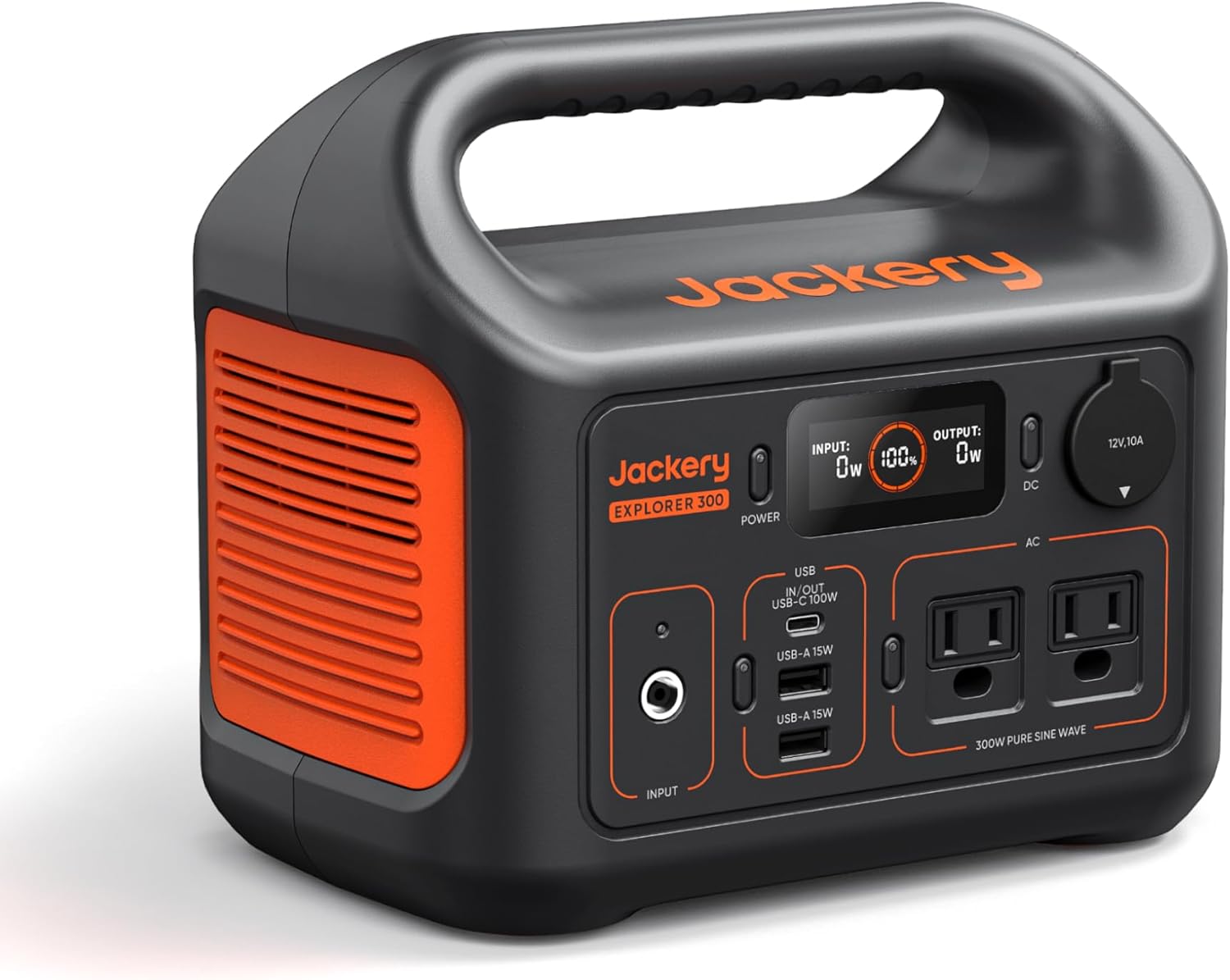
Jackery Portable Power Station Explorer 300
Budget OptionPower on the Go: Weighing only 11 lbs, it's convenient to set up and store with book-sized foldable solar panels

BLUETTI Portable Power Station AC180
Designed for both indoor and outdoor scenarios, AC180 is highly capable as it has a robost capacity and continuous output power.

EF ECOFLOW DELTA Pro Ultra Power Station
Upgraded PickEcoFlow DELTA Pro Ultra is a whole-home energy system designed to grow with your family. Integrated with the Smart Home Panel 2, it scales to meet your evolving energy needs — keeping your home powered, intelligent, and secure through every stage of life.
We earn a commission, at no additional cost to you.
Strategic Assessment Analysis
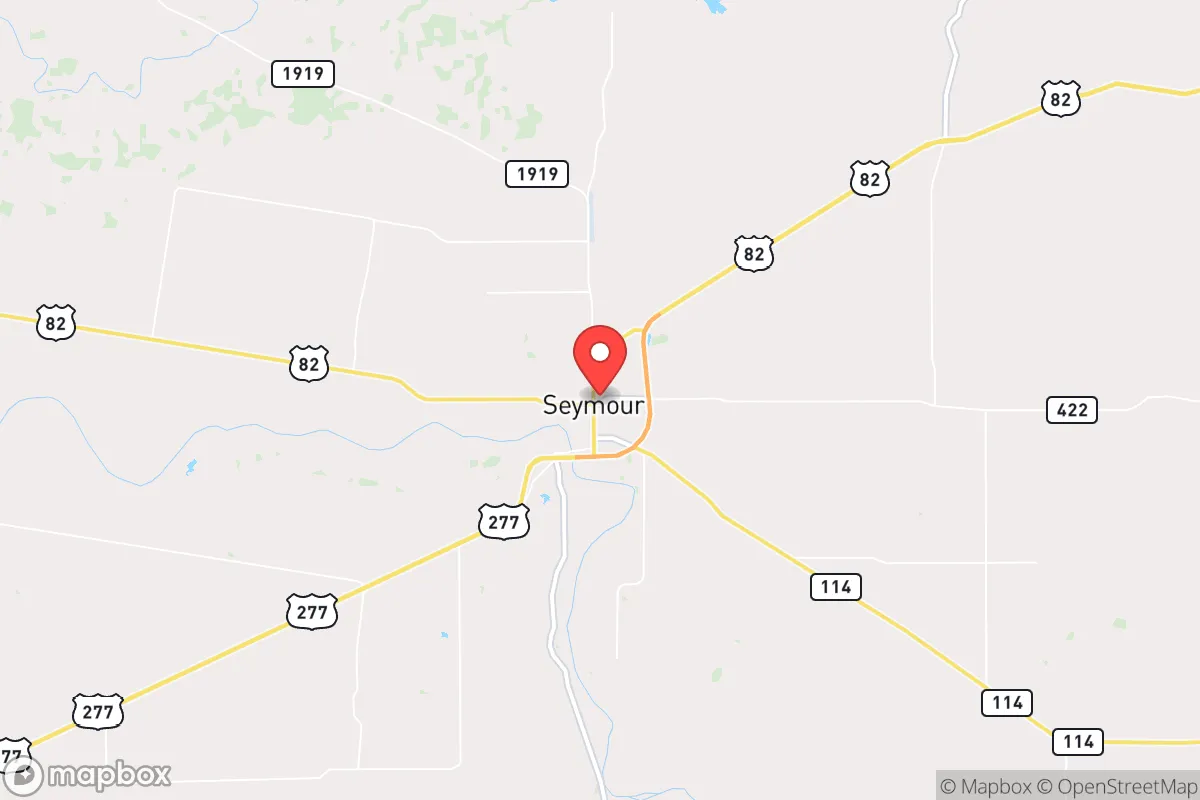
Seymour, Texas, offers a strategic resilience profile that is quietly stronger than most small towns in the Lone Star State, largely because of its position in the rolling plains of Baylor County, roughly 80 miles north of Abilene and 60 miles southwest of Wichita Falls. For a relocator weighing disaster readiness and self-sufficiency, the town’s primary advantages are its distance from major metropolitan blast zones, its low population density, and its access to the region’s agricultural backbone. Seymour is not a prepper’s paradise in the mountain-west sense, but it is a place where the fundamentals of survival—water, food, and community—are more accessible than in suburban Texas, and where the risks are mostly natural rather than man-made.
Geographic position and natural advantages for long-term stability
Seymour sits on the Brazos River, which is the single most important natural asset for anyone thinking about water security in West-Central Texas. The river provides a surface water source that many neighboring towns lack, and the surrounding Baylor County is dotted with smaller creeks and stock tanks that support ranching operations. The local aquifer, though not unlimited, is shallower here than in the far western parts of the state, making private well drilling a realistic option for a relocator with a few acres. The terrain is gently rolling prairie, which offers decent drainage and avoids the flash-flood canyons found further west, though the Brazos itself can flood during heavy spring rains.
The town’s location is also a logistical asset. Seymour sits at the intersection of U.S. Highway 82 and U.S. Highway 277, giving residents two solid east-west and north-south evacuation or supply routes that do not require passing through a major city. It is roughly 2.5 hours from the Dallas-Fort Worth metroplex, which is far enough to be outside the immediate fallout and panic radius of a major event, but close enough that regional medical and supply chains remain viable in normal times. The local economy is anchored by agriculture—cotton, wheat, and cattle—which means that in a prolonged disruption, the area produces more calories than it consumes, a rare and underappreciated advantage.
Risks, exposures, and proximity to fallout-relevant landmarks
The most significant man-made risk for Seymour is not a direct target but rather its position relative to potential secondary targets. Sheppard Air Force Base in Wichita Falls, about 60 miles northeast, is a legitimate military installation that could be a priority target in a conflict scenario, and the Dallas-Fort Worth metroplex, with its defense contractors and logistics hubs, is within a plausible fallout plume corridor depending on wind direction. Seymour is far enough from these that direct blast effects are not a concern, but a relocator should understand that the prevailing winds in North Texas often blow from the south and southwest, which means fallout from a strike on DFW would likely drift east or northeast, away from Seymour in most scenarios. The more realistic risk is a strike on Sheppard, which sits closer and could put Seymour in a downwind path under certain weather conditions.
Natural risks are more immediate and more frequent. The area is prone to severe thunderstorms, hail, and tornadoes, with Baylor County sitting on the southern edge of the traditional Tornado Alley. The 1979 Wichita Falls tornado, which killed 42 people, is a reminder that this region can produce violent, fast-moving storms. Drought is the other chronic risk; the 2011 Texas drought was devastating for local ranchers, and water restrictions are a recurring reality. Wildfire risk is moderate, mostly confined to dry grass on ranchland, but a relocator with acreage should maintain a defensible perimeter. The town itself is not in a floodplain, but low-lying areas near the Brazos can flood, so property selection matters.
Practical resilience for a relocator: food, water, energy, and defensibility
For a family or individual serious about self-sufficiency, Seymour offers a practical baseline that is hard to find closer to the cities. Food security is the strongest category: the local agricultural economy means fresh meat, eggs, and produce are available from neighbors and farmers markets, and the soil, while not rich blackland, is workable for a serious garden with composting and irrigation. Hunting is a realistic supplement—deer, turkey, and feral hogs are abundant in Baylor County, and a hunting license is inexpensive for residents. The town has a small grocery store, but a relocator should plan to stockpile non-perishables, as supply chain disruptions in a regional event would hit a town this size first.
Water is the category that requires the most planning. The Brazos River is a reliable surface source, but it is not potable without treatment, and a well is the best long-term investment. Drilling costs in the area typically run $15,000 to $25,000 for a domestic well, and yields vary, so a pre-purchase water test and a backup storage system—at least 1,000 gallons per person—are non-negotiable for a serious resilience plan. Energy is a mixed picture. The grid in North Texas is part of ERCOT, which has a documented history of winter failures, most notably the February 2021 blackouts. A relocator should assume the grid will fail during a severe winter storm and plan for solar with battery storage or a propane generator; natural gas service is available in town but not reliable for rural acreage.
Defensibility is a function of distance and community. Seymour is a small town of roughly 2,600 people, and the surrounding county is sparsely populated, which means a relocator with a few acres has natural buffer from the chaos that would follow a major urban event. The local sheriff’s department is small but responsive, and the community culture is one of mutual aid—ranchers and farmers know their neighbors, and that social fabric is a genuine security asset. The town’s main street is compact, and the courthouse square is a defensible gathering point if needed. For a family, the local school system is small (roughly 500 students district-wide), which means teachers and administrators know every child by name—a practical advantage in an emergency.
The overall strategic picture for Seymour is one of moderate-to-strong resilience with clear, manageable weaknesses. It is not a remote mountain redoubt, and a relocator who wants absolute isolation should look further west or north. But for someone who wants to stay within a few hours of regional medical care and supply chains while maintaining genuine self-sufficiency, Seymour offers a rare combination: abundant water access, a food-producing local economy, low population density, and a community that still operates on a handshake. The risks are real—tornadoes, drought, and the distant but non-zero threat of fallout from a strike on Wichita Falls or DFW—but they are predictable and mitigable with planning. For a family or individual who is willing to invest in a well, a backup power system, and a serious food storage program, Seymour is a defensible, sustainable choice in a state where most small towns offer far less.

* Values derived from national, state, county, city and local statistics and may differ in a specific area. Last updated: 2026-10-21T11:20:26.000Z
Narrative content on this page is AI-generated and may contain mistakes. Verify any details that matter before acting on them.
ReloMaps may earn a commission from affiliate links at no extra cost to you.

