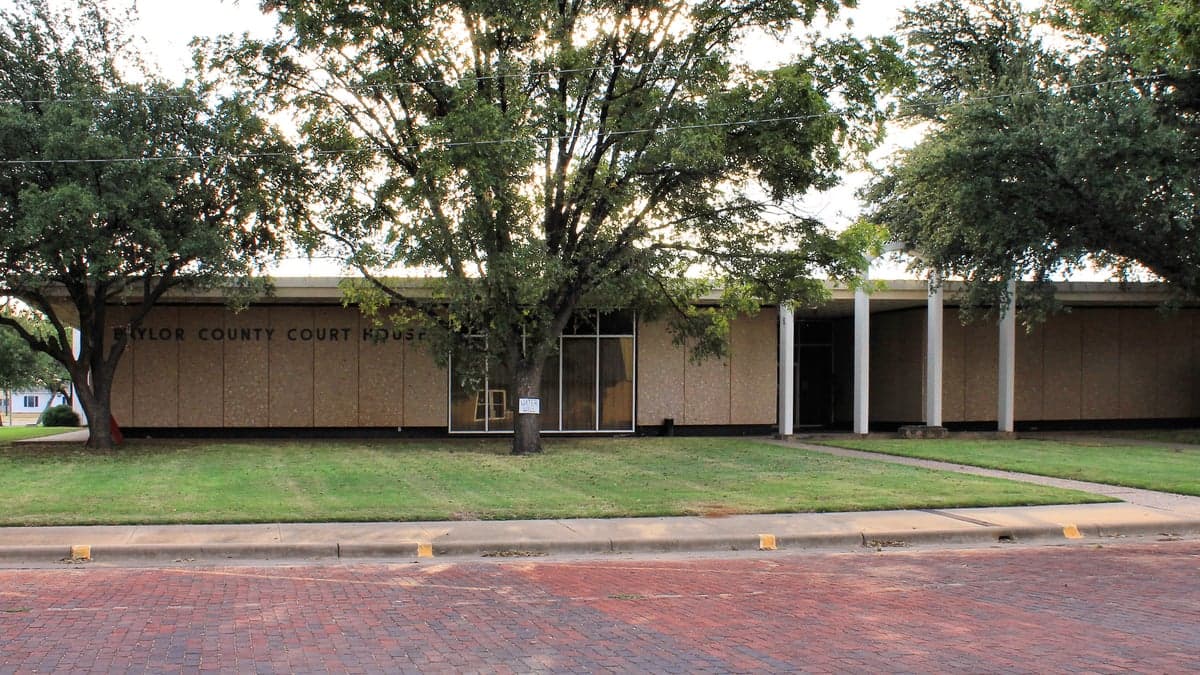
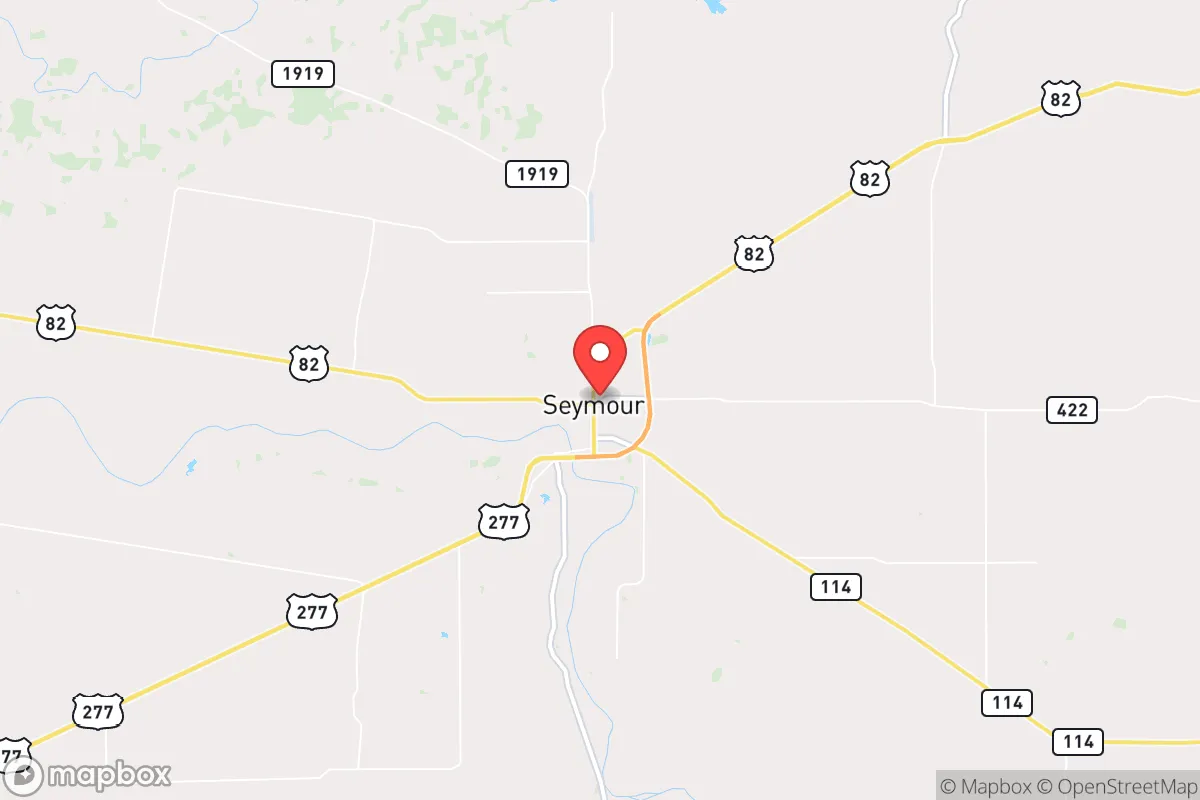
Photo: Wikipedia
Personal Sovereignty in Seymour, TX
Strong independent fundamentals that actively favor personal liberty and low regulation.
What does Personal Sovereignty tell us?
Personal Sovereignty measures your capacity for self-reliance and independence with minimal government friction. Higher scores mean fewer barriers between you and the way you want to live... but it assumes you have the space you need and good neighbors.
What does this tell us?
Personal Sovereignty measures your capacity for self-reliance and independence with minimal government friction. Higher scores mean fewer barriers between you and the way you want to live... but it assumes you have the space you need and good neighbors.
State Policy
Energy independence: Net exporter (220% of energy produced in-state)
Personal Liberty
Homesteading

Personal Liberty Analysis
Seymour, Texas, offers an environment where personal sovereignty is deeply rooted in the state's constitutional framework and local cultural norms, making it a compelling option for those who prioritize autonomy and minimal government interference. As a small town in Baylor County, Seymour operates under Texas's broad preemption laws and a light-touch local governance structure, creating a setting where individual decision-making—whether in business, family life, or self-defense—is largely respected. The area's rural character and low population density further amplify the sense of independence, though residents must navigate the practical realities of limited services and distance from major urban centers.
Tax burden and regulatory posture: How Seymour compares to other Texas towns
Seymour benefits from Texas's absence of a state income tax, which immediately preserves more of residents' earnings compared to states with such levies. The local tax burden is primarily driven by property taxes, which in Baylor County average approximately 1.2% to 1.5% of assessed home value—slightly below the Texas median of around 1.6%, according to recent county appraisal data. Sales tax in Seymour is capped at the state rate of 6.25%, plus a local option that brings the total to roughly 8.25%, consistent with most rural Texas towns. Regulatory posture in Seymour is notably light: the city enforces basic zoning for commercial and residential separation but does not impose the kind of extensive land-use codes found in suburban Dallas or Austin. Building permits are required for new construction but are processed quickly, often within a week, and there are no county-level environmental overlay districts that complicate development. For small businesses, the lack of a local business license requirement (beyond state-level registration) and minimal occupational licensing for common trades like landscaping or handyman services means lower startup friction. This regulatory environment is typical of rural North Texas—less bureaucratic than metropolitan areas, but not entirely unregulated.
Self-defense and gun law specifics: What Texas's "constitutional carry" means in Seymour
Texas's firearm laws apply uniformly across the state, and Seymour residents enjoy the full scope of those protections. Since 2021, Texas has permitted constitutional carry, meaning any adult who can legally possess a firearm may carry it openly or concealed without a permit. This is a significant sovereignty feature for residents who view self-defense as a personal right. Seymour itself has no additional local firearm ordinances—no city-level restrictions on magazine capacity, no waiting periods, and no registration requirements. The Baylor County Sheriff's Office is known for a pro-Second Amendment stance, and local law enforcement generally does not proactively enforce state-level restrictions like the "30.06" and "30.07" signage laws (which prohibit carry in posted private businesses) unless a complaint is filed. For those interested in training, the Seymour Gun Club offers a range for practice, and the nearest major firearms retailers are in Wichita Falls, about 45 minutes north. Stand-your-ground and castle doctrine laws are fully in effect, meaning there is no duty to retreat before using deadly force in self-defense in any place where the individual is lawfully present. This legal framework gives Seymour residents a high degree of personal security autonomy, though responsible gun ownership and safe storage remain practical considerations, especially for families with children.
Self-reliance and homesteading viability: Lot sizes, zoning, and off-grid feasibility
Seymour's rural character makes it highly viable for self-reliant living. Residential lots within the city limits typically range from 0.25 to 1 acre, while unincorporated Baylor County land is often sold in parcels of 5 to 40 acres or more, with prices averaging $2,000–$4,000 per acre as of 2025. Zoning within Seymour is minimal: the city distinguishes between residential and agricultural zones but does not prohibit keeping chickens, goats, or even a small number of cattle on residential lots, provided they are properly fenced. There are no homeowners' association (HOA) restrictions in most of the town, which is a major advantage for those who want to modify their property without approval. Off-grid feasibility is high: the area receives ample sunlight for solar panels, and many rural properties already rely on well water and septic systems. The city does not mandate connection to municipal water or sewer for properties outside the town limits, and there are no county-level bans on rainwater harvesting or composting toilets. However, residents should note that Baylor County does enforce basic health codes for septic systems, and any new well must be permitted through the Texas Commission on Environmental Quality (TCEQ), a process that typically takes 2–4 weeks. For those seeking full independence from the grid, properties in the surrounding countryside offer the best options, with minimal regulatory hurdles compared to more populated Texas counties like Travis or Harris.
Personal liberties: Parental rights, medical autonomy, speech, and property
Texas law provides strong protections for parental rights, and Seymour's community culture reinforces this. Parents have the legal authority to direct their children's education, including the option to homeschool without state-mandated curriculum approval or standardized testing requirements. The Seymour Independent School District is small (around 500 students K-12) and generally deferential to parental input, with a school board that reflects conservative values. Medical autonomy in Texas is limited by state licensing requirements, but Seymour residents can access direct primary care (membership-based, no insurance) through clinics in Wichita Falls or nearby Archer City. The state does not mandate COVID-19 or other vaccine requirements for adults, and there are no local health ordinances that restrict personal medical choices beyond standard public health regulations. Free speech is protected under the First Amendment, and Seymour's small-town nature means that public expression—whether political, religious, or personal—is rarely challenged by local authorities. Property rights are robust: Texas's property tax system is the primary constraint, but there are no local rent control laws, no inclusionary zoning mandates, and no restrictions on short-term rentals (like Airbnb) within the city limits. The Texas Property Code gives landowners broad latitude to use their property as they see fit, subject only to basic nuisance laws and deed restrictions (which are rare in Seymour). This combination of legal protections and cultural norms makes Seymour a place where personal sovereignty is exercised with minimal friction, though residents should be aware that the town's small size means social conformity can be a subtle pressure in close-knit communities.
Overall, Seymour offers a level of personal sovereignty that is high relative to most of the United States, though it is not an outlier within rural Texas. The absence of state income tax, constitutional carry, minimal zoning, and strong property rights create a foundation for autonomy that is difficult to find in coastal states or even in Texas's major cities. Compared to areas like Austin or Houston, Seymour's regulatory environment is dramatically lighter—no city-level gun restrictions, no complex permitting for home-based businesses, and no HOA-dominated subdivisions. However, residents must accept the trade-offs of rural living: limited healthcare access, fewer employment options, and a slower pace of life. For those who prioritize self-reliance and personal freedom over urban amenities, Seymour represents a practical, low-friction environment where the government's role is largely confined to basic services like roads and law enforcement. It is a place where individual sovereignty is not just a legal concept but a lived reality, shaped by the community's expectation that people will take care of themselves and their neighbors without excessive oversight.

* Values derived from national, state, county, city and local statistics and may differ in a specific area. Last updated: 2026-10-21T11:20:26.000Z
Narrative content on this page is AI-generated and may contain mistakes. Verify any details that matter before acting on them.
ReloMaps may earn a commission from affiliate links at no extra cost to you.

