Photo: Wikipedia
Demographics of Seymour, TX
Affluence Level in Seymour, TX
A low-income area with significant economic hardship. Household wealth and educational attainment are well below national averages.
People of Seymour, TX
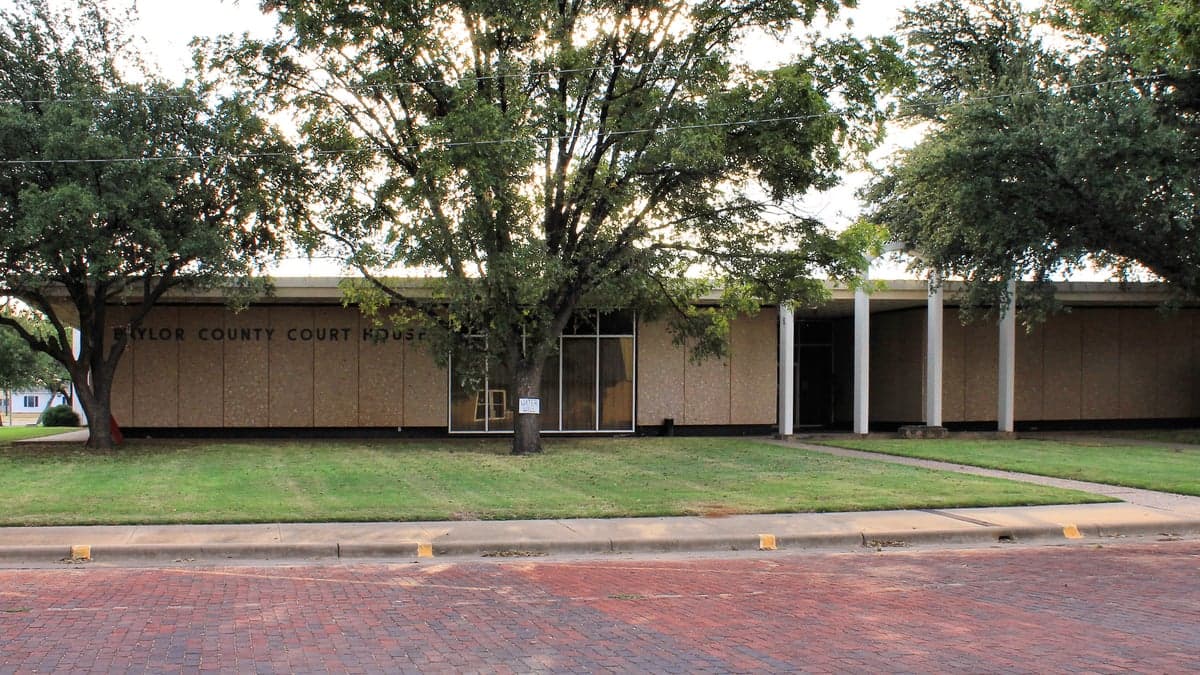
The people of Seymour, Texas, today form a small, predominantly white community of 2,607 residents, characterized by a strong sense of local heritage and a notably low level of demographic change. With a foreign-born population of just 0.2% and a Hispanic share of 10.0%, the city remains overwhelmingly native-born and culturally homogenous compared to state and national averages. The population is older than the Texas median, with a college attainment rate of 22.1%, reflecting a community rooted in agriculture, oilfield work, and local service industries rather than a knowledge economy. Distinctive markers include a deep attachment to the Baylor County fair and rodeo, a high rate of church membership, and a palpable wariness of rapid growth, making Seymour a place where "newcomer" status can linger for a generation.
How the city was settled and grew
Seymour was founded in 1879 as a stop on the Wichita and Northwestern Railroad, drawing its first wave of settlers from the post-Reconstruction South and Midwest. The original population was almost entirely white, Anglo-Saxon, and Protestant, attracted by cheap land grants for cotton farming and cattle ranching. The earliest residential area, known as Old Town Seymour (roughly bounded by the railroad tracks and Main Street), was built by these homesteaders and remains the historic core, with many original wood-frame homes still standing. A second wave arrived during the 1920s oil boom, when the discovery of the Seymour Field brought roughnecks and speculators, many of whom settled in the Oil Patch Addition on the city's west side, a neighborhood of modest bungalows and worker cottages that still houses many families tied to the energy sector. The Great Depression and Dust Bowl years saw a small influx of displaced farmers from the Oklahoma Panhandle, who clustered in the Southside District along the Brazos River bottomlands, an area that remains the city's most economically diverse pocket. By 1950, Seymour's population had peaked near 3,200, and the city's ethnic composition was nearly 99% white, with a tiny Black population (descendants of a few railroad workers) concentrated in a two-block area near the depot known locally as Depot Row.
Modern era (post-1965)
After the 1965 Hart-Cellar Act, Seymour experienced virtually no international immigration, and the city's demographic profile has remained remarkably static. The most significant post-1965 shift has been the gradual growth of the Hispanic population, which rose from roughly 2% in 1970 to 10.0% today, driven by domestic in-migration of Tejano families from South Texas and the Rio Grande Valley seeking agricultural and oilfield work. These families have concentrated in the Eastside Addition, a newer subdivision of manufactured homes and ranch-style houses built in the 1980s and 1990s, where the city's only Spanish-language church, Iglesia Bautista El Buen Pastor, was established in 1998. The white population has aged in place, with many younger adults leaving for larger cities, leading to a net population decline from 3,200 in 1950 to 2,607 today. The Black population has shrunk to 1.0%, with most descendants of the original Depot Row families having moved to Wichita Falls or Dallas. The Asian and Indian populations remain at 0.0%, reflecting the city's lack of high-skilled employment or university presence. Suburbanization has been minimal, limited to a few acreage lots on the city's northern fringe, an area sometimes called North Seymour Estates, where a handful of retired farmers and oil executives have built custom homes since the 2000s.
The future
Seymour's population is projected to continue a slow decline, with the white share shrinking slightly as the Hispanic share grows to an estimated 12-14% by 2040, driven by higher birth rates among Tejano families and continued out-migration of young white adults. The city is not becoming more diverse in a broad sense—the foreign-born share will likely remain below 1%—but the Hispanic presence will become more visible, particularly in the Eastside Addition and in the local school system, where Hispanic students already make up roughly 18% of the elementary enrollment. No new neighborhoods are planned, and the city's housing stock is aging, with few new builds outside of scattered infill. The cultural identity of Seymour is likely to remain anchored in its Anglo-Texan ranching heritage, but with a growing Tejano influence in local cuisine (two taquerias have opened since 2020) and in the annual Baylor County Fair, which now features a Hispanic heritage day. For a newcomer, this means moving into a community that is stable but slowly graying, where the dominant culture is still defined by the descendants of the original settlers, but where the most dynamic demographic growth is among Hispanic families who are quietly reshaping the city's eastern edge.
For someone moving in now, Seymour offers a deeply rooted, low-cost, and safe environment where the population is stable but aging, and where the most significant change is the gradual Hispanicization of the east side. The city's future is not one of explosive growth or dramatic diversification, but of a slow, organic shift in which the white majority will remain dominant for decades, while the Tejano community becomes an increasingly integral part of the local fabric. This is a place for those who value continuity, low crime, and a known social order, not for those seeking a melting pot or a booming job market.

* Values derived from national, state, county, city and local statistics and may differ in a specific area. Last updated: 2026-10-21T11:20:26.000Z
Narrative content on this page is AI-generated and may contain mistakes. Verify any details that matter before acting on them.
ReloMaps may earn a commission from affiliate links at no extra cost to you.

