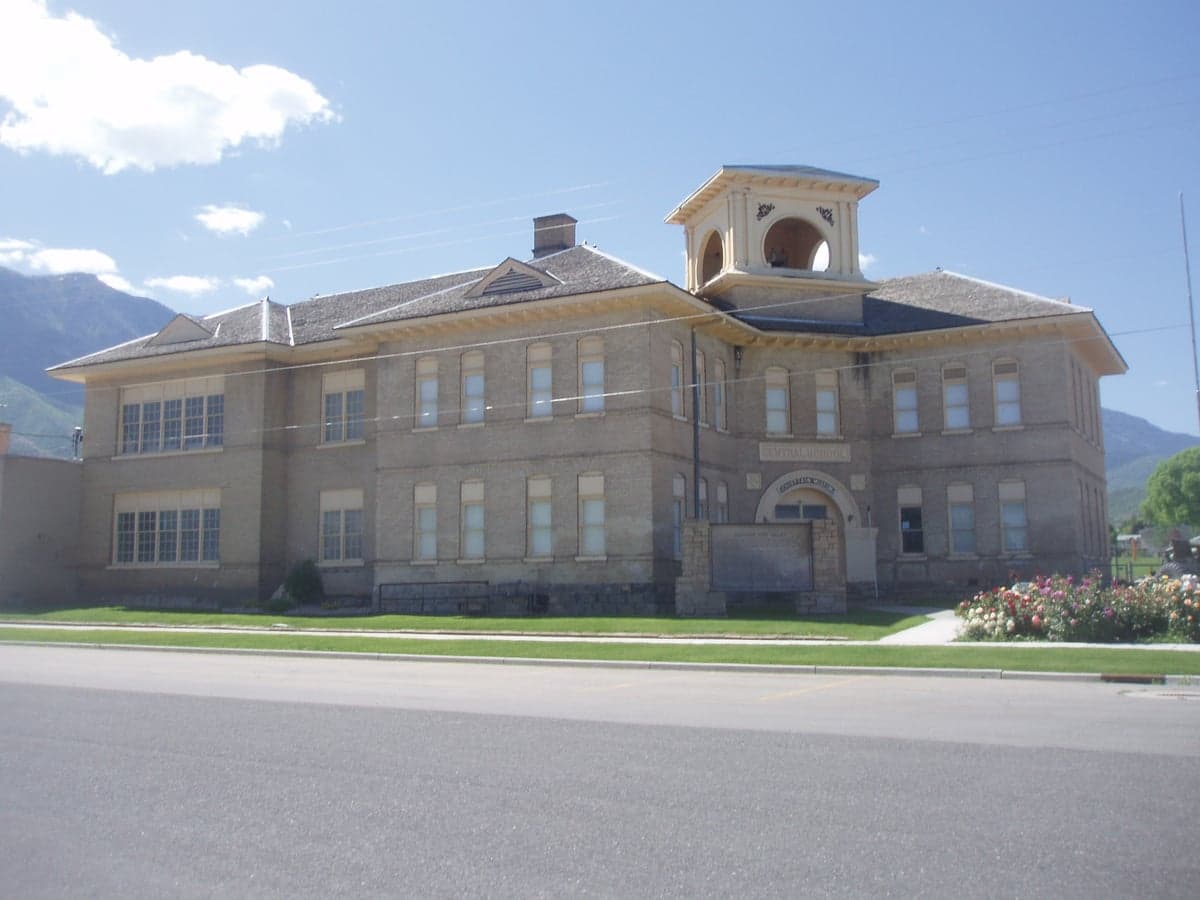
Photo: Wikipedia
Political ClimatePolitical Climate in Santaquin, UT
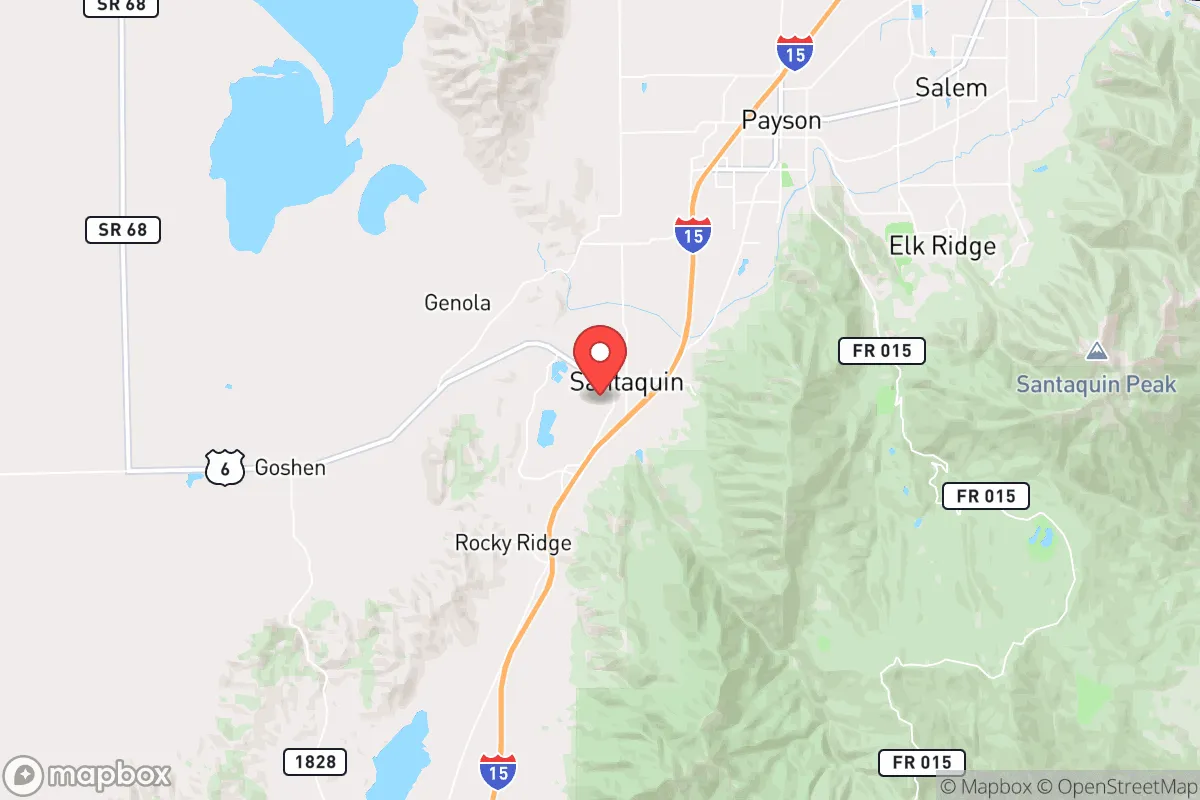
District shown is the primary district for this city’s centroid. Cities may span multiple districts.
Local Political AnalysisPolitical Analysis of Santaquin, UT
Santaquin is about as reliably Republican as any town in Utah County, which is saying something. The city sits in a county that hasn't voted for a Democratic presidential candidate since 1964, and the local Cook PVI of R+14 reflects a community that's even more conservative than the state as a whole (R+11). If you look at the voting patterns over the last decade, Santaquin has actually trended a bit further right, even as some parts of Utah County—like Provo or Orem—have shown slight shifts toward the center, especially among younger voters. But Santaquin? It’s held steady, maybe even hardened a little, as new families move in from more rural areas to the south and east, bringing that deep-red culture with them.
How it compares
Compared to the rest of Utah, Santaquin is noticeably more conservative. The state’s R+11 PVI already makes Utah one of the reddest states in the country, but Santaquin’s R+14 puts it in the top tier of conservative strongholds. Drive 15 minutes north to Payson or Spanish Fork, and you’ll find similar politics—those towns are also deep red. But head 20 minutes west to Eagle Mountain or Saratoga Springs, and you’ll see a slightly more moderate vibe, with more transplants from out of state who might lean Republican but aren’t as locked into the local culture. Santaquin, by contrast, feels more like a traditional Utah farming community that’s grown fast but kept its roots. The contrast is sharpest if you go 30 minutes north to Provo: while still conservative, Provo’s university population and tech scene bring a libertarian-leaning, sometimes socially moderate energy that Santaquin largely lacks.
What this means for residents
For conservative residents, Santaquin is a comfortable fit. Local politics are dominated by Republican candidates, often unopposed in general elections. The city council and school board races are decided in the GOP primary, so if you’re a conservative, your vote carries real weight there. For liberal or moderate residents, the reality is more isolating. You’ll find few openly Democratic neighbors, and local policy—on everything from land use to education—reflects a strong conservative consensus. That said, the area is growing fast, and with growth comes some diversity of thought. A few younger families moving in from the Wasatch Front have started to quietly push for more mixed-use development and better public transit, but those are still fringe conversations. In practice, the political climate means lower taxes and fewer regulations, but also limited public services and a social environment where conservative values are the default.
One cultural distinction worth noting: Santaquin’s identity is still tied to its agricultural past, especially the annual Santaquin Chokecherry Days festival. That small-town feel means politics here isn’t just about voting—it’s about who you see at the grocery store or church. The LDS Church’s influence is strong, and local leaders often align with its teachings on family and community. For newcomers, especially those not LDS, it can take time to feel fully integrated. But if you’re looking for a place where your vote really counts in a Republican primary, and where the pace of life is slower than the Salt Lake Valley, Santaquin delivers exactly that.

State Political ClimatePolitical Climate in Utah
State Political AnalysisPolitical Environment in the State
Utah is a deeply Republican state, with a Cook PVI of R+11 that has held steady for over a decade, but the political reality is far more layered than a single number suggests. The dominant coalition is a mix of the Church of Jesus Christ of Latter-day Saints (LDS) institutional influence, a growing libertarian-leaning tech sector along the Wasatch Front, and a culturally conservative rural base. Over the last 20 years, the state has shifted from a reliably red, almost one-party system to a more internally competitive environment, where the real fights are now between the mainstream GOP and a more populist, anti-establishment wing, while Democrats hold a narrow but durable stronghold in Salt Lake City proper.
Urban vs. rural divide
The political map of Utah is a classic Wasatch Front vs. everything else story. Salt Lake County, home to over 40% of the state's population, is the epicenter of the state's political diversity. The city of Salt Lake City itself is a deep blue island, consistently voting Democratic by 30-40 points in presidential races, driven by a mix of young professionals, university students at the University of Utah, and a growing non-LDS population. However, the suburbs of Sandy and Draper in the southern part of the county are reliably Republican, though they are trending slightly more moderate on social issues. Utah County, anchored by Provo and home to Brigham Young University, is the heart of the state's conservative base—it's one of the most Republican counties in the nation, often voting +50 points or more for the GOP. The rural counties—Duchesne, Uintah, San Juan—are deep red, with turnout driven by resource extraction and ranching interests. The only real exception to this pattern is Summit County (Park City), which is a wealthy, ski-resort enclave that votes reliably Democratic, often flipping the state's second congressional district into competitive territory.
Policy environment
Utah's policy environment is defined by low taxes and a hands-off regulatory posture, but with a strong social conservative overlay. The state has a flat income tax rate of 4.65% and a state sales tax of 4.85%, though local options push it higher. Property taxes are among the lowest in the nation. The regulatory climate is business-friendly, with a right-to-work law and minimal zoning restrictions outside of the Wasatch Front. Education policy is a flashpoint: the state passed a universal school voucher program in 2023 (HB 215), making it one of the most expansive in the country, but it also funds public schools at a below-average per-pupil level. Healthcare is a mixed bag—Utah expanded Medicaid under the Affordable Care Act via a 2018 ballot initiative, but the legislature has since added work requirements and a per-capita cap. Election laws are moderately restrictive: voter ID is required, same-day registration is not available, and mail-in voting is universal but with signature verification. The state has no open-carry permit requirement for handguns, and it is a "shall-issue" state for concealed carry permits.
Recent policy direction
Over the last five years, Utah has moved decisively in a libertarian-conservative direction on several fronts. On gun and self-defense law, the state passed permitless carry (HB 60) in 2021, allowing any law-abiding adult to carry a concealed firearm without a permit. On parental and education rights, the legislature passed HB 261 in 2024, effectively banning diversity, equity, and inclusion (DEI) programs at public universities and K-12 schools, and it also passed a "Parents' Bill of Rights" (HB 243) in 2023, giving parents explicit authority over their child's education and medical decisions. On speech and privacy, Utah passed one of the nation's strongest age-verification laws for social media (SB 152) in 2023, requiring parental consent for minors to use platforms like TikTok and Instagram. On medical and bodily autonomy, the state enacted a near-total abortion ban in 2020 (trigger law), with exceptions only for rape, incest, and life of the mother, and it has resisted any expansion of gender-affirming care for minors. On property rights, the state has a strong eminent domain protection law, but it also allows for significant mineral and water rights extraction on private land. On taxation, the legislature passed a series of income tax rate cuts, from 4.95% to 4.65% in 2023, with a goal of reaching 4.5% by 2027. On voting and ballot access, the state has tightened signature verification for mail-in ballots and made it harder for third-party candidates to get on the ballot.
Civil unrest & political movements
Utah is not known for large-scale civil unrest, but there are distinct political movements that shape the landscape. The most visible is the anti-establishment, populist wing of the state GOP, which has clashed with the more moderate, business-friendly LDS-aligned leadership. This faction, often associated with the "Utah Patriot" movement, has pushed for nullification of federal gun laws and has been vocal in opposing COVID-19 mandates. In 2020, there were small but persistent protests at the state capitol against mask mandates and lockdowns, organized by groups like Utahns for Freedom. On the left, the Salt Lake City chapter of Black Lives Matter held significant protests in 2020, drawing thousands, and the group has since focused on police reform and housing policy. Immigration politics are relatively quiet—Utah has a "compact" with the federal government that allows for a state-level guest worker program, but it is not a sanctuary state. There have been no serious secession or nullification movements, though some rural counties have passed symbolic "Second Amendment sanctuary" resolutions. Election integrity controversies are minimal; the state's universal mail-in voting system is widely trusted, and there have been no major fraud allegations that gained traction.
Projection
Over the next 5-10 years, Utah's political trajectory is likely to remain solidly Republican, but the internal dynamics will shift. The biggest driver is in-migration: the state is growing at roughly 1.5% per year, with most newcomers settling along the Wasatch Front. These new residents tend to be younger, more secular, and more moderate than the native population, which could slowly dilute the state's social conservatism. The tech sector in Lehi and Draper (the "Silicon Slopes") is attracting a libertarian-leaning workforce that is fiscally conservative but socially liberal, which could push the state toward a more "live and let live" posture on issues like marijuana legalization and LGBTQ rights. However, the rural counties are losing population, and the LDS Church's institutional influence, while still strong, is slowly waning among younger members. The most likely outcome is a state that remains R+11 in presidential races but becomes more internally divided, with the GOP primary becoming the real battleground between the populist and moderate wings. A new resident moving in now should expect a state that is deeply conservative on fiscal and education policy, but where the culture wars are fought primarily within the Republican Party, not between the two major parties.
For a new resident, the bottom line is this: Utah offers a stable, low-tax, business-friendly environment with a strong sense of community, but you need to be comfortable with a dominant conservative culture that shapes everything from school board meetings to zoning laws. If you're a conservative, you'll find a state that largely aligns with your values, with a government that is actively pushing the envelope on school choice, gun rights, and parental control. If you're a liberal, you'll find a vibrant blue enclave in Salt Lake City and Park City, but you'll be living in a state where your vote has little impact on statewide elections and where social policies will feel restrictive. The practical takeaway: Utah is not a purple state in disguise, but it is a red state with a growing internal debate about what that means.
* Values derived from national, state, county, city and local statistics and may differ in a specific area. Last updated: 2026-11-06T03:22:22.000Z
Narrative content on this page is AI-generated and may contain mistakes. Verify any details that matter before acting on them.
ReloMaps may earn a commission from affiliate links at no extra cost to you.

