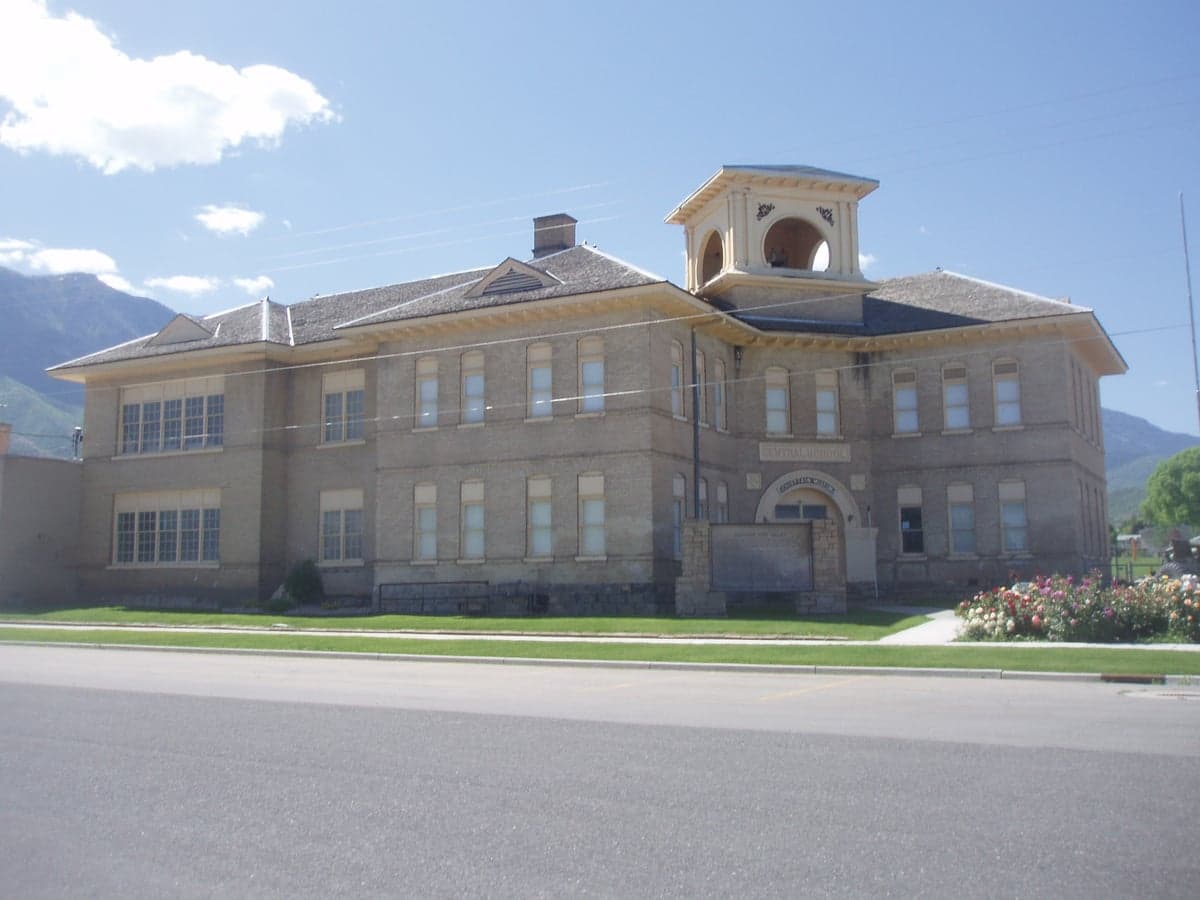
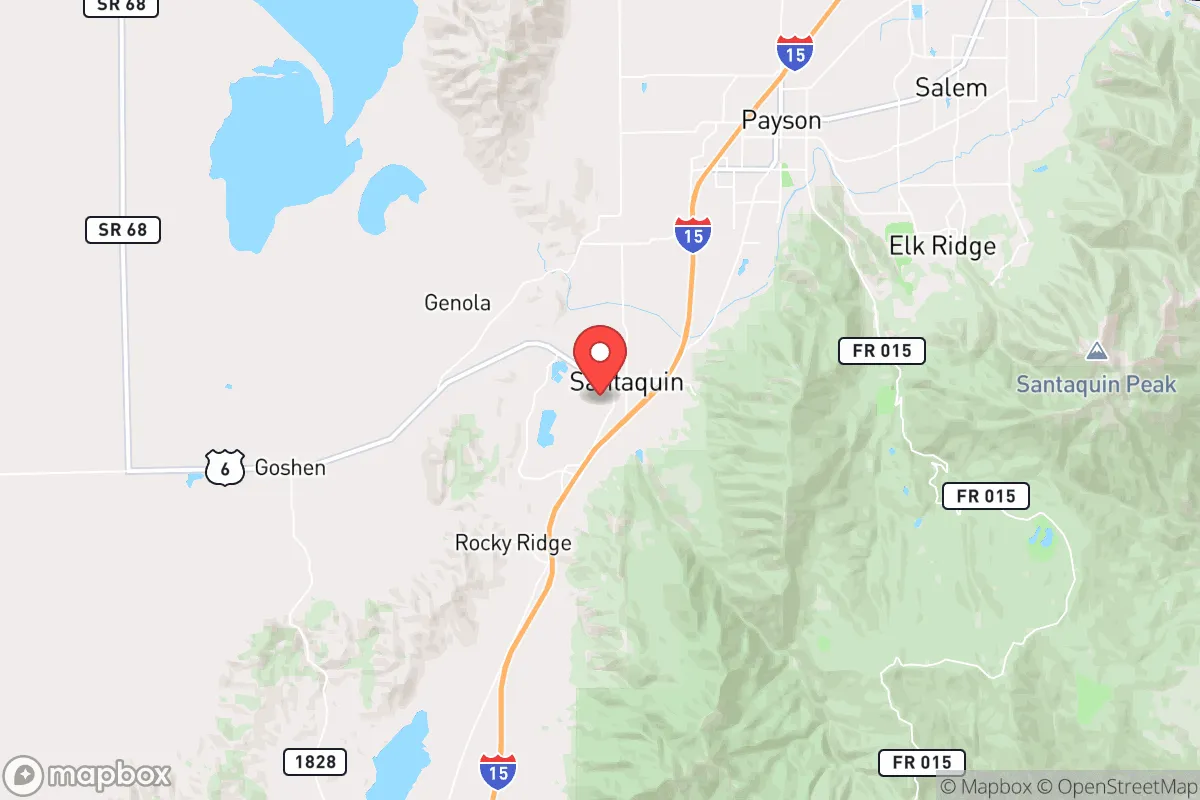
Photo: Wikipedia
Demographics of Santaquin, UT
Affluence Level in Santaquin, UT
An upper-middle-class area. Household wealth, education levels, and homeownership run ahead of national benchmarks.
People of Santaquin, UT
The people of Santaquin, Utah, today number roughly 15,391, forming a community that is predominantly white (79.1%) with a significant Hispanic minority (13.1%) and a very small foreign-born population (1.8%). The city retains a distinctly rural, family-oriented character, with a median age around 30 and a lower-than-state-average college attainment rate of 25.8%, reflecting its agricultural roots and blue-collar employment base. Santaquin’s identity is shaped by its history as a Mormon pioneer settlement and its more recent role as a bedroom community for commuters working in Provo and Salt Lake City, creating a blend of deep-rooted local families and newer arrivals seeking affordable housing.
How the city was settled and grew
Santaquin was settled in the 1850s by Mormon pioneers dispatched by Brigham Young to establish agricultural outposts in Utah Valley. The original settlers were primarily families of English and Scandinavian descent who farmed the fertile bottomlands along the Santaquin Creek. The earliest homes and farms clustered around what is now Main Street and Center Street, an area still referred to locally as Old Town Santaquin. A second wave arrived in the 1880s and 1890s, drawn by the expansion of the railroad and the establishment of a sugar beet factory, which spurred growth in the Railroad District along the tracks south of Main Street. These later arrivals included more Scandinavian immigrants and a small number of Italian and German families who worked in the factory and on the surrounding farms. By 1900, the population had reached roughly 1,000, and the town’s social and economic life revolved around the LDS Church ward and the agricultural cooperatives that marketed fruit and hay.
Modern era (post-1965)
After the 1965 Immigration and Nationality Act, Santaquin saw little direct international immigration; its foreign-born share remains just 1.8%, far below the national average. Instead, the city’s modern growth has been driven by domestic in-migration from other parts of Utah and the Intermountain West. The construction of Interstate 15 in the 1970s made Santaquin a viable commuter town, and the Orchard Hills subdivision, developed in the 1980s and 1990s, absorbed many of these new residents—mostly white, middle-class families seeking larger lots and lower home prices than in Provo or Orem. The Hispanic population, now 13.1%, began to grow noticeably in the 1990s and 2000s, driven by agricultural labor demand in the surrounding orchards and dairies. These families concentrated in the South Santaquin area, near the old sugar beet factory site and along the highway corridor, where older, more affordable housing stock is available. The Black (1.6%) and East/Southeast Asian (0.1%) populations remain very small, with no distinct ethnic enclaves; these residents are dispersed across newer subdivisions like Mountain View Estates and Lakeridge, which were built in the 2000s and 2010s.
The future
Santaquin’s population is projected to continue growing, potentially reaching 25,000–30,000 by 2040, driven by ongoing residential development and its position as a lower-cost alternative to the Wasatch Front’s core cities. The city is becoming slightly more diverse: the Hispanic share is expected to rise gradually, possibly to 18–20% by 2040, as younger Hispanic families move in from other parts of Utah County and as second-generation residents form households. The white share will likely decline proportionally but remain the overwhelming majority. New development is concentrated in the West Santaquin master-planned communities, such as the Santaquin Meadows and Pioneer Crossing areas, which are attracting a mix of young families and retirees. These newer neighborhoods are more ethnically mixed than Old Town, though still predominantly white. The city’s cultural identity is evolving from a tight-knit, agrarian Mormon community into a more diverse, commuter-oriented suburb, though LDS Church membership remains high and local politics lean conservative.
For someone moving in now, Santaquin offers a stable, family-oriented environment with a strong sense of local history, but with a population that is slowly diversifying and becoming more connected to the broader Wasatch Front economy. The city is likely to remain predominantly white and LDS for the foreseeable future, but the growing Hispanic community and the influx of out-of-state commuters are gradually reshaping its social fabric. New arrivals will find a place where agricultural roots still matter, but where the future is increasingly tied to suburban expansion and the economic pull of Provo and Salt Lake City.

* Values derived from national, state, county, city and local statistics and may differ in a specific area. Last updated: 2026-11-06T03:22:22.000Z
Narrative content on this page is AI-generated and may contain mistakes. Verify any details that matter before acting on them.
ReloMaps may earn a commission from affiliate links at no extra cost to you.

