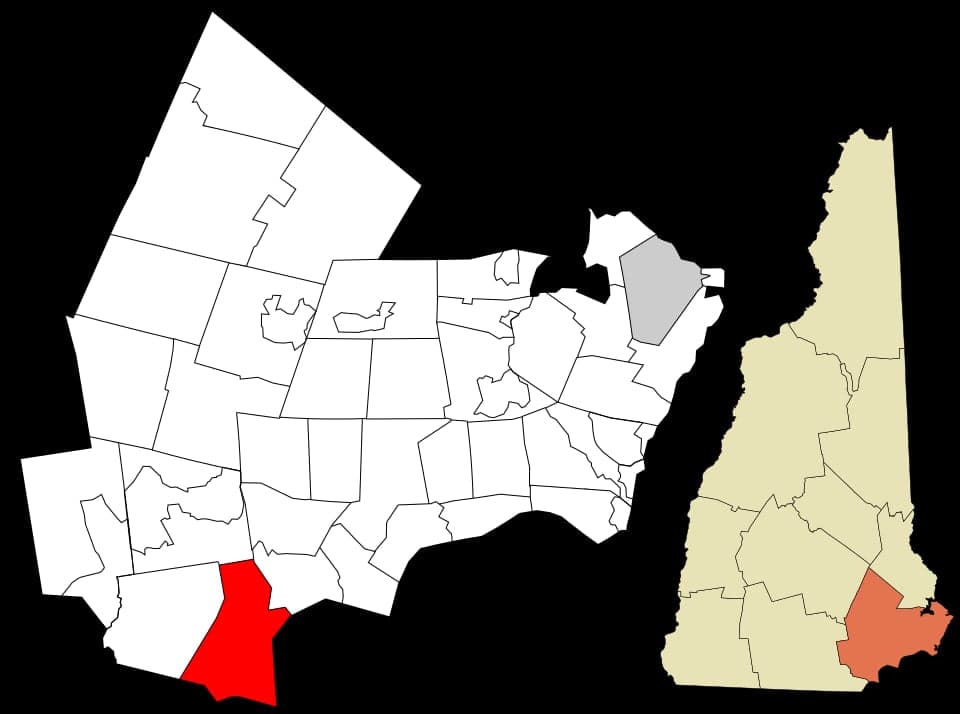
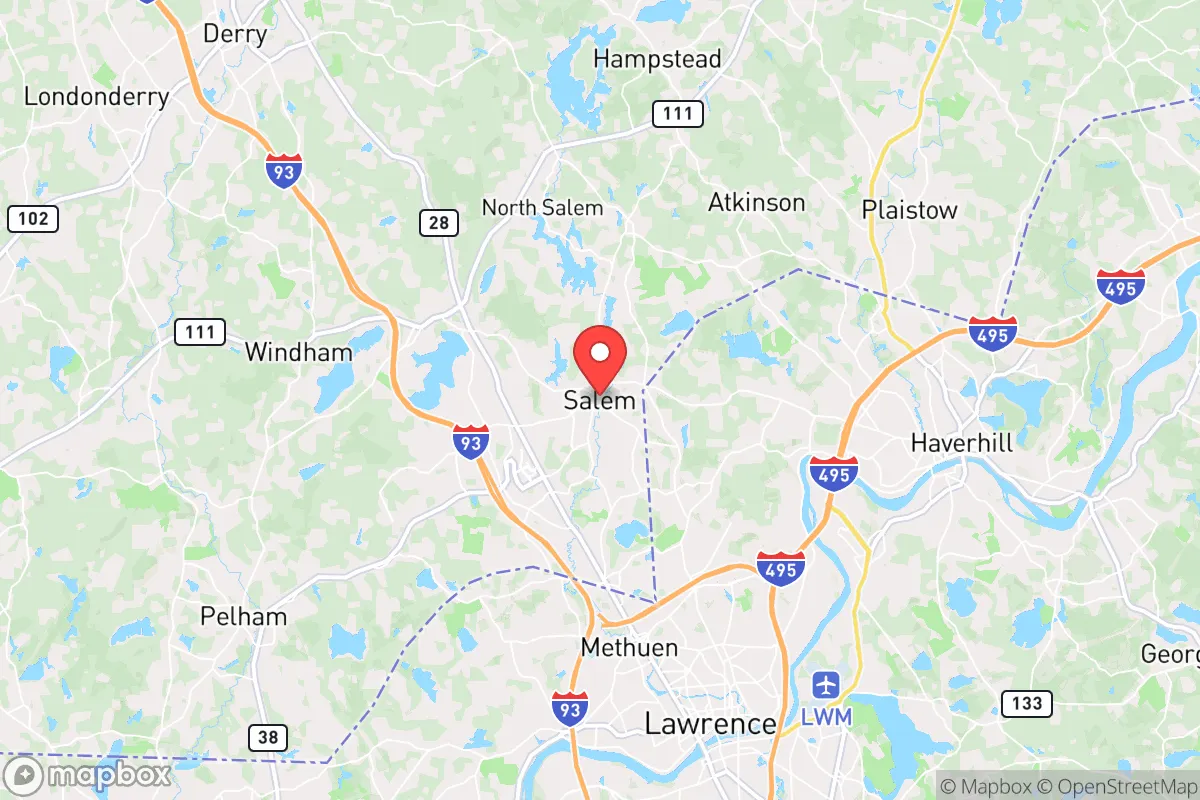
Photo: Wikipedia
Quality of Life in Salem, NH
A high quality of life with strong walkability, manageable living costs, healthy neighborhood signals, and solid amenity access.
What does Quality of Life tell us?
Quality of Life blends cost of living, nearby amenities, socioeconomic signals, and neighborhood character. City-level scores represent the whole municipality; individual neighborhoods can differ.
What does this tell us?
Quality of Life blends cost of living, nearby amenities, socioeconomic signals, and neighborhood character. City-level scores represent the whole municipality; individual neighborhoods can differ.
Cost of Living
59% above national average
The Real Cost of Living in Salem, NH for 2026
| Tier | Individual | Family (4) |
|---|---|---|
| Survival | $28k | $53k |
| Comfortable | $94k | $139k |
| Luxury | $223k+ | $346k+ |
| Elite (Top 5%) | $273k+ | $423k+ |
89%
The Area Signal
A metric tracking the socioeconomic signals of the area.
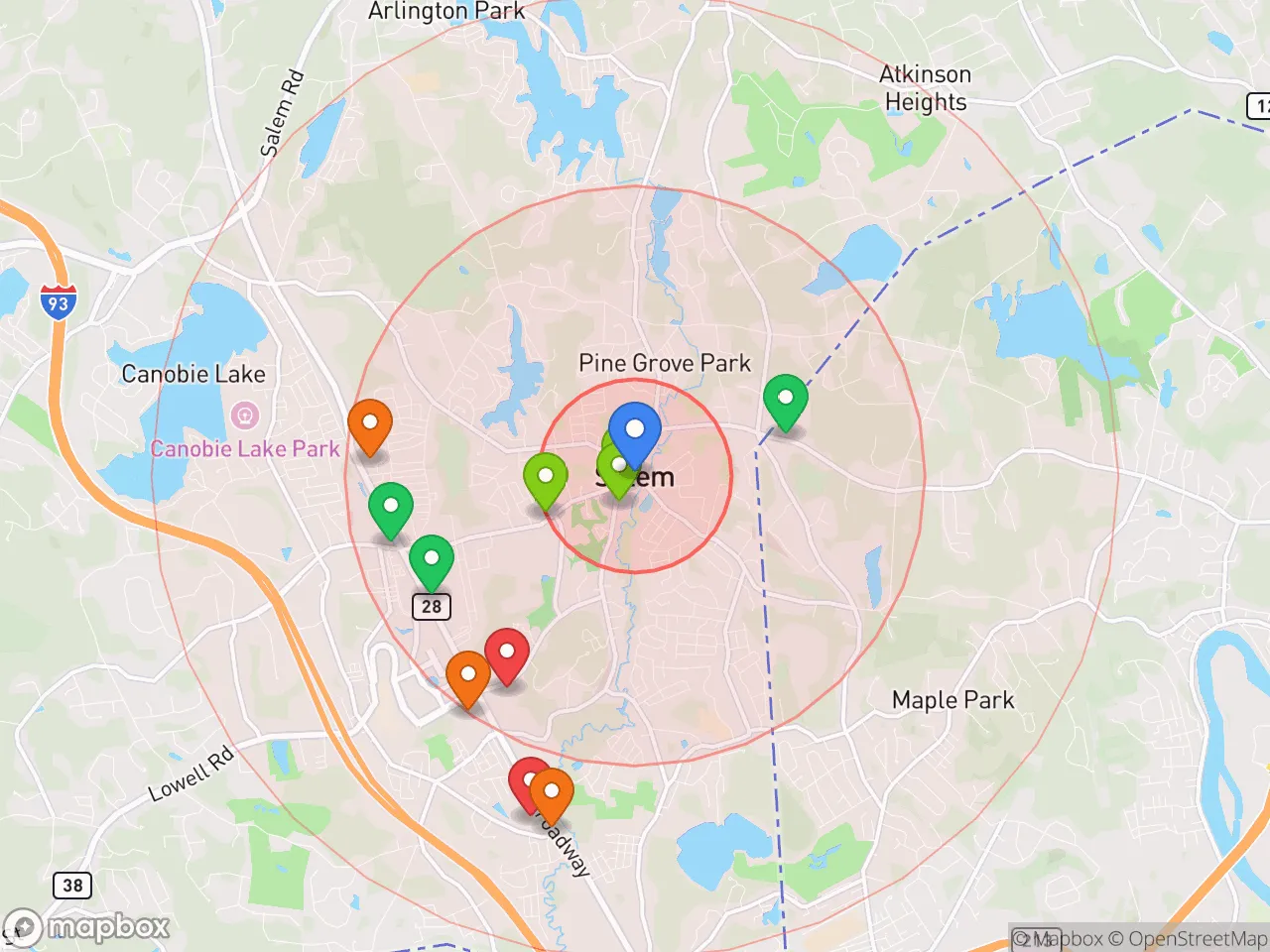
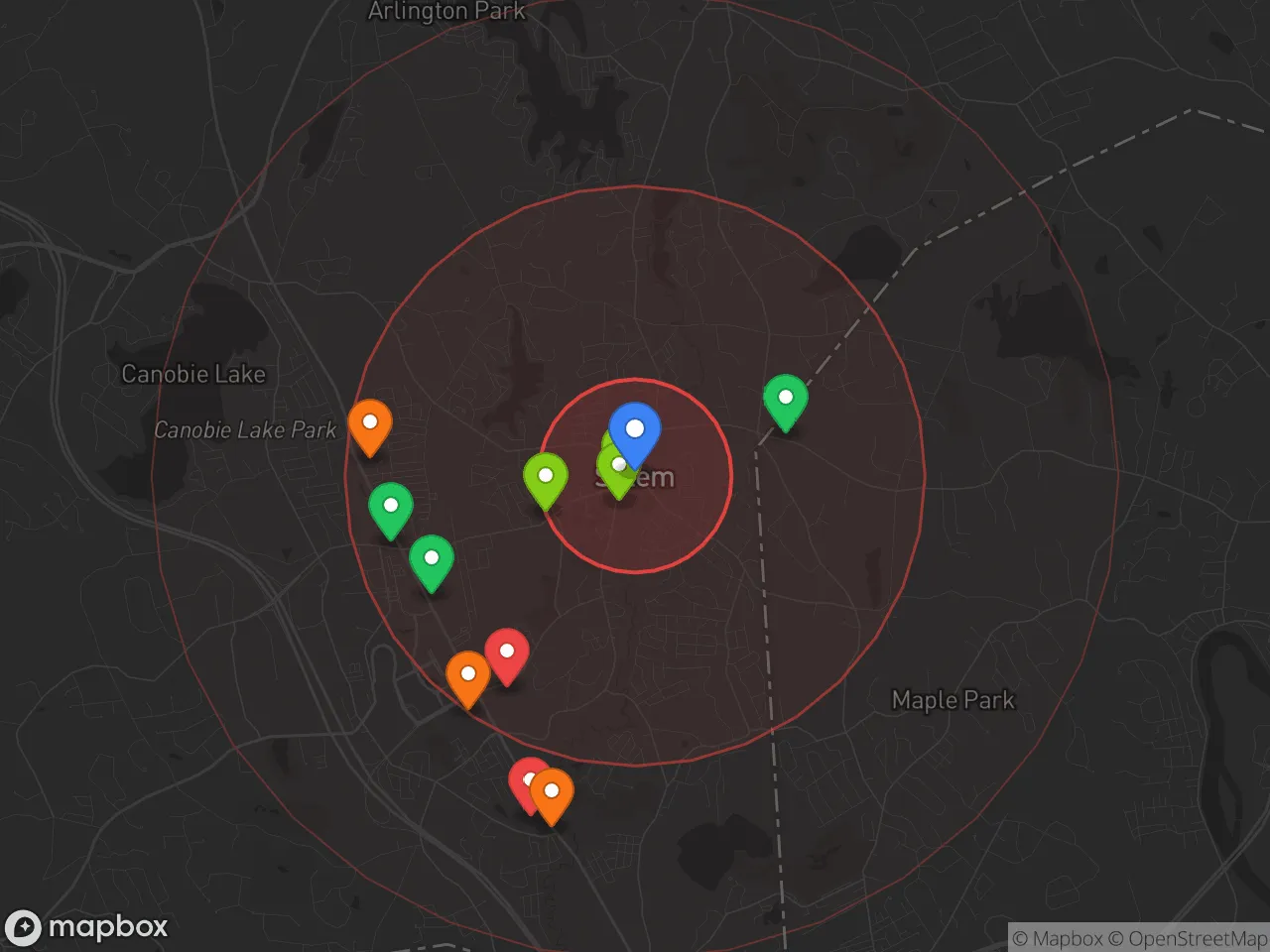
Hobbies
Explore the areaGroceries
5 within 10 miles
Gas
20 within 10 miles
Hospital
20 within 20 miles
Airport
PDX — Portland International Jetport
Post Office
USPS — Salem, NH
Critical Amenities
Quality-of-Life Analysis
Salem, New Hampshire, is an affluent, family-oriented community where the typical resident is a homeowner in a single-family house, commuting to a professional or managerial job in the greater Boston metro area. With a cost of living index of 159 (well above the U.S. average of 100), Salem attracts households that prioritize New Hampshire’s lower tax burden and strong school system over the higher housing costs found in comparable Massachusetts suburbs. The town’s population of roughly 30,000 is predominantly white-collar, with a median household income significantly above the national median, reflecting a community built around stability, suburban comfort, and access to regional employment hubs.
Cost of living, housing, and affordability compared to nearby towns
Salem’s cost of living is 59% above the national average, driven almost entirely by housing. The median home value of $485,500 is steep by national standards but notably lower than in neighboring Massachusetts communities such as Methuen (median ~$520,000) or Andover (~$700,000). Median rent sits at $1,750, which is competitive for the region—cheaper than Nashua’s $1,850 average and far below Boston’s $2,800. Property taxes in New Hampshire are higher than the national average (roughly 1.8% of assessed value), but the absence of a state income or sales tax offsets much of that burden for higher earners. For a family earning $120,000–$150,000, Salem offers a realistic path to homeownership that is increasingly out of reach in eastern Massachusetts. However, renters and first-time buyers on lower incomes will find the market challenging, as inventory remains tight and prices have risen roughly 8% annually since 2020.
Amenities, schools, and what daily life is like for families
Daily life in Salem revolves around its strong public school system, ample retail, and easy highway access. The Salem School District serves about 4,000 students and consistently earns above-average ratings from Niche and GreatSchools, with Salem High School offering a 14:1 student-teacher ratio and a 93% graduation rate. The town is a retail hub for the region, anchored by the Mall at Rockingham Park and a dense corridor of big-box stores and restaurants along Route 28. For outdoor recreation, Canobie Lake Park provides seasonal family entertainment, and the town maintains over 200 acres of parkland, including Spicket River Greenway and Veteran’s Memorial Park. The average one-way commute is 29 minutes, with most residents driving to jobs in southern New Hampshire or the I-93 corridor into Boston. While public transit is limited to a few Nashua-area bus routes, the town’s location at the intersection of I-93 and NH-28 makes car travel efficient for most errands and work trips. The rhythm of life is distinctly suburban: school events, weekend shopping trips, and commutes define the week, with a quiet, low-crime atmosphere that families prize.
Salem is best suited for professionals and families who value a strong school system, low state taxes, and a suburban lifestyle within striking distance of Boston. It is less ideal for singles seeking nightlife, renters on tight budgets, or anyone reliant on public transit. The town’s high cost of living is a trade-off for safety, schools, and tax advantages that many find worthwhile. For a dual-income household earning $130,000 or more, Salem offers a stable, well-resourced community where the daily trade-offs—longer commutes, higher housing costs—are balanced by tangible quality-of-life benefits.

Crime in Salem, NH
Lower crime rates than 78% of comparable U.S. locations.
Violent CrimeViolent Crime Analysis
Property CrimeProperty Crime Analysis
Crime Analysis
Salem, New Hampshire, presents a mixed safety profile that residents and prospective movers should evaluate carefully. The town's violent crime rate of 146.9 per 100,000 residents is notably lower than the national average, but its property crime rate of 1,531.3 per 100,000 exceeds both state and national benchmarks. This combination places Salem in a category where violent incidents are relatively rare, yet theft, burglary, and vehicle-related crimes are a persistent concern for daily life.
Crime in context
Salem's violent crime rate of 146.9 per 100,000 is roughly half the U.S. average of about 380 per 100,000, and well below New Hampshire's already low statewide rate of approximately 170 per 100,000. However, the property crime rate of 1,531.3 per 100,000 is significantly higher than the New Hampshire average of roughly 1,100 per 100,000 and the national average of about 1,950 per 100,000. This means Salem is safer than the typical American town for violent offenses but riskier than its own state's norm for property crimes. The town's location as a retail and commercial hub along Interstate 93, drawing shoppers from Massachusetts and beyond, likely contributes to elevated property crime figures, particularly larceny and shoplifting.
What residents experience
For those living in Salem, the practical experience of safety is shaped by the property crime rate. Residents report that package thefts from porches, vehicle break-ins, and occasional burglaries are the most common concerns, especially in neighborhoods near the Mall at Rockingham Park or along major corridors like Route 28. Violent crime, such as assault or robbery, is infrequent and tends to be isolated to specific incidents rather than a widespread threat. The town's police department maintains a visible presence, with community policing initiatives and regular patrols in commercial areas. However, because Salem is part of the broader Boston metro area, it falls under the jurisdiction of Rockingham County's court system, which some critics argue leans toward progressive sentencing practices. This can result in repeat property offenders cycling through the system with minimal consequences, a pattern that frustrates residents who see the same individuals involved in multiple thefts. The combination of a high property crime rate and a justice system perceived as lenient toward non-violent offenders creates a sense of vulnerability among homeowners and small business owners.
Neighborhood-level variation is notable in Salem. Areas closer to the Massachusetts border, such as the neighborhoods around Exit 2 on I-93, tend to see higher foot traffic and associated property crime. In contrast, more residential pockets like those near Canobie Lake or along the Pelham town line report lower incident rates. Prospective residents should examine block-level crime maps and consider proximity to major retail zones when choosing a home, as the difference in safety can be substantial between a street adjacent to a shopping plaza and a quiet cul-de-sac a mile away.
* Values derived from national, state, county, city and local statistics and may differ in a specific area. Last updated: 2026-10-10T16:28:50.000Z
Narrative content on this page is AI-generated and may contain mistakes. Verify any details that matter before acting on them.
ReloMaps may earn a commission from affiliate links at no extra cost to you.

