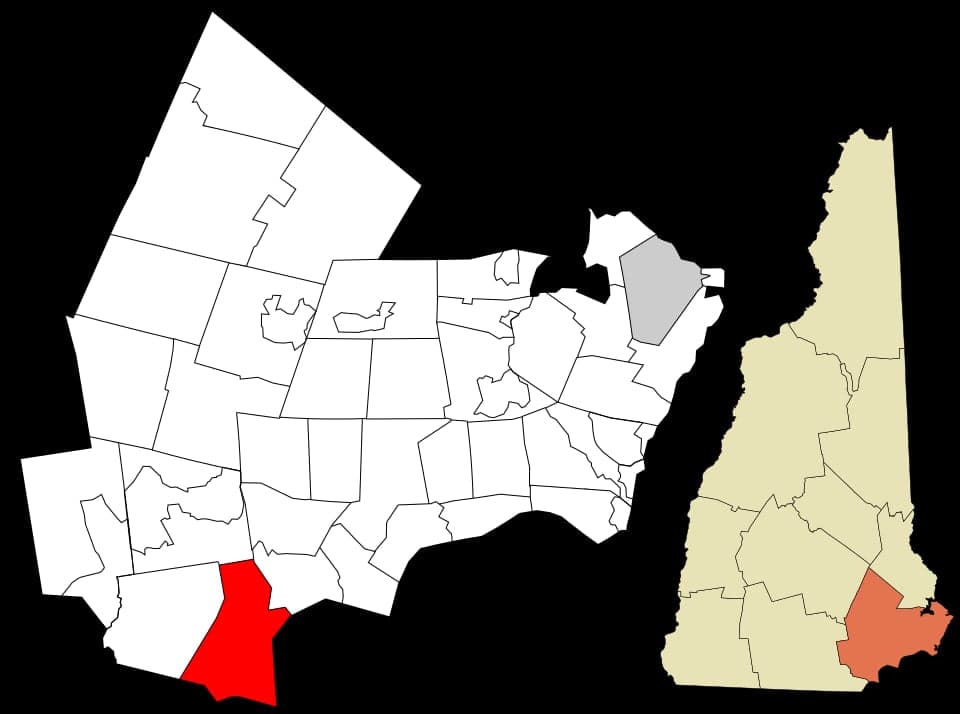
Photo: Wikipedia
Political ClimatePolitical Climate in Salem, NH
District shown is the primary district for this city’s centroid. Cities may span multiple districts.
Local Political AnalysisPolitical Analysis of Salem, NH
Salem, New Hampshire, sits in a unique political pocket that’s more competitive than its statewide Cook PVI of D+2 might suggest. While the town has trended slightly blue in recent presidential cycles—matching the state’s overall D+2 lean—local elections often flip between parties, and the real story is the growing suburban split between the more conservative, older-stock neighborhoods and the influx of younger, moderate families moving up from Massachusetts. You’ll see Trump signs on some lawns and Harris signs on others, often on the same street, which wasn’t the case even a decade ago.
How it compares
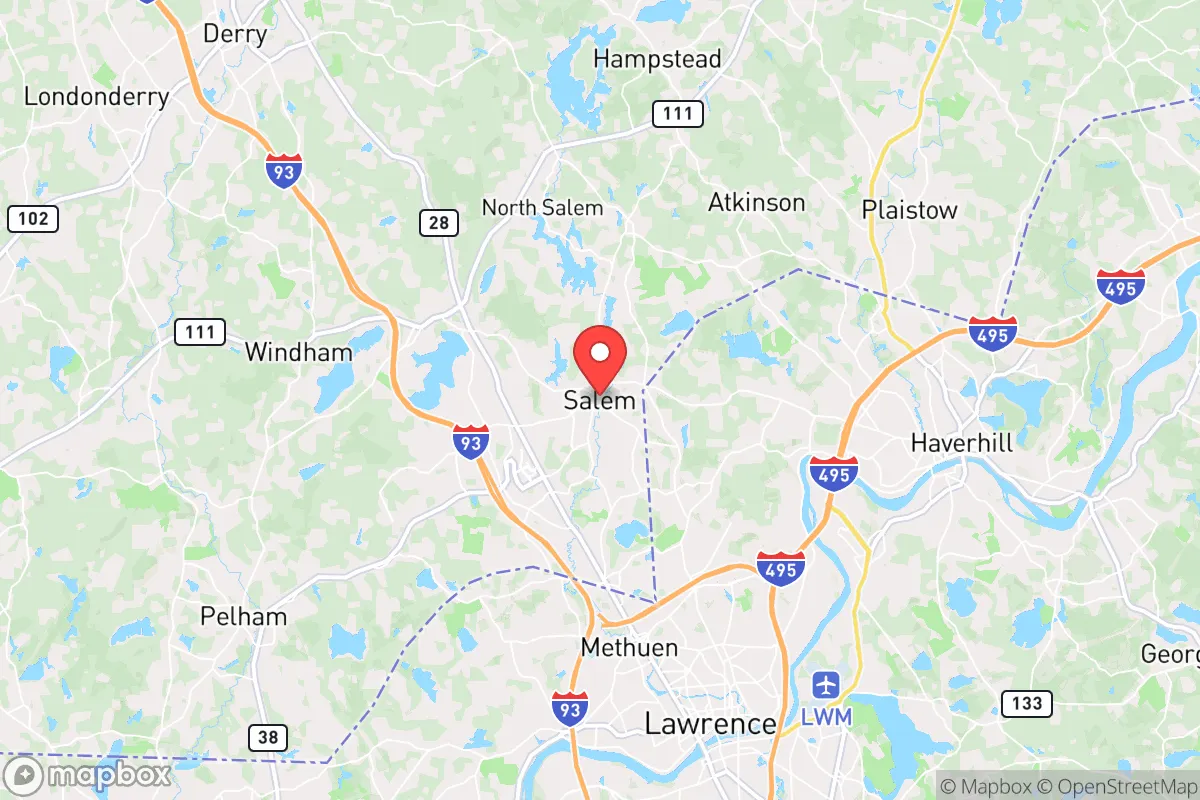
Salem’s D+2 rating puts it right in line with New Hampshire as a whole, but that masks a sharp contrast with its immediate neighbors. Drive five miles south into Methuen, Massachusetts, and you’re in a solidly blue area (D+15 or so), while heading west to Windham or north to Londonderry shifts you into more Republican-leaning territory (R+4 to R+6). Salem acts as a political buffer zone: it’s the most purple town in the southern tier, where the state’s famous “Live Free or Die” libertarian streak meets the pragmatic, tax-conscious commuter culture. The town’s large retail and commercial base—think the Mall at Rockingham Park and the cluster of auto dealers along Route 28—also means local politics often revolve around development and property taxes rather than the culture-war issues that dominate state-level debates. In the 2024 primary, Salem voters split their tickets more than any surrounding town, backing both moderate Republicans and mainstream Democrats for local offices.
What this means for residents
For conservative residents, Salem is a comfortable place to live without feeling politically isolated. You’ll find a robust local GOP committee, a strong Second Amendment presence, and plenty of neighbors who share your views on taxes and school choice. The downside? You’re in a swing town, so you can’t take local elections for granted—every seat is genuinely contested. For liberal residents, Salem offers a blue-leaning baseline in presidential years, but you’ll need to engage in local politics to keep the balance. The school board and planning board are where the real action is, and both sides show up. The practical effect is that Salem avoids the extreme policy swings seen in deep-blue Massachusetts towns or deep-red rural New Hampshire ones. Zoning debates, for instance, tend to be pragmatic compromises rather than ideological battles.
Culturally, Salem’s political climate reflects its identity as a border town with one foot in Massachusetts’ orbit and one in New Hampshire’s independence. You’ll hear more talk about commuter rail expansion and the cost of living than about national political figures. The town’s large Catholic and growing Hispanic populations add layers to the political mix, making it less predictable than the stereotypical New England suburb. Looking ahead, the trajectory is toward a slight but steady blue shift as younger, more diverse families move in from the south, but Salem’s independent streak—and its reliance on retail and hospitality jobs—will keep it from ever becoming a lock for either party. It’s the kind of place where your neighbor might be a libertarian small-business owner and the next house over a public-school teacher, and both feel they have a real say in how things run.

State Political ClimatePolitical Climate in New Hampshire
State Political AnalysisPolitical Environment in the State
New Hampshire is often described as a swing state that leans slightly Democratic at the presidential level, with a Cook PVI of D+2, but that label barely scratches the surface of its fiercely independent political culture. Over the past 20 years, the state has shifted from a reliably Republican stronghold in federal elections to a purple battleground, driven largely by the explosive growth of the southeastern corner—the Nashua-Manchester corridor and the Seacoast region around Portsmouth. Yet the state legislature and governor’s office have remained competitive or Republican-controlled for much of that period, creating a unique tension where the state’s libertarian streak, fiscal conservatism, and socially moderate-to-liberal urban centers all pull in different directions. For a conservative-leaning relocator, the key takeaway is that New Hampshire offers low taxes and a hands-off government philosophy, but the political landscape is a patchwork where your experience will vary dramatically depending on whether you settle in a small town like Meredith or a commuter suburb like Nashua.
Urban vs. rural divide
The political map of New Hampshire is a classic tale of two regions. The southeastern crescent—including Manchester, Nashua, Portsmouth, and the bedroom communities along the Massachusetts border—votes reliably Democratic, fueled by out-of-state transplants, younger professionals, and a growing service economy. In 2024, Hillsborough County (home to Manchester and Nashua) went for Biden by about 8 points, while Rockingham County (the Seacoast) was a toss-up. Drive north or west, and the picture flips hard. The North Country—places like Berlin, Lancaster, and Colebrook—votes Republican by margins of 30-40 points, driven by a rural, older, and more native-born population that values gun rights, low taxes, and local control. The Lakes Region around Meredith and Wolfeboro is a mixed bag, with seasonal residents and retirees often leaning conservative, while the Dartmouth-Lake Sunapee area around Hanover and Lebanon is a Democratic island thanks to the college and medical center. What this means on the ground: a conservative family moving to Salem (Rockingham County) will find a reliably red town with good schools and low crime, while a liberal professional in Portsmouth will feel right at home with its walkable downtown and progressive city council. The divide isn’t just about party—it’s about lifestyle, with rural towns fiercely resisting the zoning and tax policies that dominate the urban southeast.
Policy environment
New Hampshire’s policy environment is defined by its famous “Live Free or Die” ethos, which translates into concrete, conservative-friendly outcomes. The state has no broad-based income tax and no sales tax, relying instead on property taxes and business taxes—a structure that appeals strongly to fiscal conservatives. The regulatory posture is light: there’s no state-mandated building code in most towns, no helmet law for adults on motorcycles, and no seatbelt enforcement for those over 18. Education policy is a mixed bag: the state funds public schools through local property taxes, leading to wide disparities between wealthy suburbs like Bedford and poorer rural districts. School choice is limited compared to some states, but charter schools and homeschooling are legal and growing. Healthcare leans moderate: the state expanded Medicaid under the Affordable Care Act, but also has a robust private insurance market. Election laws are among the most open in the country—same-day voter registration, no excuse needed for absentee ballots, and a famously accessible primary system that lets undeclared voters choose either party’s ballot. For a conservative, the tax and regulatory environment is a major draw; for a liberal, the lack of a state income tax and minimal social safety net can feel austere.
Recent policy direction
Over the past five years, New Hampshire has moved in a distinctly libertarian-conservative direction on several fronts, even as the state legislature has seesawed between parties. In 2021, the Republican-controlled legislature passed a constitutional carry law (permitless concealed carry), which Governor Chris Sununu signed, making New Hampshire one of the most gun-friendly states in the Northeast. Parental rights in education have been a flashpoint: in 2022, the state passed a “Parents’ Bill of Rights” requiring schools to notify parents about curriculum changes and medical services, and in 2024, a law was enacted banning transgender girls from participating in girls’ sports (SB 375). On the tax front, the state has been cutting: the business profits tax was reduced from 7.7% to 7.5% in 2023, and the interest and dividends tax is being phased out entirely by 2027. On privacy and surveillance, New Hampshire has a relatively strong record—no statewide facial recognition database, and a 2023 law restricts the use of automated license plate readers by police. Medical and bodily autonomy is a split screen: abortion remains legal up to 24 weeks (codified in 2021), but the state also passed a 2024 law requiring parental notification for minors seeking abortions. Property rights are strong, with no statewide zoning and a “right-to-farm” law that protects agricultural uses. Voting access remains wide open, with no voter ID requirement at the polls—a point of contention for conservatives who worry about fraud, though no major scandals have emerged. For a relocator, the bottom line is that New Hampshire is trending more conservative on guns, education, and taxes, while maintaining a moderate-to-liberal stance on abortion and voting access.
Civil unrest & political movements
New Hampshire is not a hotbed of civil unrest, but it has a long tradition of organized political activism that punches above its weight. The Free State Project, a movement that encourages libertarians to move to the state, has been active since the early 2000s and now claims about 6,000 signatories, with a visible presence in towns like Keene and Manchester. They’ve successfully pushed for constitutional carry, marijuana decriminalization (though full legalization has stalled), and resistance to federal overreach. On the left, the Granite State Progress coalition and local Indivisible chapters have mobilized around abortion rights, climate action, and opposition to the school choice movement. Immigration politics are relatively muted compared to border states, but there have been flashpoints: in 2019, Manchester considered a “sanctuary city” ordinance, which was defeated after intense debate. Election integrity has been a recurring theme since 2020, with Republican legislators pushing for voter ID laws (so far unsuccessful) and a 2022 audit of the 2020 election that found no evidence of widespread fraud. Protests have been small and localized—a 2020 Black Lives Matter march in Portsmouth drew a few hundred people, and a 2023 rally against the transgender sports ban brought out about 200 counter-protesters at the State House. What a new resident would notice is not chaos, but a constant low-grade political energy—yard signs, town hall meetings, and a state legislature that is the fourth-largest in the country (400 members), meaning almost everyone knows someone who serves.
Projection
Looking ahead 5-10 years, New Hampshire’s political trajectory points toward continued polarization, with the southeastern suburbs growing bluer and the rural north and west staying red. In-migration is the wild card: the state has seen steady population growth from Massachusetts and other high-tax states, and these newcomers tend to be younger, more educated, and more Democratic—but they also bring wealth that fuels the tax base. The Free State Project’s influence may plateau as its early wave of activists ages, but its policy wins (constitutional carry, tax cuts) are likely to stick. The state’s aging population (median age 43, among the highest in the nation) could shift priorities toward healthcare and property tax relief, which both parties support. On the national level, New Hampshire’s swing-state status will keep it a target for both parties, meaning the presidential race will remain close. For a conservative moving in now, the realistic expectation is that the state will stay purple but with a slight rightward tilt on cultural issues (guns, education, taxes) and a leftward tilt on social services and environmental policy. The state’s famous independence means that neither party will have a permanent lock on power, and local control will remain strong—so your experience will depend more on your town than on the state as a whole.
For a new resident, the practical takeaway is that New Hampshire offers a rare combination of low taxes, strong gun rights, and a live-and-let-live attitude that appeals to conservatives, but you’ll need to be comfortable with a state that also protects abortion access, has no voter ID laws, and lets its urban centers run progressive. The key is picking your town wisely: if you want a red enclave with good schools and a conservative community, look at Bedford, Londonderry, or Windham in the southeast, or the Lakes Region towns like Meredith. If you want a more moderate or liberal environment, Portsmouth or Hanover will suit you. Either way, you’ll be living in a state where your vote actually matters, your taxes are low, and your neighbors will respect your right to live as you see fit—as long as you extend the same courtesy to them.
* Values derived from national, state, county, city and local statistics and may differ in a specific area. Last updated: 2026-10-10T16:28:50.000Z
Narrative content on this page is AI-generated and may contain mistakes. Verify any details that matter before acting on them.
ReloMaps may earn a commission from affiliate links at no extra cost to you.

