Photo: Wikipedia
Personal Sovereignty in Salem, NH
Viable for self-reliance. Generally workable, though some barriers may limit total independence.
What does Personal Sovereignty tell us?
Personal Sovereignty measures your capacity for self-reliance and independence with minimal government friction. Higher scores mean fewer barriers between you and the way you want to live... but it assumes you have the space you need and good neighbors.
What does this tell us?
Personal Sovereignty measures your capacity for self-reliance and independence with minimal government friction. Higher scores mean fewer barriers between you and the way you want to live... but it assumes you have the space you need and good neighbors.
State Policy
Energy independence: Importer (10% of energy produced in-state)
Personal Liberty
Homesteading

Personal Liberty Analysis
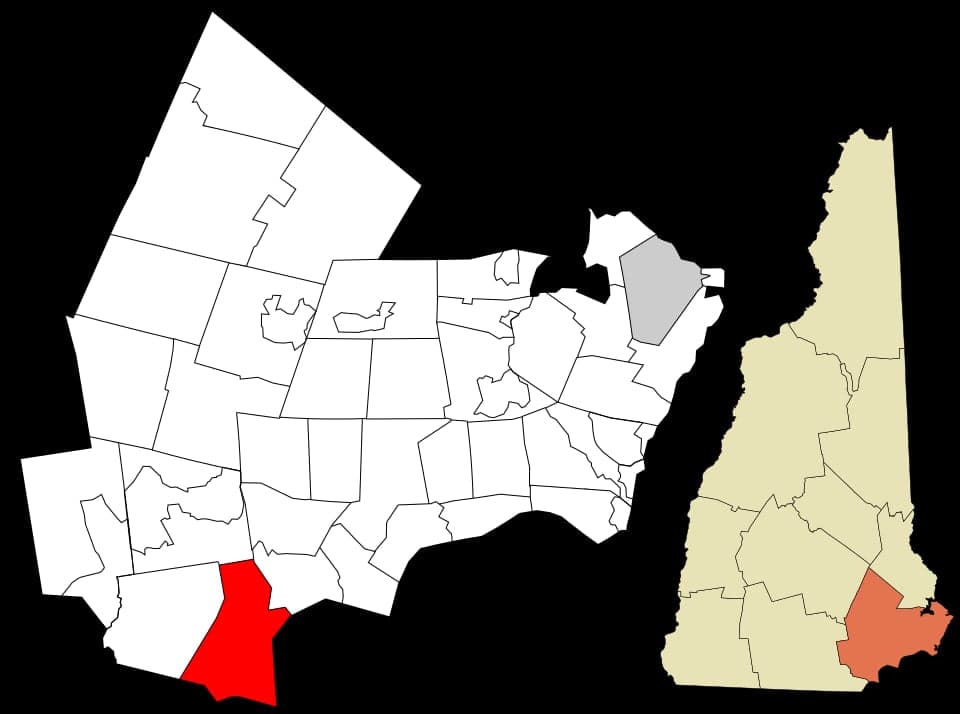
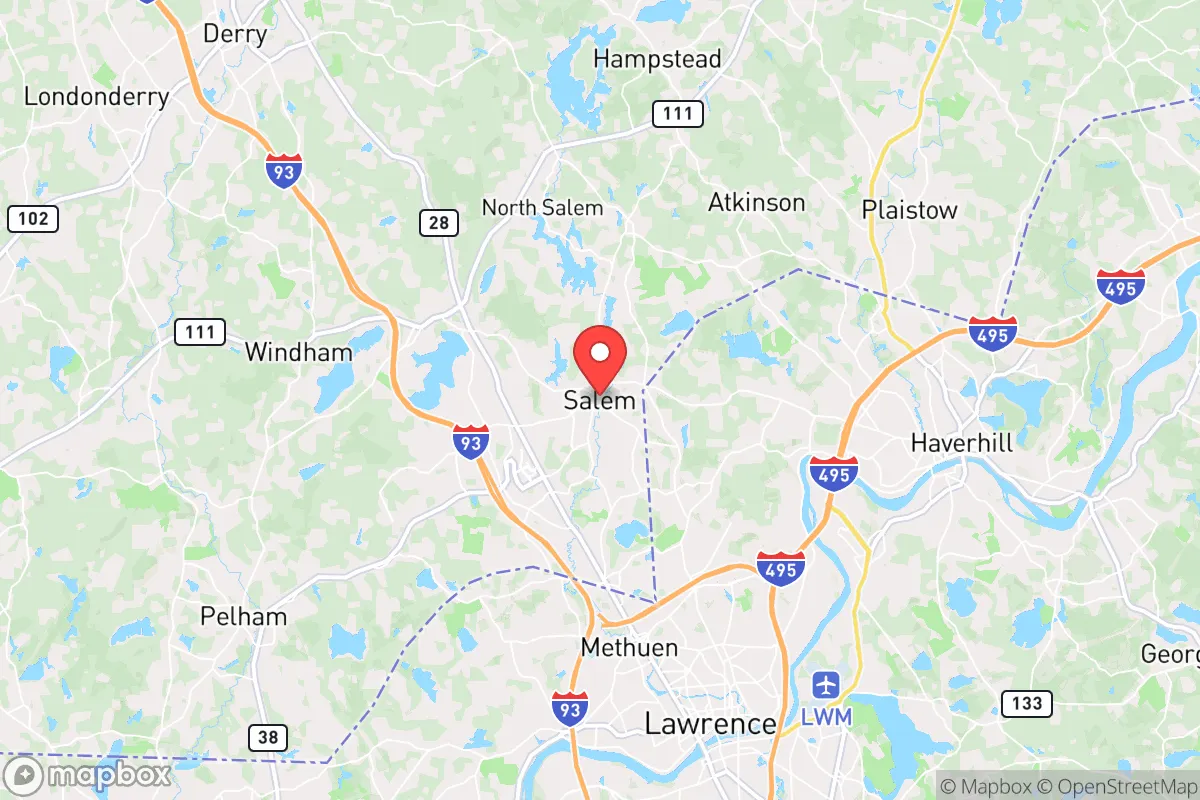
Salem, New Hampshire, offers one of the strongest personal sovereignty environments in the northeastern United States, anchored by a state with no general income tax, no sales tax, and a broad statutory commitment to individual rights. For a relocation researcher focused on autonomy, the town sits at a strategic crossroads: it is a 7.2-square-mile border community with Massachusetts, yet its legal and fiscal framework is fundamentally different from the high-tax, high-regulation environment just across the Merrimack River. The practical result is a place where a single individual or family can keep more of what they earn, exercise meaningful control over their property, and operate under a state government that consistently ranks among the most liberty-oriented in the region.
How the tax burden and regulatory climate compare to neighboring states
New Hampshire’s tax structure is the single most consequential factor for personal sovereignty in Salem. The state levies no general sales tax and no personal income tax, which means a household earning $100,000 in Salem keeps roughly $5,000 to $8,000 more annually than the same household earning that income in Massachusetts, where the flat income tax rate is 5% and local sales taxes add another 6.25% to most purchases. Salem’s local property tax rate is moderate for the state — the town’s 2024 equalized rate sits around $20.50 per $1,000 of assessed value — but the absence of income and sales taxes means the effective overall burden is far lighter than in most of New England. The state also caps property tax increases at 2.4% annually under SB 2, a law that gives voters direct control over municipal budgets through ballot voting on default budgets, a mechanism Salem residents use regularly to restrain spending.
Regulatory posture in Salem is business-friendly relative to the region. The town has a robust commercial corridor along Route 28 and Interstate 93, and the planning board operates under a "presumption of approval" for most site plans that meet zoning requirements. New Hampshire is a right-to-work state, has no state-level minimum wage (it defaults to the federal $7.25), and does not mandate paid family leave, giving employers and employees more contractual freedom than in neighboring states. For a self-employed individual or small business owner, the absence of a state income tax on business profits (LLCs and S-corps are taxed only at the federal level) is a significant autonomy advantage. The state’s regulatory environment is consistently ranked in the top ten nationally by the Mercatus Center and the Cato Institute for fiscal and regulatory freedom.
Self-defense rights and gun law specifics in Salem
New Hampshire is a constitutional carry state, and Salem residents enjoy some of the most expansive self-defense rights in the country. No permit is required to carry a concealed firearm for any law-abiding adult 18 or older, and the state does not require registration, licensing, or a waiting period for firearm purchases. The state’s "Shall Not Be Infringed" statute (RSA 159:26) explicitly preempts local gun ordinances, meaning Salem’s town government cannot pass its own restrictions on firearms, ammunition, or accessories — a critical protection against the kind of patchwork municipal gun laws common in Massachusetts, where Salem’s neighboring towns like Methuen and Haverhill impose their own permitting regimes.
Use of force law in New Hampshire is equally favorable to the individual. The state’s Castle Doctrine (RSA 627:9) establishes that a person has no duty to retreat in their own home or place of business, and the "stand your ground" provision extends that principle to any place where a person is lawfully present. Deadly force is justified if the individual reasonably believes it is necessary to prevent imminent death or serious bodily harm. New Hampshire also has strong firearm preemption for storage laws — there is no state mandate for gun safes or trigger locks, leaving storage decisions to individual judgment. For a family, this means the legal framework respects parental discretion in firearms education and access, a stark contrast to the strict liability storage laws in Massachusetts and Connecticut.
Self-reliance and homesteading viability: lot sizes, zoning, and off-grid feasibility
Salem is a suburban town, not a rural one, and that shapes its homesteading potential. The minimum lot size in most residential zones is one acre, with some agricultural districts requiring two acres, and the town’s zoning ordinance permits keeping chickens, bees, and small livestock on properties of at least one acre with a simple permit. Larger animals like goats or pigs require a minimum of two acres and a conditional use permit from the zoning board. The town’s agricultural commission actively supports small-scale farming, and the Rockingham County Conservation District offers technical assistance for soil health and water management. However, Salem’s average home lot is around 0.4 acres in established neighborhoods, so true self-sufficiency in food production is limited to the newer developments on the town’s northern and eastern edges.
Off-grid feasibility is constrained by state and local codes. New Hampshire allows residential solar with net metering, and Salem’s building department processes solar permits in under two weeks, but the town requires grid connection for any habitable structure — fully off-grid living is not permitted within Salem’s zoning jurisdiction. Rainwater collection is legal and unregulated for outdoor use, but potable water must come from a drilled well or municipal supply, and composting toilets require a state-approved system. The practical workaround for autonomy-minded residents is a grid-tied solar array with battery backup, which is common in the area; Eversource, the local utility, is required by state law to pay net metering credits at the retail rate. Wood heat is a viable supplement — the town allows outdoor wood boilers with a 100-foot setback from neighbors — and the state has no restrictions on home canning, butchering, or food preservation for personal use.
Personal liberties: parental rights, medical autonomy, speech, and property
New Hampshire’s legal framework gives Salem residents strong protections for parental authority and medical choice. The state’s parental rights statute (RSA 186-C:1) affirms that parents have the primary responsibility for their children’s education and welfare, and the state does not mandate any vaccines for school attendance — New Hampshire is one of only a handful of states with no vaccine requirements for public or private school, allowing philosophical and religious exemptions without a notarized form. Medical autonomy is similarly protected: the state has no mandate for health insurance coverage of specific procedures, and its "right to try" law (RSA 141-C:1) allows terminally ill patients to access experimental treatments without FDA approval. The state also has no certificate-of-need law for medical facilities, which keeps the healthcare market more competitive and gives patients more provider choices.
Property rights in Salem are reinforced by New Hampshire’s strong eminent domain protections. The state constitution (Part I, Article 12) requires that property be taken only for a public use and with just compensation, and the state’s 2006 law (RSA 498-A) prohibits the use of eminent domain for private economic development — a direct response to the Kelo decision. This means Salem’s town government cannot seize private land to hand it to a commercial developer, a protection that matters for anyone holding land for long-term appreciation or personal use. Free speech is robustly protected under the state constitution, which has its own free speech clause that courts have interpreted more expansively than the federal First Amendment in some contexts, particularly regarding expressive conduct on private property. Salem’s town meeting form of government — the town uses SB 2 official ballot voting — gives residents direct voting power on the annual budget and any zoning changes, a meaningful check on regulatory creep.
Overall, Salem’s sovereignty profile is a hybrid: it offers the fiscal and legal freedom of a low-tax, low-regulation state while sitting in a suburban setting that imposes some practical limits on full self-sufficiency. Compared to Massachusetts, Connecticut, or Rhode Island, the town is dramatically more liberty-oriented — no income tax, no sales tax, constitutional carry, no vaccine mandates, and strong property protections. Compared to rural northern New Hampshire, it is more regulated and less suited to off-grid living, but it offers superior economic opportunity and proximity to Boston’s job market. For a single individual or family that values keeping their earnings, controlling their medical and educational choices, and exercising self-defense rights without government permission, Salem represents one of the best sovereignty-to-opportunity ratios in the Northeast.

* Values derived from national, state, county, city and local statistics and may differ in a specific area. Last updated: 2026-10-10T16:28:50.000Z
Narrative content on this page is AI-generated and may contain mistakes. Verify any details that matter before acting on them.
ReloMaps may earn a commission from affiliate links at no extra cost to you.

