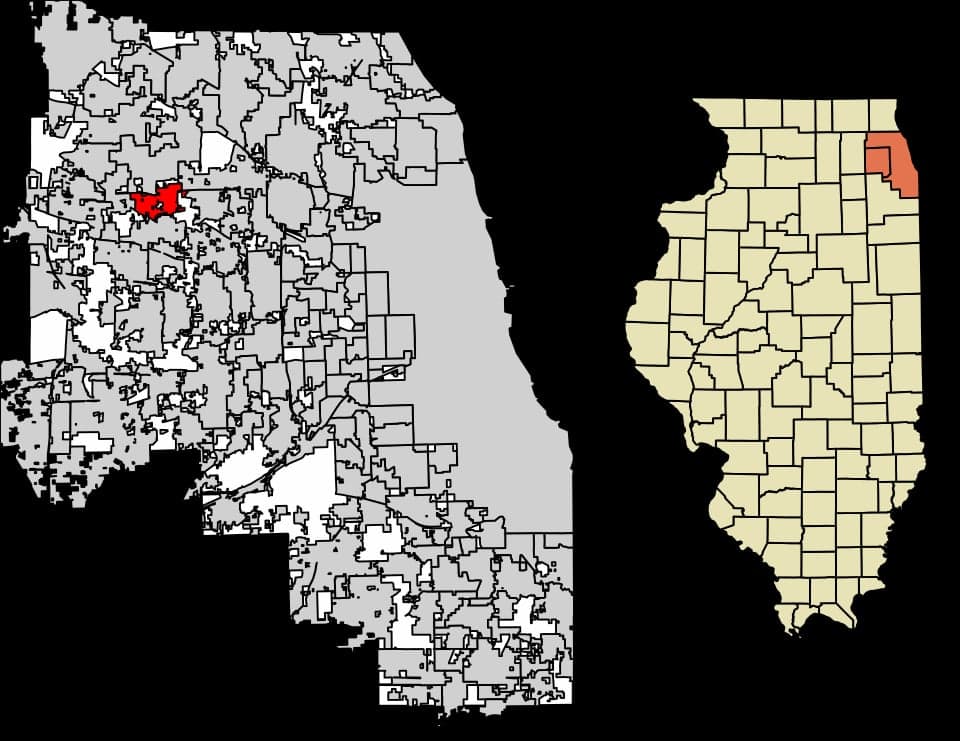
Photo: Wikipedia
Strategic Assessment of Roselle, IL
Multiple tactical vulnerabilities. Population density, target proximity, or disaster risk are likely compounding. A retreat property and exit planning is required.
What does the Strategic Assessment tell us?
Our Strategic Assessment grades tactical survivability of an area. Major population centers, military targets, fallout zones, natural disasters, and border exposure all drive risk — lower exposure means a more defensible position in a crisis.
This is heavily inspired by Joel Skousen's Strategic Relocation book. Highly recommended you checkout the book ($)What does this tell us?
Our Strategic Assessment grades tactical survivability of an area. Major population centers, military targets, fallout zones, natural disasters, and border exposure all drive risk — lower exposure means a more defensible position in a crisis.
This is heavily inspired by Joel Skousen's Strategic Relocation book. Highly recommended you checkout the book ($)Strategic Pillars
Key Distances
Regional Safe Places
Below is our recommended "safe zones" in Illinois and the surrounding area based on our strategic heuristics. For most people, it's unrealistic to live in a “safe zone” full-time due to work, family or other personal reasons. They tend to be more rural. However, many of these areas are perfect for second homes and retreat properties that double as a vacation home or even a short-term rental.
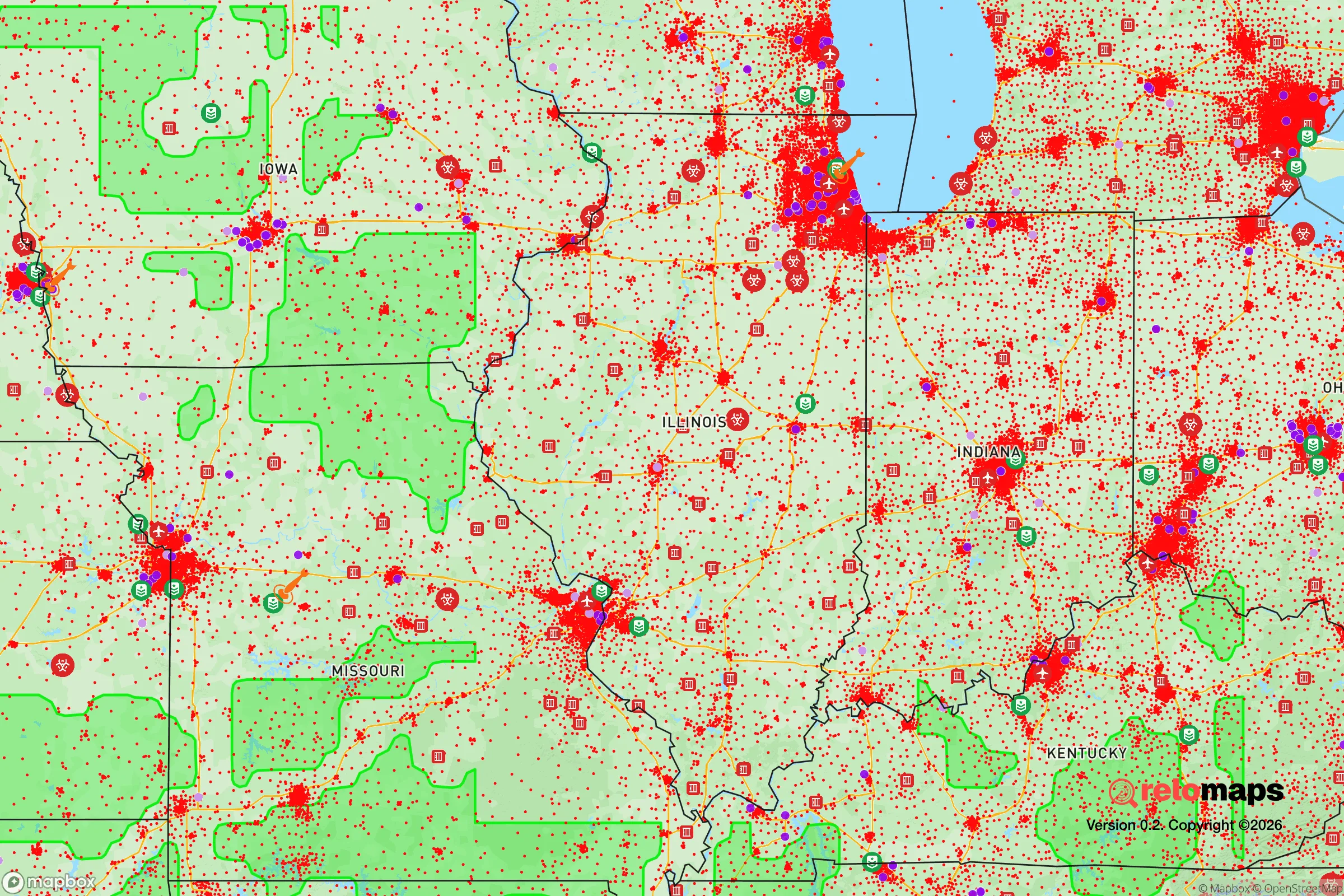
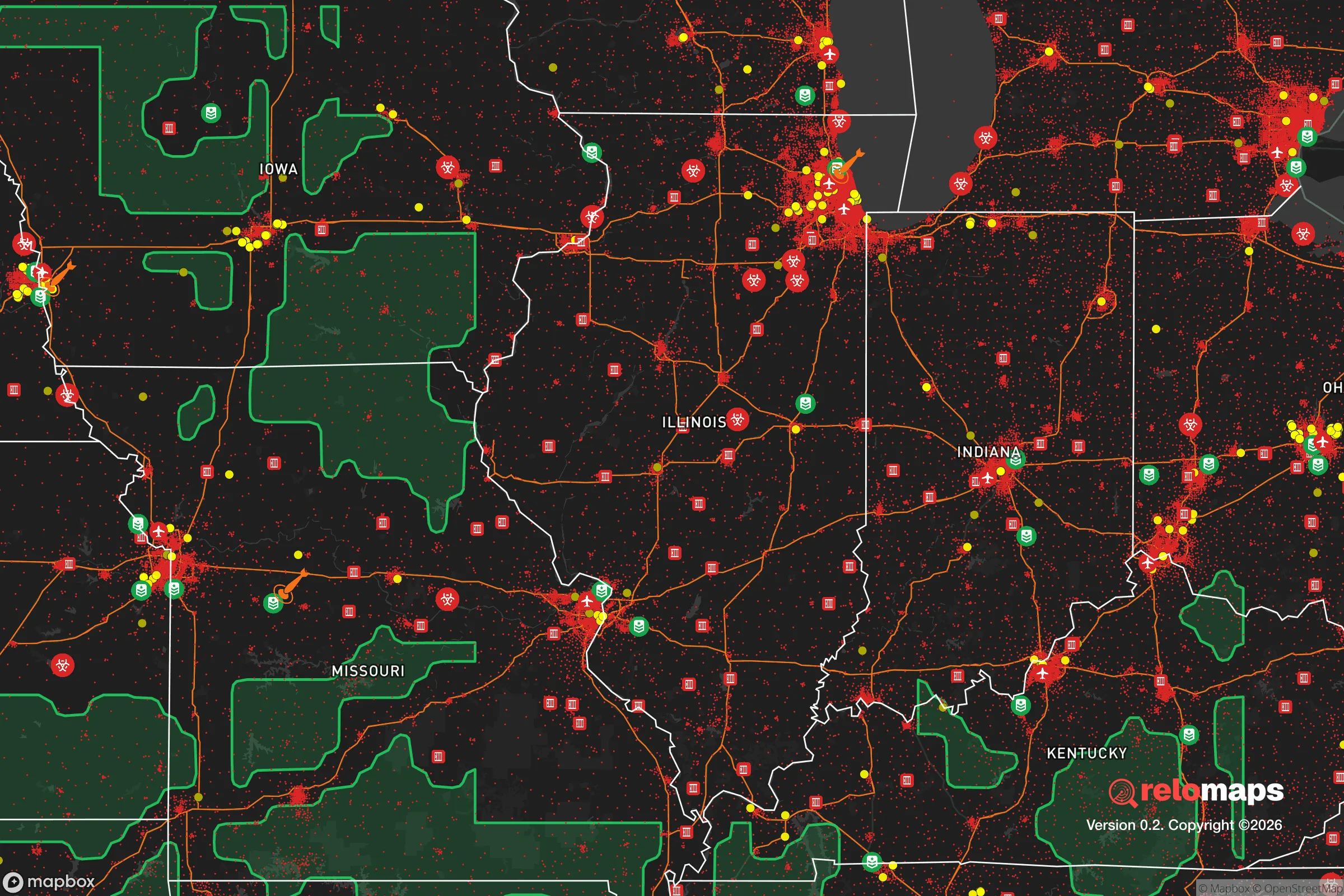


Important Note: For informational purposes only. This does not mean nothing bad ever happens in the green zones. Please use common sense. This is based on public data and modeled with AI. We tried to take a conservative approach but mistakes happen. We update this regularly as new information becomes available.
Solar Generator Recommendations
Backup power matters more here than in safer locations. We've picked three solar generators across budgets and capacity tiers — start with the budget unit if you only need a few essentials, or step up if you want to run a fridge and HVAC for days at a time.
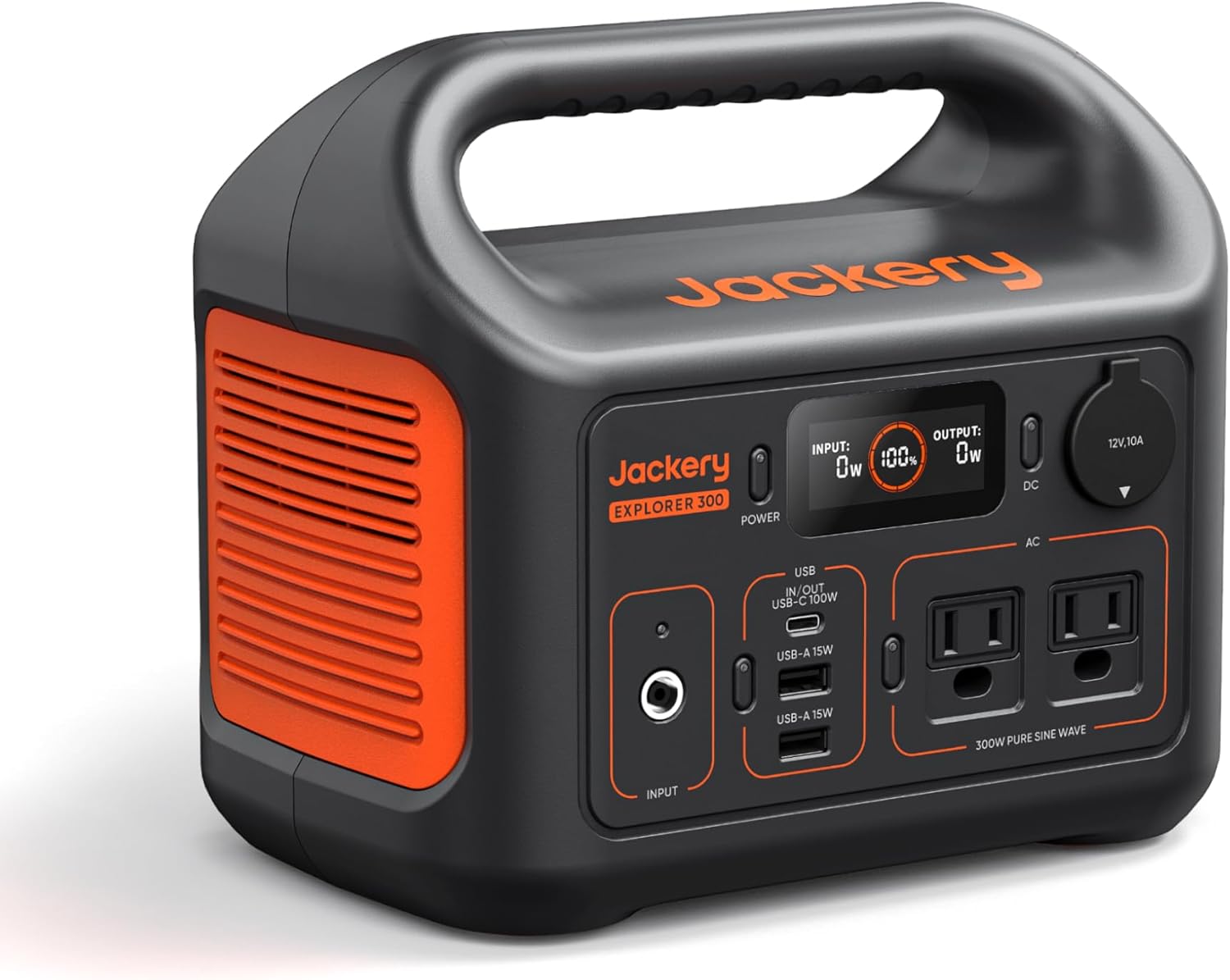
Jackery Portable Power Station Explorer 300
Budget OptionPower on the Go: Weighing only 11 lbs, it's convenient to set up and store with book-sized foldable solar panels

BLUETTI Portable Power Station AC180
Designed for both indoor and outdoor scenarios, AC180 is highly capable as it has a robost capacity and continuous output power.

EF ECOFLOW DELTA Pro Ultra Power Station
Upgraded PickEcoFlow DELTA Pro Ultra is a whole-home energy system designed to grow with your family. Integrated with the Smart Home Panel 2, it scales to meet your evolving energy needs — keeping your home powered, intelligent, and secure through every stage of life.
We earn a commission, at no additional cost to you.
Strategic Assessment Analysis
Roselle, Illinois, sits in a position that demands a mixed strategic assessment for the relocation-minded reader focused on resilience and self-sufficiency. While not a remote bunker town, its location in northeastern DuPage County offers a set of practical advantages—stable infrastructure, strong local governance, and a dense network of resources—that make it a surprisingly defensible suburban option for those who want proximity to Chicago's economic engine without living inside its risk footprint. The village's resilience is less about isolation and more about redundancy: multiple supply chains, redundant power grids, and a community that has historically weathered economic and environmental shocks without breaking stride.
Geographic position and natural advantages for long-term stability
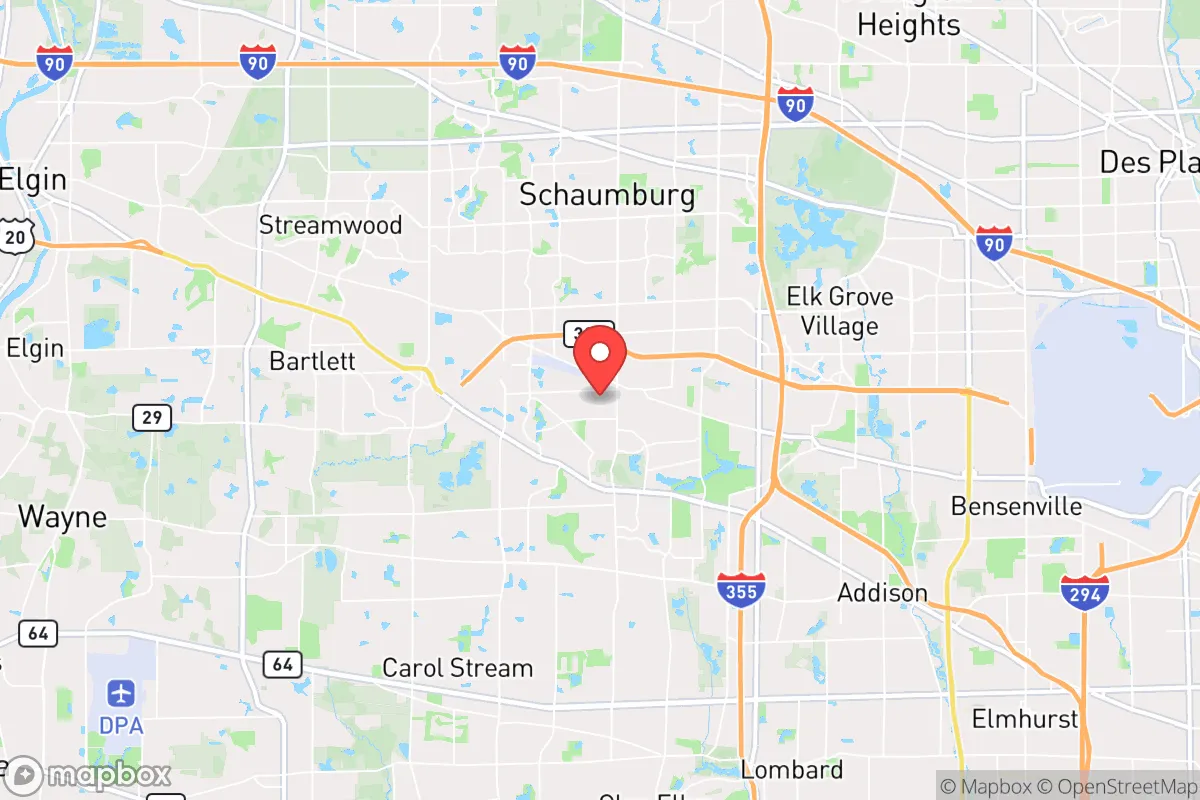
Roselle's geographic position is its strongest card. It sits on the western edge of the Chicago metropolitan area, roughly 25 miles northwest of the Loop, placing it outside the immediate blast and fallout zones of a major urban target while still within a reasonable commute for work. The area is part of the DuPage River watershed, which provides reliable surface water and groundwater access—a critical factor for long-term water security. The terrain is flat to gently rolling, with well-drained soils that support agriculture, though most of the land is developed. The village's elevation, around 700 feet above sea level, offers no floodplain exposure from the DuPage River itself, though low-lying areas near the river and its tributaries (like Spring Creek) can see minor flooding during heavy rains. The region's temperate climate, with four distinct seasons, supports year-round gardening and small-scale livestock if you have the land, though the growing season is only about 160 days. Snowfall averages 35 inches annually, which is manageable with proper preparation. The absence of major natural disaster threats—no hurricanes, no earthquakes, no wildfires—makes Roselle a low-volatility choice for a relocator who wants to avoid the catastrophic reset button that coastal or seismic zones face.
Risks, exposures, and proximity to fallout-relevant landmarks
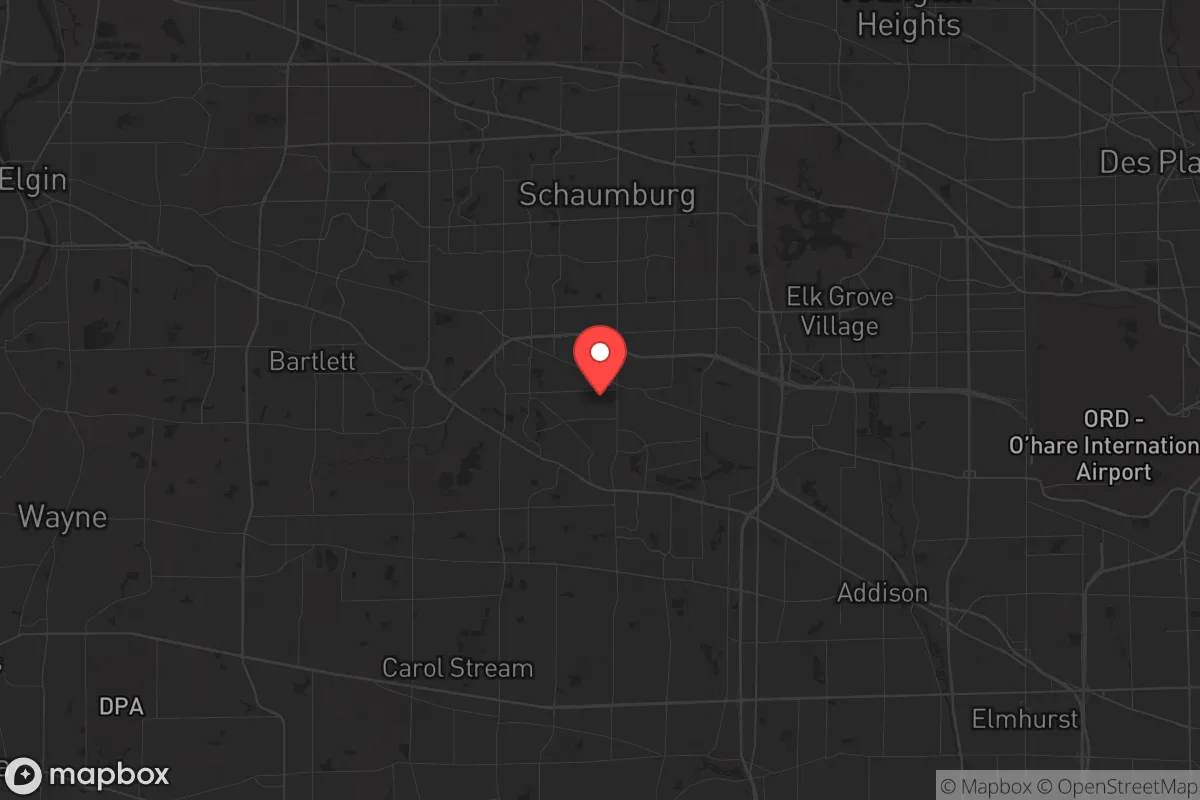
The primary risk for Roselle is its proximity to Chicago and the associated man-made threats. The village lies within the 50-mile radius of the city, meaning a nuclear detonation or major industrial accident at one of the region's chemical plants or refineries could produce fallout that reaches the area within hours, depending on wind patterns. The closest high-value target is O'Hare International Airport, roughly 12 miles east—a likely first-strike target in a conflict scenario. The Argonne National Laboratory, a major research facility with nuclear materials, is about 20 miles south in Lemont. Additionally, the region's dense rail and highway network (I-290, I-355, and the Union Pacific Northwest Line run through or near Roselle) means that a transportation accident involving hazardous materials is a non-zero risk. On the natural side, the area is seismically quiet, but the New Madrid Seismic Zone, 300 miles south, could produce ground shaking that affects older brick buildings in the village. Tornado risk is moderate—DuPage County averages one or two tornadoes per decade, typically EF0 to EF2. The village's emergency management is well-organized, with a dedicated Office of Emergency Management that coordinates with DuPage County's robust system, but the reality is that in a major regional event, resources will be stretched thin. For a relocator, the key takeaway is that Roselle is not a standalone fortress; it's a node in a larger, vulnerable network. Your personal preparedness—food, water, medical supplies, and a plan to shelter in place or evacuate west—will determine your outcome more than the village's inherent safety.
Practical resilience for a relocator: food, water, energy, and defensibility
For a relocator serious about self-sufficiency, Roselle offers a mixed bag. Water is the strongest point: the village draws from Lake Michigan via the Chicago water system, but it also has access to deep groundwater wells in the area. A backup well on your property is feasible if you're on a larger lot (many homes in the village sit on quarter-acre to half-acre parcels), and rainwater collection is legal in Illinois with proper permits. Food security is moderate: the village has a handful of community gardens and a farmers market from June to October, but the real opportunity is in the surrounding farmland. Within a 15-minute drive, you'll find u-pick farms, orchards, and small-scale livestock operations in places like Bloomingdale, Hanover Park, and unincorporated DuPage County. The local soil is fertile, and with a greenhouse, you can extend the growing season significantly. However, the village's zoning is suburban—no backyard chickens without a permit, and no livestock on standard lots. For energy, the grid is reliable but not hardened. Roselle is served by ComEd, which has a decent track record for restoration after storms, but major outages (lasting 24+ hours) happen once or twice a year, usually from ice storms or derecho winds. Solar panels are a viable option, with net metering available, and the village's building codes allow for battery storage. Natural gas is the primary heating fuel, which is a vulnerability if the pipeline network is disrupted. Defensibility is the weakest category. Roselle is a typical suburban grid of cul-de-sacs and arterial roads, with no natural chokepoints or elevated terrain to control access. The village's police department is professional and well-funded, but in a widespread crisis, they will be focused on the downtown core and major intersections. Your home's defensibility depends entirely on your own preparations: reinforced doors, window film, a perimeter fence, and a neighborhood watch network. The village's density (roughly 3,000 people per square mile) means you'll have neighbors close enough to help or hinder, depending on the scenario. For a relocator, the practical advice is to buy a home on a corner lot or at the end of a dead-end street, invest in a well and solar, and build relationships with nearby farmers before you need them.
The overall strategic picture for Roselle is one of calculated trade-offs. It is not a survivalist's paradise, but it is a stable, well-resourced suburban community that offers a realistic path to resilience for someone who is willing to put in the work. The village's greatest strength is its redundancy: multiple grocery stores within a 10-minute drive, three hospitals within 20 minutes (Alexian Brothers, Northwest Community, and St. Alexius), and a dense network of hardware stores, feed stores, and farm supply outlets that make prepping practical rather than theoretical. Its greatest weakness is its location within the Chicago metro's risk footprint, which means you cannot ignore the possibility of evacuation or shelter-in-place scenarios. For a family or individual who wants to be prepared without living off-grid, Roselle provides a solid foundation—but only if you treat it as a base of operations, not a final redoubt. The smartest move a relocator can make here is to buy a property with a well and a basement, stockpile six months of supplies, and establish a mutual-aid network with neighbors who share your mindset. Done right, Roselle can be a quiet, defensible corner of the Midwest that lets you enjoy the benefits of civilization while being ready for when civilization hiccups.

* Values derived from national, state, county, city and local statistics and may differ in a specific area. Last updated: 2026-11-27T16:00:46.000Z
Narrative content on this page is AI-generated and may contain mistakes. Verify any details that matter before acting on them.
ReloMaps may earn a commission from affiliate links at no extra cost to you.

