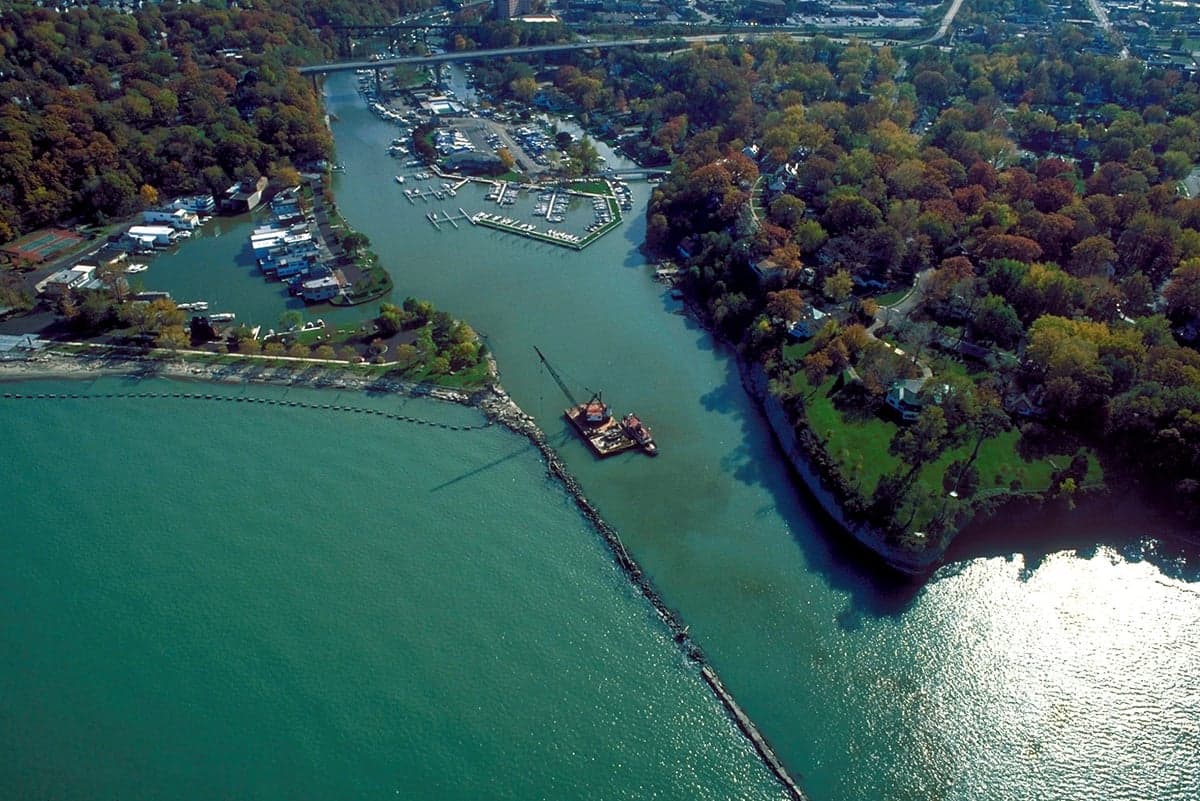
Photo: Wikipedia
Political ClimatePolitical Climate in Rocky River, OH
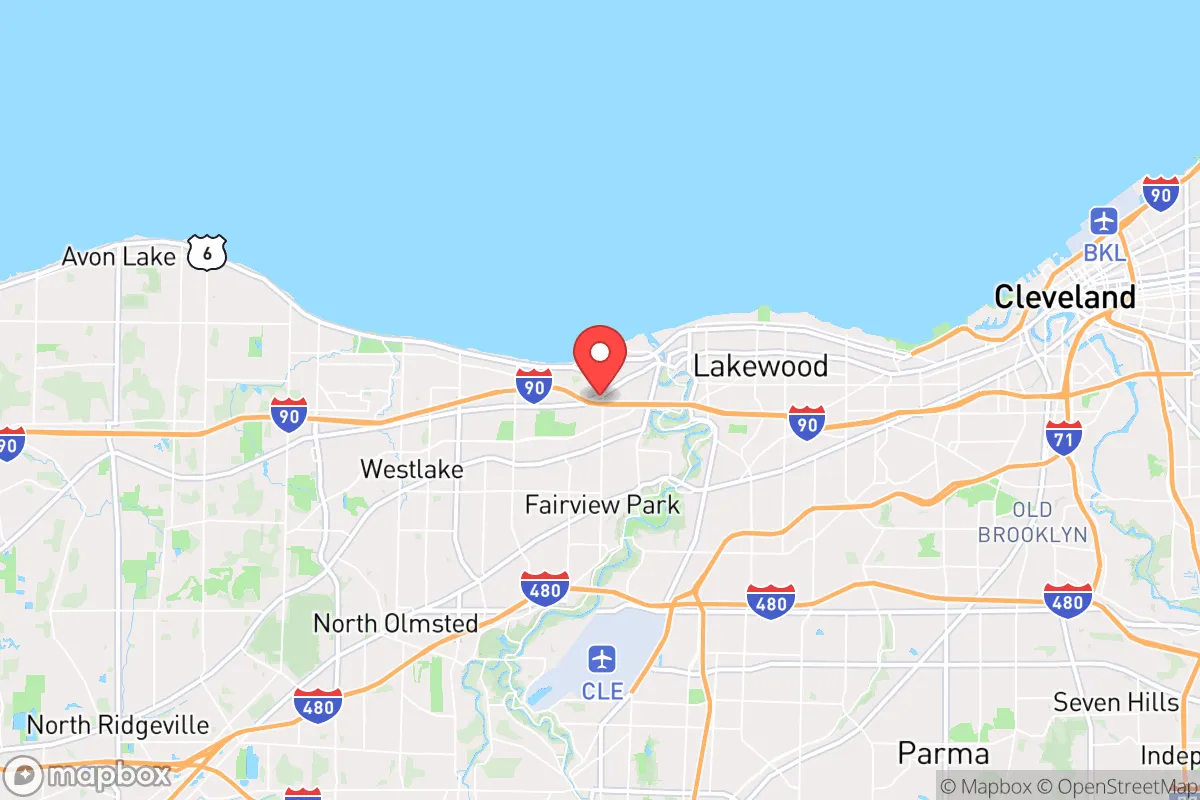
District shown is the primary district for this city’s centroid. Cities may span multiple districts.
Local Political AnalysisPolitical Analysis of Rocky River, OH
Rocky River sits in a politically competitive but reliably Republican-leaning pocket of Cuyahoga County, with a Cook PVI of R+5 that mirrors the statewide average for Ohio. That means the city is roughly five points more Republican than the nation as a whole, but it’s not a deep-red stronghold—it’s a place where elections are genuinely contested and outcomes often hinge on a few thousand suburban votes. The trajectory here is subtle: the city has drifted slightly leftward in presidential cycles since 2016, even as the surrounding county has moved the other way, creating a fascinating split between local and national voting patterns.
How it compares
Rocky River’s R+5 PVI puts it in the same ballpark as the rest of Ohio, which also sits at R+5, but that number hides a lot of local texture. The city is an island of relative moderation in a county that has become increasingly Democratic—Cuyahoga County as a whole voted for Joe Biden by roughly 30 points in 2020, while Rocky River itself went for Donald Trump by a narrow margin. Drive ten minutes south to Lakewood and you’ll find a solidly liberal suburb that votes Democratic by 20-plus points; head west to Westlake or North Olmsted and you’ll see similar R+5 to R+8 leanings that feel more like the statewide average. The real contrast is with the exurbs further out—places like Strongsville or Medina County, which lean R+15 or more and have become the engine of Republican turnout in the region. Rocky River’s political identity is best understood as a bridge between those two worlds: it’s a lakefront community with a professional, college-educated base that splits its ticket more than almost anywhere else in Northeast Ohio.
What this means for residents
For conservative residents, living in an R+5 city means your vote matters in a way it doesn’t in deep-blue Cleveland proper, but you’ll rarely feel like you’re in the majority. Local races for city council and school board are often decided by a few hundred votes, and Republicans have held the mayor’s office in recent cycles, but the margin is never comfortable. For liberal residents, the practical reality is that you’re in a purple zone—you can win local seats with the right candidate, but you’ll need to appeal to moderate independents who dominate the electorate. The city’s politics are heavily shaped by local issues rather than national ones: property taxes, lakefront erosion, school funding, and the redevelopment of the old shopping districts tend to dominate council debates. Both sides generally agree on maintaining the city’s excellent schools and parks, which keeps the temperature lower than in more polarized suburbs. The 2024 cycle saw a notable uptick in Democratic organizing in the city, but Republican turnout held steady, suggesting the R+5 lean is durable for now.
Cultural and policy distinctions
The most distinctive political feature of Rocky River is its pragmatic, issue-driven culture—residents here are less interested in national culture-war battles than in whether the new mixed-use development on Detroit Road is going to work, or how to fund the new pool at the recreation center. The city has a strong tradition of fiscal conservatism paired with social moderation: it voted for Trump twice but also passed a levy to support affordable housing initiatives in 2023, a combination that would be unthinkable in most other R+5 jurisdictions. State-level politics matter here, though—the city’s delegation in Columbus is split, with a Republican state senator and a Democratic state representative, which reflects the community’s willingness to send different parties to different chambers. Looking ahead, the demographic trend is toward slightly younger, more liberal families moving in from Cleveland’s west side, which could push the PVI toward even in the next decade, but the city’s strong attachment to its local identity and its older, established conservative base will likely keep it competitive for the foreseeable future.

State Political ClimatePolitical Climate in Ohio
State Political AnalysisPolitical Environment in the State
Ohio is a solidly Republican-leaning state with a Cook PVI of R+5, but it’s not a deep-red bastion like neighboring Kentucky or West Virginia—it’s a classic Midwest battleground that has drifted right over the past decade. The dominant coalition is a mix of rural conservatives, exurban families, and working-class voters in the Appalachian southeast and the northwest, while the big metros of Columbus, Cleveland, and Cincinnati keep the state competitive at the margins. Over the last 20 years, Ohio has gone from the ultimate presidential bellwether (it voted for the winner in every election from 1964 to 2016) to a state that now reliably lands in the Republican column by 5 to 8 points, a shift driven by cultural realignment and demographic sorting.
Urban vs. rural divide
The political map of Ohio is a tale of three distinct regions. The urban cores—Columbus, Cleveland, Cincinnati, and to a lesser extent Toledo and Akron—are Democratic strongholds, with Franklin County (Columbus) and Cuyahoga County (Cleveland) delivering margins of 30 to 40 points for Democrats in recent cycles. But the real action is in the suburbs and exurbs. Places like Delaware County, just north of Columbus, and Warren County, between Cincinnati and Dayton, have become Republican anchors, with Delaware County voting +25 to +30 Republican in 2024. The rural counties in the southeast—like Muskingum, Guernsey, and Belmont—are deeply red, often voting 70-30 or worse for Republicans, a shift that accelerated after 2012 as the old "Reagan Democrat" base in the coal and manufacturing towns fully realigned. The northwest, including counties like Wood and Lucas around Toledo, is more mixed, with Lucas County (Toledo) staying blue while surrounding rural counties are solidly red. The net effect is a state where the urban-rural divide is stark, but the suburbs are the true battleground—and they've been trending Republican for a decade.
Policy environment
Ohio's policy environment is defined by a low-tax, light-regulation posture that has gotten more conservative over the past decade. The state has a flat income tax rate of 3.5% (down from a top marginal rate of nearly 6% in 2015), no estate tax, and a sales tax of 5.75% plus local add-ons. Property taxes are moderate, though recent reappraisals in growing suburbs like Dublin and West Chester have caused sticker shock. The regulatory climate is business-friendly, with a right-to-work law passed in 2011 (though repealed by referendum in 2011, the state remains effectively anti-union in practice). Education policy is a flashpoint: Ohio has one of the largest school voucher programs in the country, with the EdChoice expansion in 2023 making vouchers available to nearly all families regardless of income. Healthcare is a mixed bag—Ohio expanded Medicaid under the Affordable Care Act in 2014, but the state has since added work requirements for able-bodied adults and has a conservative certificate-of-need regime that limits new hospital construction. Election laws are moderately restrictive: voter ID is required, early voting is limited to 28 days, and the state purges inactive voters aggressively, a practice upheld by the Supreme Court in 2018.
Recent policy direction
The last five years have seen Ohio move decisively right on a broad range of issues. On guns, Ohio became a permitless carry state in 2022 (HB 227), allowing any adult 21 or older to carry a concealed firearm without a license or training. The same year, the state passed a "stand your ground" law (SB 175), removing the duty to retreat in self-defense cases. On education and parental rights, Ohio passed the Parental Rights in Education Act in 2023, which requires schools to notify parents of any changes to a student's health or well-being and prohibits instruction on gender identity in grades K-3. On abortion, Ohio passed a six-week heartbeat ban in 2019, but voters rejected it in a 2023 referendum, enshrining abortion access in the state constitution via Issue 1. That same 2023 election saw voters legalize recreational marijuana (Issue 2) by a 57-43 margin, a sign that the state's conservative legislature is often out of step with its voters on social issues. On voting, Ohio passed a 2023 law (HB 458) that requires a photo ID for all voting, eliminates same-day registration, and restricts ballot drop boxes to one per county. On property rights, the state has been aggressive in using eminent domain for economic development, most notably in the controversial $1.5 billion Intel semiconductor plant in Licking County, which involved seizing farmland. On privacy and surveillance, Ohio has no comprehensive data privacy law, and law enforcement agencies have expanded use of automated license plate readers and drone surveillance with minimal legislative oversight.
Civil unrest & political movements
Ohio has seen its share of political flashpoints. The 2020 George Floyd protests in Columbus and Cincinnati were large but largely peaceful, though the Columbus police response drew criticism. The 2023 East Palestine train derailment, where a Norfolk Southern train carrying hazardous chemicals derailed in a small village near the Pennsylvania border, became a national political flashpoint—residents' frustration with the federal response fueled local anger at both parties, and the town has become a symbol of rural distrust of government. Immigration politics are active but less heated than in border states: Ohio has no sanctuary cities, and the state passed a 2023 law requiring local law enforcement to cooperate with federal immigration authorities. The state has seen a rise in organized conservative activism, particularly around school boards and library boards, with groups like the Ohio Value Voters and Moms for Liberty winning seats in suburban districts like West Chester and Delaware. On the left, the Ohio Democratic Party has been energized by the 2023 abortion and marijuana ballot wins, and groups like the Ohio Organizing Collaborative have built strong grassroots networks in Columbus and Cleveland. Election integrity controversies have been relatively muted compared to other states, though the 2020 election saw Republican Secretary of State Frank LaRose defend the state's voting system against claims of fraud while also pushing for stricter voter ID laws.
Projection
Over the next 5-10 years, Ohio is likely to stay Republican-leaning but with a growing urban-suburban split that could make it more competitive in certain races. The state's population is aging and slowly shrinking overall, but the Columbus metro is booming—Franklin and Delaware counties are adding tens of thousands of residents annually, driven by Intel's $20 billion investment and the growth of the fintech and logistics sectors. This in-migration is bringing a mix of young professionals and tech workers who tend to lean Democratic, which could narrow the statewide margin in the next decade. However, the rural and exurban areas are not shrinking as fast, and the state's Republican legislature has shown a willingness to gerrymander aggressively—the current congressional map, drawn in 2021, gives Republicans a 10-5 advantage in a state that voted for Trump by 8 points. The 2023 ballot initiatives suggest a growing disconnect between the legislature and the electorate on social issues, which could lead to more referendum battles and a more moderate Republican primary electorate. A new resident moving to Ohio in 2026 should expect a state that remains Republican-leaning but with a lively, contested political culture—especially in the suburbs, where school board races and local ballot measures are often more heated than statewide contests.
For a new resident, the bottom line is that Ohio offers a conservative-leaning policy environment with real, concrete differences from blue states: lower taxes, permitless carry, school choice, and a legislature that is actively conservative on education and election law. But it's not a one-party state—the 2023 votes on abortion and marijuana show that Ohioans are more libertarian than the legislature on some issues, and the Columbus and Cleveland metros are reliably blue with strong progressive institutions. If you're moving to Ohio, you'll find a state where your vote matters more than in a deep-red or deep-blue state, where the suburbs are the real battleground, and where the political culture is serious but not extreme. Expect to pay lower taxes and have more freedom on guns and school choice, but also expect to navigate a state that is still figuring out how to balance its rural and urban identities.
* Values derived from national, state, county, city and local statistics and may differ in a specific area. Last updated: 2026-10-26T00:10:52.000Z
Narrative content on this page is AI-generated and may contain mistakes. Verify any details that matter before acting on them.
ReloMaps may earn a commission from affiliate links at no extra cost to you.

