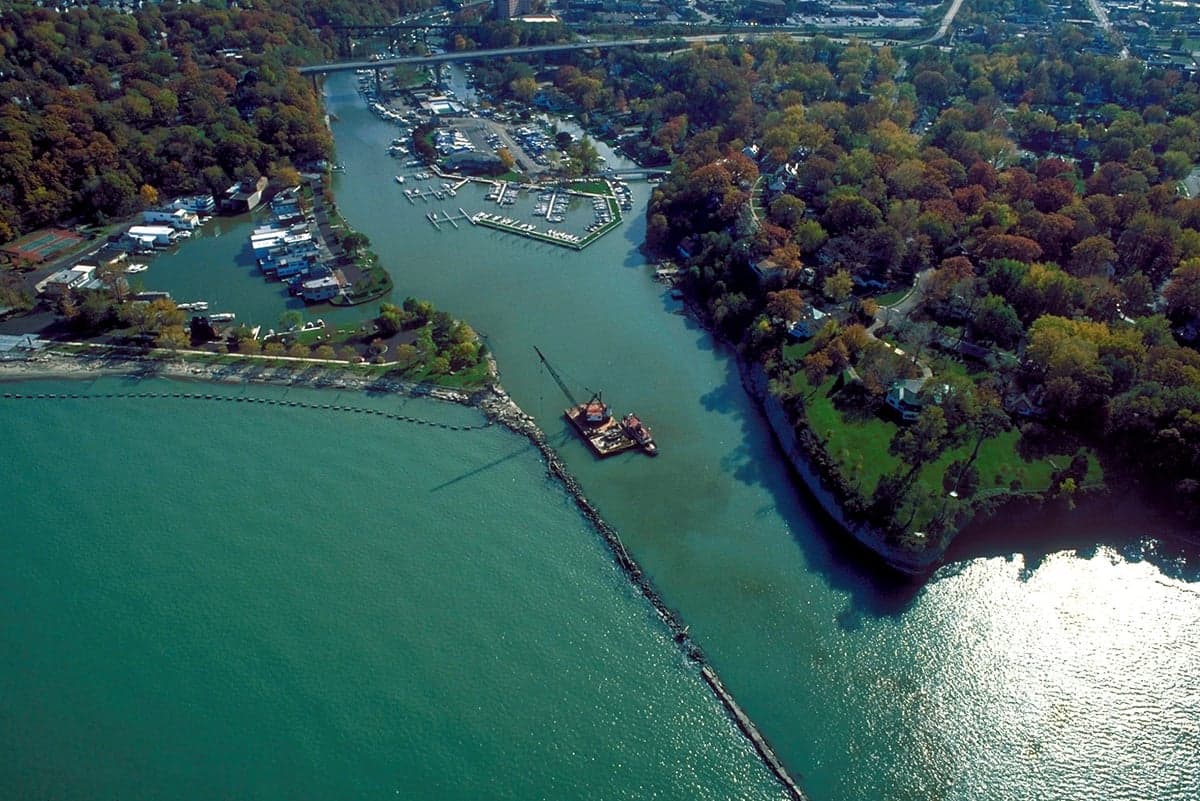
Photo: Wikipedia
Personal Sovereignty in Rocky River, OH
Viable for self-reliance. Generally workable, though some barriers may limit total independence.
What does Personal Sovereignty tell us?
Personal Sovereignty measures your capacity for self-reliance and independence with minimal government friction. Higher scores mean fewer barriers between you and the way you want to live... but it assumes you have the space you need and good neighbors.
What does this tell us?
Personal Sovereignty measures your capacity for self-reliance and independence with minimal government friction. Higher scores mean fewer barriers between you and the way you want to live... but it assumes you have the space you need and good neighbors.
State Policy
Energy independence: Importer (40% of energy produced in-state)
Personal Liberty
Homesteading

Personal Liberty Analysis
Rocky River, Ohio, offers a distinctly moderate environment for personal sovereignty — a place where state-level protections for self-defense and property rights meet a more structured, higher-tax suburban framework. For individuals and families weighing independence against the conveniences of a first-ring Cleveland suburb, the balance tilts toward a regulated but predictable autonomy, with Ohio’s constitutional carry law and low income tax ceiling providing meaningful counterweights to the city’s zoning and municipal oversight.
How tax burden and regulatory posture shape financial independence
Ohio’s tax climate is a mixed bag that leans favorably for wage earners but punishes certain forms of wealth accumulation. The state’s income tax is a progressive flat-rate system that tops out at 3.5% for the highest earners — a significant reduction from the 4.797% top rate in 2021 — which directly benefits single professionals and dual-income families. However, Rocky River adds a 2% municipal income tax on top of that, a common feature of Cleveland’s inner-ring suburbs that funds robust local services like the city’s award-winning parks and its own police and fire departments. Property taxes in Cuyahoga County are among the highest in the state, with effective rates often exceeding 2.2% of assessed home value, a factor that erodes the long-term wealth-building potential of homeownership compared to neighboring counties like Medina or Lorain.
Regulatory posture in Rocky River is decidedly hands-on. The city operates under a comprehensive zoning code that strictly separates residential, commercial, and mixed-use districts, and the architectural review board has a reputation for scrutinizing exterior modifications — a hurdle for homeowners who want to add accessory dwelling units or make unconventional structural changes. Business formation is straightforward at the state level, with Ohio’s online filing system processing LLCs in under 24 hours, but opening a home-based business in Rocky River requires a conditional use permit and compliance with parking and signage rules that can feel bureaucratic. The city’s building department enforces the Ohio Residential Code with consistency, which protects property values but leaves little room for the kind of unpermitted DIY expansion that thrives in less-regulated rural townships.
Self-defense and gun law specifics for Rocky River residents
Ohio is a constitutional carry state, meaning that as of June 2022, any law-abiding adult 21 or older can carry a concealed firearm without a permit. This is a foundational sovereignty right that applies fully within Rocky River’s city limits, and the city’s police department does not impose any additional firearm registration or storage mandates beyond state law. For those who prefer a permit, Ohio’s concealed handgun license (CHL) still offers reciprocity with roughly 30 other states, a practical advantage for residents who travel across state lines. The state’s "stand your ground" statute, codified in Ohio Revised Code 2901.05, removes any duty to retreat in a place where the person is lawfully present, and self-defense claims are evaluated under a preponderance of the evidence standard — a more defendant-friendly threshold than the beyond-a-reasonable-doubt standard used in some other states.
One notable local consideration: Rocky River is a home-rule municipality, and while it cannot preempt state firearms law, it does enforce a discharge ordinance that prohibits firing a weapon within city limits except at a licensed range. The nearest public shooting range is the Cleveland Police Range on the city’s east side, about a 25-minute drive, or the A&A Shooting Range in nearby Walton Hills. Magazine capacity and ammunition purchases are unrestricted under Ohio law, and there is no state-level waiting period for firearm purchases, though federal background checks apply at licensed dealers. For families, this means the legal framework for self-defense is robust, but the practical reality of training and practice requires travel outside the immediate area.
Self-reliance and homesteading viability in a suburban footprint
Rocky River’s lot sizes are the primary constraint on homesteading ambitions. The city’s typical residential lots range from 6,000 to 10,000 square feet, with a minimum lot width of 50 feet in most districts — enough for a substantial vegetable garden and a small chicken coop, but far from the acreage needed for livestock or serious off-grid infrastructure. The zoning code permits backyard chickens (hens only, no roosters) with a permit and a 25-foot setback from neighboring structures, and compost bins are allowed without restriction. However, the city’s stormwater management regulations require permeable surfaces for any new hardscaping, and the tree preservation ordinance restricts the removal of mature trees, which can complicate solar panel placement or rainwater catchment systems.
Off-grid living is effectively infeasible within city limits. Rocky River’s building code mandates connection to municipal water and sewer, and the city’s electrical inspector requires grid interconnection for any permanent structure. Solar panels are permitted but must be installed by a licensed contractor and tied to the grid, with net metering available through Cleveland Public Power or FirstEnergy, the two utilities serving the area. Rainwater harvesting is limited to 250 gallons of storage without a separate permit, and the city’s health department prohibits graywater reuse for irrigation. For those serious about self-reliance, the practical move is to look west to Lorain County, where townships like Eaton or Carlisle offer 1- to 5-acre parcels with fewer restrictions, or south to Medina County, where agricultural zoning allows for small-scale livestock operations within a 30-minute commute of Rocky River’s amenities.
Personal liberties: parental rights, medical autonomy, speech, and property
Ohio has enacted several laws that strengthen parental rights in education. The Parental Rights in Education Act, passed in 2023, requires schools to notify parents of any changes to a student’s health or well-being and prohibits classroom instruction on sexual orientation or gender identity in grades K-3. Rocky River City Schools, which consistently ranks among the top districts in Cuyahoga County, has implemented these policies with a relatively low-conflict approach, though the district’s curriculum transparency portal is less detailed than those in more conservative districts like Avon or Strongsville. Medical autonomy for minors is similarly constrained by state law: Ohio requires parental consent for most medical treatments for those under 18, and the 2023 gender-affirming care ban for minors, which overrode a local ordinance in Columbus, applies uniformly across the state, including Rocky River.
Free speech protections are robust under Ohio’s constitution, which provides independent and often broader protections than the federal First Amendment. Rocky River’s public forum rules allow leafleting and demonstrations in city parks with a simple permit, and the city’s social media policy for public comment is among the more permissive in the region. Property rights are protected by Ohio’s strong eminent domain restrictions, enacted after the 2005 Kelo decision, which prohibit the seizure of private property for economic development purposes. However, Rocky River’s rental registration program, which requires annual inspections for all rental units, is a point of friction for landlords and a reminder that the city’s regulatory reach extends into private property in ways that rural Ohio townships do not replicate.
Overall, Rocky River delivers a workable but tempered version of personal sovereignty. The state-level framework — constitutional carry, stand your ground, parental rights, and a flat income tax — provides a solid foundation for individual autonomy, while the city’s zoning code, property taxes, and municipal utility mandates impose a suburban ceiling on self-reliance. Compared to rural Ohio counties where a 5-acre homestead with a well and septic system is a realistic goal, Rocky River trades that frontier independence for the security of a well-funded police force, top-tier schools, and a walkable lakefront. For a family that values personal freedom but wants the infrastructure of a mature suburb, it is a defensible middle ground; for a committed homesteader or off-grid enthusiast, it is a place to visit, not to settle.

* Values derived from national, state, county, city and local statistics and may differ in a specific area. Last updated: 2026-10-26T00:10:52.000Z
Narrative content on this page is AI-generated and may contain mistakes. Verify any details that matter before acting on them.
ReloMaps may earn a commission from affiliate links at no extra cost to you.

