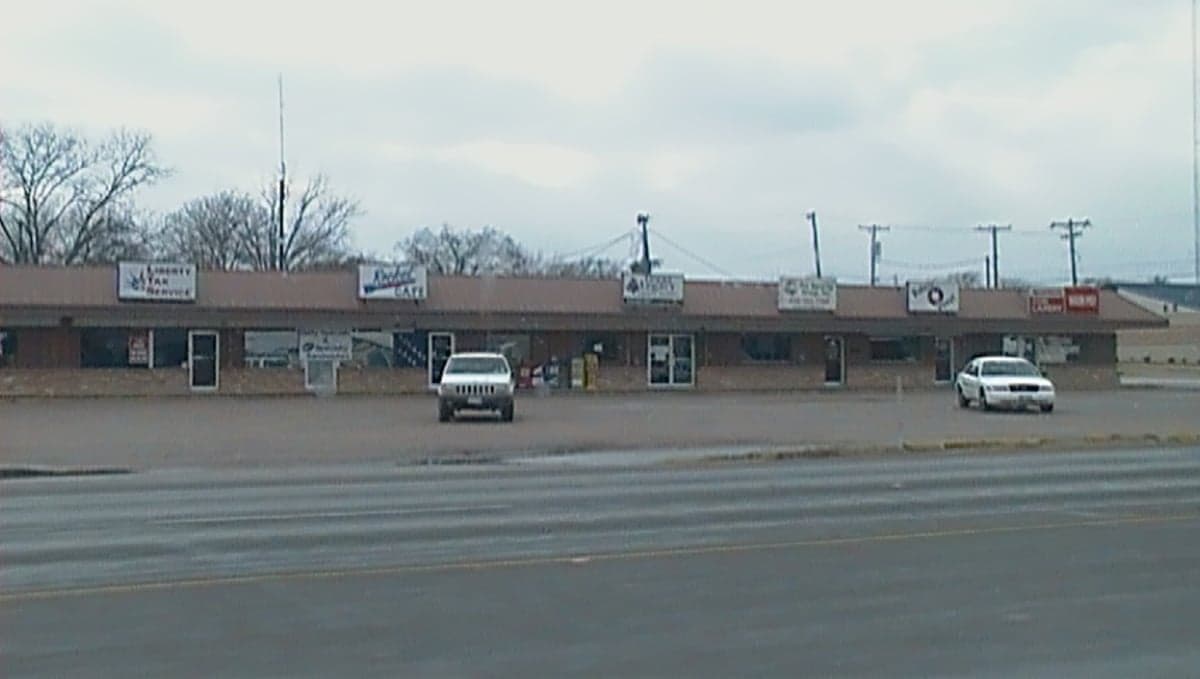
Photo: Wikipedia
Political ClimatePolitical Climate in Robinson, TX
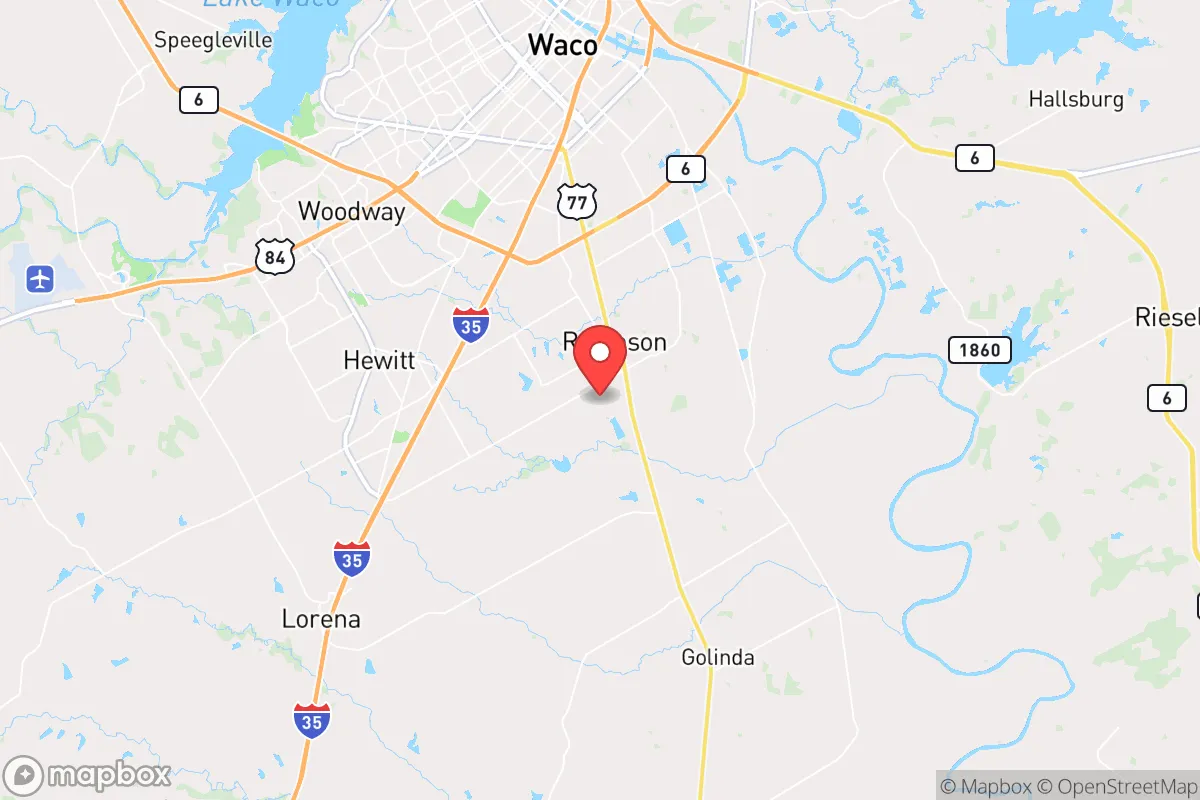
District shown is the primary district for this city’s centroid. Cities may span multiple districts.
Local Political AnalysisPolitical Analysis of Robinson, TX
Robinson, Texas, is a solidly conservative community that has only deepened its Republican allegiance over the past decade. The city’s Cook Partisan Voting Index (PVI) of R+14 means it votes about 14 points more Republican than the national average, placing it well to the right of the state of Texas as a whole. While Texas itself is a Republican-leaning state, its urban centers like Austin and Dallas have been trending bluer, creating a stark contrast with smaller, more rural towns like Robinson. In the 2024 presidential election, McLennan County, which contains Robinson, voted for Donald Trump by a margin of roughly 65% to 34%, a spread that mirrors the city’s deeply conservative character. This isn’t a recent shift—Robinson has been reliably red for generations, but the intensity of that lean has increased as national politics have polarized.
How it compares
Compared to the state of Texas, Robinson is noticeably more conservative. Texas as a whole has a Cook PVI of R+5, meaning Robinson is nearly three times as Republican-leaning. The difference becomes even more pronounced when you look at nearby cities. Just 10 miles north, Waco—home to Baylor University and a growing population of young professionals—has a more moderate political climate, with pockets of Democratic strength in its urban core. Drive 30 miles east to West, Texas, and you’ll find a similar conservative bent, but it’s less intense than Robinson’s. The real contrast comes when you head south to Austin, about 100 miles away, which is a deep blue stronghold with a Cook PVI of D+23. For a Robinson resident, that political gulf feels like a different world. In practice, this means Robinson’s local elections are often decided in the Republican primary, and Democratic candidates rarely field serious campaigns for city council or school board seats.
What this means for residents
For conservative residents, Robinson’s political climate is a comfortable fit. Local policies tend to emphasize low taxes, limited regulation, and a strong law-and-order approach. The city’s property tax rate is competitive with surrounding areas, and there’s little appetite for new social programs or zoning changes that might be seen as “big government.” For liberal residents, life in Robinson can feel isolating. You’re unlikely to find many like-minded neighbors, and local political discourse often assumes a conservative baseline. That said, the community is generally polite and neighborly—political disagreements rarely turn hostile in day-to-day interactions. The real friction shows up in school board meetings or city council hearings, where progressive voices are a distinct minority. Over the long term, I see Robinson staying the course. The city’s population is stable and aging slightly, with few new arrivals from blue states to shift the balance. Unless Waco’s growth spills over significantly—which seems unlikely given the distance—Robinson will remain a reliably red enclave.
One cultural distinction worth noting: Robinson’s politics are deeply tied to its identity as a family-oriented, faith-driven community. Church attendance is high, and local leaders often invoke Christian values in public statements. This isn’t unique to Robinson—it’s common across Central Texas—but it does mean that policy debates around issues like school curriculum or public events often carry a religious undertone. For newcomers, especially those from more secular or diverse areas, this can be a noticeable shift. But for longtime residents, it’s just part of the fabric of the place. If you’re looking for a politically quiet, predictable community where your vote aligns with the majority, Robinson delivers. If you’re hoping for a lively mix of viewpoints, you’ll find that more easily in Waco or, further afield, in Austin.

State Political ClimatePolitical Climate in Texas
State Political AnalysisPolitical Environment in the State
Texas has been a reliably Republican state for the past three decades, but the margin has been shrinking. In 2024, Donald Trump won the state by roughly 9 points, down from 11 points in 2020 and 16 points in 2016. The dominant coalition remains a mix of rural conservatives, suburban moderates, and evangelical voters, but explosive growth in the metroplexes of Dallas-Fort Worth, Houston, and San Antonio is slowly shifting the map. The long-term trajectory is a slow purple-ward drift, though the state’s legislative and policy machinery remains firmly under GOP control.
Urban vs. rural divide
The political map of Texas is a stark checkerboard. The big blue dots are Austin (Travis County, +50 D in 2024), El Paso (El Paso County, +35 D), and Houston (Harris County, +15 D). These cities are growing fast, driven by tech, healthcare, and immigration, and they anchor the Democratic vote. In contrast, the vast rural expanse—places like Lubbock (Lubbock County, +30 R), Amarillo (Potter County, +25 R), and the oil patch around Midland (Midland County, +45 R)—votes overwhelmingly Republican. The real battleground is the suburbs. Collin County (north of Dallas) was +20 R in 2016 but slipped to +12 R in 2024, while Fort Bend County (southwest of Houston) flipped from +6 R in 2016 to +8 D in 2024. These suburban shifts are driven by college-educated professionals and growing Asian and Hispanic populations who lean moderate to left on social issues but remain fiscally conservative.
Policy environment
Texas has no state income tax, which is the single biggest policy draw for relocators. The trade-off is high property taxes—averaging about 1.7% of home value, among the highest in the nation—and a heavy reliance on sales tax (8.25% combined rate in most areas). The regulatory posture is famously business-friendly: no state-level minimum wage above the federal $7.25, weak unions, and fast permitting for energy and construction. Education policy is a flashpoint: the state funds schools through a Robin Hood system that redistributes property tax revenue from wealthy districts to poor ones, but per-pupil spending remains below the national average. School choice is a live issue—the 2023 legislature passed a voucher-like program for special education students, and a universal ESA bill is expected in 2025. Healthcare is largely unregulated; Texas has the highest uninsured rate in the country (18% vs. 8% national average), and Medicaid expansion has been repeatedly rejected. Election laws tightened after 2020: SB 1 (2021) banned 24-hour and drive-through voting, added ID requirements for mail ballots, and gave partisan poll watchers more access.
Recent policy direction
The 2023 and 2025 legislative sessions have pushed Texas sharply right on several fronts. Gun and self-defense law: permitless carry (HB 1927, 2021) allows anyone 21+ to carry a handgun without a license, and the 2023 session expanded campus carry to all public universities. Parental and education rights: HB 900 (2023) requires book vendors to rate materials for "sexual content," effectively banning many titles from school libraries, and the 2023 "Save Women's Sports" bill (SB 15) bans transgender athletes from K-12 female sports. Speech: HB 20 (2023) prohibits social media platforms from "censoring" users based on viewpoint, though it's tied up in court. Medical and bodily autonomy: Texas has a near-total abortion ban (SB 8, 2021, and trigger law) with no exceptions for rape or incest, and the 2023 session banned gender-affirming care for minors (SB 14). Property rights: the state has strong eminent domain protections for landowners, but no statewide rent control (preempted by law). Taxation: the 2023 session passed a $18 billion property tax cut, mostly via a higher homestead exemption and a compression of school tax rates. Voting/ballot access: SB 1 remains in effect, and a 2025 bill to require citizenship proof for voter registration is likely to pass.
Civil unrest & political movements
Texas has seen significant protest activity on both sides. The 2020 George Floyd protests in Austin and Houston were large and occasionally violent, leading to a state law (HB 347, 2021) that increased penalties for rioting and protected drivers who hit protesters blocking roads. The abortion ban sparked regular protests at the state capitol and outside Planned Parenthood clinics, but enforcement has been quiet since the Dobbs decision. Immigration politics are a constant flashpoint: Governor Abbott's Operation Lone Star (2021-present) deployed state troopers and National Guard to the border, bused migrants to New York and Chicago, and installed razor wire along the Rio Grande. This has drawn lawsuits from the Biden administration and created a visible state-federal standoff. Secession rhetoric—"Texit"—surfaced in the 2022 GOP platform but has no serious legislative traction; a 2023 poll showed only 14% of Texans support it. Election integrity controversies persist: the 2020 audit of four counties (including Harris and Dallas) found no evidence of widespread fraud, but the issue remains a rallying cry for the GOP base.
Projection
Over the next 5-10 years, Texas will continue to shift purple, but slowly. The in-migration from California and the Northeast is largely Republican-leaning (many are fleeing high taxes and regulation), but the native-born Hispanic population—which leans Democratic by about 20 points—is growing faster. The suburbs of Dallas, Houston, and San Antonio will be the key battlegrounds; expect more counties like Fort Bend and Williamson (north of Austin) to flip blue by 2030. The state legislature will remain GOP-controlled through at least 2030 due to aggressive gerrymandering, but the margin will narrow. Policy-wise, expect continued fights over school vouchers (likely to pass in 2025), abortion (no change), and immigration (more state-level enforcement). A new resident moving in now should expect a state that is culturally conservative in rural areas and deeply liberal in the cities, with a government that is reliably Republican but increasingly responsive to suburban moderates on issues like property taxes and school funding.
For a new resident, the bottom line is this: Texas offers low taxes and a business-friendly environment, but you'll pay for it in high property taxes and limited public services. If you're conservative, you'll find your values reflected in state law—especially on guns, abortion, and education. If you're liberal, you'll find your community in the cities and suburbs, but you'll be fighting a state government that is actively hostile to your priorities. The political climate is polarized but stable; the culture wars are real, but daily life for most people is unaffected. The key is choosing your county wisely—Collin for conservative suburbs, Travis for urban liberalism, Bexar for a swing county that's trending blue.
* Values derived from national, state, county, city and local statistics and may differ in a specific area. Last updated: 2026-10-28T23:17:02.000Z
Narrative content on this page is AI-generated and may contain mistakes. Verify any details that matter before acting on them.
ReloMaps may earn a commission from affiliate links at no extra cost to you.

