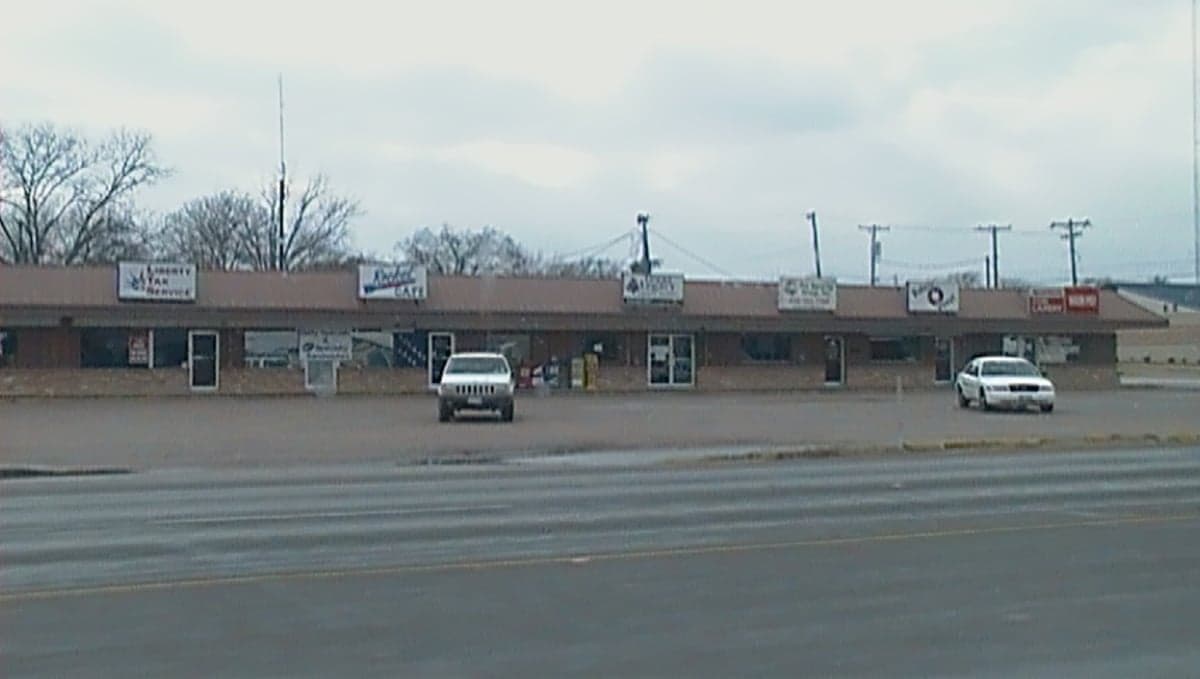
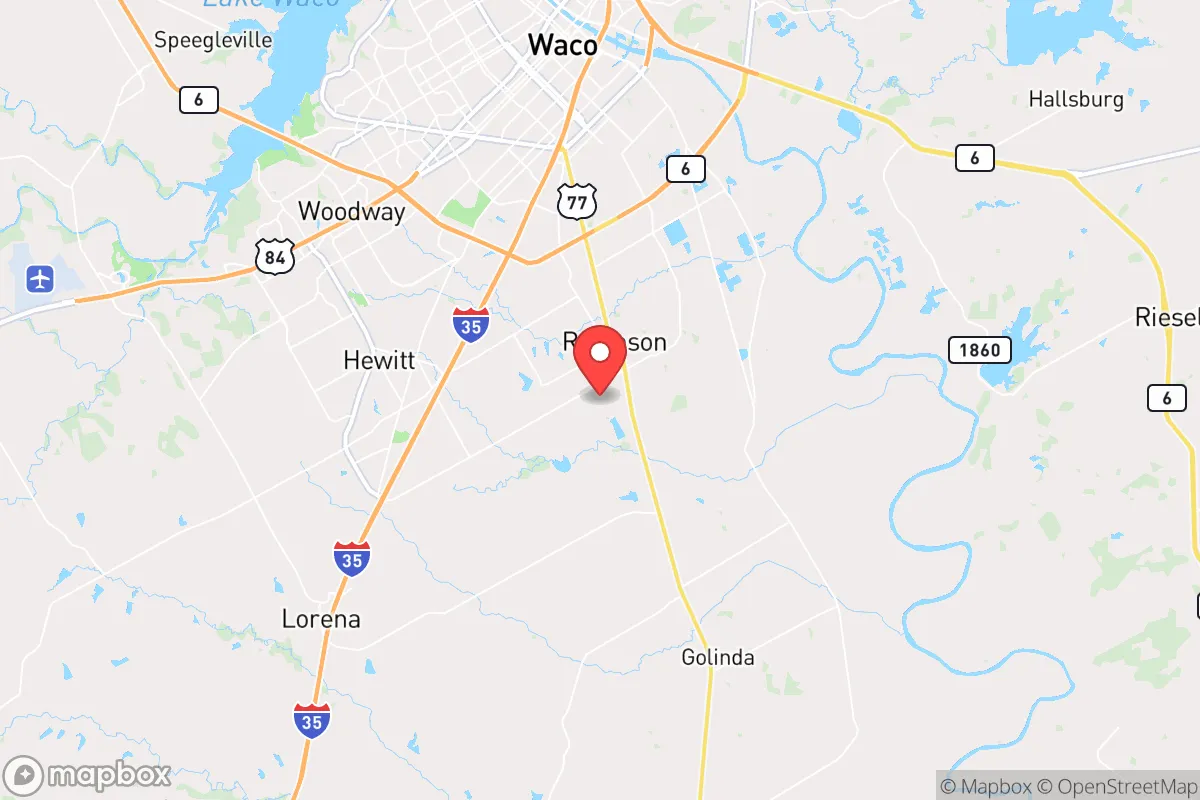
Photo: Wikipedia
Personal Sovereignty in Robinson, TX
Strong independent fundamentals that actively favor personal liberty and low regulation.
What does Personal Sovereignty tell us?
Personal Sovereignty measures your capacity for self-reliance and independence with minimal government friction. Higher scores mean fewer barriers between you and the way you want to live... but it assumes you have the space you need and good neighbors.
What does this tell us?
Personal Sovereignty measures your capacity for self-reliance and independence with minimal government friction. Higher scores mean fewer barriers between you and the way you want to live... but it assumes you have the space you need and good neighbors.
State Policy
Energy independence: Net exporter (220% of energy produced in-state)
Personal Liberty
Homesteading

Personal Liberty Analysis
Robinson, Texas, offers a notably high degree of personal sovereignty, grounded in the state’s strong legal protections for individual rights and a local culture that prizes self-reliance. As a small city within McLennan County, Robinson benefits from Texas’s absence of a state income tax and its broad preemption of local regulations, creating an environment where residents face fewer layers of government interference than in many other parts of the country. For those prioritizing autonomy in daily life—from financial decisions to self-defense and property use—Robinson presents a practical, low-friction setting that aligns with a conservative, freedom-oriented worldview.
Tax burden and regulatory posture: How light is the government footprint?
Texas’s lack of a state income tax is the cornerstone of its light-touch fiscal environment, and Robinson residents enjoy this benefit directly. The city’s revenue comes primarily from property and sales taxes, with the combined local sales tax rate at 8.25% (state plus local). Property taxes in McLennan County are moderate compared to other Texas counties, with effective rates typically ranging from 2.0% to 2.5% of assessed value, depending on the specific school district and city levies. This is a tangible cost of local services, but the absence of income tax means residents keep more of their earnings for discretionary use. On the regulatory side, Texas law heavily restricts local governments from enacting ordinances that exceed state minimums on issues like firearm carry, short-term rentals, and land use. Robinson’s zoning code is relatively straightforward, focused on basic land-use categories without the extensive overlay districts or design review boards common in larger cities. The city does not impose rent control, business licensing beyond basic permits, or environmental regulations that go beyond state requirements. For a resident or small business owner, the regulatory posture is best described as permissive: the city sets baseline rules for safety and order but largely leaves individuals to manage their own affairs.
Self-defense and gun law specifics: What are the legal boundaries for carrying and protecting property?
Texas is a permitless carry state, meaning any adult who can legally possess a firearm may carry it openly or concealed without a license. Robinson, as a city, does not impose additional restrictions beyond state law. This means residents can carry firearms for self-defense in most public spaces, including parks and streets, with the standard exceptions of schools, polling places, and certain government buildings. The state’s “stand your ground” law eliminates any duty to retreat before using deadly force in a place where the individual is lawfully present, and the Castle Doctrine provides a legal presumption that force is justified when defending a home, vehicle, or workplace against unlawful entry. For property protection, Texas law allows the use of deadly force to prevent arson, burglary, robbery, or theft at night, though daytime property defense is more limited. Robinson’s local law enforcement generally respects these rights; there are no known local ordinances that conflict with state preemption. For a resident concerned with personal safety, the legal environment is among the most permissive in the United States, with clear statutory protections for defensive gun use.
Self-reliance and homesteading viability: Lot sizes, zoning, and off-grid feasibility
Robinson’s residential zoning allows for a range of lot sizes, with many single-family homes sitting on quarter-acre to half-acre parcels. While the city does not have large agricultural tracts within its limits, the surrounding unincorporated areas of McLennan County offer more acreage for those seeking a homesteading lifestyle. Within city limits, keeping chickens, goats, or other small livestock is generally permitted on lots of sufficient size, though residents should verify specific HOA covenants if applicable. Off-grid living—such as relying entirely on solar power, rainwater collection, or composting toilets—faces practical and legal hurdles. Texas does not have a statewide ban on off-grid systems, but local building codes in Robinson require connection to municipal water and sewer where available. For properties outside the city’s utility service area, private wells and septic systems are standard. Solar panels are allowed, but net metering policies with the local electric cooperative (typically Oncor or a local provider) may limit the economics of full grid disconnection. For a family wanting significant self-sufficiency—gardening, small livestock, rainwater catchment—the best strategy is to look at properties just outside Robinson’s city limits, where zoning is minimal and utility requirements are more flexible. Within the city, the environment supports moderate self-reliance but not full off-grid independence.
Personal liberties: Parental rights, medical autonomy, speech, and property
Texas law provides strong protections for parental rights, including the right to direct a child’s education, medical care, and moral upbringing. Robinson is served by the Robinson Independent School District, which operates under state policies that emphasize parental involvement and transparency in curriculum. Homeschooling is legal with minimal state oversight—parents need only submit a simple notice of intent and provide a curriculum covering basic subjects. Medical autonomy is similarly broad: Texas does not mandate COVID-19 or other adult vaccinations, and the state has passed laws restricting vaccine mandates by private employers and government entities. For children, exemptions from school vaccine requirements are available for medical, religious, or conscientious reasons. Free speech and property rights are protected under both the U.S. and Texas constitutions, with Texas offering additional protections against “taking” property through eminent domain. Robinson does not have local ordinances that restrict political speech, signage, or assembly beyond standard time-place-manner rules. Property rights are further strengthened by Texas’s lack of a state property tax on business inventory or personal property, and by laws that limit homeowners’ association authority in certain areas. For a resident who values the ability to make independent decisions about family, health, and expression, Robinson provides a legal framework that is deferential to individual choice.
Compared to other areas in Texas and the broader United States, Robinson offers a consistently high level of personal sovereignty across the dimensions that matter most to freedom-oriented residents. The combination of no state income tax, permitless carry, strong self-defense laws, permissive zoning for moderate homesteading, and robust protections for parental and medical autonomy places it in the top tier of American communities for individual liberty. While it is not a fully unregulated environment—property taxes are real, and city utility requirements limit extreme off-grid living—the overall posture is one of light-touch governance that trusts residents to make their own decisions. For a single individual or family seeking a place where the government stays out of the way, Robinson, Texas, is a strong and practical choice.

* Values derived from national, state, county, city and local statistics and may differ in a specific area. Last updated: 2026-10-28T23:17:02.000Z
Narrative content on this page is AI-generated and may contain mistakes. Verify any details that matter before acting on them.
ReloMaps may earn a commission from affiliate links at no extra cost to you.

