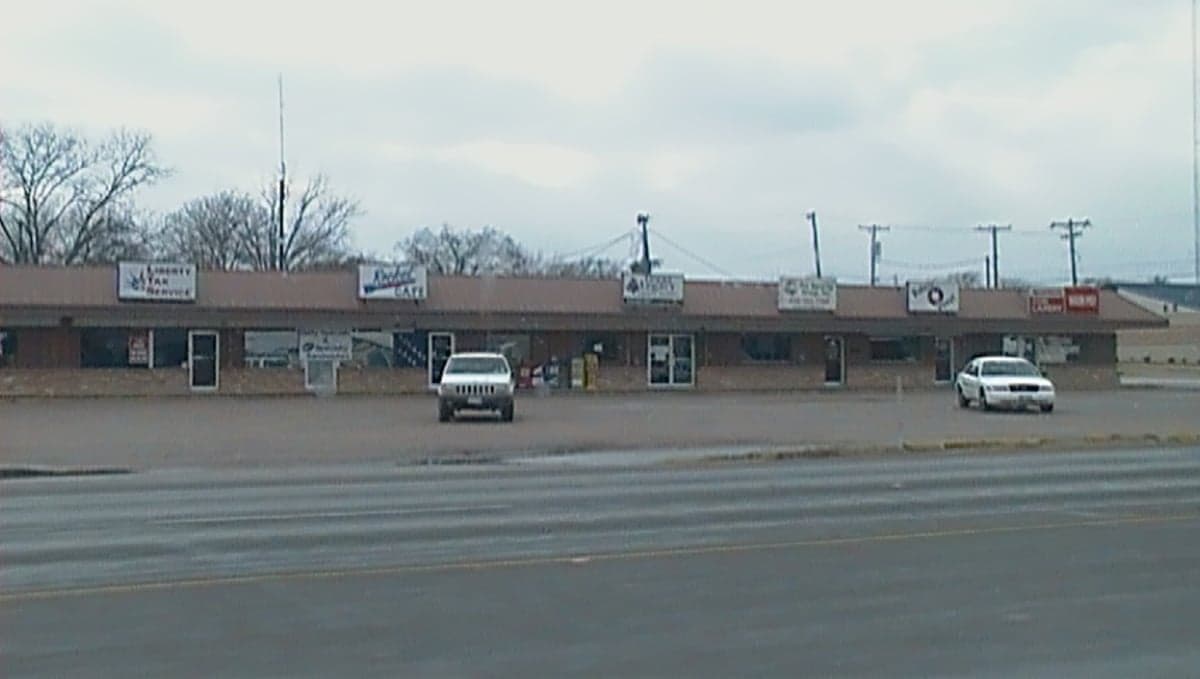
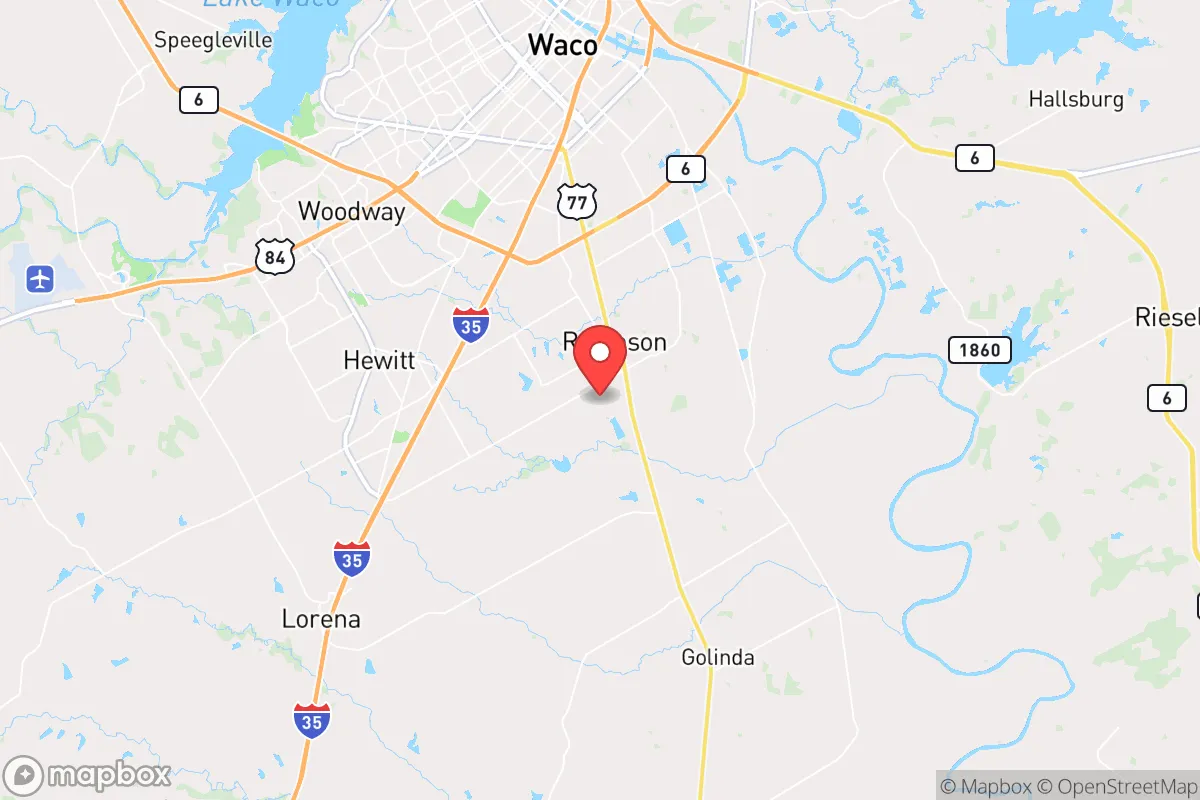
Photo: Wikipedia
Demographics of Robinson, TX
Affluence Level in Robinson, TX
A middle-class area roughly in line with national averages across income, home values, education, and employment.
People of Robinson, TX
The people of Robinson, Texas today form a predominantly white (64.9%) and increasingly Hispanic (27.8%) community of 12,668 residents, with a small Black population (5.8%) and a negligible East/Southeast Asian presence (0.2%). The city’s identity is rooted in its history as a railroad and agricultural hub, now evolving into a family-oriented bedroom suburb of Waco. With a relatively low college attainment rate of 21.5% and a foreign-born share of just 3.0%, Robinson remains a culturally homogenous, working-to-middle-class community where generational roots run deep and new growth is driven by domestic migration from nearby counties.
How the city was settled and grew
Robinson was founded in the late 19th century as a railroad stop along the Missouri-Kansas-Texas (Katy) line, drawing its first permanent residents—mostly Anglo farmers and railroad workers—in the 1880s. The city was officially incorporated in 1937, but its early population clustered around the depot and along the original farm-to-market roads that now form the spine of the Old Town Robinson district. These early families were predominantly of German and Czech descent, many migrating from central Texas farming communities like West and Taylor. The Robinson Cemetery area and the blocks surrounding Robinson Drive still contain homes built by these founding families. A second wave arrived during the post-World War II era, when returning veterans and Waco workers sought affordable land south of the city. This group settled in the Lake Air and South Robinson subdivisions, which were developed as modest single-family neighborhoods on former cotton fields. The city’s population remained overwhelmingly white and native-born through the 1960s, with agriculture and the nearby Waco industrial base providing steady employment.
Modern era (post-1965)
The 1965 Hart-Cellar Act had minimal direct impact on Robinson’s demographics, as the city’s foreign-born population remains just 3.0% today. Instead, the major post-1965 shift was domestic: the expansion of Waco’s economy—particularly at Baylor University and the Texas State Technical College—drew new residents to Robinson’s affordable housing stock. The Robinson Estates neighborhood, developed in the 1970s and 1980s, attracted middle-class families from Waco and McLennan County, many of them white professionals. The Hispanic population began growing noticeably in the 1990s, driven by in-migration from South Texas and Mexico for construction and service jobs. These families concentrated in the North Robinson area, near the intersection of FM 3406 and I-35, where older, smaller homes and rental properties offered entry points. The Black population, at 5.8%, is largely concentrated in the East Robinson corridor along Old Robinson Road, a historically working-class area that has seen modest reinvestment. The Asian population (East/Southeast Asian) remains negligible at 0.2%, with no distinct neighborhood cluster. The Indian subcontinent population is effectively zero. Robinson’s modern character is thus one of a slowly diversifying suburb where white and Hispanic residents form the core, and other groups remain statistically marginal.
The future
Robinson’s population is projected to continue growing slowly, driven by spillover from Waco’s expanding housing market. The Hispanic share is likely to rise toward 35-40% over the next decade, as younger families move into newer developments like the Robinson Ranch subdivision, a master-planned community of 300+ homes built since 2020. This area is attracting a mix of white and Hispanic buyers, suggesting a gradual dispersal rather than continued ethnic clustering. The white population share will decline proportionally but remain the majority. The Black and Asian shares are expected to remain low, as Robinson lacks the employment base or cultural infrastructure to attract significant diversity from outside the region. The city’s cultural identity is evolving from a quiet Anglo farming town to a more Hispanic-influenced suburb, evident in the growing number of bilingual signage and taquerias along Robinson Drive. For new residents, this means moving into a community that is becoming more diverse in its Hispanic population but remains overwhelmingly native-born and family-oriented, with a conservative-leaning political culture and a strong emphasis on local schools and church life.
Robinson is becoming a more Hispanic, still majority-white bedroom suburb of Waco, where growth is steady but not explosive, and where the population’s character remains rooted in domestic migration rather than international immigration. For a family or individual moving in now, the city offers a stable, low-density environment with a clear sense of local identity, but limited ethnic diversity beyond the white-Hispanic axis.

* Values derived from national, state, county, city and local statistics and may differ in a specific area. Last updated: 2026-10-28T23:17:02.000Z
Narrative content on this page is AI-generated and may contain mistakes. Verify any details that matter before acting on them.
ReloMaps may earn a commission from affiliate links at no extra cost to you.

