
Photo by Zoshua Colah on Unsplash
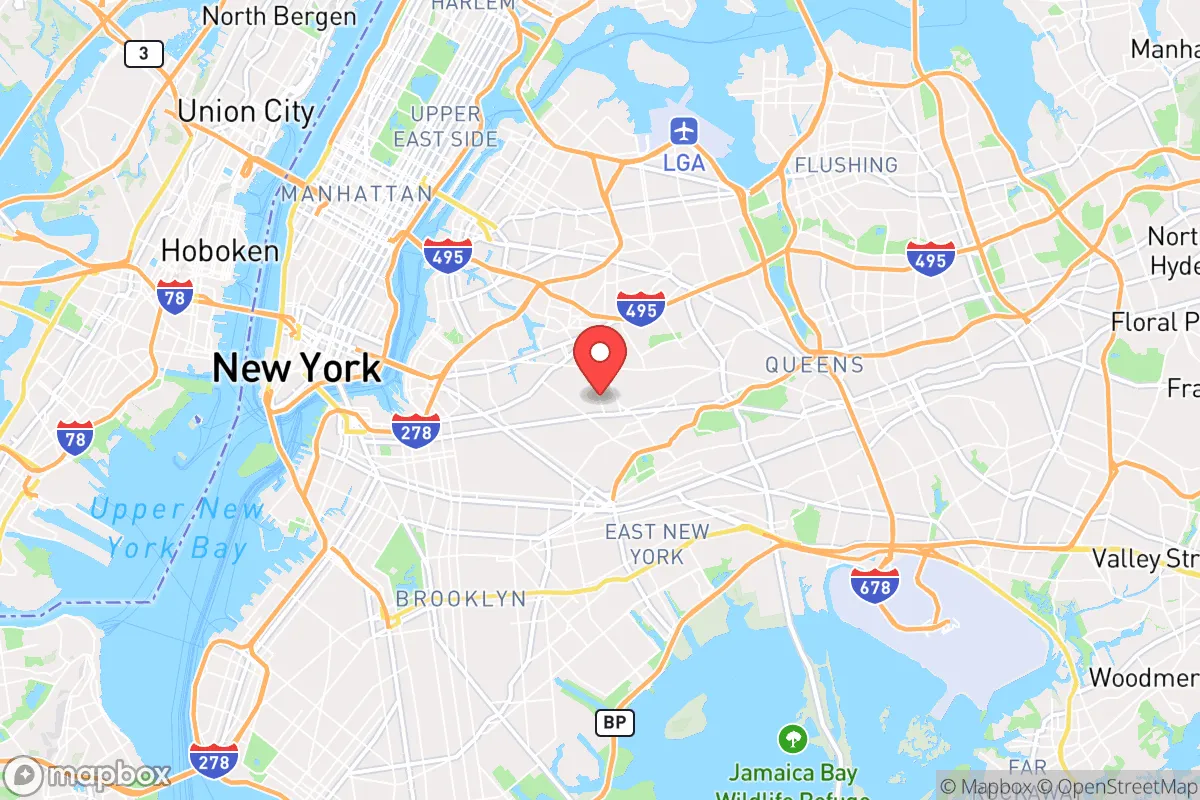
Quality of Life in Ridgewood, NY
Above-average quality of iife. The area offers a reasonable cost of living, decent mobility, and a mix of neighborhood amenities.
What does Quality of Life tell us?
Quality of Life blends cost of living, nearby amenities, socioeconomic signals, and neighborhood character. City-level scores represent the whole municipality; individual neighborhoods can differ.
What does this tell us?
Quality of Life blends cost of living, nearby amenities, socioeconomic signals, and neighborhood character. City-level scores represent the whole municipality; individual neighborhoods can differ.
Cost of Living
98% above national average
The Real Cost of Living in Ridgewood, NY for 2026
| Tier | Individual | Family (4) |
|---|---|---|
| Survival | $28k | $53k |
| Comfortable | $138k | $202k |
| Luxury | $144k+ | $223k+ |
| Elite (Top 5%) | $237k+ | $368k+ |
39%
The Area Signal
A metric tracking the socioeconomic signals of the area.
Hobbies
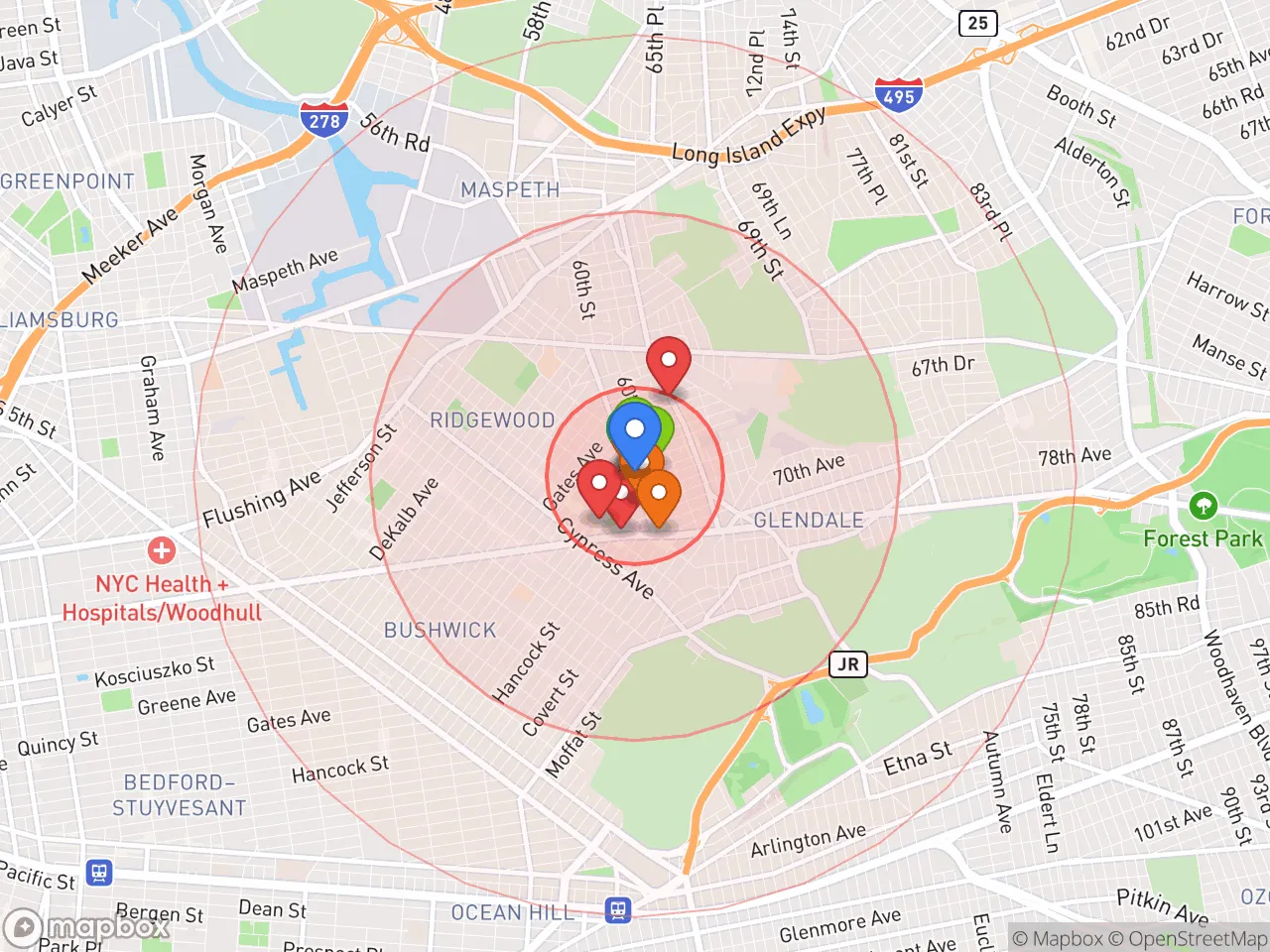
Explore the areaGroceries
0 within 10 miles
Gas
0 within 10 miles
Hospital
0 within 20 miles
Airport
JFK — John F. Kennedy International
Post Office
Critical Amenities
Quality-of-Life Analysis
Ridgewood, New York, is a predominantly middle- to upper-middle-class neighborhood in Queens known for its historic architecture, tight-knit community feel, and growing appeal among young professionals and families seeking more space than Manhattan offers. With a cost-of-living index of 198—nearly double the national average—residents are typically established professionals, creative-class workers, or long-term homeowners who value the area’s relative affordability compared to pricier Brooklyn neighborhoods just across the border. The neighborhood’s character is shaped by a blend of German, Polish, and Hispanic heritage, alongside a rising influx of artists and remote workers drawn by its tree-lined blocks and prewar housing stock.
Cost of living, housing, and how Ridgewood compares to Bushwick and Williamsburg
Ridgewood’s cost-of-living index of 198 reflects a market that is expensive by national standards but remains a bargain within the New York City metro area. The median home value sits at $751,700, which is roughly 30% lower than the median in nearby Williamsburg and about 15% lower than in Bushwick, making it one of the more attainable homeownership options in northwestern Queens. Median rent is $1,779, a figure that undercuts comparable units in Greenpoint or Astoria by several hundred dollars per month. However, the average commute of 40.6 minutes is notably longer than the citywide average of 38 minutes, as many residents rely on the L and M subway lines for trips to Manhattan. For buyers, the trade-off is clear: lower purchase prices and rents come with a longer daily travel time, though the neighborhood’s proximity to Brooklyn’s nightlife and dining scenes partially offsets this.
Parks, schools, and the daily rhythm of life in Ridgewood
Daily life in Ridgewood revolves around its walkable commercial corridors—Myrtle Avenue and Fresh Pond Road—lined with independent bakeries, Polish delis, and vintage shops. The neighborhood is served by several well-regarded public schools, including PS 239 (The Ridgewood School) and IS 93 (Ridgewood Intermediate School), both of which score above Queens averages on state assessments. Green space is limited but functional: Ridgewood Park offers a playground, basketball courts, and a dog run, while Grover Cleveland Park provides a larger lawn for picnics and sports. The area’s low crime rate relative to adjacent Bushwick and East Williamsburg contributes to a quieter, more family-oriented atmosphere, with many residents describing the vibe as “suburban in the city.” Weekend mornings see crowds at Rudy’s Bakery and Mama’s Empanadas, while evenings are dominated by local bars like The Keep and Gottscheer Hall, a historic German social club.
Ridgewood is best suited for buyers and renters who prioritize space, historic charm, and a slower pace over instant access to Manhattan’s core. Young families will appreciate the strong elementary schools and relatively affordable three-bedroom apartments, while creative professionals can take advantage of the lower rents to maintain studio space or work remotely. Commuters should be prepared for a 40-minute-plus subway ride to Midtown, but the trade-off of a quieter, more affordable home base in a neighborhood with genuine character makes Ridgewood a compelling choice for those priced out of Brooklyn’s trendier enclaves.

Crime in Ridgewood, NY
WARNING: The crime statistics are unreliable for this jurisdiction. Local authorities have either not reported or under reported their data to the FBI. This could be due to bad intentions, incompetence or technical issues. Regardless, we suggest skepticism.
Higher crime rates than 65% of comparable U.S. locations.
Violent CrimeViolent Crime Analysis
Property CrimeProperty Crime Analysis
Crime Analysis
Ridgewood, New York, presents a mixed safety profile that demands careful consideration from potential residents. The neighborhood's violent crime rate of 363.5 incidents per 100,000 residents and property crime rate of 1,547.4 per 100,000 place it in a concerning middle ground—safer than many parts of New York City but significantly more dangerous than the national average. These figures reflect the broader challenges of policing a dense urban environment within a jurisdiction whose progressive criminal justice policies have drawn criticism for prioritizing offender rehabilitation over public safety.
Crime in context
Ridgewood's violent crime rate is roughly 4% higher than the national average of approximately 350 per 100,000, while its property crime rate sits about 15% above the U.S. median of roughly 1,340 per 100,000. Compared to New York State as a whole—which reports a violent crime rate near 360 per 100,000—Ridgewood is essentially on par. However, these numbers must be understood within the framework of New York City's progressive judicial environment. District attorneys in Queens and across the city have implemented policies such as cash bail reform, reduced prosecution of certain nonviolent offenses, and diversion programs that, while well-intentioned, have resulted in repeat offenders cycling back onto the streets more quickly. For residents, this means that even relatively low-level property crimes can have recurring impacts, as perpetrators face minimal consequences.
What residents experience
Daily life in Ridgewood involves a heightened awareness of property crime. Package theft, car break-ins, and bicycle theft are common complaints on neighborhood social media groups. The area's dense rowhouse and apartment stock, combined with busy commercial corridors like Myrtle Avenue and Fresh Pond Road, creates numerous opportunities for opportunistic crime. Violent incidents, while less frequent, do occur—typically concentrated around late-night hours near bars and transit hubs. Residents report that police response times can be inconsistent, a frustration often attributed to the NYPD's broader staffing challenges and the district attorney's office's perceived reluctance to aggressively prosecute quality-of-life offenses. The progressive approach to justice, which emphasizes alternatives to incarceration, has left many law-abiding residents feeling that the system is weighted against their safety and property rights.
Neighborhood-level variation
Safety in Ridgewood is not uniform. The area south of Metropolitan Avenue, closer to the Brooklyn border, tends to see higher concentrations of both property and violent crime, particularly along the industrial edges near the cemetery and rail yards. In contrast, the blocks north of Myrtle Avenue, especially those near the Glendale border, are generally quieter and experience fewer incidents. Streets with heavy foot traffic and active storefronts—like Seneca Avenue and Forest Avenue—benefit from natural surveillance but also attract more petty crime. Side streets off the main commercial drags are often safer, though they require residents to be vigilant about locking doors and securing vehicles. For those considering a move, a block-by-block assessment is essential, as a single street can shift from relatively safe to noticeably higher-risk within a few blocks.
* Values derived from national, state, county, city and local statistics and may differ in a specific area. Last updated: 2026-10-01T11:40:57.000Z
Narrative content on this page is AI-generated and may contain mistakes. Verify any details that matter before acting on them.
ReloMaps may earn a commission from affiliate links at no extra cost to you.

