
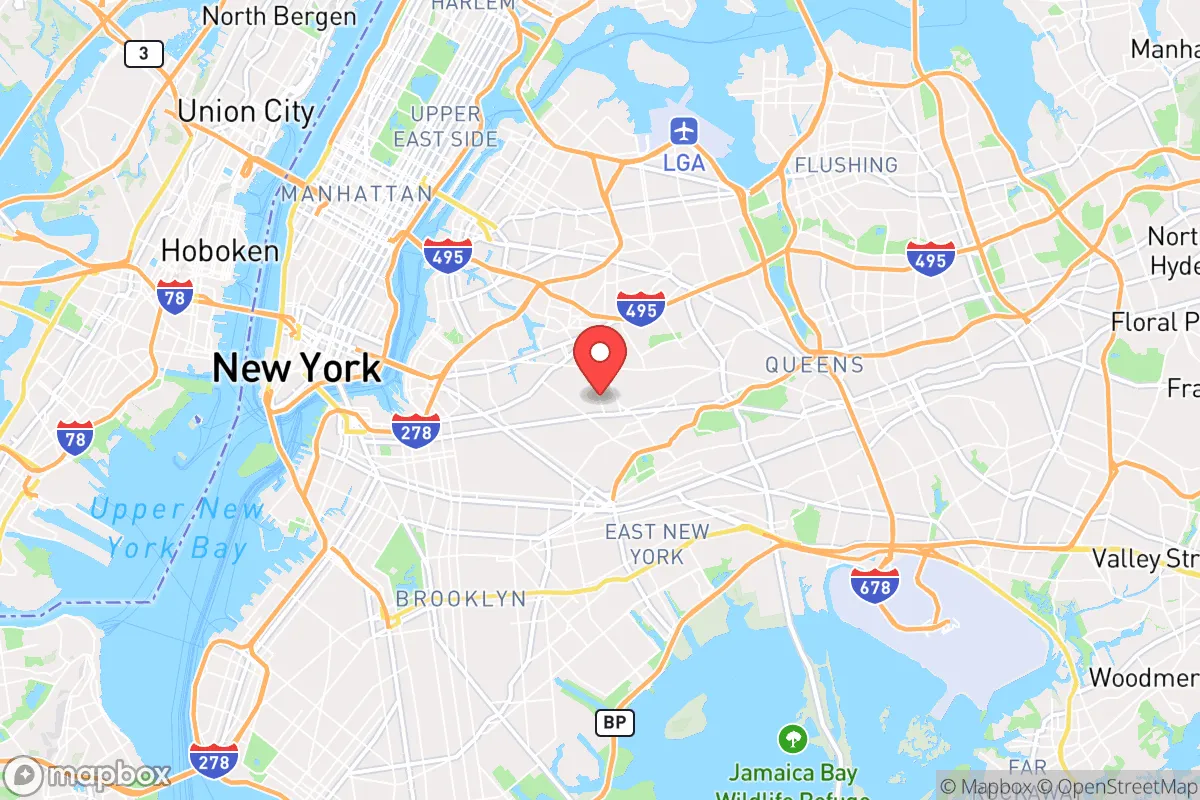
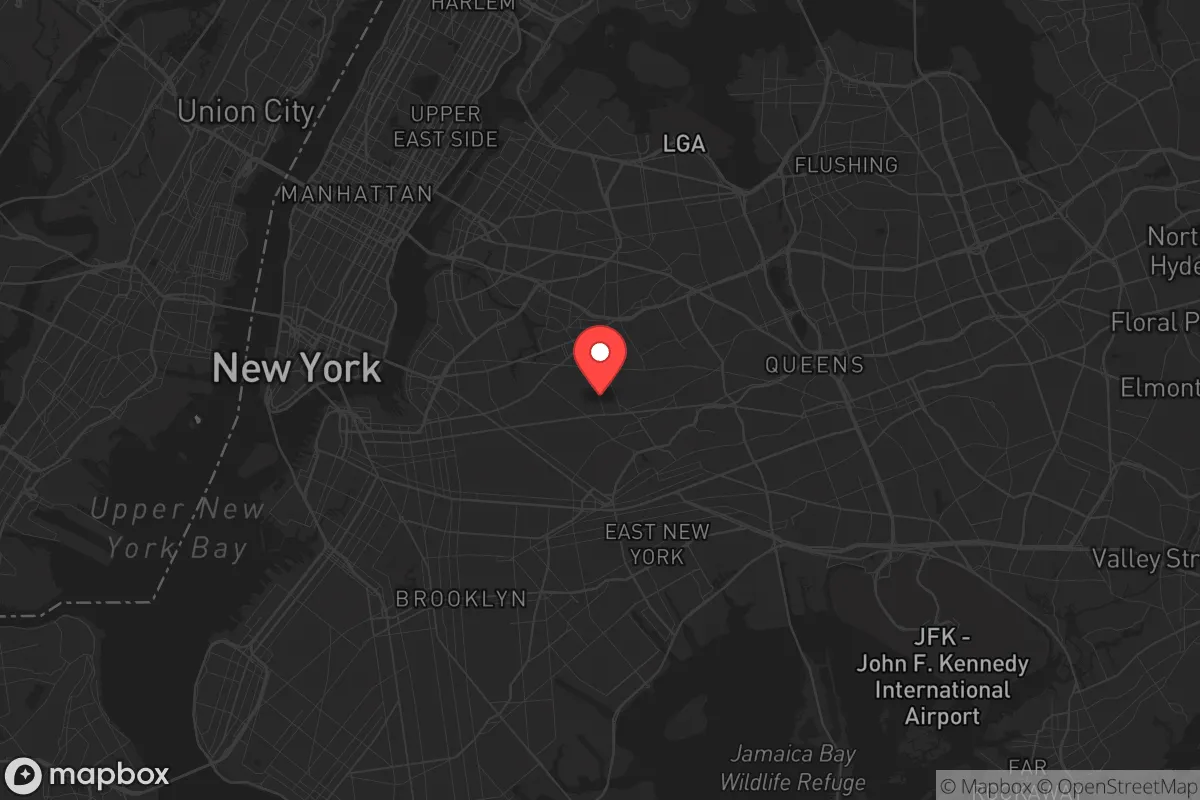
Photo by Zoshua Colah on Unsplash
Demographics of Ridgewood, NY
Affluence Level in Ridgewood, NY
A middle-class area roughly in line with national averages across income, home values, education, and employment.
People of Ridgewood, NY
Ridgewood, New York, is a densely woven, predominantly middle-class neighborhood of roughly 8,500 residents within the larger borough of Queens, known for its intact stock of historic brick and limestone row houses and a fiercely local, family-oriented character. Its population today is a striking mosaic: 31.3% White, 28.4% Hispanic, 20.8% Black, 10.0% East and Southeast Asian, and 4.5% Indian (subcontinent), with 15.0% foreign-born and 41.0% college-educated. This diversity is not a recent overlay but the product of distinct, layered waves of settlement, each group leaving its mark on specific blocks and commercial corridors. For a relocating family or individual, Ridgewood offers a rare combination of urban convenience, architectural charm, and a palpable sense of ethnic succession still in progress.
How the city was settled and grew
Ridgewood’s story begins not as a city but as a rural hamlet within the Town of Bushwick, settled by Dutch and German farmers in the 17th and 18th centuries. Its transformation into a dense urban neighborhood came with the arrival of the Long Island Rail Road and elevated subway lines in the late 19th century, which triggered a building boom of six-family tenements and two-family rowhouses designed for a rising German and Irish working class. By 1900, the area around Fresh Pond Road and Myrtle Avenue was a solidly German enclave, with beer gardens, churches, and social clubs anchoring the community. A second major wave arrived between 1900 and 1930: Italian and Eastern European Jewish immigrants, who settled heavily in the blocks south of Metropolitan Avenue and around Cypress Hills, building the neighborhood’s signature limestone and brick row houses. These groups established Ridgewood’s reputation as a stable, blue-collar “city of homes” — a place where immigrants could buy a house and raise a family within walking distance of factories and the elevated train.
Modern era (post-1965)
The 1965 Hart-Cellar Act reshaped Ridgewood’s population dramatically. The earlier German, Irish, Italian, and Jewish families began a slow out-migration to Long Island and New Jersey suburbs, while new arrivals from Latin America and the Caribbean moved in. By the 1980s and 1990s, Seneca Avenue and the blocks around Forest Avenue became the heart of a growing Hispanic community, primarily Puerto Rican and Dominican, later joined by Ecuadorian and Colombian families. Simultaneously, a smaller but significant wave of South Asian immigrants — primarily from India, Pakistan, and Bangladesh — settled along the Myrtle Avenue corridor east of Fresh Pond Road, opening sari shops, grocery stores, and restaurants. The 2000s and 2010s brought a new domestic in-migration: younger, college-educated professionals — many from Manhattan and Brooklyn — drawn by Ridgewood’s affordable housing stock and easy subway access. This group concentrated in the historic district around Onderdonk Avenue and Woodbine Street, accelerating a gradual process of gentrification that has raised home values but also created tension with longer-term residents. Today, the neighborhood’s racial and ethnic mix is its defining feature: no single group holds a majority, and the 20.8% Black population includes both African American families with deep Queens roots and newer Afro-Caribbean arrivals from Jamaica, Guyana, and Trinidad.
The future
Ridgewood’s population is becoming more diverse, not less, but the nature of that diversity is shifting. The White share (31.3%) is stable or slightly rising due to continued in-migration of young professionals, while the Hispanic share (28.4%) is slowly declining as older Puerto Rican and Dominican families sell homes or move to more affordable suburbs. The East and Southeast Asian population (10.0%) is growing, particularly Chinese and Korean families, who are buying two-family homes in the Glendale border area and along Catalpa Avenue. The Indian subcontinent population (4.5%) is also expanding, with new Bangladeshi and Pakistani families settling near Fresh Pond Road and Metropolitan Avenue. The college-educated share (41.0%) is likely to keep rising as the neighborhood attracts more remote workers and creative professionals priced out of Williamsburg and Bushwick. Over the next 10–20 years, Ridgewood will likely become more affluent and more Asian and Indian, while retaining a substantial Hispanic and Black presence. The cultural identity is evolving from a historically white ethnic enclave into a genuinely multi-ethnic, multi-class neighborhood where old-timers and newcomers share the same block.
For someone moving in now, Ridgewood is a neighborhood in mid-transition: still affordable by New York City standards, still family-oriented, but increasingly competitive and diverse. It offers the rare chance to buy into a community with deep immigrant roots, a strong housing stock, and a demographic trajectory that points toward greater mixing rather than segregation. The key is to understand which micro-neighborhood fits your priorities — the historic district for architecture and walkability, the Myrtle Avenue corridor for South Asian groceries and community, or the Glendale border for more space and quieter streets.

* Values derived from national, state, county, city and local statistics and may differ in a specific area. Last updated: 2026-10-01T11:40:57.000Z
Narrative content on this page is AI-generated and may contain mistakes. Verify any details that matter before acting on them.
ReloMaps may earn a commission from affiliate links at no extra cost to you.

