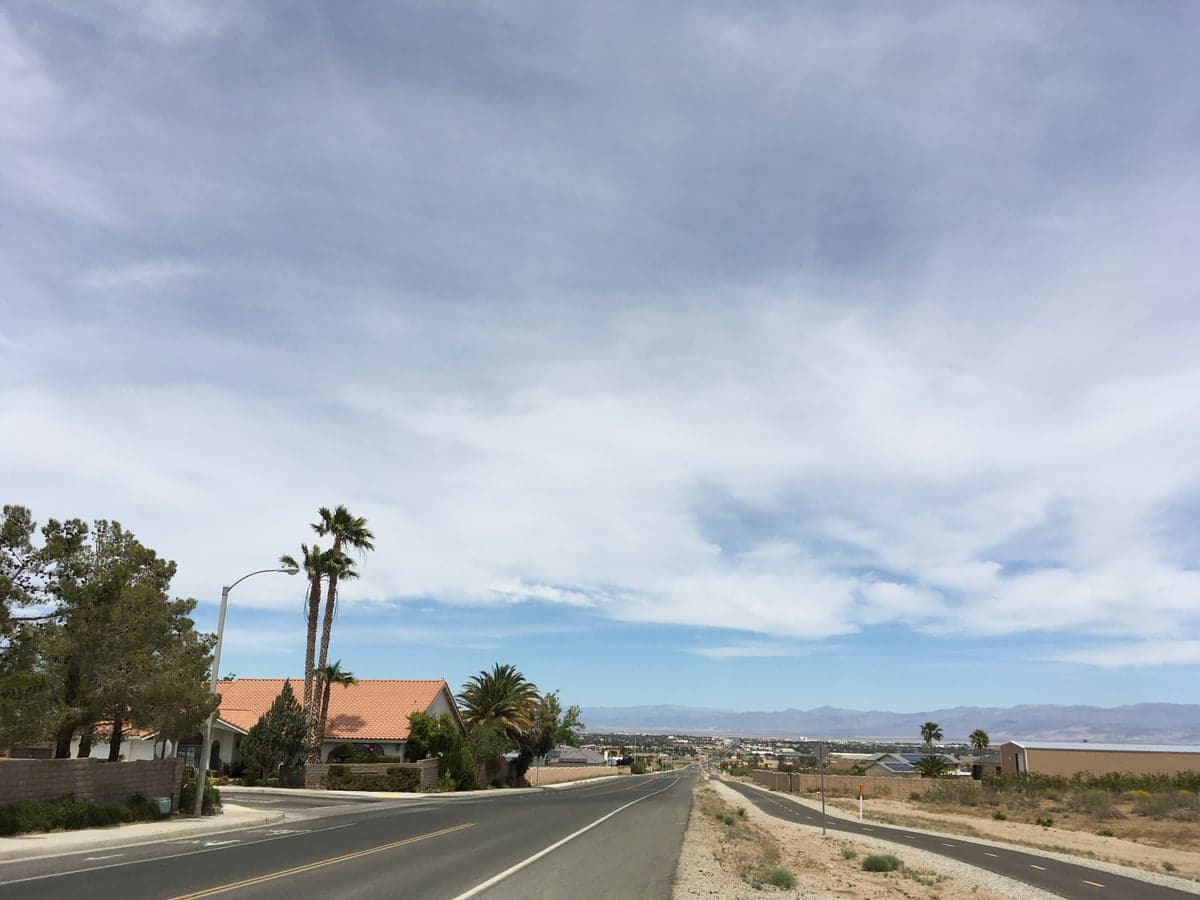
Photo: Wikipedia
Political ClimatePolitical Climate in Ridgecrest, CA
District shown is the primary district for this city’s centroid. Cities may span multiple districts.
Local Political AnalysisPolitical Analysis of Ridgecrest, CA
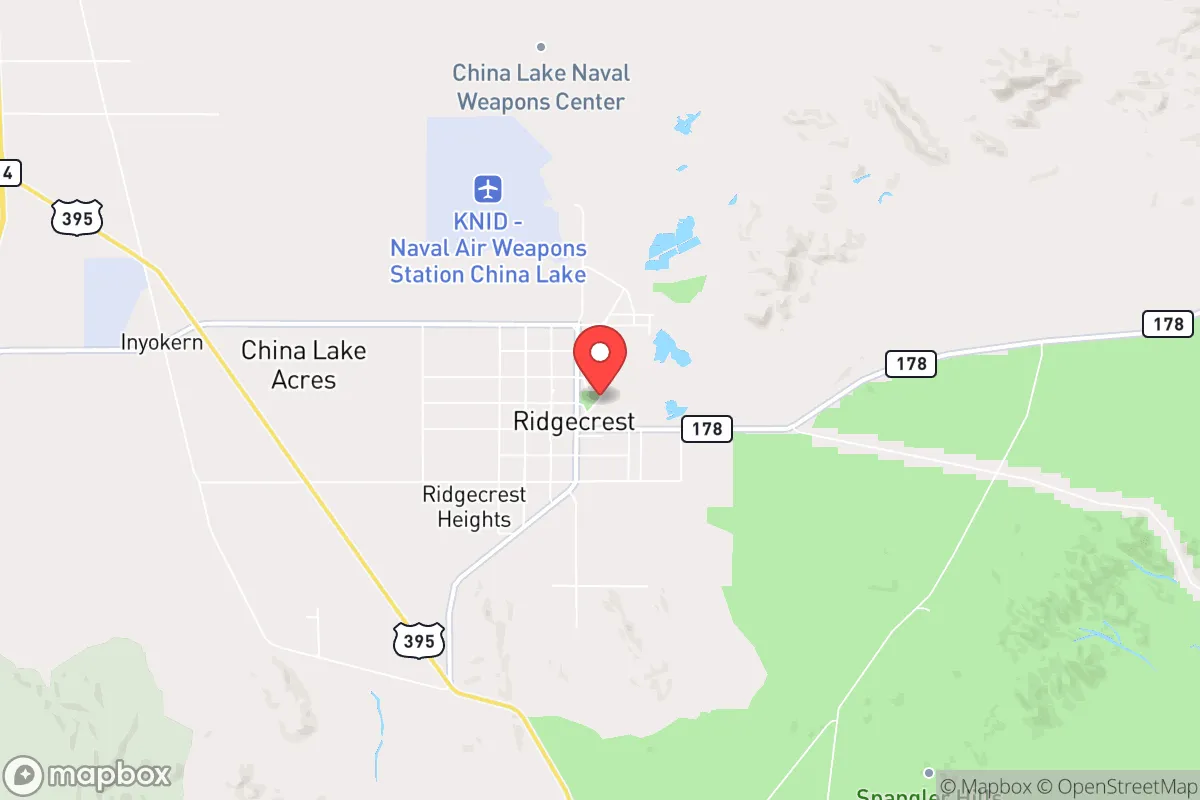
Ridgecrest is a solidly conservative stronghold in a deep blue state, with a Cook Partisan Voting Index of R+15 that makes it one of the most reliably Republican communities in California. The city’s political identity is shaped heavily by its role as a high-desert hub for the Naval Air Weapons Station China Lake, where a mix of active-duty military, defense contractors, and federal employees creates a culture that leans heavily toward fiscal conservatism and national security priorities. Over the past decade, the area has only grown more Republican, with local elections routinely decided in primaries and Democratic candidates rarely breaking 40% in general elections. If you’re used to the coastal politics of Los Angeles or San Francisco, Ridgecrest feels like a different state entirely—and in many ways, it is.
How it compares
Compared to California as a whole, Ridgecrest is an outlier. The state’s Cook PVI is not officially calculated because it’s the entire state, but California’s statewide elections have gone Democratic by double digits in every presidential race since 1992, with margins often exceeding 20 points. Ridgecrest, by contrast, votes more like a rural Nevada or Arizona town. Neighboring communities like Inyokern and Trona are similarly conservative, but drive an hour west to Bakersfield and you’ll find a more mixed political landscape—Kern County overall leans Republican but has a growing Democratic base in the city itself. Head south to Lancaster or Palmdale, and you’ll see a shift toward purple territory, with those cities trending bluer as they absorb more Los Angeles commuters. Ridgecrest remains insulated from that trend because of its isolation—it’s a two-hour drive from any major metro area, and the local economy depends on the base, not on tourism or tech. That geographic and economic reality keeps the political culture stable and resistant to the leftward drift seen elsewhere in California.
What this means for residents
For conservative residents, Ridgecrest offers a rare experience in California: your vote actually counts in local races, and your values are reflected in city council decisions, school board policies, and law enforcement priorities. You can expect lower taxes relative to the state average, a strong Second Amendment culture, and minimal pushback on things like gun shows or church involvement in public life. For liberal residents, the reality is more isolating. You’ll find few like-minded neighbors, and local political activism is an uphill battle—though the presence of federal employees and some academics at Cerro Coso Community College does create a small, quiet progressive minority. Statewide issues like housing mandates, environmental regulations, and sanctuary policies are often met with open hostility here, and local officials frequently push back against Sacramento’s directives. That tension is a daily fact of life: Ridgecrest residents pay California income taxes and follow California laws, but they vote as if they wish they lived in a different state.
Culturally, Ridgecrest stands apart from the California stereotype. The pace is slower, the politics are more direct, and there’s a strong “live and let live” attitude that coexists with a deep suspicion of government overreach—except when it comes to the base, which is seen as the town’s economic lifeline. You won’t find many Tesla charging stations or organic grocery stores, but you will find a community that takes care of its own, where neighbors know each other’s names and local news still covers city council meetings in detail. The political divide between Ridgecrest and the rest of California isn’t just about party registration; it’s about a fundamentally different vision of what life should look like. And as California’s Democratic supermajority continues to push progressive policies, Ridgecrest’s conservative identity is likely to harden, not soften, in the years ahead.

State Political ClimatePolitical Climate in California
State Political AnalysisPolitical Environment in the State
California is a deeply blue state where Democrats hold every statewide office and supermajorities in both legislative chambers, but that monolithic label hides a far more complex reality. The state hasn't voted Republican in a presidential race since 1988, and the Democratic share of the vote has crept from about 54% in 2000 to over 60% in 2024. Yet this isn't a uniform liberal monolith — it's a state where the coastal metros and Central Valley agricultural towns live in completely different political worlds, and where a conservative relocator can find genuine community in specific pockets, even as state policy trends sharply leftward.
Urban vs. rural divide
The political map of California is essentially a tale of three regions. The coastal urban crescent — from San Francisco and Oakland down through Los Angeles and San Diego — drives the state's blue lean. These metros are home to the state's largest concentrations of college-educated professionals, union households, and immigrant communities, and they reliably deliver 65-85% Democratic margins. In contrast, the Central Valley and Inland Empire are far more competitive. Bakersfield and Fresno are reliably red, with Kern County voting +17 R in 2024. The real battlegrounds are the suburban exurbs: Orange County, once a GOP stronghold, has flipped decisively blue over the past decade, with its congressional delegation now 6-0 Democratic. Meanwhile, San Diego County has shifted from purple to solid blue, while Riverside County remains a true swing area, voting +3 D in 2024. The rural north — places like Redding and Yreka — are deep red, but their populations are too small to offset the coastal vote.
Policy environment
California's policy environment is defined by high taxes, heavy regulation, and expansive government services. The state has a progressive income tax with a top marginal rate of 13.3% (the highest in the nation), a state sales tax of 7.25% (with local add-ons pushing it to 10.25% in many cities), and property taxes capped at 1% of assessed value under Proposition 13. Education policy is dominated by the California Teachers Association, with per-pupil spending around $15,000 (above the national average) but with significant variation between wealthy coastal districts and inland ones. Healthcare is heavily regulated, with the state running its own insurance exchange (Covered California) and expanding Medi-Cal to all income-eligible residents regardless of immigration status. Election laws are among the most accessible in the nation: all registered voters receive a mail ballot automatically, same-day registration is available, and the state has a top-two primary system that often locks out third-party candidates. Gun laws are among the strictest nationally, including an assault weapons ban, a 10-day waiting period, and a requirement for a Firearm Safety Certificate.
Recent policy direction
The last five years have seen California accelerate its progressive agenda across nearly every dimension a relocator might care about. On gun and self-defense law, the state passed SB 2 in 2023, which effectively bans carrying firearms in most public places (currently tied up in court). On parental and education rights, the state enacted AB 1955 in 2024, which prohibits school districts from requiring parental notification when a child changes their gender identity — a direct response to conservative school board movements in places like Chino Valley and Rocklin. On speech, the state has expanded anti-SLAPP protections but also passed AB 587, which requires social media platforms to report their content moderation policies, a move critics call a backdoor censorship mandate. On privacy and surveillance, the California Privacy Rights Act (CPRA) of 2020 gave residents some of the strongest data rights in the country. On medical and bodily autonomy, the state has become a "sanctuary" for abortion access, with SB 245 eliminating copays for abortion services and a constitutional amendment (Prop 1) enshrining abortion rights. On property rights, the state has tightened rent control through the Tenant Protection Act (AB 1482) and is considering expanding it further. On taxation, the trend is toward higher taxes on the wealthy, with Prop 30 (2022) increasing taxes on incomes over $2 million to fund electric vehicle programs. On voting and ballot access, the state has expanded mail voting permanently and is considering ranked-choice voting for state elections.
Civil unrest & political movements
California has been a flashpoint for political activism on both sides. The 2020 George Floyd protests were among the largest and most destructive in the nation, particularly in Los Angeles and Oakland, where looting and arson caused billions in damage. The homelessness crisis has become a political flashpoint, with cities like San Francisco and Los Angeles seeing tent encampments that have sparked both progressive calls for housing-first policies and conservative demands for enforcement. Immigration politics are a constant battleground: California is a "sanctuary state" under SB 54, which limits local law enforcement cooperation with federal immigration authorities, and the state has sued the Trump administration multiple times over border policies. The secession movement (Calexit) has fizzled, but the State of Jefferson movement in the rural north — advocating for a separate state comprising conservative counties in California and Oregon — remains active, with several counties passing symbolic resolutions. Election integrity controversies have been muted compared to swing states, but the 2020 and 2024 elections saw scattered claims of irregularities in Los Angeles County's massive vote-by-mail system. A new resident would notice the political polarization most acutely in the suburbs: in Placer County (Roseville, Rocklin), you'll see Trump flags alongside "In This House We Believe" signs, while in Marin County, the political consensus is uniformly progressive.
Projection
Over the next 5-10 years, California's political trajectory points further left, but with significant caveats. Demographic trends are working against the progressive coalition: the state's population has declined for three consecutive years (2020-2023), driven by out-migration of lower-income and middle-class families to Texas, Arizona, and Nevada. Those leaving tend to be more moderate or conservative, while the state continues to attract high-income professionals and immigrants who lean Democratic. The inland areas — the Central Valley, Inland Empire, and far north — are growing faster than the coast, which could slowly shift the political center of gravity. However, the legislative supermajority is likely to persist, meaning the policy direction will continue toward higher taxes, stricter regulation, and expanded social services. The housing crisis is the wild card: if the state fails to build enough housing, the cost of living will continue to drive out the very families that might moderate its politics. A conservative relocator moving to Temecula or Murrieta today should expect that in a decade, the state will have even stricter gun laws, more expansive parental notification restrictions, and higher taxes — but also that their local community will likely remain a conservative island within a blue state.
For a new resident, the bottom line is this: California offers unmatched economic opportunity and natural beauty, but you will be living under a government that is actively hostile to many conservative values. If you're moving to Bakersfield or Redding, you'll find a like-minded community but will still pay high taxes and deal with state-level policies you oppose. If you're moving to San Francisco or Los Angeles, you'll be in a deep-blue environment where your political views may be a minority. The key is to pick your location carefully — the state's political diversity means you can find a place that fits, but you can't escape the state government's reach.
* Values derived from national, state, county, city and local statistics and may differ in a specific area. Last updated: 2026-10-03T14:21:37.000Z
Narrative content on this page is AI-generated and may contain mistakes. Verify any details that matter before acting on them.
ReloMaps may earn a commission from affiliate links at no extra cost to you.

