Photo: Wikipedia
Demographics of Ridgecrest, CA
Affluence Level in Ridgecrest, CA
A middle-class area roughly in line with national averages across income, home values, education, and employment.
People of Ridgecrest, CA
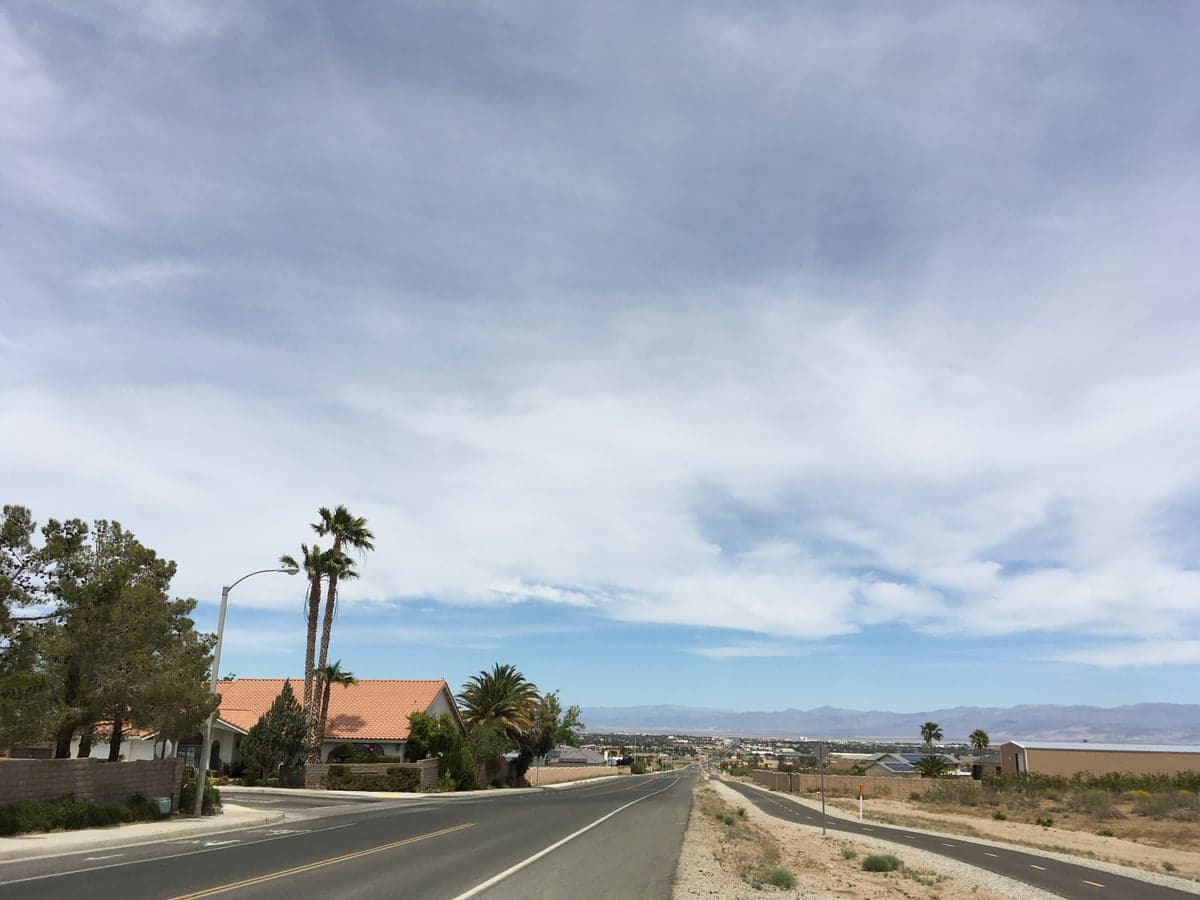
The people of Ridgecrest, California, today form a tight-knit, predominantly white and Hispanic community of 28,138 residents, shaped overwhelmingly by the U.S. Navy and its nearby China Lake Naval Air Weapons Station. With a foreign-born population of just 3.1% — far below the California average of 27% — Ridgecrest is notably less diverse than the state as a whole, yet it maintains a distinctive identity as a stable, family-oriented desert town where military and civilian aerospace careers anchor daily life. The city’s character is one of self-reliance and civic pride, with a population density of roughly 1,100 people per square mile, giving it a spacious, suburban feel.
How the city was settled and grew
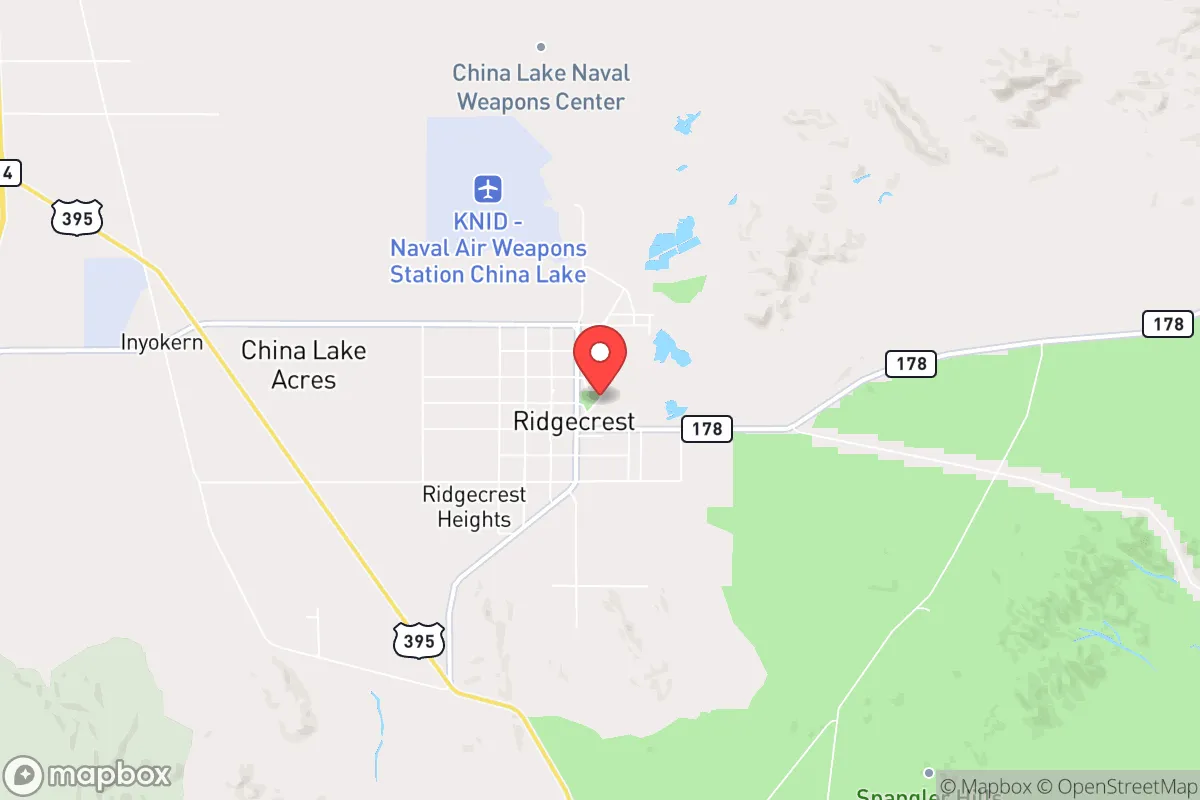
Ridgecrest’s human history is almost entirely a 20th-century story. The area was originally inhabited by the Kawaiisu and Panamint Shoshone peoples, but no permanent non-Native settlement existed until the early 1900s. The town was founded in 1912 as a small agricultural and mining outpost called Crumville, later renamed Ridgecrest in 1947. The transformative event was the U.S. Navy’s establishment of the Naval Ordnance Test Station (now China Lake) in 1943, which drew a wave of engineers, scientists, and support personnel from across the country. These early arrivals — mostly white, college-educated professionals — built homes in the Historic Downtown area and the China Lake Acres neighborhood, a rural residential zone just north of the base. A second wave came during the Cold War arms race of the 1950s and 1960s, when the base expanded to develop the Sidewinder missile and other advanced weapons. This period saw the construction of the Lassiter Heights subdivision, a planned community of ranch-style homes that attracted middle-class families, many of whom were military retirees or civilian defense contractors. By 1960, the population had grown to roughly 5,000, nearly all white, with a small number of Hispanic and Black families working in support roles on base or in local services.
Modern era (post-1965)
After the 1965 Hart-Cellar Act, Ridgecrest saw modest diversification, though far less than coastal California cities. The Hispanic population grew steadily from the 1970s onward, driven by families from Mexico and Central America who moved into the West Ridgecrest area, a working-class neighborhood of smaller homes and mobile home parks near the city’s western edge. Today, Hispanic residents make up 21.1% of the population, concentrated in West Ridgecrest and parts of the North Gateway district. The Black population, at 4.4%, is largely composed of military families stationed at China Lake, with many living in on-base housing or the Balsam Street corridor, a mixed-income area near the base’s main gate. East and Southeast Asian communities (3.0%) — primarily Filipino and Korean families — arrived in the 1980s and 1990s, often as civilian engineers or military personnel, and settled in the China Lake Acres and Lassiter Heights neighborhoods. The Indian subcontinent population (0.6%) is small but growing, with professionals in tech and engineering roles at the base. White residents, at 64.3%, remain the majority and are dispersed across all neighborhoods, though they are most concentrated in the newer Ridgecrest Heights subdivision, a master-planned community built in the 2000s. The college-educated share of 31.7% reflects the base’s high-skill workforce, though this is below the national average for similar defense towns.
The future
Ridgecrest’s population is projected to remain stable or grow slowly, with the U.S. Navy’s continued investment in China Lake as a key driver. The base’s role in testing hypersonic weapons and electronic warfare systems is expected to sustain demand for engineers and technicians, potentially attracting a new wave of younger, more diverse professionals. The Hispanic population is likely to increase gradually, as families from the Central Valley and Los Angeles area move inland for affordable housing and base-related jobs. The East/Southeast Asian and Indian communities may grow modestly as the tech sector expands, but Ridgecrest’s remote location — 150 miles from Los Angeles — limits large-scale immigration. The city’s cultural identity is likely to remain conservative and military-oriented, with little change in the political leanings that saw Kern County vote +27 Republican in 2024. New housing developments, such as the Brown Road Estates project planned for the city’s southeast edge, will likely absorb most population growth, attracting families seeking larger lots and proximity to the base.
For someone moving in now, Ridgecrest offers a stable, safe, and affordable community where the Navy and aerospace industries define both the economy and the social fabric. The population is becoming slightly more diverse, but the city’s core identity as a white-majority, family-centric desert town with a strong military ethos is unlikely to shift dramatically in the next decade. New residents should expect a place where neighbors know each other, schools are well-regarded, and the pace of life is slower than in California’s coastal cities.

* Values derived from national, state, county, city and local statistics and may differ in a specific area. Last updated: 2026-10-03T14:21:37.000Z
Narrative content on this page is AI-generated and may contain mistakes. Verify any details that matter before acting on them.
ReloMaps may earn a commission from affiliate links at no extra cost to you.

