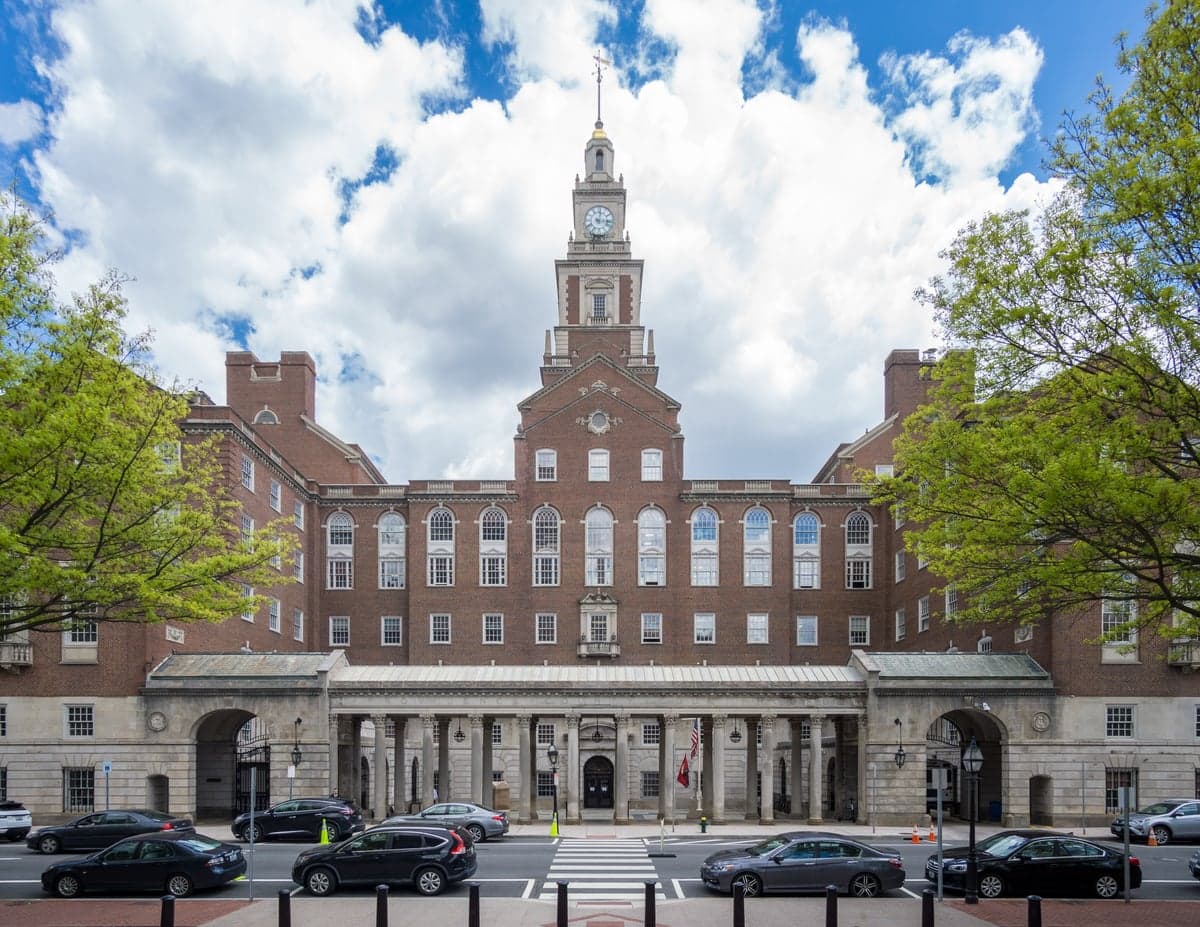
Photo: Wikipedia
Political ClimatePolitical Climate in Providence County
Showing district-level results — no local-only data available.
Local Political AnalysisPolitical Analysis of Providence County
Providence County, Rhode Island, has a Cook PVI of D+4, making it a reliably Democratic area, but it's noticeably less blue than the state as a whole, which sits at D+8. That four-point gap tells you a lot about the internal friction here. While the county's population centers in Providence and Pawtucket drive the overall Democratic lean, the outlying towns and rural pockets push back hard against the progressive tide, creating a political landscape that's more divided than the statewide numbers suggest.
How it compares
The difference between Providence County's D+4 and Rhode Island's D+8 is mostly about the suburbs and exurbs. In Providence itself, you're looking at a deep blue stronghold—think 70-80% Democratic margins in most precincts, with a heavy focus on urban issues like housing, transit, and public-sector unions. But drive 20 minutes northwest to Burrillville or Glocester, and you'll find towns that regularly vote Republican by 10-15 points. These are places where the Second Amendment, property rights, and local control are still taken seriously. Cumberland and Lincoln are the real swing areas—they've trended purple in recent cycles, with school board races and local zoning fights often turning on whether voters feel the state government is overreaching. The county's overall D+4 masks this tension: the Providence machine pulls it left, but the rural and suburban towns are fighting to keep it from going full progressive.
What this means for residents
For someone who values personal freedom and limited government, living in Providence County means constantly watching your back. The state legislature in Providence has been pushing a laundry list of top-down mandates—think strict environmental regulations that hit small businesses, zoning overrides that strip local control from towns like Scituate and Foster, and a steady creep of tax policies that fund urban programs at the expense of rural communities. The county's D+4 lean means these measures usually pass, but the margin is close enough that grassroots opposition can sometimes slow them down. If you're in East Providence or Warwick (technically Kent County, but culturally similar), you'll see the same dynamic: the state government treats the whole county as a laboratory for progressive experiments, while local officials in the redder towns scramble to carve out exemptions.
Cultural and policy distinctions
The real divide here isn't just party lines—it's about trust in government. In Providence and Pawtucket, there's a general acceptance that the state knows best on issues like education policy, housing density, and environmental rules. But in Burrillville, Glocester, and Foster, you hear a lot of grumbling about "Providence knows best" being code for "we'll tell you how to live." The recent push for statewide rent control and mandatory affordable housing quotas has been a flashpoint, with rural towns arguing it's a direct assault on property rights. The county's D+4 PVI means these fights aren't going away—the urban core has the votes, but the rural towns have the energy and the willingness to push back. If you're considering a move here, know that your experience will depend heavily on which town you pick. The county's political climate is a patchwork, not a monolith, and the tension between state power and local freedom is the defining issue for anyone who values keeping government at arm's length.

State Political ClimatePolitical Climate in Rhode Island
State Political AnalysisPolitical Environment in the State
Rhode Island has been a reliably Democratic state for decades, with a Cook PVI of D+8, meaning it votes about eight points more Democratic than the national average in presidential elections. The dominant coalition is a mix of union labor, public-sector employees, and urban progressives in Providence, Pawtucket, and Central Falls, with a growing suburban liberal base in places like Barrington and East Greenwich. Over the last 10-20 years, the state has shifted leftward on social and economic issues, though a stubborn conservative minority holds ground in the rural western and southern towns, making the political map more sharply divided than its small size suggests.
Urban vs. rural divide
The political geography of Rhode Island is a tale of two worlds. Providence, the capital and largest city, is the engine of Democratic dominance, with precincts routinely delivering 70-80% of the vote for Democratic candidates. The city's economy is anchored by Brown University, Rhode Island Hospital, and a growing tech and creative sector, which attracts a young, educated, and left-leaning population. Pawtucket and Central Falls, old mill towns with large immigrant communities—especially from Latin America and West Africa—are similarly deep blue, driven by union ties and social service dependency. On the flip side, the rural western half of the state, including towns like Foster, Glocester, and Burrillville, votes reliably Republican. These areas are home to working-class families, small farmers, and gun owners who feel increasingly alienated from the coastal liberal consensus. The suburban ring around Providence—places like Cranston, Warwick, and North Kingstown—is the true battleground, often deciding state-level races. Cranston, for example, has a Republican mayor (Ken Hopkins) but votes Democratic in presidential elections, reflecting a split-ticket tendency that keeps the state from becoming as lopsided as Massachusetts.
Policy environment
Rhode Island's policy environment is a mixed bag for conservatives, with some bright spots and many red flags. On taxes, the state is one of the highest-taxed in the nation, with a top income tax rate of 5.99% on income over $155,050, a sales tax of 7%, and property taxes that vary wildly—Providence's rate is about $24 per $1,000 of assessed value, while rural Foster is closer to $15. The regulatory posture is heavy: the state has a strict renewable energy mandate (100% by 2033), a $15 minimum wage, and a paid family leave program funded by a payroll tax. Education policy is dominated by the teachers' union, with school choice limited to a small, means-tested voucher program for low-income students in Providence. Healthcare is heavily regulated, with the state running its own health insurance exchange and expanding Medicaid under the Affordable Care Act. Election laws are moderately restrictive: no-excuse mail voting was made permanent after 2020, but voter ID is required. The state also has a "sanctuary" policy limiting cooperation with federal immigration enforcement, which was codified by executive order in 2021 and remains a flashpoint.
Trajectory & freedom
Over the last five years, Rhode Island has become less free by most conservative measures. The 2022 "Rhode Island Reproductive Privacy Act" codified abortion rights up to viability, removing any parental notification requirement for minors—a significant expansion of state power over family decisions. On gun rights, the state passed a 2023 "safe storage" law requiring firearms to be locked up or face criminal penalties, and a 2024 "assault weapons" ban that effectively outlaws many popular semi-automatic rifles. Property rights took a hit with the 2021 "Rent Stabilization Act" in Providence, which caps annual rent increases at 4% plus inflation, a policy that has discouraged new housing construction. On the positive side for conservatives, the state's "Parental Bill of Rights" (2023) requires schools to notify parents about curriculum changes and medical services, though it was watered down from the original version. The biggest freedom concern is the state's aggressive COVID-era mandates, which included one of the longest-running indoor mask mandates in the country and a vaccine mandate for healthcare workers that remains in effect. The state's "Right to Shelter" law, unique in New England, mandates emergency housing for families with children, creating a magnet for out-of-state homeless populations and straining local budgets.
Civil unrest & political movements
Rhode Island has seen its share of political flashpoints. The 2020 Black Lives Matter protests in Providence were large and occasionally violent, with the city's statue of Christopher Columbus vandalized and later removed by the mayor. The state's sanctuary policy has led to periodic standoffs between local police and ICE, most notably in Central Falls, where the city council voted in 2017 to limit cooperation with federal immigration authorities. On the right, the Rhode Island Republican Party is small but vocal, with a strong grassroots presence in the "Second Amendment Sanctuary" movement—towns like Foster and Glocester passed resolutions in 2021 declaring they would not enforce certain state gun laws. Election integrity has been a persistent issue: the state's use of mail-in ballots in 2020 led to a lawsuit from the state GOP over signature verification, which was settled with minor changes. The most visible flashpoint for a new resident would be the annual "March for Life" at the State House in Providence, which draws a few hundred counter-protesters from the left, and the "Rhode Island Pride" parade, which has become increasingly politicized with drag performances and anti-police rhetoric.
Projection
Looking ahead 5-10 years, Rhode Island is likely to become more progressive and less friendly to conservative values. The state's population is aging and shrinking—it lost 3.3% of its population between 2010 and 2020—and the growth that does occur is concentrated in Providence and its inner suburbs, driven by immigration and young professionals. The rural towns that vote Republican are losing population faster than the urban centers, meaning their political weight is diminishing. The state's high taxes and regulatory burden are driving out middle-class families, especially those with school-age children, who often move to Florida, Texas, or New Hampshire. The Democratic supermajority in the legislature is likely to persist, and the next wave of legislation will probably include a "public option" for health insurance, a statewide rent control law, and a carbon tax. The one wild card is the state's fiscal crisis: Rhode Island has one of the highest unfunded pension liabilities per capita in the country, and a future budget crunch could force tax increases or service cuts that accelerate out-migration. A conservative moving in now should expect to be a permanent minority, with limited ability to change state policy, but with strong local communities in the western towns where conservative values still hold.
For a new resident, the bottom line is this: Rhode Island offers beautiful coastline, historic towns, and proximity to Boston and New York, but it comes with a heavy price tag in taxes, regulation, and cultural conformity. If you value low taxes, gun rights, school choice, and limited government, you will find yourself swimming against a strong tide. The best bet for a conservative is to settle in a rural town like Foster or Burrillville, where the local culture is more aligned with your values, and accept that state-level politics will be an uphill battle. If you're a parent, be prepared to navigate a school system that prioritizes equity over excellence, and consider private or homeschool options. Rhode Island is a beautiful place to live, but it is not a free one by conservative standards.
* Values derived from national, state, county, city and local statistics and may differ in a specific area. Last updated: 2026-05-12T04:33:20.000Z
Narrative content on this page is AI-generated and may contain mistakes. Verify any details that matter before acting on them.
ReloMaps may earn a commission from affiliate links at no extra cost to you.

