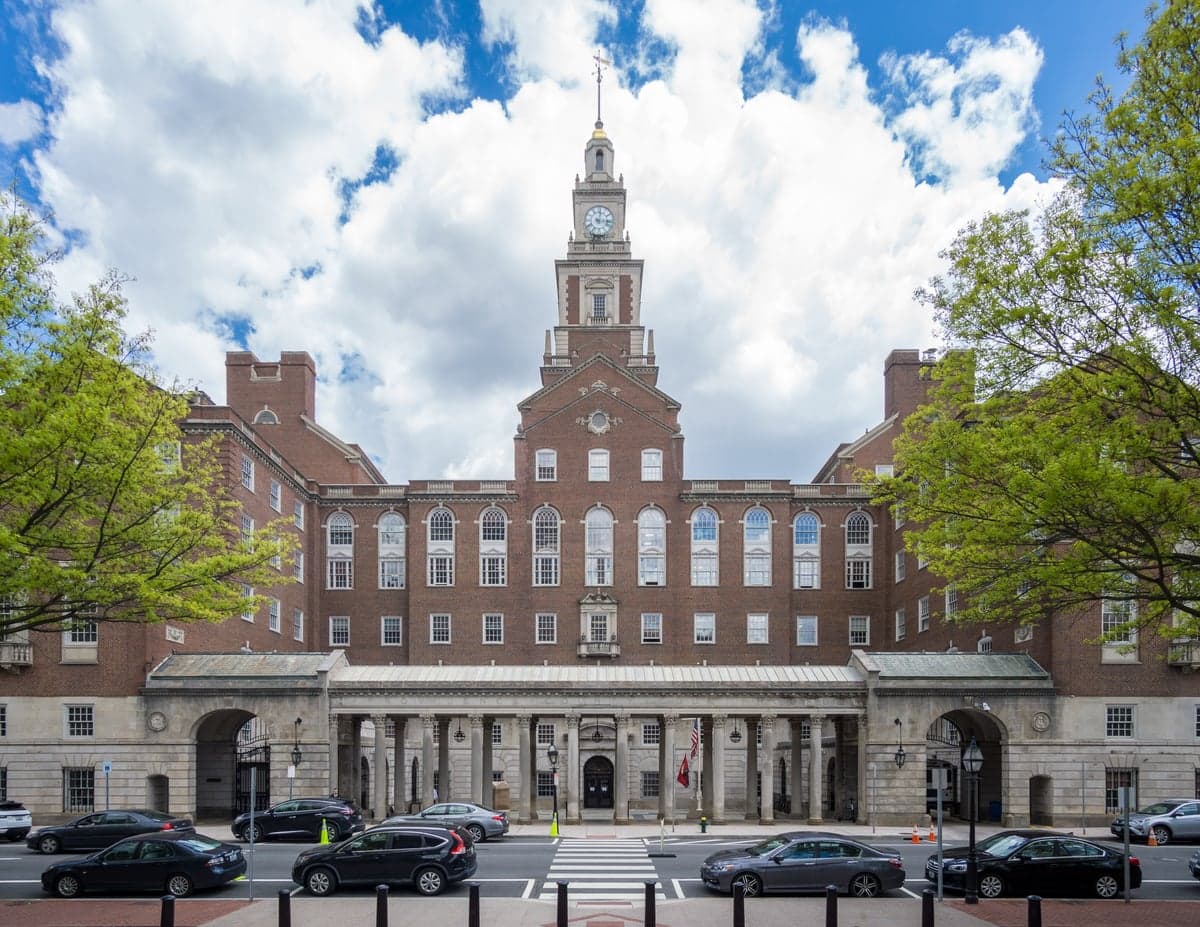
Photo: Wikipedia
Demographics of Providence County
Affluence Level in Providence County
A middle-class area roughly in line with national averages across income, home values, education, and employment.
People of Providence County
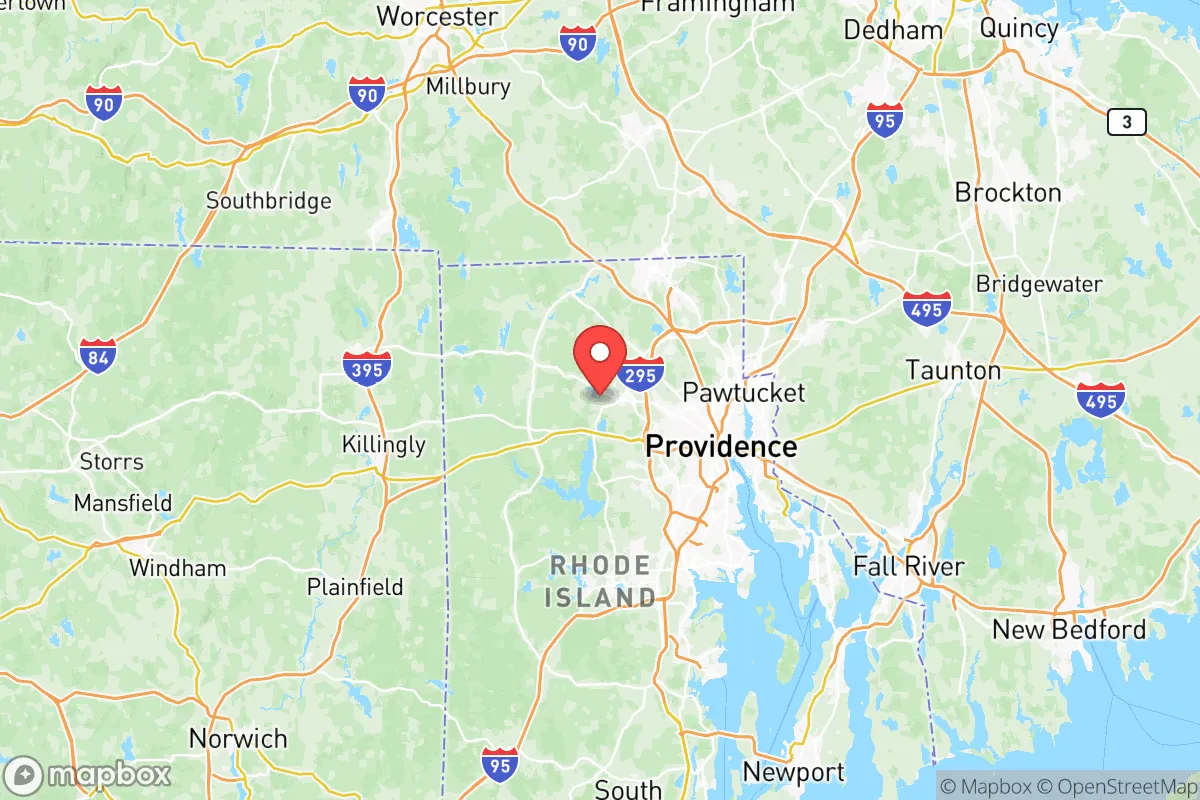
Providence County’s 658,977 residents form the dense, historic core of Rhode Island, a place where a majority-white population (57.6%) coexists with the state’s largest Hispanic community (24.9%) and smaller but established Black (7.2%), East/Southeast Asian (3.0%), and Indian-subcontinent (1.1%) populations. The county is defined by its compact, urbanized footprint—Providence itself is one of America’s oldest cities—and a working-class identity rooted in centuries of immigration and industrial labor. Today, it is a region of stark contrasts: revitalized downtowns alongside struggling mill towns, a growing foreign-born population (9.6%) that is reshaping neighborhoods, and a political culture that leans heavily Democratic, even as some suburban and rural pockets hold more conservative views.
Settlement & growth (pre-1960)
Long before European arrival, the land now comprising Providence County was home to the Narragansett and Wampanoag peoples, who lived in seasonal villages along the Providence River and Narragansett Bay. English colonists, led by the dissident theologian Roger Williams, founded Providence in 1636 as a haven for religious freedom, attracting a mix of Puritans, Baptists, and other nonconformists. The colony’s early economy was based on farming, fishing, and maritime trade, with settlements spreading to Pawtucket and Cranston by the late 1600s.
The Industrial Revolution transformed Providence County in the late 18th and early 19th centuries. Samuel Slater’s cotton-spinning mill in Pawtucket (1793) launched America’s factory system, drawing waves of immigrants to work in the textile mills, machine shops, and jewelry factories that lined the Blackstone and Pawtuxet Rivers. The first major wave was Irish, arriving in the 1840s and 1850s to escape the Great Famine; they settled in Providence’s Federal Hill and Pawtucket’s Woodlawn neighborhoods, building Catholic parishes that still anchor those communities. French-Canadians followed from the 1860s through the 1890s, recruited by mill agents to work in Woonsocket and Central Falls, where they created a distinct Franco-American culture centered on the Church of the Precious Blood and the Union Saint-Jean-Baptiste.
Southern and Eastern Europeans arrived in the great wave of 1880–1920. Italians concentrated in Providence’s Federal Hill, establishing a vibrant enclave of bakeries, social clubs, and the St. Mary’s Feast. Poles settled in Greenville and Johnston, building St. Adalbert’s Church and the Polish American Citizens Club. Portuguese immigrants, many from the Azores, established a presence in East Providence and Bristol (though Bristol is in Bristol County, the Portuguese community spills into East Providence). By 1920, Providence County was one of the most ethnically diverse places in New England, with a foreign-born population exceeding 30%. The Great Depression and World War II slowed immigration, but the county’s industrial base—textiles, jewelry, machine tools—continued to employ second- and third-generation descendants of these groups through the 1950s.
Modern era (post-1965)
The 1965 Hart-Cellar Act fundamentally altered Providence County’s demographic trajectory. The first major post-1965 wave was Hispanic, primarily Puerto Ricans and Dominicans, who began arriving in the 1970s and 1980s. They settled in Providence’s South Side and Olneyville, where they replaced departing white ethnic populations in aging housing stock. By 2000, the Hispanic share of the county had risen to 15%, and it now stands at 24.9%. The community is predominantly Puerto Rican and Dominican, with growing numbers of Guatemalans and Colombians. The enclave is visible in the bodegas and Pentecostal churches along Broad Street and Westminster Street, and in the annual Providence Puerto Rican Festival.
East and Southeast Asian immigration began in the 1970s with refugees from the Vietnam War, including ethnic Chinese from Vietnam. They established a small but visible presence in Providence’s Elmwood and Mount Hope neighborhoods, opening restaurants and grocery stores. The Asian share of the county is now 3.0%, with Cambodian and Laotian communities forming the largest subgroups. Indian-subcontinent immigration (1.1%) is more recent, driven by tech and healthcare professionals since the 1990s, with a concentration in Cumberland and Lincoln near the Route 295 corridor.
Domestic migration has been less dramatic than in Sun Belt counties, but notable shifts have occurred. The collapse of manufacturing in the 1970s and 1980s triggered a population decline from a peak of 621,000 in 1970 to 621,000 in 1980 (a plateau), then a slow recovery driven by immigration and the expansion of healthcare and education sectors. Brown University, Rhode Island Hospital, and Johnson & Wales University have become major employers, attracting a college-educated workforce (32.2% of adults) from across the Northeast. Suburbanization has pushed some white and Asian families to Smithfield and Scituate, where larger lots and lower taxes appeal to those seeking space from the urban core.
The future
Providence County is likely to continue its gradual diversification, though at a slower pace than the national average. The Hispanic population is the fastest-growing segment, driven by both immigration and natural increase, and is projected to approach 30% by 2040. This growth is concentrated in Providence and Central Falls, where Hispanic residents already form a majority in several census tracts. The East/Southeast Asian and Indian-subcontinent populations are growing more slowly, primarily through professional migration, and are likely to remain small but stable enclaves in the northern suburbs.
The white population, while still a majority, is aging and declining in absolute numbers, as younger white residents move to lower-cost states or to Boston for career opportunities. This trend is most pronounced in the old mill towns of Woonsocket and Pawtucket, where population has stagnated or fallen since 2000. The county is not homogenizing; instead, it is tribalizing into distinct enclaves: Hispanic-majority urban neighborhoods, white-majority exurbs, and a small but growing professional class in the downtown Providence condo market. The foreign-born share (9.6%) is below the national average (13.7%), suggesting that Providence County is not a primary destination for new immigrants compared to gateway cities like New York or Boston.
For someone moving in now, Providence County offers a dense, walkable urban experience in Providence itself, with a strong sense of ethnic identity and community. The cost of living is moderate by Northeast standards, but taxes are high, and the public school system in Providence struggles with underfunding and segregation. The region’s future is tied to its ability to retain young professionals and attract new industries beyond healthcare and education, while managing the tensions that come with rapid demographic change in a small, historically insular state.

* Values derived from national, state, county, city and local statistics and may differ in a specific area. Last updated: 2026-05-12T04:33:20.000Z
Narrative content on this page is AI-generated and may contain mistakes. Verify any details that matter before acting on them.
ReloMaps may earn a commission from affiliate links at no extra cost to you.

