
Photo: Wikipedia
Strategic Assessment of Newport County
Multiple tactical vulnerabilities. Population density, target proximity, or disaster risk are likely compounding. A retreat property and exit planning is required.
What does the Strategic Assessment tell us?
Our Strategic Assessment grades tactical survivability of an area. Major population centers, military targets, fallout zones, natural disasters, and border exposure all drive risk — lower exposure means a more defensible position in a crisis.
This is heavily inspired by Joel Skousen's Strategic Relocation book. Highly recommended you checkout the book ($)What does this tell us?
Our Strategic Assessment grades tactical survivability of an area. Major population centers, military targets, fallout zones, natural disasters, and border exposure all drive risk — lower exposure means a more defensible position in a crisis.
This is heavily inspired by Joel Skousen's Strategic Relocation book. Highly recommended you checkout the book ($)Strategic Pillars

Key Distances
Strategic Assessment Analysis
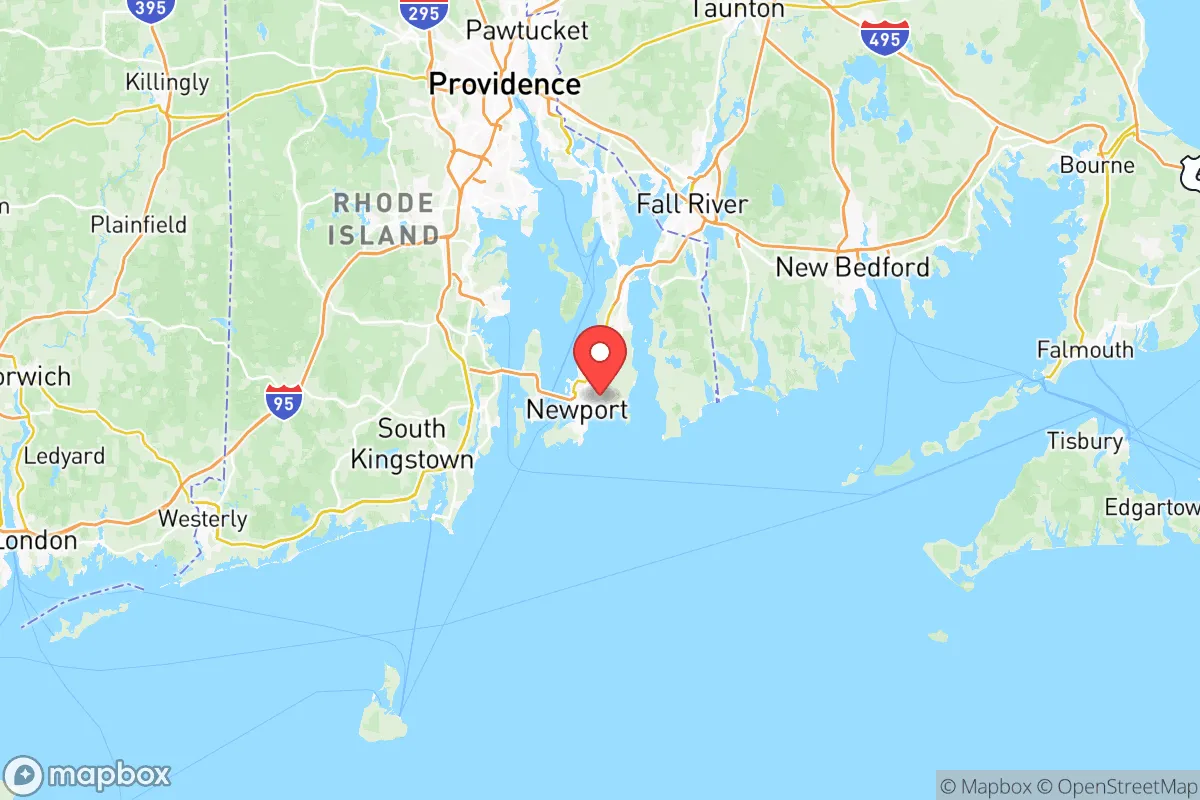
Newport County, Rhode Island, offers a unique strategic profile for the relocation-minded reader focused on resilience: it combines the defensive advantages of an island geography with the vulnerabilities of dense coastal tourism and proximity to major Northeast Corridor targets. The county’s core—Aquidneck Island, home to Newport, Middletown, and Portsmouth—is physically separated from the mainland by bridges, while the less-developed mainland towns of Tiverton and Little Compton provide a rural buffer. This creates a layered environment where a relocator can balance access to maritime resources with the need for distance from high-risk zones, though the area’s dependence on bridges and its position downwind of Boston and Providence introduce serious trade-offs.
Geographic position and natural advantages for long-term security
Newport County’s primary strategic asset is its insular geography. Aquidneck Island, roughly 15 miles long and 5 miles wide, is accessible only via the Claiborne Pell (Newport) Bridge from the west and the Sakonnet River Bridge from the east, both of which are choke points that could be controlled or monitored in a crisis. The island’s eastern shore along the Sakonnet River and its southern exposure to Rhode Island Sound provide natural barriers against overland approach, while the deep-water port of Newport—historically a U.S. Navy hub—offers potential for maritime resupply or evacuation. The mainland towns of Tiverton and Little Compton, though less isolated, sit on a peninsula bounded by the Sakonnet River and Mount Hope Bay, offering a mix of farmland and forest that is relatively sparsely populated compared to the island’s tourist-heavy core. The region’s maritime climate moderates temperature extremes, reducing the risk of the severe winter storms that plague inland New England, though nor’easters remain a recurring hazard. For a relocator prioritizing defensibility, the island’s natural moat is a genuine advantage, but it comes with the caveat that any bridge failure—whether from storm damage, earthquake, or deliberate action—would strand residents and cut off supply lines.
Risks, exposures, and proximity to fallout-relevant landmarks
The county’s resilience profile is significantly undermined by its location within the Northeast Corridor, one of the most densely populated and economically critical regions in the United States. Newport County lies roughly 30 miles south of Providence and 70 miles south of Boston, both major population centers that would be primary targets in a large-scale conflict or terrorist event. The naval history of the area is a double-edged sword: the former Naval Station Newport, now a training center for the Naval War College and other facilities, remains an active military installation. While this provides a local security presence, it also makes the island a potential secondary target. On the mainland, the Port of Providence—a major hub for petroleum, chemicals, and container shipping—is within 25 miles, and the Brayton Point Power Station in nearby Somerset, Massachusetts (a decommissioned coal plant but still a landmark) sits on Mount Hope Bay just north of Tiverton. The Newport Bridge itself is a critical infrastructure node; its destruction would isolate the island entirely. Natural risks include storm surge from hurricanes—Hurricane Sandy in 2012 caused significant coastal flooding in Newport’s low-lying Thames Street area—and the potential for nor’easter-driven erosion along the southern cliffs. The county’s dense summer population (swelling from roughly 85,000 year-round residents to over 150,000 with tourists) creates a seasonal vulnerability: evacuation routes would be overwhelmed in a sudden crisis during July or August.
Practical resilience for a relocator: food, water, energy, and defensibility
For a relocator serious about self-sufficiency, Newport County offers a mixed bag. Local food production is limited but present: Tiverton and Little Compton host a handful of working farms—such as Simmons Farm and the Little Compton Agricultural Conservancy Trust—that produce vegetables, dairy, and meat, but the county as a whole imports the vast majority of its food via the bridges. The island’s rocky, thin soils are not conducive to large-scale agriculture, though backyard gardening is feasible in sheltered areas. Freshwater is a critical concern: Aquidneck Island relies on the St. Mary’s Reservoir system and the Lawton Valley Reservoir, both of which are vulnerable to contamination or drought. The mainland towns draw from groundwater wells, but saltwater intrusion is a growing issue in coastal areas. Energy infrastructure is fragile: the island’s power comes via overhead lines from the mainland, and the 2019 microgrid project at the Naval War College is a military asset, not a civilian one. Most homes use oil or propane for heating, which would require resupply after a disruption. Defensibility is the county’s strongest suit: the island’s limited access points make it relatively easy to monitor and control movement, and the dense network of historic stone walls and wooded areas in Portsmouth and Middletown provides cover for those who know the terrain. However, the high property values—median home prices in Newport exceed $700,000—mean that affordable land for a self-sufficient homestead is scarce, pushing relocators toward the mainland towns where land is cheaper but the defensive advantages are weaker.
The overall strategic picture for Newport County is one of calculated trade-offs. The island geography offers genuine defensive depth and access to maritime resources, but the area’s dependence on bridges, its position downwind of major Northeast Corridor targets, and its limited local food and water production make it a high-risk, high-reward relocation option. For a family or individual willing to invest in bridge-independent supplies—such as a boat for water transport, a well-drilling project, and a substantial food cache—the county can be a defensible redoubt. For those seeking a low-profile, self-sufficient homestead with minimal exposure to fallout risks, the mainland towns of Tiverton and Little Compton are the better bet, though they lack the island’s natural moat. The key takeaway: Newport County is not a bug-out location for the unprepared, but for the strategic relocator who understands its vulnerabilities and mitigates them, it offers a rare combination of natural beauty, historical depth, and genuine defensive potential that few other coastal New England locations can match.

* Values derived from national, state, county, city and local statistics and may differ in a specific area. Last updated: 2026-06-16T22:25:38.000Z
Narrative content on this page is AI-generated and may contain mistakes. Verify any details that matter before acting on them.
ReloMaps may earn a commission from affiliate links at no extra cost to you.

