
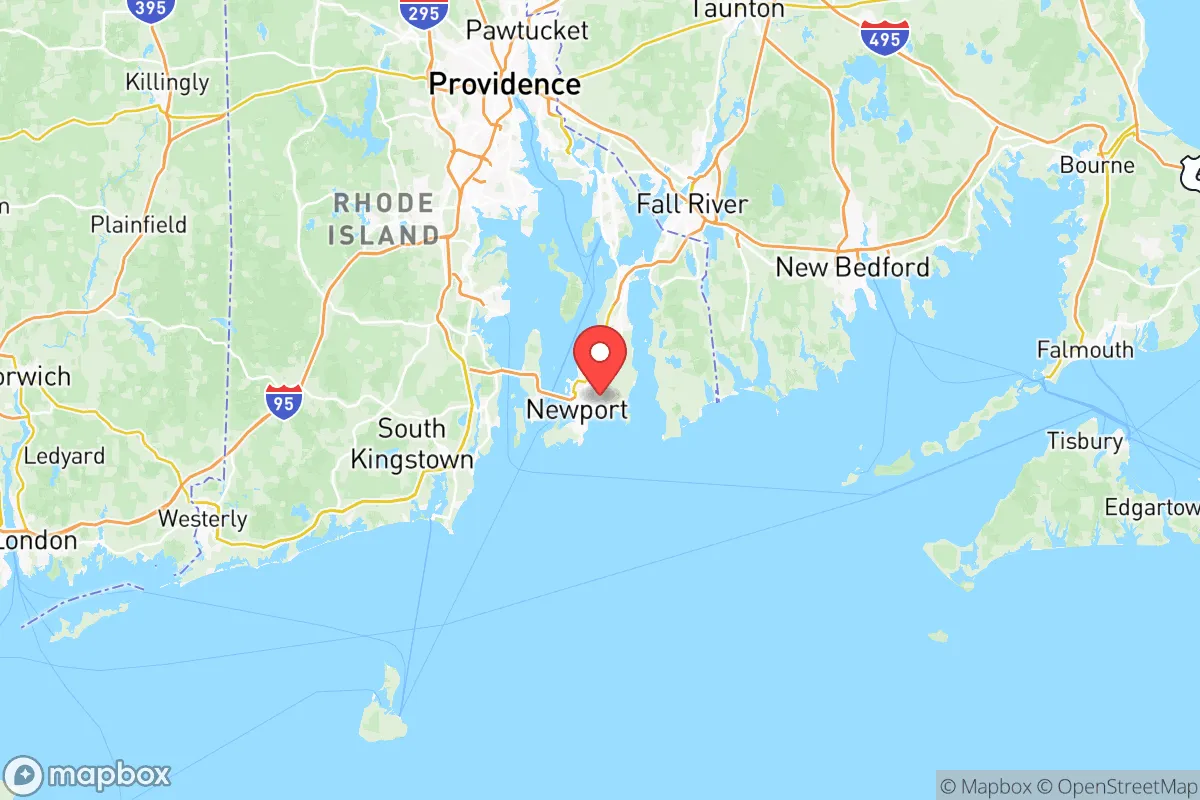
Photo: Wikipedia
Personal Sovereignty in Newport County
Viable for self-reliance. Generally workable, though some barriers may limit total independence.
What does Personal Sovereignty tell us?
Personal Sovereignty measures your capacity for self-reliance and independence with minimal government friction. Higher scores mean fewer barriers between you and the way you want to live... but it assumes you have the space you need and good neighbors.
What does this tell us?
Personal Sovereignty measures your capacity for self-reliance and independence with minimal government friction. Higher scores mean fewer barriers between you and the way you want to live... but it assumes you have the space you need and good neighbors.
State Policy
Energy independence: Importer (1% of energy produced in-state)
Personal Liberty
Homesteading

Personal Liberty Analysis
Newport County presents a complex personal sovereignty environment where state-level restrictions often override local preferences, creating a regulatory landscape that demands careful navigation for those prioritizing autonomy. While Rhode Island as a whole leans toward progressive governance, Newport County's mix of wealthy coastal enclaves, historic preservation districts, and rural inland areas produces distinct pockets where self-reliance and personal freedom are more or less attainable. The county's 2024 political registration shows Democrats holding a 2-to-1 advantage over Republicans, but this masks significant variation between towns like Little Compton and Tiverton, where conservative-leaning independents often hold sway, versus Newport and Middletown, where progressive policies dominate local governance.
Tax burden and regulatory posture across Newport County towns
Rhode Island's overall tax burden ranks among the highest in New England, and Newport County reflects this reality with property tax rates that vary dramatically by municipality. Newport city levies a property tax rate of approximately $16.50 per $1,000 of assessed value, while Little Compton sits around $12.00, and Tiverton near $14.00. The state's income tax is a flat 3.75% on all income above certain thresholds, with no local income tax, which provides some predictability. Regulatory posture is heavily influenced by coastal management and historic preservation: Newport and Middletown enforce strict zoning and building codes tied to their tourism-driven economies, while Portsmouth and Tiverton maintain more permissive agricultural and residential zoning. The Rhode Island Department of Environmental Management (DEM) imposes significant permitting requirements for any property modifications near wetlands or coastlines, affecting roughly 40% of Newport County's land area. For a family seeking minimal regulatory interference, Little Compton and Tiverton offer the lightest touch, while Newport and Middletown require navigating multiple layers of municipal and state approval for even modest property improvements.
Self-defense rights and gun law specifics in Rhode Island
Rhode Island's firearm laws are among the most restrictive in New England, and Newport County residents must comply with state-level mandates that local governments cannot override. The state requires a permit to purchase any handgun, a five-day waiting period for long gun purchases, and a background check for all firearm transfers, including private sales. Newport and Middletown police departments are known for strict interpretation of the "good reason" requirement for concealed carry permits, often denying applications unless the applicant demonstrates a specific, documented threat. In contrast, Tiverton and Little Compton have historically issued permits more liberally, though the 2022 Supreme Court decision in NYSRPA v. Bruen has pressured all Rhode Island jurisdictions to adopt a "shall issue" standard. Magazine capacity is capped at 10 rounds for handguns and 15 for long guns, and "assault weapons" as defined by state law are banned. Stand-your-ground laws do not exist in Rhode Island; the state imposes a duty to retreat before using deadly force outside the home. For a self-defense-minded individual, Tiverton and Little Compton offer the most gun-friendly culture, while Newport and Middletown present a more restrictive environment both legally and socially.
Self-reliance and homesteading viability: lot sizes, zoning, and off-grid feasibility
Homesteading and off-grid living in Newport County are constrained by both state environmental regulations and local zoning, but opportunities exist in the county's rural towns. Little Compton and Tiverton allow agricultural zoning on parcels as small as 2 acres, with many properties exceeding 5 acres, making them viable for small-scale farming, livestock, and substantial gardens. Portsmouth offers a mix of residential and agricultural zones, with minimum lot sizes of 1 acre in rural districts, though proximity to the naval base and suburban development limits true off-grid potential. Off-grid systems like solar panels, rainwater collection, and composting toilets are technically legal but require permits from both the local building department and the Rhode Island DEM, which mandates connection to municipal water and sewer where available. In Newport and Middletown, lot sizes rarely exceed 0.25 acres, and zoning prohibits livestock, large gardens, or any structure not connected to utilities. The state's building code requires all new homes to meet energy efficiency standards that effectively mandate grid connection for most systems. For a family seeking maximum self-reliance, Little Compton and Tiverton are the only towns where a genuine homesteading lifestyle is feasible, and even there, full off-grid independence is difficult due to state-level permitting requirements.
Personal liberties: parental rights, medical autonomy, speech, and property
Parental rights in Rhode Island are protected under state law but face challenges from progressive school board policies, particularly in Newport and Middletown, where school districts have adopted comprehensive sex education and gender identity policies that some parents view as infringing on their authority. Tiverton and Little Compton have more conservative school boards that generally defer to parental decision-making, though state curriculum mandates limit local control. Medical autonomy is constrained by Rhode Island's vaccine mandates for school attendance and healthcare workers, and the state's strict prescription drug monitoring program. The Rhode Island Department of Health has broad authority to mandate public health measures, which was exercised extensively during the COVID-19 pandemic. Free speech protections are robust under both the U.S. and Rhode Island constitutions, though Newport has enacted noise ordinances and public assembly restrictions that some residents argue chill political expression. Property rights are strongest in Little Compton and Tiverton, where zoning boards rarely deny reasonable development requests, while Newport and Middletown impose historic district commissions and design review boards that can veto exterior modifications. For a family prioritizing personal liberties, Little Compton and Tiverton offer the most favorable environment, while Newport and Middletown require accepting more government oversight in daily life.
Overall, Newport County ranks as a moderate-to-restrictive environment for personal sovereignty compared to other regions in the United States, falling well below the autonomy levels found in states like New Hampshire, Texas, or Idaho. The county's coastal towns—Newport, Middletown, and Portsmouth—are heavily regulated due to tourism, historic preservation, and environmental concerns, while the inland and eastern towns—Tiverton and Little Compton—offer significantly more breathing room for those seeking self-reliance. For a conservative-leaning individual or family, the best strategy is to target Little Compton or Tiverton for homesteading and personal liberty, while accepting that Rhode Island's state-level tax burden and firearm restrictions will remain constraints regardless of local choices. The county's natural beauty and coastal access come with a price in regulatory oversight, making it a trade-off rather than a freedom-first destination.

* Values derived from national, state, county, city and local statistics and may differ in a specific area. Last updated: 2026-06-16T22:25:38.000Z
Narrative content on this page is AI-generated and may contain mistakes. Verify any details that matter before acting on them.
ReloMaps may earn a commission from affiliate links at no extra cost to you.

