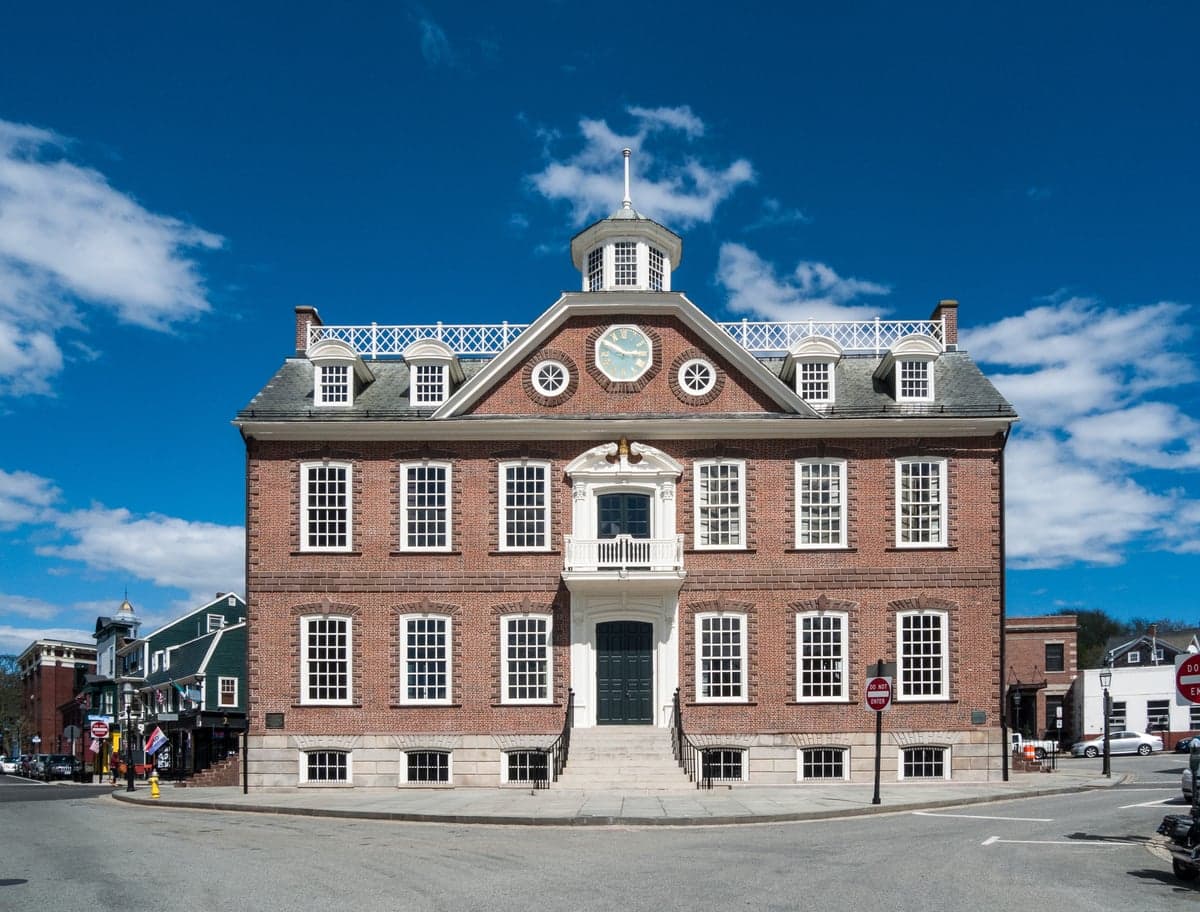
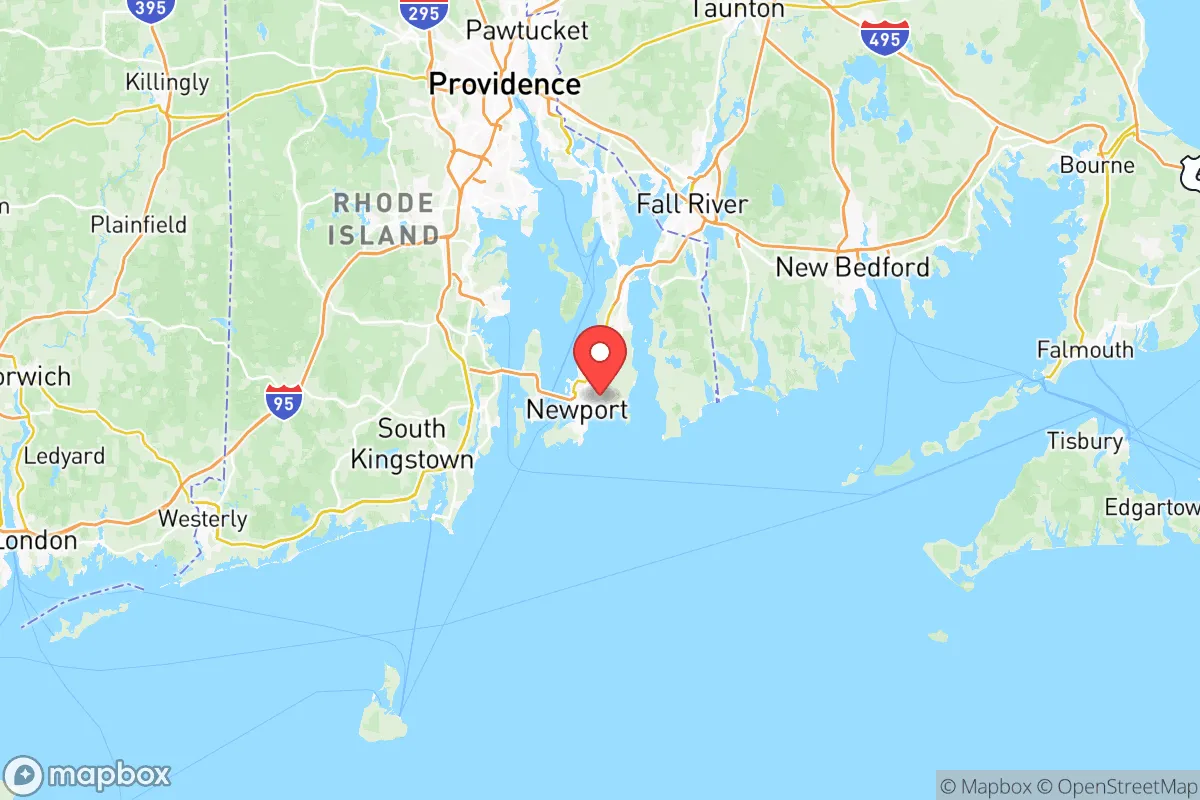
Photo: Wikipedia
Demographics of Newport County
Affluence Level in Newport County
An upper-middle-class area. Household wealth, education levels, and homeownership run ahead of national benchmarks.
People of Newport County
Newport County, Rhode Island, is home to 85,095 residents who form a distinctive blend of old-stock Yankee lineage, Portuguese and Irish maritime heritage, and a growing Hispanic presence, all set within a region defined by historic wealth, naval tradition, and seasonal tourism. The county’s population is notably older and more educated than the national average—53.0% hold a college degree—while its foreign-born share sits at just 2.9%, reflecting a deeply rooted, insular character. The population is 83.3% white, 6.6% Hispanic, 3.4% Black, 1.3% East/Southeast Asian, and 0.5% Indian subcontinent. Despite its small size, Newport County carries an outsized cultural and historical weight, shaped by centuries of maritime commerce, military presence, and summer resort life.
Settlement & growth (pre-1960)
Long before European arrival, the area now known as Newport County was home to the Narragansett people, who used the coastal islands and mainland for seasonal fishing and farming. The first English settlers arrived in 1639, founding Newport on Aquidneck Island as a haven for religious dissenters from the Massachusetts Bay Colony. By the mid-1700s, Newport had grown into one of the busiest ports in colonial America, its wealth built on triangular trade—rum, molasses, and enslaved Africans. A significant Black population, both free and enslaved, lived in Newport and Portsmouth during this era, with the city becoming a center of the early abolitionist movement by the 1780s.
The Revolutionary War devastated Newport’s economy; the British occupied the town from 1776 to 1779, and much of the merchant class fled. Recovery came slowly, but by the 1820s, a new wave of Irish immigrants arrived to build Fort Adams in Newport and work in the growing textile mills of Middletown and Tiverton. The Irish settled densely in the Fifth Ward of Newport and in mill villages along the Sakonnet River. The 1840s Potato Famine brought a second, larger wave of Irish, who formed the backbone of the county’s labor force for generations.
Portuguese immigrants from the Azores and Cape Verde began arriving in the 1870s, drawn by the whaling and fishing industries centered in Newport and Little Compton. By 1900, Portuguese was the second most spoken language in the county after English, and Portuguese fishing families established tight-knit communities along Thames Street in Newport and in the coastal villages of Jamestown on Conanicut Island. Italian immigrants followed in the 1890s-1910s, settling in Newport’s lower Broadway area and working as stonemasons, fishermen, and laborers on the Gilded Age mansions being built along Bellevue Avenue.
The U.S. Navy became the dominant economic force in the early 20th century. The Naval War College opened in Newport in 1884, and the Naval Torpedo Station on Goat Island expanded massively during World War I and World War II, drawing thousands of sailors and civilian workers from across the country. This military presence brought a transient, more diverse population to the county, though most service members did not settle permanently. The construction of the Claiborne Pell Newport Bridge (completed 1969) connected Aquidneck Island to Jamestown and the mainland, accelerating suburban development in Middletown and Portsmouth as bedroom communities for Navy personnel and commuters to Providence and Boston.
Modern era (post-1965)
The 1965 Hart-Cellar Act had a muted effect on Newport County compared to urban centers, but it did reshape the population in specific ways. The county’s foreign-born share remains low at 2.9%, but the composition shifted. Portuguese immigration continued through the 1970s, with families from the Azores settling in Newport’s East End and Middletown. A smaller wave of Brazilian immigrants arrived in the 1990s and 2000s, working in landscaping, cleaning, and the service industry tied to tourism. Today, the Hispanic population stands at 6.6%, with many families concentrated in Newport’s lower-income neighborhoods and in Middletown’s apartment complexes near the naval base.
The most dramatic demographic change since 1965 has been the decline of the Navy presence. The base closures of the 1970s—particularly the 1973 closure of the Naval Torpedo Station—cost the county thousands of jobs and residents. The population of Newport city fell from 34,562 in 1970 to 24,672 by 2020. In response, the county pivoted to tourism and second-home development. Wealthy buyers from New York, Boston, and Connecticut purchased the Gilded Age mansions and built new estates in Little Compton and Jamestown, driving up property values and pushing out working-class families. The Black population, which had been 8.5% in 1970, declined to 3.4% by 2020 as housing costs rose and the Navy’s African American workforce left.
Suburbanization reshaped the county’s geography. Middletown grew from a rural farming town into the county’s commercial hub, with strip malls, chain restaurants, and the largest concentration of rental housing. Portsmouth became a commuter suburb for Providence and Boston, its population rising from 8,000 in 1960 to 17,000 by 2020. Tiverton and Little Compton remained more rural, attracting retirees and second-home owners seeking coastal quiet. The East/Southeast Asian population (1.3%) and Indian subcontinent population (0.5%) are small but growing, concentrated among professionals working at the Naval War College, Newport Hospital, and the University of Rhode Island’s Bay Campus in Narragansett (Washington County, but adjacent).
The future
Newport County is becoming slightly more diverse, but the pace is slow. The Hispanic share is projected to rise from 6.6% to perhaps 10-12% by 2040, driven by natural increase and continued immigration from Central America and Brazil. The East/Southeast Asian and Indian populations will likely grow modestly as the region attracts more healthcare and tech workers, but the county’s high housing costs—median home prices exceed $600,000—will limit in-migration of younger, less affluent families. The white population, while still the overwhelming majority, is aging: the median age in Newport County is 47.1, compared to 38.8 nationally, and deaths are projected to outnumber births in most years through 2040.
The county’s cultural identity is evolving from a Navy town and summer resort into a year-round destination for wealthy retirees and remote workers. Towns like Jamestown and Little Compton are becoming enclaves of the affluent, while Newport and Middletown retain more economic diversity. The school-age population is shrinking, and several towns are consolidating or sharing services. The next 10-20 years will likely see continued gentrification of the waterfront, a slow diversification of the suburbs, and an ongoing struggle to retain young families and working-class residents in the face of rising costs.
For someone moving in now, Newport County offers a place of deep historical roots, strong community institutions, and natural beauty—but it is not a region of rapid growth or dramatic change. The population is stable, aging, and increasingly divided between longtime locals and wealthy newcomers. The character remains distinctly New England: reserved, proud of its heritage, and cautious about the future. Those who value tradition, coastal living, and a slower pace will find it welcoming; those seeking diversity, affordability, or career opportunity may find it limiting.

* Values derived from national, state, county, city and local statistics and may differ in a specific area. Last updated: 2026-06-16T22:25:38.000Z
Narrative content on this page is AI-generated and may contain mistakes. Verify any details that matter before acting on them.
ReloMaps may earn a commission from affiliate links at no extra cost to you.

