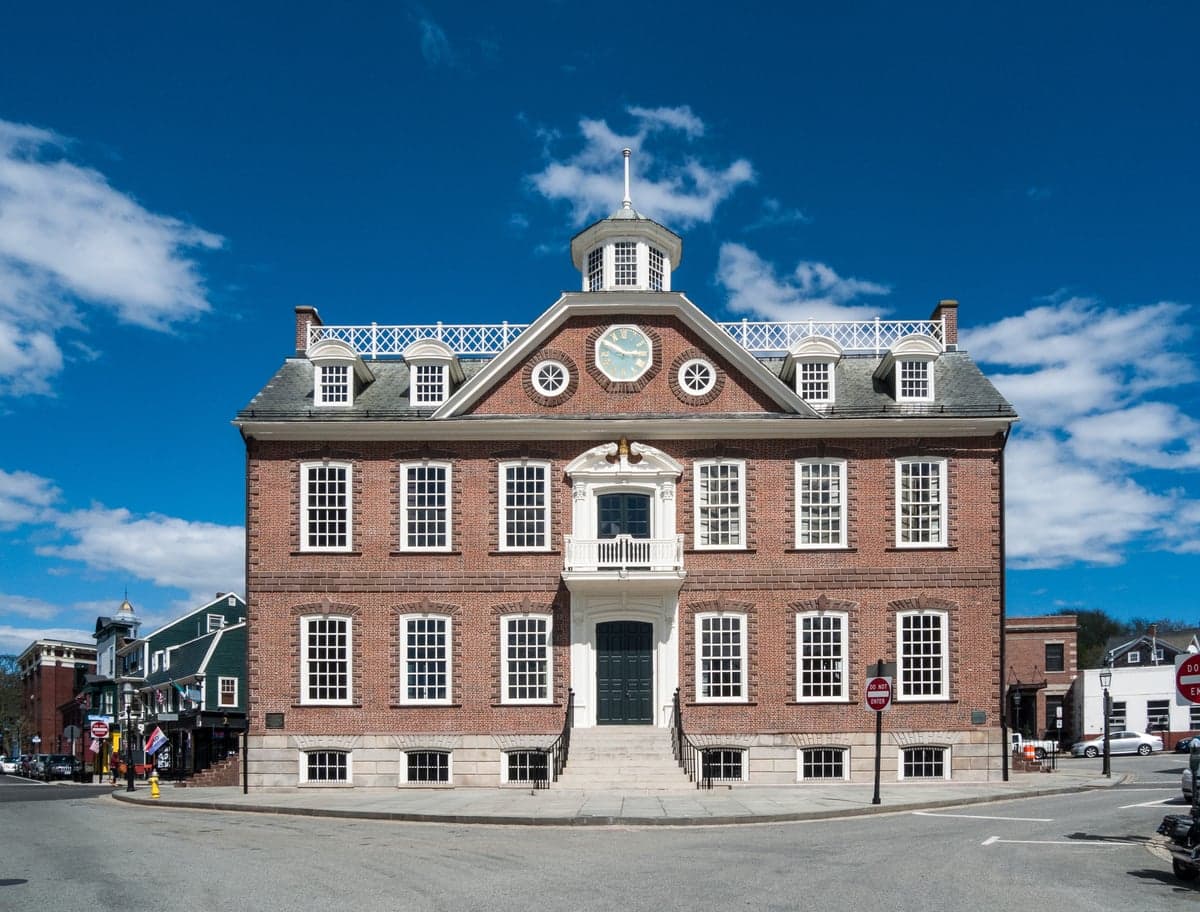
Photo: Wikipedia
Quality of Life in Newport County
A livable area that tracks near national norms for affordability, walkability, and neighborhood health.
What does Quality of Life tell us?
Quality of Life measures an area by evaluating factors like cost of living, nearby amenities, country club access, airport proximity, socioeconomic signals and neighborhood character. For large states, this is a general average — quality of life can vary dramatically between metro areas, suburbs, and rural communities within the same state.
What does this tell us?
Quality of Life measures an area by evaluating factors like cost of living, nearby amenities, country club access, airport proximity, socioeconomic signals and neighborhood character. For large states, this is a general average — quality of life can vary dramatically between metro areas, suburbs, and rural communities within the same state.
Cost of Living
65% above national average
63%
The Real Cost of Living in Newport County for 2026
| Tier | Individual | Family (4) |
|---|---|---|
| Survival | $26k | $50k |
| Comfortable | $109k | $160k |
| Luxury | $182k+ | $282k+ |
| Elite (Top 5%) | $229k+ | $356k+ |
Quality-of-Life Analysis
Newport County offers a quality-of-life spectrum that ranges from the dense, historic, tourism-driven city of Newport itself to quiet, rural coastal villages and inland agricultural pockets, attracting everyone from seasonal second-home owners and yachting professionals to year-round commuters and remote workers. The county’s character shifts dramatically within a 15-mile drive: one neighborhood may pulse with Gilded Age mansions and summer crowds, while another feels like a secluded New England fishing hamlet. This diversity makes the county appealing to those who want walkable urban energy, suburban family life, or genuine rural solitude, all within a compact geography.
Largest town(s) & population centers
Newport is the county’s undisputed hub, with roughly 25,000 year-round residents swelling dramatically in summer. Daily life here centers on Thames Street’s restaurants, boutique shopping, and the Cliff Walk, but also includes a working waterfront with the Naval Station Newport and the Naval War College as major employers. Middletown, directly north, functions as the county’s commercial and residential backbone, with big-box retail along West Main Road, more affordable housing stock, and a family-oriented feel. Portsmouth, further north, blends suburban subdivisions with working farms and the sprawling Portsmouth Abbey campus, offering a quieter, more land-oriented lifestyle. Tiverton and Little Compton on the eastern shore are less dense, with Tiverton’s Four Corners area providing a village center and Little Compton remaining largely agricultural and coastal. The average commute across the county is a manageable 23 minutes, making it feasible to live in a rural pocket and work in Newport or even Providence (about 30 minutes north).
Smaller towns & rural pockets
Beyond the main towns, Newport County contains distinct rural enclaves. Little Compton is the county’s most rural municipality, with a year-round population under 3,500, working farms like Walker’s Roadside Stand, and miles of undeveloped coastline at Goosewing Beach. Jamestown, on Conanicut Island, is a tight-kint island community of about 5,500, accessible only by the Newport Pell Bridge or the Jamestown–Newport ferry; it has a single main street, no chain stores, and a strong sailing culture. Adamsville, a village within Little Compton, is a tiny historic crossroads with a general store and a handful of antique shops. Prudence Island, part of Portsmouth, is accessible only by ferry and has fewer than 100 year-round residents, with no paved roads in many areas. These pockets offer a pace of life that feels decades removed from Newport’s summer bustle.
Cost & lifestyle range
The county’s overall cost-of-living index of 165 (65% above the U.S. average) masks a wide internal spread. At the high end, Newport’s waterfront neighborhoods and Jamestown’s island properties command median home values well above the county’s $559,700 median, often exceeding $1 million for homes with water views. At the more affordable end, parts of Middletown and Portsmouth offer condos and smaller single-family homes in the $400,000–$500,000 range, and Tiverton’s inland areas still have some homes under $400,000. Median rent across the county is $1,652, but studio apartments in Newport during summer can exceed $2,000, while a two-bedroom in Portsmouth may rent for $1,400. Lifestyle range is equally broad: Newport offers nightlife, museums, and the International Tennis Hall of Fame; Jamestown provides quiet island living with a strong community calendar; Little Compton and Adamsville offer solitude, farming, and beach access without commercial amenities. The trade-off is access: rural residents drive 20–30 minutes for groceries or healthcare, while Newport residents walk to everything but pay a premium for parking and space.
Newport County best suits those who value coastal access and historic character above all else and are willing to pay a significant premium for it. Remote workers, military personnel stationed at Naval Station Newport, and retirees often thrive here, as do families who prioritize schools (the county’s districts are generally well-regarded) and outdoor recreation. Those seeking low taxes or sprawling, cheap land will find the county frustrating; those who want a compact, beautiful, and varied coastal environment with a genuine sense of place will find it hard to leave.

Crime in Newport County
Lower crime rates than 75% of comparable U.S. locations.
Violent CrimeViolent Crime Analysis
Property CrimeProperty Crime Analysis
Crime Analysis
Newport County, Rhode Island, reports a violent crime rate of 143.9 incidents per 100,000 residents and a property crime rate of 909.3 per 100,000, placing it in a moderate safety tier relative to the rest of the state. While these figures are lower than the national average for violent crime, the county’s property crime rate is notably elevated, driven largely by seasonal tourism and the concentration of high-value assets in coastal communities like Newport and Middletown. The overall safety picture is mixed: residents in suburban and rural towns generally experience fewer incidents, while the urbanized waterfront areas see higher volumes of theft and vandalism.
Crime in context
Newport County’s violent crime rate of 143.9 per 100,000 is roughly 60% lower than the national average of 380 per 100,000, but it sits slightly above the Rhode Island state average of 130 per 100,000. Property crime, at 909.3 per 100,000, is about 10% higher than the national average of 830 per 100,000 and significantly above the Rhode Island average of 720 per 100,000. The disparity is largely attributable to the county’s tourism economy: the City of Newport, which hosts millions of visitors annually, sees a disproportionate share of larcenies, vehicle break-ins, and bicycle thefts. By contrast, inland towns such as Portsmouth and Little Compton report property crime rates closer to 500 per 100,000, reflecting lower population density and fewer transient targets. The Newport County District Attorney’s office, which operates under the Rhode Island Attorney General’s jurisdiction, has faced criticism from residents for a perceived leniency toward repeat property offenders, a concern amplified by the state’s progressive bail reform policies enacted in 2022. These policies, which prioritize pretrial release for nonviolent offenders, have been linked to a rise in serial theft rings operating across the county’s commercial corridors.
What residents experience
For most residents, the primary safety concern is not violent crime but opportunistic property crime. Unlocked vehicles, bicycles left on porches, and packages taken from doorsteps are the most common complaints in neighborhoods like Newport’s Broadway district and Middletown’s East Main Road corridor. Violent crime is rare but concentrated: the county’s few aggravated assaults and robberies occur almost exclusively in the late-night hospitality zones of Thames Street and Bellevue Avenue in Newport. The town of Jamestown, a small island community connected by bridge, consistently reports the lowest crime rates in the county, with violent crime below 50 per 100,000 and property crime under 300 per 100,000. Tiverton, a more rural town on the Massachusetts border, also enjoys low violent crime but has seen a recent uptick in residential burglaries, likely tied to its proximity to the Fall River, MA, metro area. Residents in Middletown and Portsmouth generally report feeling safe walking at night, though they note that police response times can stretch during summer weekends when tourist volumes spike.
Neighborhood-level variation is pronounced. The historic Hill District of Newport, home to many of the Gilded Age mansions, benefits from private security patrols and low crime. In contrast, the lower-income North End of Newport, near the Newport County Detention Center, sees higher rates of drug-related offenses and disorderly conduct. Suburban developments in Portsmouth and Little Compton offer the safest environments, with crime rates comparable to rural Rhode Island. Residents considering a move to Newport County should weigh the trade-off: the vibrant, walkable urban core of Newport offers cultural amenities but carries a higher risk of property crime, while the quieter towns provide peace of mind at the cost of longer commutes and fewer services. The county’s reliance on a progressive judicial philosophy at the state level means that repeat offenders often cycle through the system quickly, a dynamic that frustrates many long-term residents and fuels calls for stricter local enforcement.
* Values derived from national, state, county, city and local statistics and may differ in a specific area. Last updated: 2026-06-16T22:25:38.000Z
Narrative content on this page is AI-generated and may contain mistakes. Verify any details that matter before acting on them.
ReloMaps may earn a commission from affiliate links at no extra cost to you.

