
Photo: Wikipedia
Personal Sovereignty in Kent County
Viable for self-reliance. Generally workable, though some barriers may limit total independence.
What does Personal Sovereignty tell us?
Personal Sovereignty measures your capacity for self-reliance and independence with minimal government friction. Higher scores mean fewer barriers between you and the way you want to live... but it assumes you have the space you need and good neighbors.
What does this tell us?
Personal Sovereignty measures your capacity for self-reliance and independence with minimal government friction. Higher scores mean fewer barriers between you and the way you want to live... but it assumes you have the space you need and good neighbors.
State Policy
Energy independence: Importer (1% of energy produced in-state)
Personal Liberty
Homesteading

Personal Liberty Analysis
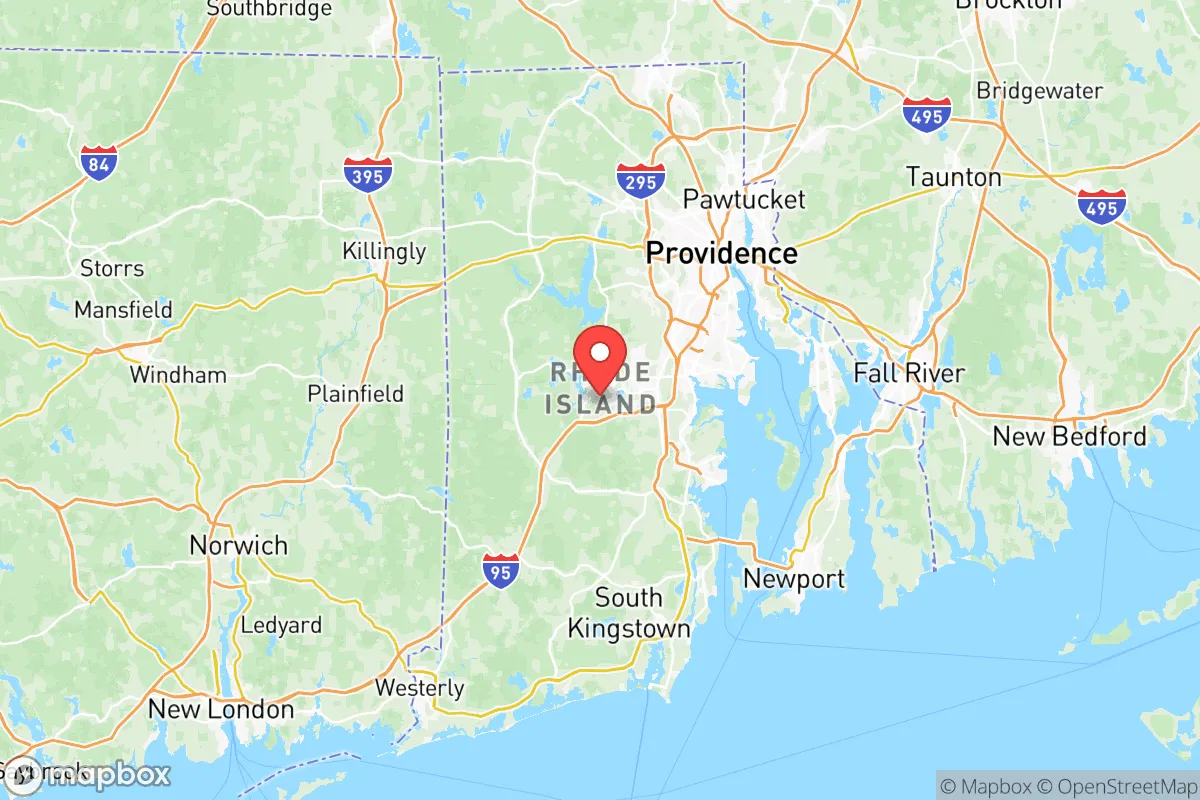
For individuals and families prioritizing personal sovereignty, Kent County, Rhode Island presents a mixed environment where state-level regulatory density often overrides local flexibility, yet specific towns offer pockets of greater autonomy. As the most populous county in the state, encompassing cities like Warwick, Cranston, and West Warwick alongside smaller communities such as Coventry, West Greenwich, and East Greenwich, the area's governance is heavily shaped by Rhode Island's historically interventionist state apparatus. While the county lacks the extreme regulatory constraints of neighboring Providence County's urban core, residents face a notably higher tax burden and more restrictive gun laws than in most of the United States, though opportunities for self-reliance and homesteading exist in the western, more rural towns.
Tax burden and regulatory posture in Kent County
Rhode Island imposes one of the highest combined state and local tax burdens in the nation, and Kent County residents feel this acutely. The state's income tax is a flat 3.75% on all income, but property taxes vary significantly by municipality. Warwick and Cranston carry some of the highest effective property tax rates in the county, often exceeding $18 per $1,000 of assessed value, while more rural Coventry and West Greenwich offer slightly lower rates, typically in the $15–$17 range. The state's regulatory posture is generally heavy-handed: Rhode Island mandates strict building codes, environmental regulations, and land-use permitting that can frustrate homeowners seeking to modify property without extensive approvals. For example, adding a detached workshop or expanding a driveway in Warwick requires multiple permits and inspections, whereas Coventry's more rural character allows for somewhat greater latitude in minor improvements. The state's sales tax is 7%, applied broadly, and vehicle excise taxes remain a persistent annoyance, though some towns have begun phasing them out. Overall, the tax and regulatory climate in Kent County is among the least freedom-friendly in New England, though the western towns provide modest relief compared to the coastal and urbanized eastern communities.
Self-defense and gun law specifics in Kent County
Rhode Island's firearm laws are among the most restrictive in the country, and Kent County residents must navigate a dense web of regulations. The state requires a permit to purchase any handgun, a five-day waiting period for long guns, and a background check for all firearm transfers, including private sales. Concealed carry permits are issued on a "may-issue" basis, meaning local police chiefs in towns like Warwick, Cranston, and East Greenwich have broad discretion to deny applications without a specific reason. In practice, obtaining a concealed carry permit in Kent County is difficult; many applicants report denials or lengthy delays, particularly in the more urbanized municipalities. West Greenwich and Coventry, with their smaller police departments and more conservative populations, are perceived as slightly more accommodating, but the state's legal framework still imposes significant hurdles. Magazine capacity is limited to 10 rounds, and "assault weapons" are banned by state law, effectively prohibiting many popular rifle platforms. Stand-your-ground laws do not exist in Rhode Island; residents have a duty to retreat before using deadly force outside the home. For self-defense-oriented individuals, Kent County is a challenging jurisdiction, and the most practical path to carrying a firearm legally involves relocating to a more permissive state.
Self-reliance and homesteading viability in Kent County
Homesteading and off-grid living are feasible in Kent County's western towns but face substantial regulatory headwinds. West Greenwich and Coventry offer the largest lot sizes in the county, with many parcels exceeding two acres and some reaching five to ten acres, providing space for gardens, small livestock, and even hobby farming. Zoning in these areas is generally more permissive than in the eastern suburbs; for instance, keeping chickens or goats is allowed on properties of one acre or more in Coventry, while Warwick and Cranston restrict such activities to larger lots or prohibit them outright. However, true off-grid living is nearly impossible in Kent County due to state building codes that mandate grid-tied electrical connections for new construction. Solar panels are permitted but must be grid-connected, and composting toilets are not recognized as a primary sanitation solution. Rainwater collection is legal but limited to 100 gallons per property without a permit. The western towns, particularly West Greenwich, have a stronger agricultural tradition and a more tolerant attitude toward self-sufficient practices, but residents should expect to comply with state-level environmental and health regulations that constrain full independence. For those willing to work within the system, Coventry and West Greenwich offer the best balance of space and regulatory leniency in the county.
Personal liberties in Kent County: parental rights, medical autonomy, speech, and property
Rhode Island's progressive state government has enacted policies that significantly shape personal liberties in Kent County. Parental rights are notably constrained: the state mandates comprehensive sex education in public schools, and parents cannot opt their children out of LGBTQ+-inclusive curriculum. Medical autonomy is limited by Rhode Island's vaccine mandates for school attendance and healthcare workers, though COVID-19-era emergency orders have largely expired. Speech protections are robust under both the U.S. and Rhode Island constitutions, and local governments in Kent County generally do not restrict peaceful assembly or expression. Property rights are heavily regulated: the state's coastal zone management program imposes strict development restrictions on waterfront properties in Warwick and East Greenwich, while inland towns like Coventry and West Greenwich have more flexible zoning but still require permits for major alterations. Eminent domain is rarely used in Kent County, but the state's landlord-tenant laws strongly favor renters, which can complicate property management for small-scale landlords. Overall, personal liberties in Kent County are strongest in the realm of speech and weakest in parental and medical autonomy, with property rights falling somewhere in between depending on the specific municipality.
Compared to other regions of the United States, Kent County offers a moderate-to-low level of personal sovereignty, ranking below most of the South and Mountain West but above the urban cores of the Northeast. For a freedom-oriented individual or family, the western towns of Coventry and West Greenwich provide the best available autonomy within the county, with lower taxes, larger lots, and slightly more permissive gun and homesteading environments. However, the state's overarching regulatory framework—particularly in taxation, firearms, and education—means that Kent County will never match the personal sovereignty found in states like New Hampshire, Texas, or Idaho. Relocation to Kent County is best suited for those who value proximity to Providence and the Rhode Island coast and are willing to accept significant constraints on self-defense, medical choice, and property use in exchange for those amenities.

* Values derived from national, state, county, city and local statistics and may differ in a specific area. Last updated: 2026-07-01T17:05:23.000Z
Narrative content on this page is AI-generated and may contain mistakes. Verify any details that matter before acting on them.
ReloMaps may earn a commission from affiliate links at no extra cost to you.

