Photo: Wikipedia
Demographics of Kent County
Affluence Level in Kent County
A middle-class area roughly in line with national averages across income, home values, education, and employment.
People of Kent County
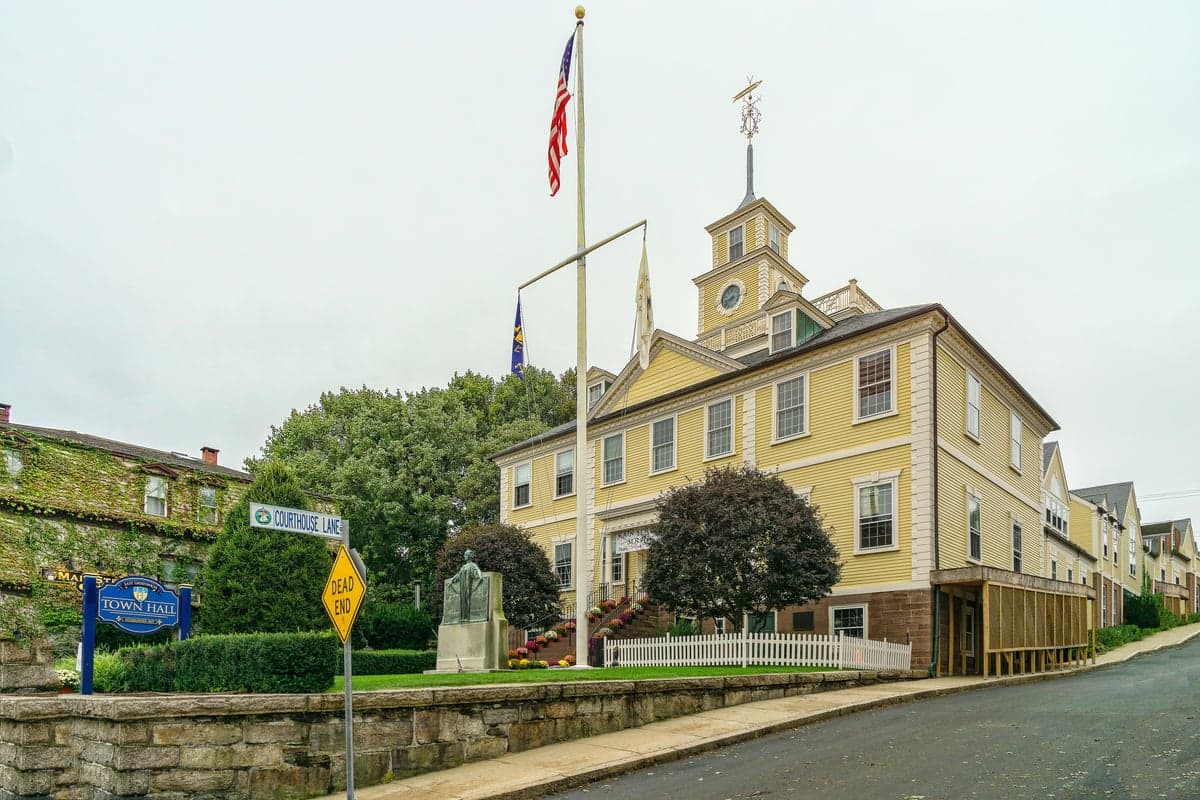
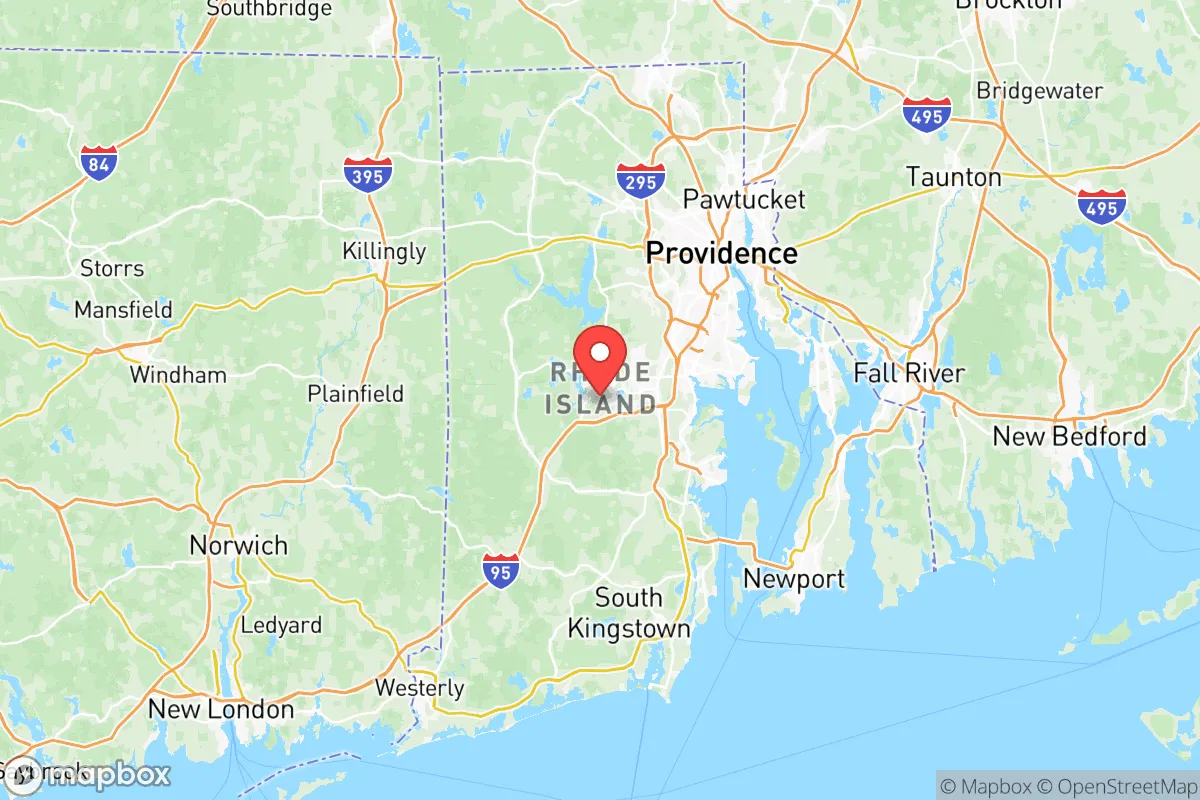
Today, Kent County, Rhode Island, is home to roughly 170,600 residents, making it the second-most populous county in the state, yet it retains a distinctly suburban and small-town character that sets it apart from the urban density of Providence County. With a population that is 84.7% white and a foreign-born rate of just 2.8%—roughly half the national average—the county feels culturally rooted in its New England past, though it is slowly diversifying. Residents identify strongly with their individual towns—Warwick, Cranston, West Warwick, Coventry, and East Greenwich—each offering a different flavor of Rhode Island life, from coastal commuter hubs to inland rural retreats. The county’s identity is shaped by a blend of historic mill-town grit, suburban family stability, and a growing number of professionals drawn by good schools and lower crime rates relative to the state’s urban core.
Settlement & growth (pre-1960)
Long before European settlement, the area now known as Kent County was the territory of the Narragansett and Niantic peoples, who used the Pawtuxet River and coastal bays for fishing and seasonal farming. English colonists from the Massachusetts Bay and Plymouth colonies began arriving in the mid-17th century, establishing the towns of Warwick (chartered in 1642) and East Greenwich (1677) as agricultural and maritime outposts. These early settlers were primarily of English and Welsh stock, and their Congregationalist and Baptist congregations laid the social and political foundations that persist in the county’s town-meeting traditions.
The 19th century brought the first major demographic shift: the Industrial Revolution. The Blackstone and Pawtuxet River valleys became dotted with textile mills, and Kent County’s towns—especially Coventry and West Warwick—saw an influx of French-Canadian and Irish immigrants between 1840 and 1890. French-Canadians came south from Quebec to work in the cotton and woolen mills, settling in tight-knit neighborhoods like Arctic Village in West Warwick and along the Pawtuxet River in Coventry. Irish immigrants, fleeing the Great Famine, took jobs in mill construction and later in the growing railroad yards of Warwick. By 1900, nearly a third of the county’s population was foreign-born, with French-Canadians forming the largest single ethnic bloc.
A second wave of European immigration arrived between 1890 and 1920, this time from Southern and Eastern Europe. Italian immigrants settled in Cranston and Warwick, working in the mills and later in the construction trades, while Polish and Portuguese families established themselves in the mill villages of West Warwick and Coventry. These groups built Catholic parishes—such as St. Anthony’s in West Warwick and St. Mary’s in Cranston—that remain community anchors today. The county’s population grew steadily through the early 20th century, reaching about 85,000 by 1950, as the mill economy held firm and suburban development began creeping outward from Providence.
World War II and the postwar boom reshaped Kent County’s population geography. The construction of Interstate 95 through Warwick in the 1960s, combined with the expansion of T.F. Green Airport, turned the town into a major commuter suburb and retail hub. East Greenwich and Coventry saw an influx of white-collar families leaving Providence, drawn by newer housing stock and the promise of better schools. This period also saw the decline of the textile industry, which hit West Warwick and Coventry hard, leading to a gradual outmigration of younger workers to other parts of New England.
Modern era (post-1965)
The 1965 Hart-Cellar Act had a muted effect on Kent County compared to urban centers like Providence or Boston. The county’s foreign-born population remains low at 2.8%, and the immigrant communities that did form are modest in scale. The most notable post-1965 arrival has been a small but growing Hispanic population—now 6.4% of the county—concentrated primarily in Cranston and Warwick. Many are of Dominican, Puerto Rican, and Guatemalan origin, drawn by service-sector jobs in hospitality, healthcare, and construction. A smaller but visible East/Southeast Asian community (1.6%) has settled in Warwick and East Greenwich, often working in technology and healthcare professions. The Indian-subcontinent population (1.3%) is similarly small and dispersed, with clusters near the hospitals and engineering firms in Warwick and Cranston.
Domestic migration has been the bigger story since 1980. Kent County has experienced steady outmigration of younger adults to lower-cost states in the South and West, while attracting older empty-nesters and remote workers from Massachusetts and Connecticut seeking lower property taxes and quieter surroundings. The Black population remains very small at 1.8%, and there is no significant African American neighborhood or historic enclave comparable to those in Providence. The county’s racial and ethnic landscape is thus one of gradual, modest diversification rather than dramatic change.
Suburbanization has continued to reshape the county’s settlement patterns. Coventry and West Greenwich (a rural town in the county’s western reaches) have seen new subdivisions and a growing number of families priced out of coastal towns like East Greenwich. Meanwhile, Warwick has become increasingly dense and commercial, with apartment complexes and condominiums replacing older single-family homes. The county’s overall population has grown slowly—from about 160,000 in 1990 to 170,658 today—as natural increase has been offset by outmigration.
The future
Kent County is likely to remain one of Rhode Island’s whitest and least diverse counties for the foreseeable future, though the Hispanic and Asian shares will continue to inch upward as younger, more diverse families move into affordable housing in Cranston and Warwick. The county’s population growth will be slow—projected at less than 5% over the next decade—driven primarily by in-migration of older adults from higher-cost parts of New England and by the children of existing residents who stay for the schools and relative safety. The most significant demographic pressure point will be housing affordability: as coastal Rhode Island becomes increasingly expensive, more working families will push inland into Coventry and West Greenwich, gradually extending the suburban footprint. The county’s cultural identity—rooted in its Franco-American and Italian Catholic heritage, its mill-town history, and its fiercely independent town governments—will persist, but it will soften as new residents from outside New England bring different perspectives.
For someone moving to Kent County now, the bottom line is this: you are choosing a stable, family-oriented, predominantly white suburban environment where change comes slowly and community ties run deep. The schools in East Greenwich and Cranston are strong, the commute to Providence is manageable, and the cost of living, while not cheap, is lower than in Boston or coastal Connecticut. If you are looking for rapid growth, high diversity, or a bustling urban scene, this is not the place. But if you want a quiet, safe, historically grounded corner of New England where your neighbors are likely to be third- or fourth-generation Rhode Islanders, Kent County delivers exactly that.

* Values derived from national, state, county, city and local statistics and may differ in a specific area. Last updated: 2026-07-01T17:05:23.000Z
Narrative content on this page is AI-generated and may contain mistakes. Verify any details that matter before acting on them.
ReloMaps may earn a commission from affiliate links at no extra cost to you.

