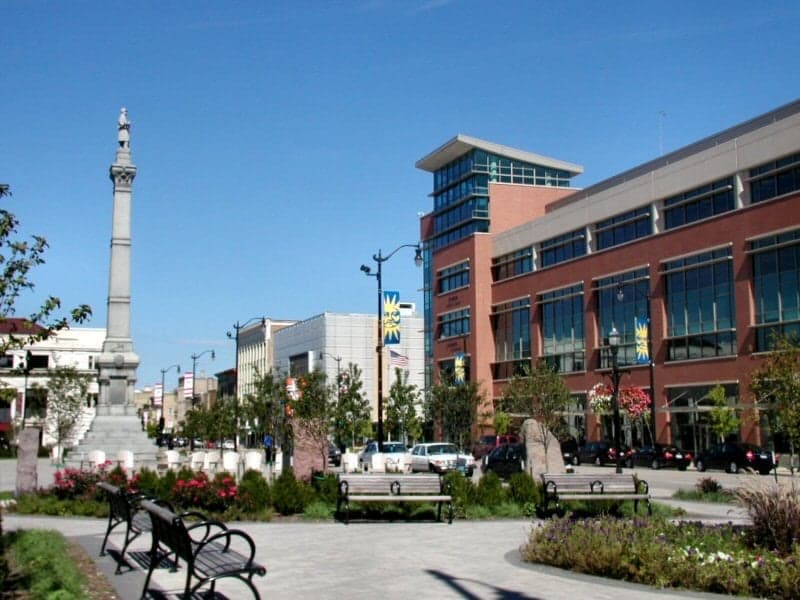
Photo: Wikipedia
Political ClimatePolitical Climate in Racine, WI
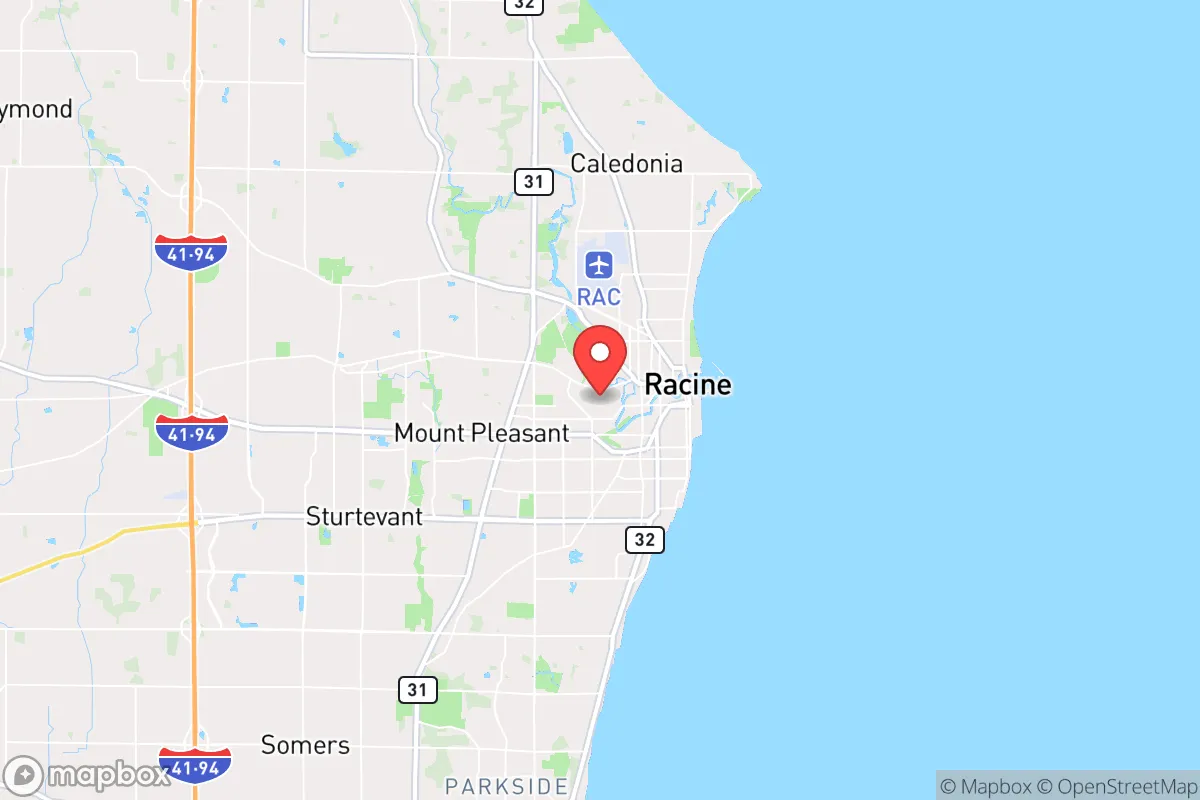
District shown is the primary district for this city’s centroid. Cities may span multiple districts.
Local Political AnalysisPolitical Analysis of Racine, WI
Racine’s political climate has shifted noticeably over the past decade, and if you’ve lived here as long as I have, you can feel it in the air. The Cook PVI sits at R+2, which means the area leans slightly Republican overall, but that number hides a lot of tension. In the 2024 presidential race, Racine County went for Trump by about 3 points, but the city of Racine itself voted solidly blue, while the surrounding towns—like Caledonia, Mount Pleasant, and Burlington—pulled the county rightward. The real story is how fast the city’s progressive wing has gained ground, pushing policies that feel more like Milwaukee’s playbook than the conservative, blue-collar roots this town was built on.
How it compares
Drive 15 minutes west to Burlington, and you’re in a different world—town hall meetings there still focus on property taxes and school choice, not equity audits or sanctuary ordinances. Head east to Kenosha, and you’ll see a similar split: the city votes left, the suburbs and farms vote right. Racine sits right in the middle of that cultural fault line. The contrast is sharpest when you look at school board races. In Racine Unified, progressive candidates have won seats by promising “equity” initiatives and critical race theory-inspired curriculum, while districts like Waterford and Union Grove have held the line on traditional academics and parental rights. That R+2 rating feels generous when you see how fast the city council has moved on issues like defunding police alternatives and allowing homeless encampments in public parks—things that would never fly in the surrounding towns.
What this means for residents
For folks who value personal freedom and limited government, the trend is concerning. The city has steadily increased its regulatory footprint—new rental inspection fees, stricter noise ordinances, and a push for a local “hate speech” ordinance that could chill free expression. Property taxes have climbed faster than inflation, partly to fund expanded social services and a new diversity office. Meanwhile, the county sheriff’s office still takes a tough-on-crime stance, but the city police department has seen morale drop after budget cuts and a civilian review board that second-guesses officers. If you’re a gun owner, Racine’s city council has debated “safe storage” laws that would go beyond state preemption, though they haven’t passed yet. The long-term worry is that as more progressive transplants from Chicago and Milwaukee move in for the lower home prices, they bring voting habits that could flip the county blue within a decade.
On the cultural side, Racine still has a strong church-going, union-hall vibe, especially among the older Polish and Danish families who’ve been here for generations. But the new energy is coming from younger activists and nonprofit groups that push for things like “racial justice” mural funding and bike lane expansions that few residents asked for. The biggest policy distinction is the city’s embrace of “Welcoming Racine” initiatives, which treat illegal immigration status as irrelevant for city services—a stance that puts it at odds with the county’s more enforcement-minded approach. If you want a place where the government stays out of your business and your wallet, the suburbs west of I-94 are still your best bet. But inside the city limits, the political winds are blowing in a direction that should give any freedom-loving resident pause.

State Political ClimatePolitical Climate in Wisconsin
State Political AnalysisPolitical Environment in the State
Wisconsin has long been a classic purple state, but over the past decade it has shifted into a deeply polarized battleground where the conservative vote is concentrated in the rural and exurban areas, while the progressive strongholds in Madison and Milwaukee have grown louder and more organized. The state’s overall partisan lean is essentially a coin flip—Donald Trump won it by less than a point in 2016 and 2020, and the 2024 race was similarly tight—but the trajectory is concerning for conservatives: the urban cores are gaining population and political influence, while the rural base is slowly eroding. If you’re looking at Wisconsin as a relocation option, you need to understand that your experience will vary dramatically depending on whether you settle in a red county like Waukesha or a blue one like Dane.
Urban vs. rural divide
The political map of Wisconsin is a textbook case of the urban-rural split. The Democratic stronghold is Dane County, home to Madison and the University of Wisconsin, which consistently delivers 70-75% of its vote to Democrats. Milwaukee County, with the city of Milwaukee itself, is similarly deep blue, though its suburbs—places like Waukesha, Brookfield, and Menomonee Falls—are among the most reliably conservative areas in the entire Midwest. The real battleground is the “WOW” counties (Waukesha, Ozaukee, Washington) that ring Milwaukee; they’ve held the line for Republicans for decades, but there are signs of suburban drift toward the center, especially among college-educated women. Meanwhile, the rural northwoods and western Wisconsin—places like Hayward, Spooner, and Rice Lake—are deeply red, often voting 65-70% Republican. The key counties that flipped from Obama to Trump in 2016 and stayed red in 2020 include Door County (a tourist destination that had been reliably blue) and Racine County (a former industrial hub that swung hard right). If you’re a conservative, you’ll feel at home in the WOW counties or the rural north, but you’ll be a distinct minority in Madison or Milwaukee proper.
Policy environment
Wisconsin’s state-level policy environment is a mixed bag for conservatives. On the plus side, the state has a flat income tax rate of 4.4% (down from 7.65% a decade ago), and the Republican-controlled legislature has passed several rounds of tax cuts since 2011. Property taxes are moderate compared to Illinois or Minnesota, and the state has a right-to-work law (passed in 2015) that weakened public-sector unions. However, the governor’s mansion has been held by Democrat Tony Evers since 2019, and he has vetoed numerous conservative bills, including a 2023 bill that would have banned abortion after 14 weeks and a 2024 parental rights bill that would have required schools to notify parents if a child requested a name or pronoun change. The state’s election laws are a perennial flashpoint: Wisconsin uses same-day voter registration and no-excuse absentee voting, which conservatives argue opens the door to fraud, though the 2020 election audits found no widespread issues. On education, the state has a robust school choice program—the Milwaukee Parental Choice Program is one of the oldest in the nation—but the Madison and Milwaukee school districts are deeply progressive and have pushed critical race theory and LGBTQ+ curriculum. For a conservative family, the policy environment is a tug-of-war: the legislature is solidly red, but the governor’s veto pen and the urban school boards can override much of that.
Trajectory & freedom
Wisconsin’s trajectory on personal freedom is a mixed picture, and the trend is slightly concerning for conservatives. On the positive side, the state is a shall-issue concealed carry state with no permit required for open carry, and the 2011 Act 35 preempted local gun ordinances, meaning cities like Madison cannot ban firearms in public parks. The legislature also passed a 2023 bill that would have banned COVID-19 vaccine mandates by private employers, though Evers vetoed it. However, the state has seen a steady erosion of parental rights: in 2024, the Madison school district implemented a policy that allows students to change their gender identity at school without parental consent, and similar policies are being pushed in Milwaukee and Green Bay. On medical freedom, Wisconsin has no religious or philosophical exemption for childhood vaccine mandates in schools, though a medical exemption is available. The state’s 2020 election law changes—including the widespread use of drop boxes and the acceptance of indefinitely confined status for absentee voting—remain a sore spot for conservatives who feel the system lacks integrity. The bottom line: Wisconsin is still relatively free on guns and taxes, but the cultural and educational fronts are moving in a progressive direction, especially in the urban centers.
Civil unrest & political movements
Wisconsin has been a flashpoint for political unrest, most notably the 2020 Kenosha riots following the shooting of Jacob Blake, which saw businesses burned and two people killed during protests. The state also experienced the massive 2011 Act 10 protests in Madison, where tens of thousands of union members and left-wing activists occupied the capitol for weeks. On the right, the Wisconsin Republican Party is well-organized, and groups like the Wisconsin Institute for Law & Liberty (WILL) have been active in suing over election procedures and school board policies. Immigration politics are less heated than in border states, but there is a growing tension in rural areas over the influx of H-2A agricultural workers and the lack of enforcement. The state has no sanctuary city policies, but Milwaukee and Madison have declared themselves “welcoming cities” and limit cooperation with ICE. Election integrity remains the hottest issue: the 2020 election saw a massive surge in absentee ballots, and the subsequent 2021 audit by the nonpartisan Legislative Audit Bureau found numerous administrative errors, though no evidence of widespread fraud. A new resident will notice that political signs and yard flags are common, and conversations about politics can get heated fast, especially in the suburbs.
Projection
Over the next 5-10 years, Wisconsin is likely to become more competitive and more polarized. The demographic trends favor Democrats: the Madison and Milwaukee metros are growing, while rural counties are losing population. In-migration from Illinois—where taxes and crime are worse—is bringing some conservatives to the WOW counties, but also many left-leaning professionals to Dane County. The 2024 redistricting gave Democrats a more favorable map, and they flipped the state supreme court in 2023, which could lead to the overturning of the current legislative maps. If that happens, expect a wave of progressive legislation on abortion, voting, and education that the governor could sign. However, the rural base is still deeply committed, and the state’s strong gun culture and low taxes will continue to attract conservatives from blue states. The wildcard is the 2026 gubernatorial race: if a Republican wins, the trajectory could shift back toward freedom. For someone moving in now, expect to live in a state where your vote truly matters, but where the cultural and political battles will only intensify.
Bottom line for a new resident: If you’re a conservative, choose your location carefully. The WOW counties and the rural north offer a high degree of freedom on taxes, guns, and local governance, but you’ll be fighting an uphill battle at the state level as long as the governor’s mansion is blue. The school choice programs are a major plus for parents, but you’ll need to be vigilant about what’s being taught in public schools, especially if you’re in a blue county. Wisconsin is still a great place to raise a family if you pick the right town, but it’s no longer the quiet, reliably conservative state it was 20 years ago. You’ll need to stay engaged and vote in every election to keep it from sliding further left.
* Values derived from national, state, county, city and local statistics and may differ in a specific area. Last updated: 2026-05-03T20:39:03.000Z
Narrative content on this page is AI-generated and may contain mistakes. Verify any details that matter before acting on them.
ReloMaps may earn a commission from affiliate links at no extra cost to you.

