Photo: Wikipedia
Political ClimatePolitical Climate in Price, UT
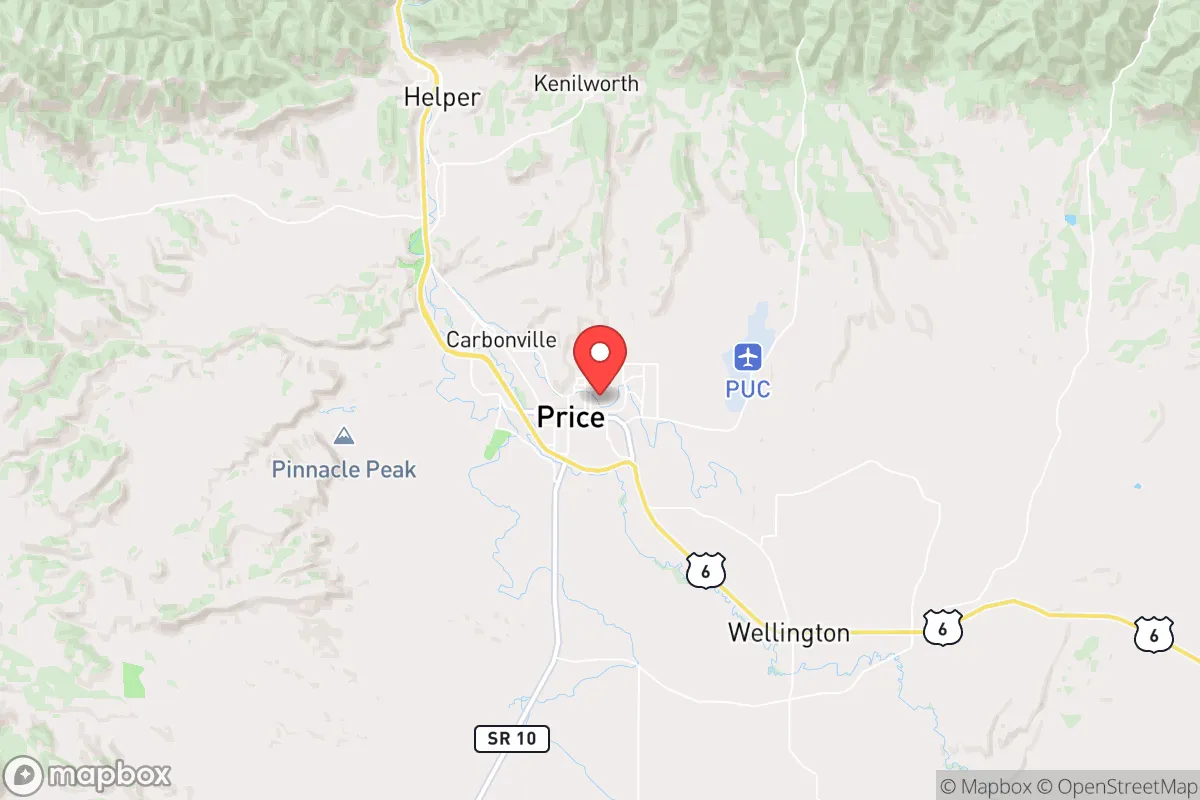
District shown is the primary district for this city’s centroid. Cities may span multiple districts.
Local Political AnalysisPolitical Analysis of Price, UT
Price, Utah, sits in a deeply conservative region, but its politics have a distinct local flavor that sets it apart from the state's broader Republican stronghold. The city's Cook PVI of R+10 is nearly identical to Utah's R+11, but that one-point difference masks a more nuanced reality. Price has historically been a union town, anchored by coal mining and energy production, which gives its conservatism a working-class, populist bent rather than the more libertarian or religiously-infused conservatism found in places like Provo or Salt Lake City. While the area votes reliably Republican, it's not uncommon to hear residents grumble about federal land management or corporate interests in a way that feels different from the suburban GOP orthodoxy.
How it compares
Compared to the rest of Utah, Price is actually a bit more moderate on economic issues, thanks to its labor history. The surrounding Carbon County has a stronger Democratic tradition than most of the state—in 2020, Joe Biden won about 28% of the vote here, which is higher than the 20% he got in Utah County. Neighboring towns like Helper and Wellington lean even more working-class, while the ski resort town of Park City, just a couple hours west, is a liberal outlier in the state. The real contrast is with rural Utah County cities like Spanish Fork or Payson, where the LDS Church's cultural influence is more dominant and the politics are more uniformly conservative. In Price, you'll still find plenty of Trump signs, but you'll also hear people talk about union protections and public lands access in ways that would raise eyebrows in St. George.
What this means for residents
For conservative residents, Price offers a comfortable environment where their views are the norm, but with a pragmatic edge. You won't find the same level of culture-war intensity as in some other Utah towns—people here are more focused on jobs, energy policy, and local infrastructure than on national social debates. For liberal residents, life is more of a balancing act. While you're not likely to face open hostility, you'll be in a clear minority, and political conversations at work or church can be tricky. That said, the area's union history means there's a small but active Democratic presence, and local elections sometimes see competitive races. The practical reality is that most policy decisions—from school board to county commission—are made by conservatives, but the community's small size means personal relationships often matter more than party labels.
One cultural distinction worth noting is the area's relationship with public lands. Unlike some parts of Utah where federal ownership is seen as a federal overreach, many Price residents have a more complicated view—they rely on those lands for recreation and grazing, but also resent restrictions on energy development. This creates a unique political dynamic where you'll find support for both conservative candidates and environmental conservation, as long as it doesn't threaten local jobs. The near future likely holds more of the same: a solidly red area that votes Republican but maintains its own identity, shaped by coal country pragmatism rather than the culture wars dominating national politics.

State Political ClimatePolitical Climate in Utah
State Political AnalysisPolitical Environment in the State
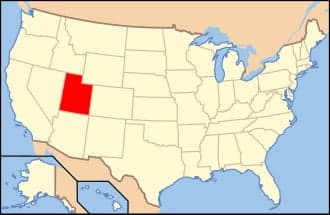
Utah is a deeply red state with a Cook PVI of R+11, but its political reality is far more nuanced than a simple partisan label suggests. The dominant political force remains the Church of Jesus Christ of Latter-day Saints (LDS Church), which shapes a distinct strain of conservatism that is socially traditional but pragmatically pro-business and environmentally conscious in specific ways. Over the last 20 years, the state has shifted from a near-monolithic Republican stronghold to one showing subtle cracks — the fast-growing Wasatch Front counties are becoming more competitive, while rural areas have hardened their conservative stance. The 2024 presidential election saw Donald Trump win Utah by about 22 points, a significant drop from the 37-point margin in 2016, driven largely by suburban defections in Salt Lake County and Summit County.
Urban vs. rural divide
The political map of Utah is defined by a stark urban-rural split. The Wasatch Front — anchored by Salt Lake City, Provo, and Ogden — contains roughly 80% of the state's population and is where the political action happens. Salt Lake County, home to over 1.1 million people, has been trending purple for a decade; it voted for Joe Biden in 2020 and narrowly for Kamala Harris in 2024, driven by the increasingly liberal Sugar House and Downtown neighborhoods. Summit County (Park City) and Grand County (Moab) are reliably blue, fueled by wealthy transplants and tourism workers. In contrast, rural Utah — places like St. George in Washington County, Cedar City, and Vernal in Uintah County — votes Republican by margins of 60-80 points. The divide is cultural as much as political: urban Utahns are more secular, diverse, and educated, while rural residents are overwhelmingly LDS, tied to extractive industries like mining and oil, and deeply skeptical of federal land management. Utah County (Provo) remains a conservative bastion but is slowly moderating as tech workers from Silicon Valley relocate to the "Silicon Slopes" corridor, bringing more libertarian-leaning fiscal conservatism with socially liberal streaks.
Policy environment
Utah's policy environment is defined by low taxes, limited regulation, and a strong emphasis on local control, but with a unique LDS-influenced social framework. The state has a flat income tax rate of 4.65% (down from 5% in 2024) and no state-level property tax on vehicles. Sales tax is around 6.1% but can climb to 8.5% with local options. The regulatory posture is business-friendly, with right-to-work laws and minimal zoning restrictions in most areas, though Salt Lake City has stricter land-use rules. Education policy is a mixed bag: Utah spends the least per pupil in the nation (around $8,200 per student), but the state has a robust school choice system, including a new universal school voucher program passed in 2023. Healthcare is dominated by Intermountain Health, a nonprofit system that keeps costs relatively low, but the state has not expanded Medicaid under the ACA, leaving a coverage gap for about 50,000 low-income adults. Election laws are moderately restrictive: voter ID is required, same-day registration is available, and mail-in voting is universal (all active registered voters receive a ballot automatically). The state has no ballot initiative process for constitutional amendments, which limits direct democracy on hot-button issues.
Recent policy direction
Utah's recent legislative sessions have pushed a distinct blend of conservative priorities with occasional pragmatic surprises. On gun and self-defense law, Utah is a constitutional carry state (no permit needed for concealed carry) and has a "stand your ground" law, but it also passed a red-flag law in 2020 allowing temporary firearm seizure for individuals deemed a threat — a rare compromise that drew backlash from gun rights groups. Parental and education rights have been a major focus: the state passed HB 261 in 2024, which bans diversity, equity, and inclusion (DEI) programs at public universities and K-12 schools, and HB 303, which requires schools to notify parents if a student changes their gender identity or pronouns. Speech and privacy are protected under a strong state constitution, but the legislature has targeted social media platforms with age-verification requirements (SB 152, 2023) and a ban on TikTok on state devices. Medical and bodily autonomy is sharply restricted: abortion is banned after 18 weeks (with exceptions for rape, incest, and maternal health), and a near-total trigger ban passed in 2020 is currently blocked by court order. Property rights are generally strong, but the state's rapid growth has led to conflicts over water rights and land use, particularly in the Wasatch Back (Heber City, Park City) where development pressure is intense. Taxation has moved steadily downward: the 2023 session cut the income tax rate from 4.85% to 4.65%, with further cuts tied to revenue triggers. Voting and ballot access remains stable, though a 2024 law (HB 300) tightened signature verification for mail-in ballots, a move critics call a solution in search of a problem.
Civil unrest & political movements
Utah is not a hotbed of civil unrest, but it has seen organized movements on both sides. The Bundy standoff in 2014 near Moab was a flashpoint for anti-federal land management sentiment, with armed protesters opposing BLM control of grazing lands. More recently, the Save Our Schools movement (2023-2024) mobilized thousands of parents and teachers against the school voucher program, though it failed to stop passage. On the left, the Utah Pride Center and groups like Equality Utah have organized large rallies at the state capitol, particularly after the passage of anti-trans legislation in 2024. Immigration politics are relatively subdued compared to border states: Utah has a "compact" with the federal government that allows local law enforcement to cooperate with ICE, but Salt Lake City has a limited sanctuary policy that restricts city resources from being used for federal immigration enforcement. Election integrity controversies are minimal — the state's mail-in system is widely trusted, and there have been no major fraud allegations. The most visible political flashpoint for newcomers is likely the flag debate (2023-2024), where the legislature replaced the state's pioneer-era flag with a new design, sparking intense cultural arguments about heritage and identity.
Projection
Over the next 5-10 years, Utah's political trajectory points toward a slow but steady moderation along the Wasatch Front, while rural areas remain deeply conservative. The key driver is demographic: the state is growing at about 1.5% annually, one of the fastest rates in the nation, and the new arrivals are disproportionately young, educated, and secular. Salt Lake County will likely become a reliable blue county by 2030, and Utah County could become a swing county within a decade as tech workers from California and Washington continue to move to Lehi and American Fork. The LDS Church's influence is slowly waning among younger members, which will further loosen the social conservative grip on policy. However, the state's gerrymandered legislative districts (the 2021 redistricting was widely criticized as partisan) mean Republicans will retain supermajorities in the legislature for the foreseeable future. The biggest wild card is water: as the Great Salt Lake shrinks and the Colorado River compact faces renegotiation, environmental policy could become a major political fault line, pitting development interests against conservationists in a way that doesn't neatly align with party lines.
For a new resident, the bottom line is this: Utah offers a stable, low-tax, family-friendly environment with a conservative social framework that is slowly loosening. If you're a conservative, you'll find a welcoming political home with strong institutions and a culture of civic engagement. If you're a liberal, you'll find a growing and increasingly influential minority in the urban core, but you'll need to accept that state-level policy will remain conservative for at least another decade. The practical takeaway is that your experience will vary dramatically depending on where you live — Park City and Salt Lake City feel like blue islands in a red sea, while St. George and Provo are as conservative as any place in America. Choose your neighborhood accordingly.
* Values derived from national, state, county, city and local statistics and may differ in a specific area. Last updated: 2026-10-17T03:53:25.000Z
Narrative content on this page is AI-generated and may contain mistakes. Verify any details that matter before acting on them.
ReloMaps may earn a commission from affiliate links at no extra cost to you.

