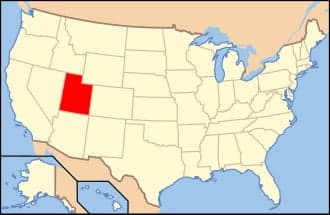
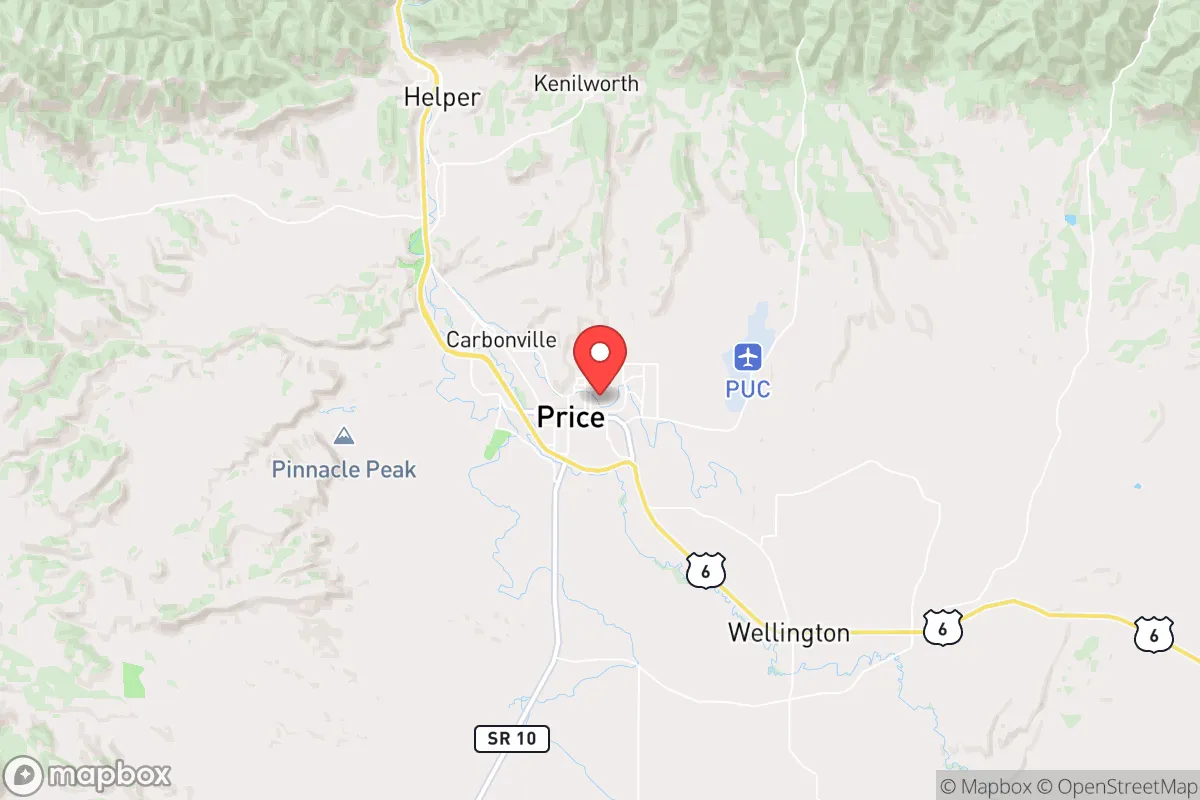
Photo: Wikipedia
Personal Sovereignty in Price, UT
Viable for self-reliance. Generally workable, though some barriers may limit total independence.
What does Personal Sovereignty tell us?
Personal Sovereignty measures your capacity for self-reliance and independence with minimal government friction. Higher scores mean fewer barriers between you and the way you want to live... but it assumes you have the space you need and good neighbors.
What does this tell us?
Personal Sovereignty measures your capacity for self-reliance and independence with minimal government friction. Higher scores mean fewer barriers between you and the way you want to live... but it assumes you have the space you need and good neighbors.
State Policy
Energy independence: Self-sufficient (80% of energy produced in-state)
Personal Liberty
Homesteading

Personal Liberty Analysis
Price, Utah, offers a notably high degree of personal sovereignty, grounded in the state’s strong constitutional protections and a local culture that prizes self-reliance over government intervention. For individuals and families who prioritize autonomy, the area presents a regulatory environment that is light-touch by national standards, with low taxes, permissive gun laws, and a practical tolerance for independent living arrangements. While not as libertarian as some rural Nevada or Alaska enclaves, Price provides a solid foundation for those seeking to minimize their interaction with state and local bureaucracy, particularly when compared to the heavily regulated corridors of the Wasatch Front.
Tax burden and regulatory posture: How light is the government footprint?
Utah’s overall tax burden is among the lowest in the nation, and Price benefits directly from this state-level posture. There is no state income tax on retirement income, and the flat personal income tax rate of 4.65% applies to all earned income. Property taxes in Carbon County are moderate, with the effective rate on residential property typically falling below 0.6% of assessed value, which is lower than the national average. The state’s regulatory climate is consistently ranked as business-friendly, with minimal red tape for small enterprises and a right-to-work law that limits union power. Local zoning in Price is relatively permissive, though the city does enforce building codes and requires permits for new construction. The overall regulatory posture is best described as light-touch but not absent; the state and local governments generally assume residents can manage their own affairs unless a clear public safety issue arises.
Self-defense and gun law specifics: What are the legal boundaries?
Utah is a constitutional carry state, meaning that as of 2021, any law-abiding adult 21 or older can carry a concealed firearm without a permit. Price residents enjoy this right fully, with no additional local restrictions beyond state law. The state has a strong preemption statute that prevents cities like Price from enacting their own gun control ordinances, ensuring uniform rights across the state. Stand-your-ground laws are in effect, with no duty to retreat in any place where a person has a legal right to be. Castle doctrine protections apply to homes, vehicles, and businesses. There is no state-level assault weapons ban, no magazine capacity limit, and no universal background check requirement for private sales. Utah’s firearm laws are among the most permissive in the Western United States, and Price’s rural character means that gun ownership is the norm rather than the exception. For those prioritizing self-defense autonomy, the legal environment is exceptionally supportive.
Self-reliance and homesteading viability: Lot sizes, zoning, and off-grid feasibility
Price sits in a high desert valley, and the practical realities of water availability and soil quality shape homesteading possibilities. Within city limits, standard residential lots range from one-quarter to one-half acre, which is sufficient for a substantial garden and small livestock like chickens or rabbits, but not for larger animals. Zoning allows for accessory dwelling units and workshops, but the city does require connection to municipal water and sewer systems where available. True off-grid living is more feasible in the unincorporated areas of Carbon County, where land parcels of 1 to 40 acres are common and building codes are less stringent. Rainwater collection is legal and encouraged, and solar panel installation faces no significant regulatory hurdles. However, the semi-arid climate means that dryland farming is not viable without irrigation, and well drilling can be expensive and uncertain. For those willing to haul water or invest in a well, the county’s permissive zoning and low land prices make self-sufficient homesteading a realistic goal. The area is particularly attractive for those seeking a balance between small-town amenities and the ability to live with a high degree of independence.
Personal liberties: Parental rights, medical autonomy, speech, and property
Utah has a strong legal framework for parental rights, including a statute that affirms parents’ fundamental right to direct their children’s education, healthcare, and religious upbringing. Price’s school district is responsive to parental input, and the state’s school choice programs, including open enrollment and the Carson Smith Scholarship for special needs students, provide alternatives to the local public schools. Medical autonomy is generally respected, though Utah does have a restrictive medical cannabis program and has not legalized recreational marijuana. Vaccine mandates are limited, and the state passed legislation in 2023 prohibiting discrimination based on vaccination status. Free speech protections are robust, with no significant local censorship or prior restraint issues. Property rights are strongly protected under Utah’s constitutional provisions, and eminent domain is rarely used for private development. The overall legal climate in Price favors individual decision-making over collective mandates, particularly in areas of family life and property use.
Compared to other regions of the United States, Price, Utah, offers a sovereignty profile that is strong but not extreme. It lacks the complete absence of building codes found in some unincorporated Nevada counties, but it also provides a functional local government that keeps roads plowed and emergency services available. For the conservative-leaning individual or family who values personal freedom, self-defense rights, and the ability to live independently without constant government oversight, Price represents a pragmatic middle ground. The area’s combination of low taxes, permissive gun laws, and a culture of self-reliance makes it a compelling option for those seeking to maximize personal sovereignty while still having access to the infrastructure and services of a small city.

* Values derived from national, state, county, city and local statistics and may differ in a specific area. Last updated: 2026-10-17T03:53:25.000Z
Narrative content on this page is AI-generated and may contain mistakes. Verify any details that matter before acting on them.
ReloMaps may earn a commission from affiliate links at no extra cost to you.

