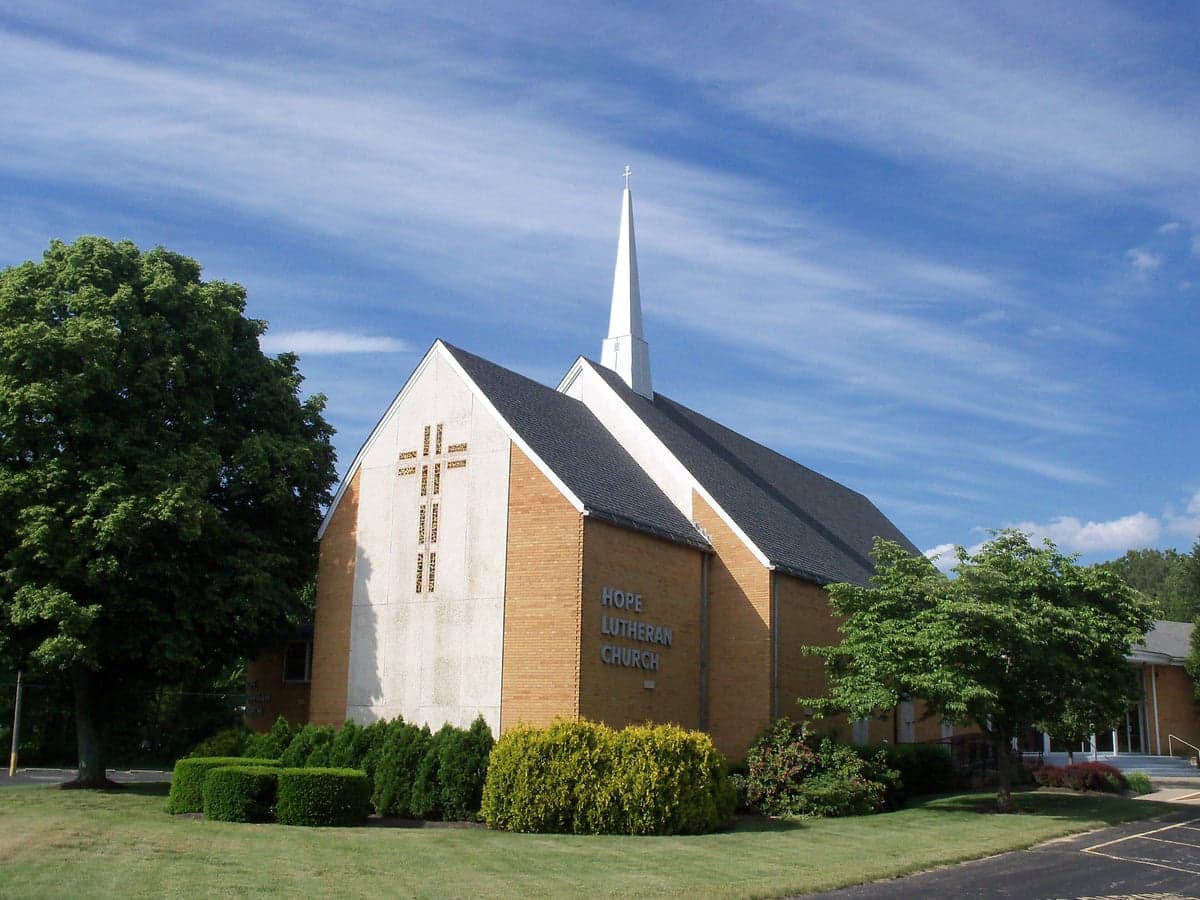
Photo: Wikipedia
Political ClimatePolitical Climate in Portage Lakes, OH
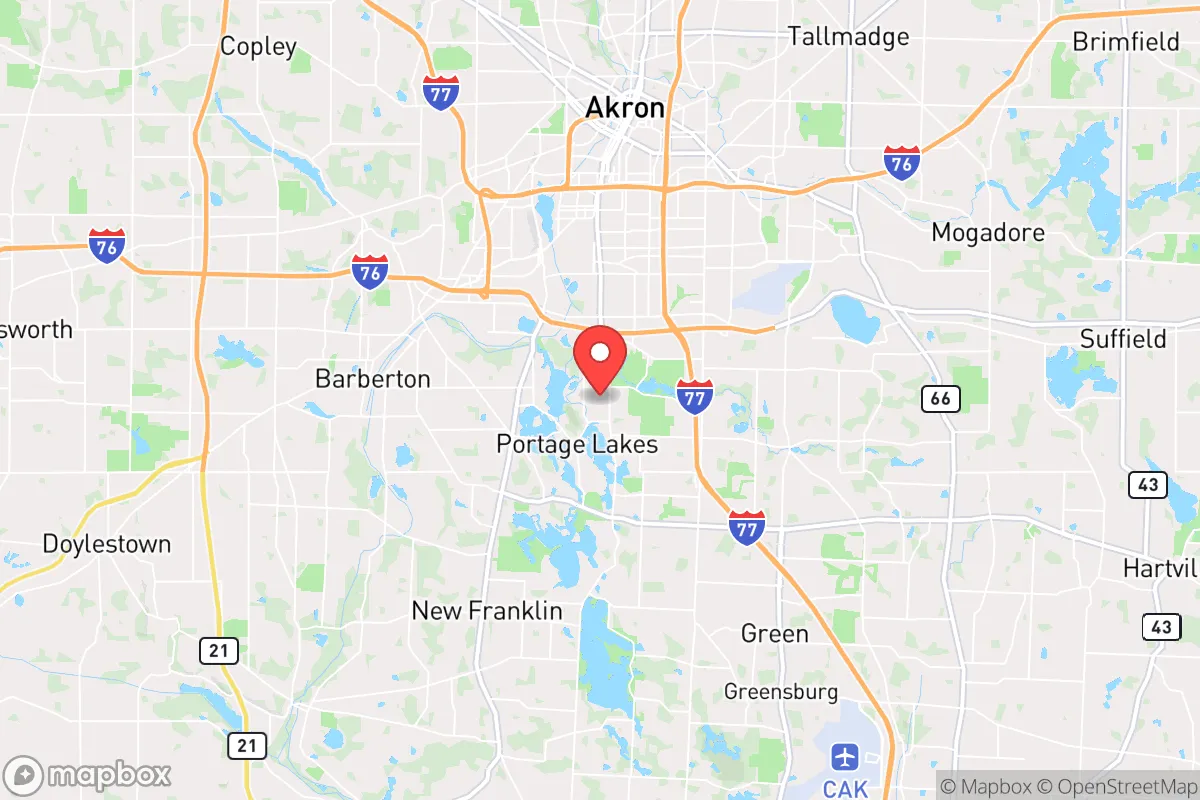
District shown is the primary district for this city’s centroid. Cities may span multiple districts.
Local Political AnalysisPolitical Analysis of Portage Lakes, OH
Portage Lakes, Ohio, sits in a unique political sweet spot. While the surrounding state of Ohio leans Republican with a Cook PVI of R+5, Portage Lakes itself is rated EVEN, meaning it votes almost exactly in line with the national average. This isn't a deep-red or deep-blue bubble; it's a genuine swing pocket where presidential elections are often decided by a few hundred votes. Over the past decade, the area has shifted slightly rightward, mirroring the broader trend in Summit County’s more suburban and exurban precincts, but it still retains a strong independent streak that makes it one of the most politically balanced communities in Northeast Ohio.
How it compares
The contrast between Portage Lakes and the rest of Ohio is stark. Drive 15 minutes north into Akron proper, and you’ll find a solidly Democratic stronghold (Cook PVI D+15) where union households and university influence dominate. Head 20 minutes south to Green or Uniontown, and you’re in R+10 territory, where Trump signs outnumber Harris signs by a wide margin. Portage Lakes sits right in the middle. In the 2020 presidential election, the precincts covering the lakes area split almost 50-50, while Ohio as a whole went for Trump by 8 points. This means a Portage Lakes voter is far more likely to encounter a neighbor with a different political bumper sticker than someone living in either Akron or the southern suburbs. The area’s EVEN rating reflects a community of small-business owners, tradespeople, and lakefront retirees who prioritize local issues—like water quality and property taxes—over national partisan battles.
What this means for residents
For conservatives, Portage Lakes offers a place where your vote actually matters in a statewide context, but you won’t feel isolated. Local Republican clubs are active, and the Summit County GOP puts real resources into the area because it’s winnable. For liberals, it’s not a hostile environment—you’ll find plenty of like-minded neighbors, especially around the more densely developed lakefront areas, and the local Democratic party works hard to turn out voters here. In practice, this balance means local government tends toward moderation. The township trustees and county council members often run as independents or with bipartisan endorsements. You won’t see the kind of culture-war ordinances that pop up in deep-red townships to the south. What you will see is a pragmatic focus on maintaining the lakes, managing development, and keeping taxes competitive—issues that unite both sides. The political climate here feels less like a battlefield and more like a negotiation.
Culturally, Portage Lakes has a distinct identity that transcends party labels. It’s a place where the annual Portage Lakes Festival draws everyone together, regardless of how they voted. The policy distinction that matters most locally is environmental regulation: the lakes themselves are a constant topic, with both conservative and liberal residents pushing for better water quality and responsible shoreline management. That shared concern often overrides national partisan divides. Looking ahead, the area’s EVEN rating could tip slightly red as more retirees from redder counties move to the lakes, but the independent, issue-by-issue voting tradition here is strong. For a new resident, the takeaway is simple: you won’t be preached at, you’ll be listened to, and your vote will count as much as anyone else’s.

State Political ClimatePolitical Climate in Ohio
State Political AnalysisPolitical Environment in the State
Ohio is a classic swing state that has shifted decisively rightward over the past decade, now carrying a Cook Partisan Voting Index of R+5. The state voted for Donald Trump by 8 points in 2020 and by 11 points in 2024, a stark contrast from 2012 when it was a true toss-up (Obama won by 3 points). The dominant coalition is a mix of working-class voters in small cities and rural areas, combined with exurban and suburban conservatives in the Cincinnati and Columbus metros, while the Democratic base is increasingly concentrated in the urban cores of Cleveland, Columbus, and Cincinnati, plus the Mahoning Valley around Youngstown.
Urban vs. rural divide
The political map of Ohio is a textbook example of the urban-rural split. The three Cs — Columbus, Cleveland, and Cincinnati — drive the Democratic vote, with Franklin County (Columbus) delivering 62% for Biden in 2020 and Cuyahoga County (Cleveland) hitting 66%. But the real story is the collapse of Democratic support in the state's small cities and rural areas. Places like Youngstown and Steubenville, once union strongholds that voted reliably Democratic, have flipped hard to the GOP — Mahoning County went from Obama +18 in 2012 to Trump +4 in 2024. The rural northwest, including Lima and Findlay, is now deep red, with Allen County voting Trump +30. The Cincinnati suburbs tell a more nuanced story: Hamilton County (Cincinnati) is competitive but trending Democratic, while the outer ring suburbs like Mason and West Chester remain reliably Republican. The Appalachian southeast, including Athens (home to Ohio University), is a rare blue dot in a sea of red, but the surrounding counties are solidly Trump country.
Policy environment
Ohio's policy environment is broadly conservative but with notable pragmatic exceptions. The state income tax was cut from a top rate of 4.797% to 3.5% in 2023, with plans to phase it down further. Property taxes are moderate, but local levies vary widely — expect higher rates in Cuyahoga County than in rural Knox County. The state is a right-to-work state in practice (though not by law), and union membership has declined to about 12% of the workforce. Education policy is a flashpoint: Ohio has a robust school voucher program (the EdChoice system) that now covers most families, and the state legislature has passed laws restricting how race and gender are taught in K-12 classrooms. Healthcare is mixed — the state expanded Medicaid under the Affordable Care Act, but there are no state-level abortion bans beyond the current 6-week limit (which is being litigated). Election laws have tightened: voter ID is now required, drop boxes are limited to one per county, and early voting hours have been standardized. The state also passed a constitutional amendment in 2023 enshrining abortion rights, which passed with 57% of the vote, showing a libertarian streak on social issues even in a red-trending state.
Recent policy direction
The last three years have seen a flurry of legislation that signals where Ohio is heading. On gun rights, Ohio became a permitless carry state in 2022, and the "stand your ground" law was expanded in 2021. On parental rights, the "Parents Bill of Rights" (HB 8) was passed in 2023, requiring schools to notify parents about curriculum changes and medical services. On education, the state banned transgender girls from female sports (HB 61) and restricted gender-affirming care for minors (HB 68), though the latter is currently blocked by court order. On property rights, the state passed a law limiting local governments' ability to ban natural gas hookups in new construction. On voting, the legislature overrode the governor's veto to pass a law requiring absentee ballot applications to be submitted earlier and limiting who can return ballots for others. On privacy, Ohio has no comprehensive data privacy law, but a 2024 law restricts the use of facial recognition by law enforcement without a warrant. On taxes, the income tax cuts were paired with a commercial activity tax reduction, making the state more attractive for businesses. The overall direction is a mix of cultural conservatism and economic pragmatism — the state is not pursuing a Texas-style culture war on all fronts, but it is clearly moving right on education, guns, and social issues.
Civil unrest & political movements
Ohio has seen its share of political flashpoints. The 2020 protests in Columbus and Cincinnati over George Floyd's death were large but largely peaceful, though there were property damage incidents in the Short North district of Columbus. The 2023 abortion rights amendment campaign saw intense grassroots organizing on both sides, with pro-choice groups outspending opponents 3-to-1. Immigration politics are less heated than in border states, but the 2024 controversy over Haitian migrants in Springfield (amplified by national figures) brought national attention to the city's demographic changes. Election integrity remains a live issue: the 2020 and 2024 elections saw Republican-led audits and a controversial purge of voter rolls in 2023 that removed over 100,000 inactive voters. The "Ohio Freedom Alliance" and other libertarian groups have been active in pushing for ballot access reforms and against vaccine mandates. On the left, the "Ohio Organizing Collaborative" has been a force in voter registration and criminal justice reform. The state has no sanctuary city policies, and a 2024 law requires local law enforcement to cooperate with federal immigration authorities. A new resident would notice the prevalence of yard signs and bumper stickers — in rural areas, Trump flags are common; in urban neighborhoods, you'll see "Ohio for Abortion Rights" signs. The political divide is visible but not violent; Ohioans tend to be polite about their disagreements.
Projection
Over the next 5-10 years, Ohio is likely to become more reliably Republican at the state level, but with important caveats. The in-migration pattern is mixed: the Columbus metro is growing fast (adding about 50,000 people per year), and many newcomers are younger and more diverse, which could shift Franklin County further left. But the rural and exurban areas are growing too, and they're voting even more Republican. The Democratic Party's base is shrinking in the Mahoning Valley and the industrial northwest, while the GOP is consolidating its hold on the suburbs of Cincinnati and Cleveland. The 2026 gubernatorial race will be a key test — if a Republican wins by double digits, the state will be considered safely red for the foreseeable future. The abortion rights amendment's passage shows that Ohio voters are willing to buck the legislature on some social issues, so expect more ballot initiatives on marijuana (already legalized for medical use), minimum wage, and redistricting reform. The state's electoral votes will likely remain out of reach for Democrats in presidential races, but the state legislature could become more competitive if Columbus's growth continues. For a new resident, the practical takeaway is that Ohio will remain a conservative state on most policy fronts, but with a pragmatic, Midwestern moderation that avoids the sharp edges of states like Florida or Texas.
For someone moving to Ohio, the bottom line is this: you'll find a state that is politically red and getting redder, but with a live-and-let-live culture that doesn't demand ideological conformity in daily life. Conservatives will appreciate the tax cuts, gun laws, and school choice options. Liberals will find safe havens in the urban cores and college towns, and the abortion rights amendment shows that direct democracy can still produce progressive outcomes. The key is choosing the right city — Columbus is the most politically balanced and fastest-growing, Cincinnati offers a mix of urban energy and conservative suburbs, and Cleveland remains a Democratic stronghold with a strong union tradition. Rural areas like Amish Country (Holmes County) are deeply conservative but also insular and community-focused. The political climate is serious but not hostile — Ohioans argue about politics, but they still help their neighbors shovel snow. That's the real character of the state.
* Values derived from national, state, county, city and local statistics and may differ in a specific area. Last updated: 2026-09-29T01:28:16.000Z
Narrative content on this page is AI-generated and may contain mistakes. Verify any details that matter before acting on them.
ReloMaps may earn a commission from affiliate links at no extra cost to you.

