Photo: Wikipedia
Find The Best Places To Live
in Port Orchard
PRO TIP! You can paste a Zillow or Redfin link to get info on that property.
What It's Like Living in Port Orchard, WA
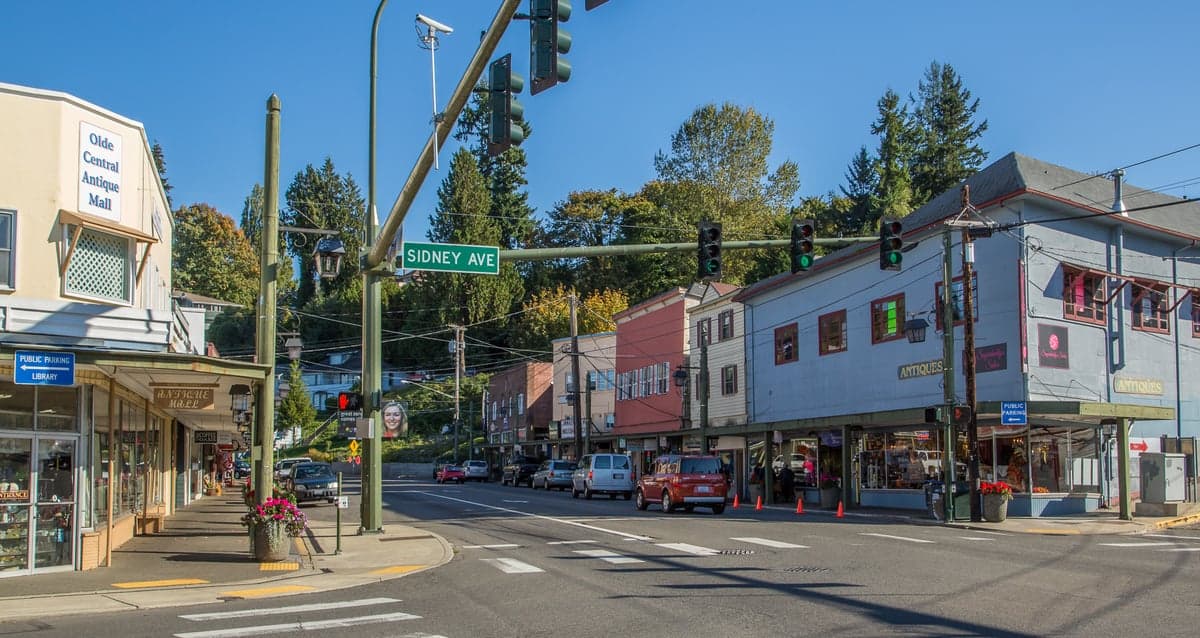
Port Orchard is the kind of place where you still get a wave from the guy in the pickup, but you’re also just a 20-minute ferry ride from downtown Seattle. It’s a working waterfront town with a quiet, unpretentious vibe—more about fixing your boat than showing it off. The people here tend to be practical, family-focused, and comfortable with a slower pace, even if that means a long commute to make it work.
The Daily Rhythm: Ferries, Commutes, and Weekends at the Water
For many residents, the day starts with a view of Sinclair Inlet and a decision: drive the 33-minute average commute north to Bremerton or Silverdale, or join the line for the Port Orchard-Southworth foot ferry to Seattle. That commute is the trade-off for living in a town where you can still buy a home for a median of $492,000—far below Seattle’s median, but still a stretch for a median household income of $81,472. Weekends are spent at Marina Park, grabbing fish and chips at The Dock, or walking the boardwalk past the historic Port Orchard Hardware. The Port Orchard Farmers Market (May through September) is the social hub, where you’ll see the same faces week after week. People shop at the local Safeway or Fred Meyer, but for anything beyond basics, they head to Silverdale’s Kitsap Mall or Costco.
Sports, Community, and the Local Identity
High school sports are a genuine big deal here. South Kitsap High School (the Wolves) draws huge crowds for Friday night football, and the rivalry with Central Kitsap is real. There’s no pro team in town, but the Seattle Mariners and Seattle Seahawks are universally followed—you’ll see flags on porches and jerseys at the Port Orchard Sports Bar & Grill. The town’s identity is tied to the water: the Port Orchard Yacht Club hosts the annual Blessing of the Fleet in June, and the Fathoms O’ Fun festival (a July tradition since the 1950s) features a parade, a carnival, and a log-rolling competition that feels like pure small-town Americana. The median age of 32.9 reflects a younger, family-oriented crowd—many are military families connected to Naval Base Kitsap in nearby Bremerton, which is the area’s largest employer.
What’s There to Do (and What’s Not)
Outdoor life is the main draw. Manchester State Park offers beachcombing and a historic lighthouse, while McCormick Forest Park has miles of hiking and mountain biking trails. For a night out, the options are limited but solid: The Bistro on Bay Street does a good happy hour, and Port Orchard Brewing Company is the local hangout for craft beer and live music on weekends. The Roxy Theater, a restored 1940s movie house, shows second-run films for $5. The biggest frustration for locals is the lack of variety—if you want a concert, a museum, or a late-night restaurant, you’re driving to Tacoma or Seattle. The violent crime rate of 298.3 per 100,000 is higher than the national average, and while most residents feel safe in their neighborhoods, property crime (especially car break-ins near the ferry terminal) is a recurring complaint.
Pros and Cons of Living Here
- Pro: Affordability (relative to Seattle). A median home value of $492,000 is steep for the national average, but it’s a bargain compared to King County. First-time buyers and military families find it accessible.
- Con: The commute. That 33-minute average hides the reality of ferry schedules and bridge traffic. If you work in Seattle, you’re looking at a 90-minute door-to-door trip each way.
- Pro: Waterfront lifestyle. Kayaking, crabbing, and boating are part of daily life, not weekend trips. The marina is the social heart of town.
- Con: Limited job market. Outside of the Navy, retail, and healthcare (St. Michael Medical Center in Silverdale), most residents commute. The 32.2% college-educated rate reflects a workforce that often leaves town for professional jobs.
- Pro: Strong community feel. Neighbors know each other, school events are well-attended, and the local Facebook groups are genuinely helpful (not just complaint boards).
- Con: Weather. The cost of living index of 161 doesn’t account for the seasonal affective reality of gray skies from October to May. If you need constant sun, this isn’t the place.
The kind of person who fits in Port Orchard is someone who values space, water, and a slower rhythm over urban convenience. It’s a town where you trade a short commute for a view of the bay, and where the biggest event of the year is a parade that closes Main Street. If that sounds like a fair trade, you’ll feel at home here.

Similar towns to Port Orchard





* Values derived from national, state, county, city and local statistics and may differ in a specific area. Last updated: 2026-09-24T15:02:11.000Z
Narrative content on this page is AI-generated and may contain mistakes. Verify any details that matter before acting on them.
ReloMaps may earn a commission from affiliate links at no extra cost to you.

