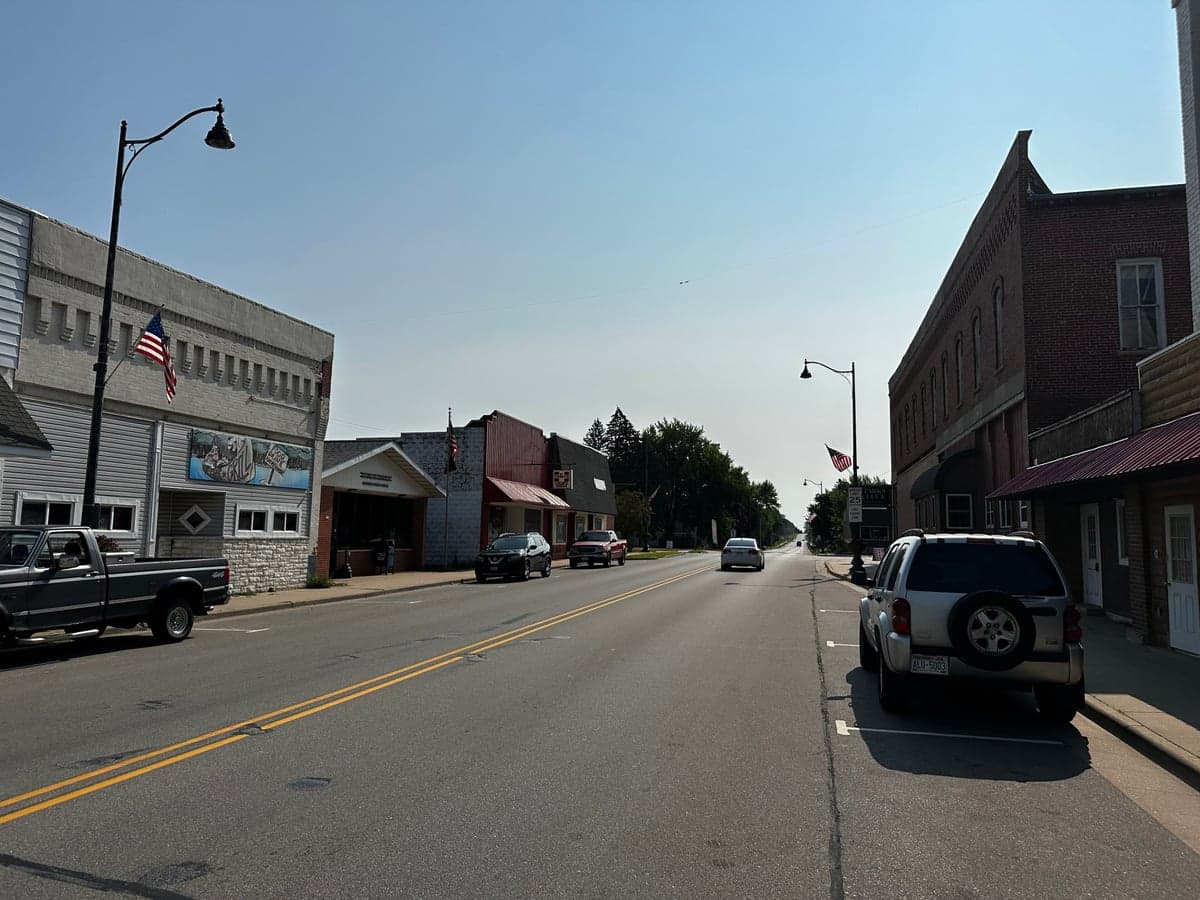
Photo: Wikipedia
Political ClimatePolitical Climate in Plainfield, WI
District shown is the primary district for this city’s centroid. Cities may span multiple districts.
Inherited from parent county — no local data available.
* Lean and PVI are calculated from the surrounding county’s 2020 and 2024 presidential results, Cook-style — a finer measure here than its congressional district (WI-6).
Political rankings in Wisconsin
- Most Conservative Cities in Wisconsin
- Most Liberal Cities in Wisconsin
- Best Liberal-Leaning Towns in the Midwest
- Safest Liberal-Leaning Towns in the Midwest
- Safest Conservative-Leaning Towns in the Midwest
- Affordable Small Towns for Conservatives
- Most Affordable Liberal-Leaning Small Towns in the U.S.
- Safest Conservative-Leaning Cities in the U.S.
- Most Conservative Counties in Wisconsin
- Most Liberal Counties in Wisconsin
Local Political AnalysisPolitical Analysis of Plainfield, WI
Plainfield is about as reliably Republican as any small town in Wisconsin gets, and it’s been that way for as long as anyone can remember. The Cook PVI here is R+18, which means the area votes about 18 points more Republican than the national average. That’s a deep red pocket, even by central Wisconsin standards. In the 2024 presidential race, Waushara County—where Plainfield sits—went for Trump by a margin of roughly 65% to 33%, a spread that’s held steady for the last three cycles. The political trajectory here isn’t shifting; if anything, it’s hardening. Younger folks who stay in the area tend to hold the same conservative views as their parents, and the population is stable enough that new arrivals don’t change the math much.
How it compares
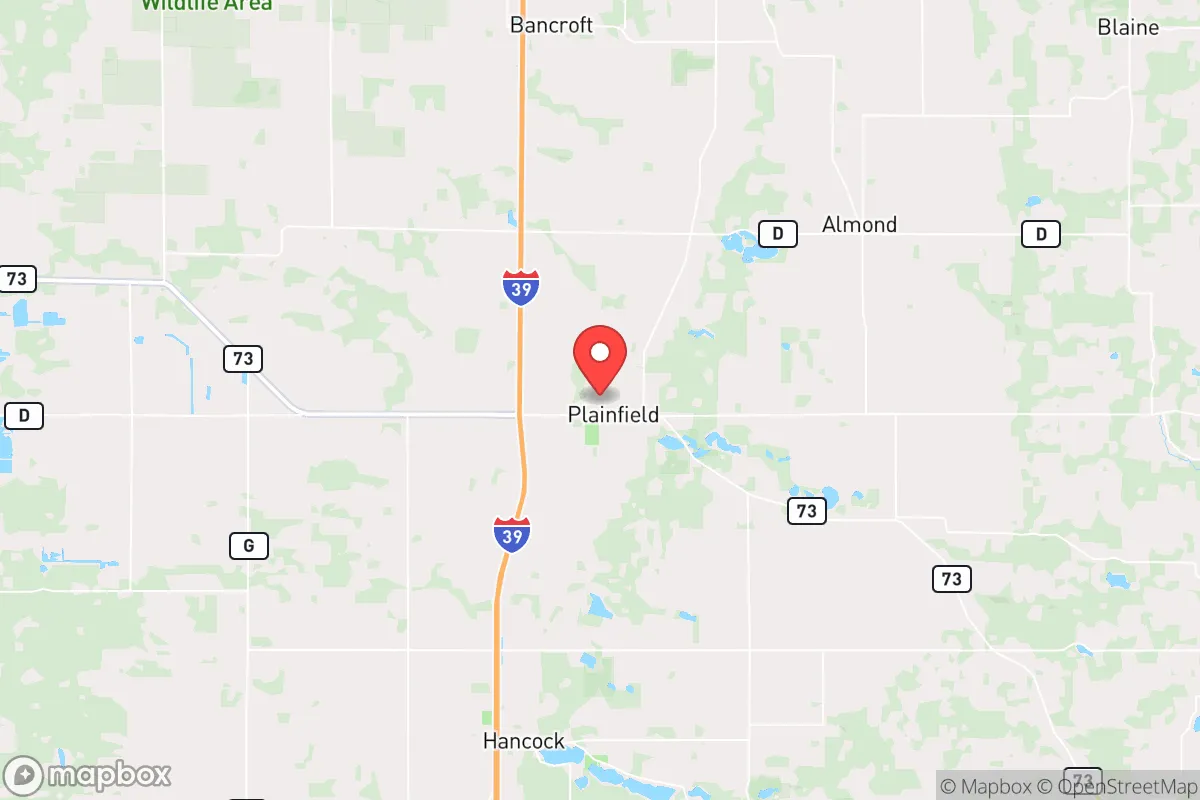
To understand how red Plainfield is, you have to look at the state as a whole. Wisconsin’s Cook PVI is EVEN—a perfect swing state, split almost down the middle. That statewide balance is driven by the Milwaukee and Madison metro areas, which lean heavily Democratic. Plainfield, by contrast, is about 90 miles north of Madison and 100 miles west of Green Bay, in a region where Democratic voters are scarce. The nearest city of any size, Stevens Point (population 26,000, about 20 miles east), is a blue dot in a red sea—Portage County went for Biden in 2020 by a slim margin. But drive 15 minutes west of Plainfield into Adams County, and you’re back in R+20 territory. The contrast is stark: Plainfield’s politics look more like rural Texas than suburban Milwaukee.
What this means for residents
For conservative residents, Plainfield is comfortable. Local government, school board meetings, and county commission decisions tend to reflect conservative priorities—low taxes, Second Amendment rights, and a focus on agriculture and small business. You won’t see much political friction at the grocery store or the gas station. For liberal residents, the reality is different. They’re a clear minority, and while nobody is hostile, it can feel isolating. There’s no active Democratic party presence in Waushara County; the nearest organized group is in Stevens Point. That said, most folks here are polite about disagreements—politics isn’t a daily topic of conversation unless you bring it up. The practical impact is that local policy moves slowly and cautiously, with a strong preference for keeping things as they are.
One cultural distinction worth noting: Plainfield sits in the heart of Wisconsin’s cranberry-growing region, and that agricultural economy shapes a lot of the local worldview. People here are pragmatic, self-reliant, and skeptical of government overreach—whether it’s from Madison or Washington. You won’t find the kind of performative political theater you see in bigger cities. The local paper, the Waushara Argus, covers town board meetings and high school sports, not partisan squabbles. Looking ahead, I don’t see Plainfield’s political character changing much. The population is aging slowly, and new residents tend to be retirees or remote workers who chose the area for its quiet, low-cost lifestyle—not to start a political movement. If you’re conservative, you’ll feel right at home. If you’re liberal, you’ll find it’s a respectful place to live, but you’ll probably drive to Stevens Point for a like-minded coffee group.

State Political ClimatePolitical Climate in Wisconsin
State Political AnalysisPolitical Environment in the State
Wisconsin is the quintessential swing state, with a Cook PVI of EVEN that perfectly captures its knife-edge political balance. Over the past 20 years, the state has shifted from a reliably blue-leaning battleground to a true toss-up, decided by margins of less than 1% in both the 2020 and 2024 presidential elections. The dominant coalitions are a deeply entrenched Democratic stronghold in the urban southeast, anchored by Milwaukee and Madison, and a sprawling, increasingly Republican rural and exurban landscape that stretches from the Driftless Region in the west up through the Northwoods. This isn't a state that leans; it's a state that splits, and the split has only gotten sharper since the 2010s.
Urban vs. rural divide
The political map of Wisconsin is a story of two states. Milwaukee County and Dane County (home to Madison) together account for roughly a quarter of the state's population and deliver massive Democratic margins—often 70-80% of the vote. Milwaukee itself is a diverse, union-heavy city with a strong African American and Latino population, while Madison is a classic college town and state capital, driven by the University of Wisconsin system and a dense concentration of government and tech workers. In contrast, the rural and exurban counties—like Waukesha (the western Milwaukee suburbs), Washington, and Ozaukee—are among the most reliably Republican in the nation, routinely voting 60-70% GOP. The WOW counties (Waukesha, Ozaukee, Washington) are the engine of the state's conservative vote, and their growth has been a key factor in Wisconsin's rightward drift. Meanwhile, smaller cities like Green Bay and Appleton in the Fox Valley are classic swing areas, with working-class voters who have trended Republican in recent cycles, while Eau Claire and La Crosse in the west lean Democratic but are surrounded by deep-red rural townships. The divide isn't just geographic; it's cultural, with urban voters prioritizing social and environmental issues and rural voters focused on agriculture, gun rights, and local control.
Policy environment
Wisconsin's policy environment reflects its divided government. The state has a flat income tax rate of 4.4% (down from 7.65% a decade ago, thanks to Republican-led cuts), and property taxes are moderate, averaging about 1.6% of home value. The regulatory posture is generally business-friendly, with a right-to-work law passed in 2015 and a relatively low corporate tax rate. Education policy is a flashpoint: the state has a robust school choice program (vouchers for private and religious schools) that began in Milwaukee in 1990 and has expanded statewide, but public school funding remains a perennial battle, with rural districts often struggling. Healthcare is mixed—Wisconsin expanded Medicaid under the Affordable Care Act in 2014, but the state's individual insurance market is volatile. Election laws are a key concern: Wisconsin has no-excuse absentee voting, same-day voter registration, and voter ID requirements. The state's election administration has been under intense scrutiny since 2020, with Republican-led audits and a controversial 2022 ruling that banned most absentee ballot drop boxes. For a conservative relocator, the tax cuts and school choice are major draws; for a liberal one, the Medicaid expansion and same-day registration are positives, while the voter ID law and drop-box ban are negatives.
Recent policy direction
The last five years have seen Wisconsin lurch rightward on several fronts. In 2023, the Republican-controlled legislature passed a major tax cut package, reducing the top income tax rate from 7.65% to 4.4% over a decade, and in 2024, they enacted a flat tax. On gun rights, Wisconsin is a "shall-issue" state for concealed carry, and in 2023, the legislature passed a bill allowing permitless carry (though it was vetoed by Democratic Governor Tony Evers). Parental rights have been a hot topic: in 2022, the legislature passed a bill requiring schools to notify parents if a student requests a name or pronoun change, which Evers also vetoed. On education, the state expanded the school choice program to all families in 2023, regardless of income. Medical and bodily autonomy saw a major shift after the 2022 Dobbs decision: Wisconsin's 1849 abortion ban was briefly in effect, but a 2023 court ruling (Kaul v. Urmanski) clarified that the ban applied only to "feticide," effectively restoring abortion access up to 22 weeks. Property rights are generally strong, with no statewide rent control and a relatively straightforward eminent domain process. On voting, the 2022 Wisconsin Supreme Court ruling (Teigen v. Wisconsin Elections Commission) banned most absentee ballot drop boxes, a decision that remains controversial. The overall direction is a state that is culturally conservative on taxes, guns, and education, but with a Democratic governor who has used veto power to block the most aggressive social legislation.
Civil unrest & political movements
Wisconsin has been a flashpoint for political activism. The 2011 Act 10 protests against Governor Scott Walker's collective bargaining restrictions drew over 100,000 people to the state capitol and sparked a national labor movement. In 2020, the Kenosha unrest after the Jacob Blake shooting led to riots, arson, and the Kyle Rittenhouse shooting, which became a national symbol of the gun rights and self-defense debate. Immigration politics are relatively quiet—Wisconsin is not a border state, and sanctuary city policies are limited to Milwaukee and Madison, which have "welcoming city" ordinances but no formal sanctuary status. Election integrity remains a live issue: the 2020 election saw Trump win Wisconsin by 20,000 votes in 2016, then lose it by the same margin in 2020, leading to a GOP-led investigation (the Michael Gableman probe) that found no widespread fraud but fueled ongoing distrust. Secession or nullification rhetoric is minimal, but there is a strong "Wisconsin First" sentiment in rural areas, with some counties passing resolutions opposing federal mandates on gun control and vaccine requirements. A new resident would notice the political polarization in everyday life—yard signs, bumper stickers, and local news coverage are intensely partisan, especially in swing counties like Brown (Green Bay) and Outagamie (Appleton).
Projection
Over the next 5-10 years, Wisconsin is likely to remain a battleground, but demographic trends favor the GOP. The WOW counties are growing, while Milwaukee and Dane counties are aging and seeing slower growth. In-migration from Illinois (driven by taxes) is bringing more conservative-leaning retirees and remote workers to the exurbs and rural areas, particularly around Lake Geneva and the Door County peninsula. The state's Hispanic population is growing, but it's concentrated in Milwaukee and tends to vote Democratic, though not as reliably as in other states. The wild card is the Wisconsin Supreme Court, which flipped to a 4-3 liberal majority in 2023 after the election of Justice Janet Protasiewicz. That court is likely to hear cases on abortion, redistricting, and election laws, potentially blocking some Republican priorities. A conservative relocator should expect continued tax cuts and school choice expansion, but with a Democratic governor and a liberal-leaning court, social issues like abortion and gun control will remain in legal limbo. A liberal relocator should expect a tough fight on voting access and public school funding, but with the court as a backstop against the most conservative legislation.
For someone moving to Wisconsin, the bottom line is that you're entering a state where your vote truly matters—and where your neighbors will likely disagree with you. The practical takeaway is to be prepared for a polarized but functional environment: taxes are low and falling, schools are a mixed bag (with strong options in the suburbs and rural areas, but struggles in Milwaukee and some rural districts), and the cost of living is moderate. If you're conservative, you'll find a welcoming policy climate in the WOW counties and Fox Valley, with strong gun rights and school choice. If you're liberal, you'll find a vibrant community in Madison or Milwaukee, with a governor who has veto power and a court that may protect abortion access. Either way, Wisconsin is a state where politics is a contact sport—but the cheese is good, the lakes are clean, and the people are generally friendly, even if they disagree with you at the dinner table.
* Values derived from national, state, county, city and local statistics and may differ in a specific area. Last updated: 2026-11-18T18:37:16.000Z
Narrative content on this page is AI-generated and may contain mistakes. Verify any details that matter before acting on them.
ReloMaps may earn a commission from affiliate links at no extra cost to you.

