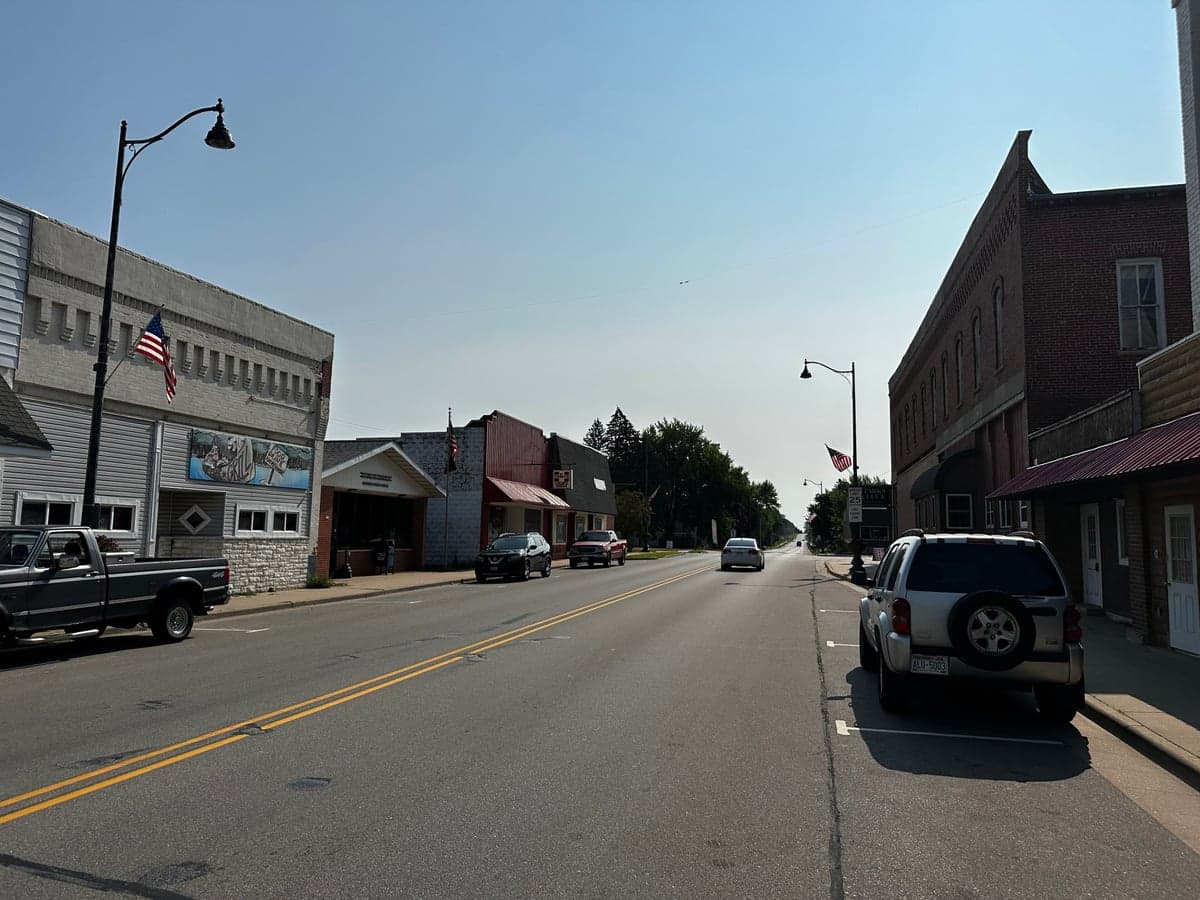
Photo: Wikipedia
Personal Sovereignty in Plainfield, WI
Moderate friction. Expect trade-offs in some aspect of personal liberty and independence.
What does Personal Sovereignty tell us?
Personal Sovereignty measures your capacity for self-reliance and independence with minimal government friction. Higher scores mean fewer barriers between you and the way you want to live... but it assumes you have the space you need and good neighbors.
What does this tell us?
Personal Sovereignty measures your capacity for self-reliance and independence with minimal government friction. Higher scores mean fewer barriers between you and the way you want to live... but it assumes you have the space you need and good neighbors.
State Policy
Energy independence: Importer (18% of energy produced in-state)
Personal Liberty
Homesteading

Personal Liberty Analysis
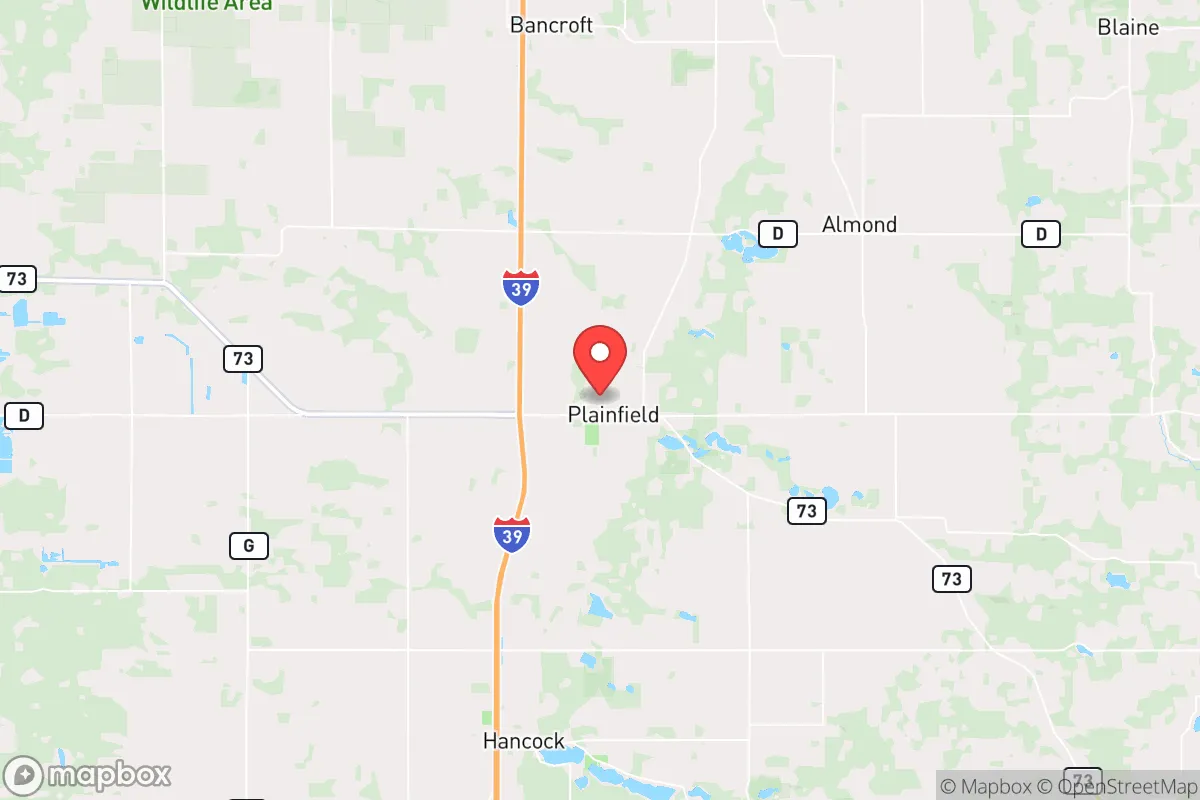
Plainfield, Wisconsin, offers a notably high degree of personal sovereignty, rooted in the state’s strong tradition of local control, a relatively light regulatory touch, and a legal framework that prioritizes individual rights in areas like self-defense and parental authority. For residents seeking to minimize government intrusion into daily life—whether through tax burden, property use, or personal choices—this small Waushara County community provides a practical environment where autonomy is the default rather than the exception. The area’s character is shaped by Wisconsin’s status as a “right-to-work” state, its constitutional carry laws, and a tax structure that, while not the lowest nationally, remains competitive for those prioritizing fiscal independence.
Tax burden and regulatory posture: How Plainfield compares to surrounding areas
Wisconsin’s overall tax burden is moderate compared to neighboring states like Minnesota or Illinois, and Plainfield benefits from this balance without the high property tax rates found in some urbanized counties. The state’s income tax is progressive, with rates ranging from 3.54% to 7.65% in 2026, but Waushara County’s median property tax rate is roughly 1.5% of assessed home value, which is below the state average of about 1.7%. For a home valued at $200,000, that translates to roughly $3,000 annually—a figure that is manageable for most households and significantly lower than in nearby Dane County (Madison area), where rates often exceed 2.2%. The regulatory posture in Plainfield is distinctly light-touch. The village government focuses on basic services like roads, water, and public safety, with minimal zoning or business licensing hurdles. There is no local income tax, and sales tax is the state’s 5% plus a 0.5% county levy, totaling 5.5%—well below the 8%+ rates in Illinois or Minnesota. For entrepreneurs or remote workers, this means less paperwork and lower overhead, though residents should note that Wisconsin does have a state-level estate tax (the “Wisconsin Estate Tax”) on estates over $2.5 million, which is a consideration for those planning generational wealth transfers.
Self-defense and gun law specifics: Constitutional carry and castle doctrine in practice
Wisconsin is a strong Second Amendment state, and Plainfield residents enjoy some of the most permissive self-defense laws in the Midwest. Since 2011, the state has had a shall-issue concealed carry permit system, and as of 2025, it operates under constitutional carry for law-abiding adults 18 and older—meaning no permit is required to carry a concealed firearm in most public places. The state also has a robust castle doctrine with no duty to retreat in one’s home, vehicle, or place of business. This means that if someone unlawfully enters your residence, you are legally presumed to have a reasonable fear of imminent death or great bodily harm, and you may use deadly force without a legal obligation to first attempt escape. Open carry is also legal without a permit, though local ordinances in some municipalities may restrict it in certain public buildings. Plainfield itself has no additional gun control measures beyond state law, so residents can expect minimal bureaucratic interference. The only notable restriction is a 48-hour waiting period for handgun purchases from licensed dealers, but private sales between individuals are unregulated. For those who prioritize self-reliance in personal safety, this legal framework is a clear advantage over states like Illinois or California, where permitting processes can take months and carry restrictions are extensive.
Self-reliance and homesteading viability: Lot sizes, zoning, and off-grid feasibility
Plainfield’s rural character makes it highly conducive to homesteading and self-sufficient living. The village itself has a mix of residential lots, typically 0.25 to 1 acre, while unincorporated areas of Waushara County offer parcels ranging from 2 to 40 acres at prices often under $5,000 per acre. Zoning is minimal: the county’s general zoning code allows for agricultural uses, livestock, and accessory structures (like barns, workshops, or greenhouses) on parcels of 5 acres or more without special permits. For smaller lots within village limits, chickens and small livestock (goats, rabbits) are generally permitted, though a permit may be required for larger animals like horses or cattle. Off-grid living is legally feasible but requires attention to state and local codes. Wisconsin has no statewide ban on rainwater collection, and solar panels are permitted without restrictive HOA covenants in most rural areas. However, the state does require a septic system permit for any dwelling not connected to municipal sewer, and well water must meet state health standards. Composting toilets are allowed under certain conditions, but graywater systems require a variance from the county health department. The biggest practical hurdle is winter: heating a home off-grid in Wisconsin’s cold climate demands a robust system (wood, propane, or solar with battery backup), but many residents in the area successfully do so. For those serious about self-reliance, Plainfield offers a low-barrier entry point compared to more regulated states like Oregon or New York, where off-grid construction can face months of permitting delays.
Personal liberties: Parental rights, medical autonomy, speech, and property
Wisconsin has a strong legal tradition of protecting parental rights, and Plainfield reflects this. The state’s Parental Rights Statute (Wis. Stat. § 48.01) affirms that parents have the fundamental right to direct the upbringing, education, and healthcare of their children, including the right to opt out of public school curricula or vaccinations for school attendance (subject to limited exemptions). In practice, this means parents in Plainfield can homeschool without extensive state oversight—only a simple annual notification to the school district is required, and there are no standardized testing mandates for homeschooled students. Medical autonomy is similarly respected: Wisconsin does not have a state-level vaccine mandate for adults, and while COVID-era restrictions were briefly enforced, the state legislature has since passed laws limiting emergency health orders to 60 days without legislative renewal. For property rights, Wisconsin is a “right-to-farm” state, meaning that agricultural operations (including livestock and crop farming) are protected from nuisance lawsuits if they have been operating for at least one year—a safeguard for those who want to keep chickens, bees, or even a small farm without fear of neighbor complaints. Free speech is robustly protected under the state constitution, and Plainfield has no local ordinances restricting political signage, leafleting, or public assembly beyond standard time-place-manner rules. The only notable limitation is that Wisconsin is a “one-party consent” state for recording conversations, which is actually more permissive than many states—you can legally record any conversation you are part of without notifying the other party.
Overall, Plainfield offers a sovereignty profile that is among the strongest in the Midwest for those who value personal independence. The combination of constitutional carry, minimal zoning, low property taxes, strong parental rights, and a light regulatory touch places it well ahead of most urbanized areas in Wisconsin or neighboring states. While it does not have the extreme libertarian lean of, say, rural Alaska or parts of Idaho, it provides a practical, legally grounded environment where individuals and families can live largely unbothered by government overreach. For a relocation researcher advising a conservative-leaning audience, Plainfield represents a solid, middle-ground choice—not the wild west, but far from the nanny state.

* Values derived from national, state, county, city and local statistics and may differ in a specific area. Last updated: 2026-11-18T18:37:16.000Z
Narrative content on this page is AI-generated and may contain mistakes. Verify any details that matter before acting on them.
ReloMaps may earn a commission from affiliate links at no extra cost to you.

