Photo: Wikipedia
Demographics of Plainfield, WI
Affluence Level in Plainfield, WI
A below-average socioeconomic profile. Incomes, home values, and educational attainment trail the U.S., with higher poverty and unemployment.
People of Plainfield, WI
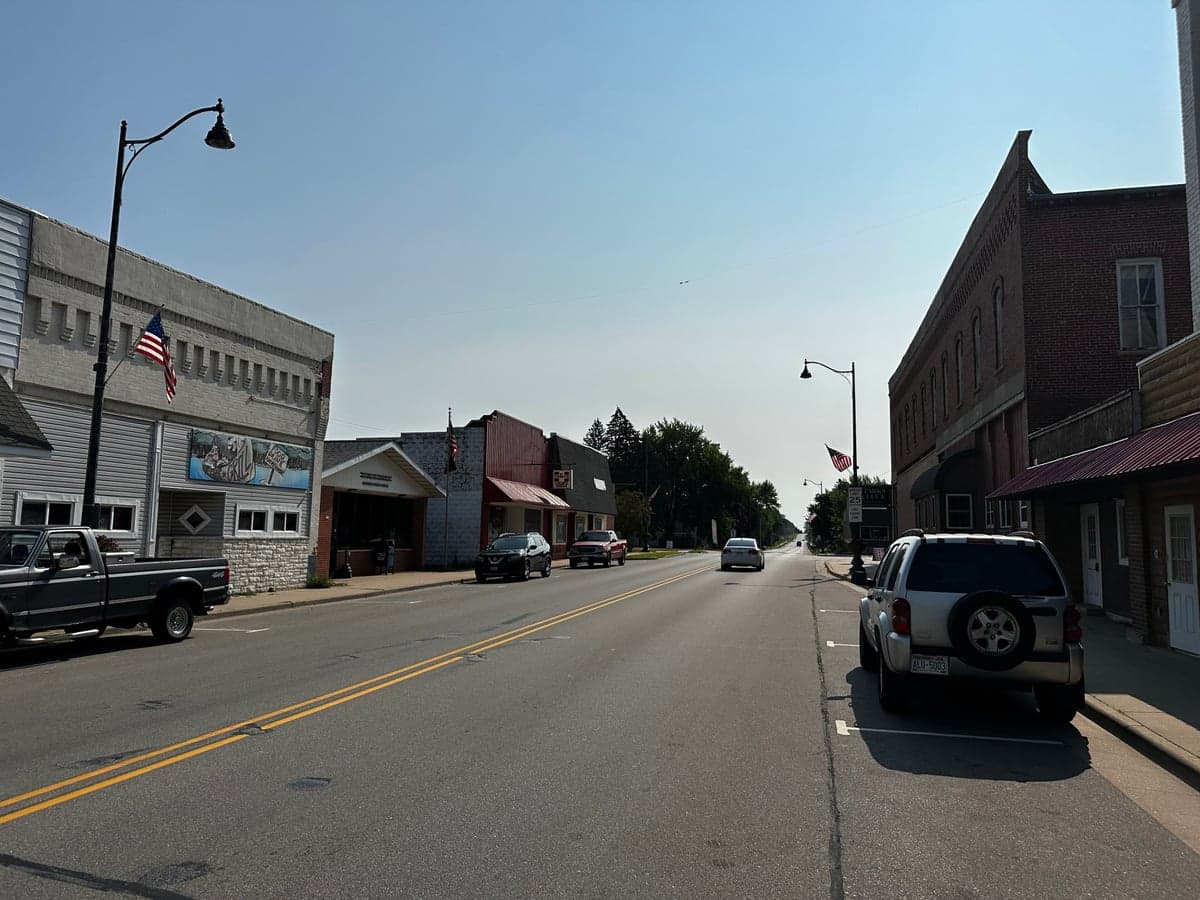
The people of Plainfield, Wisconsin, today form a small, tight-knit community of 1,057 residents, characterized by a predominantly white population (73.9%) alongside a substantial and growing Hispanic minority (23.5%). With a foreign-born share of just 3.6% and a low college attainment rate of 6.3%, the city’s identity is rooted in working-class, family-oriented life, centered around local agriculture and small-town service industries. This is a place where generational roots run deep, yet recent demographic shifts are quietly reshaping its cultural and social fabric.
How the city was settled and grew
Plainfield’s original population was drawn by the promise of fertile farmland and the arrival of the railroad in the mid-19th century. The first European settlers, primarily of Yankee and German stock, arrived in the 1850s, establishing farms and small businesses around what would become the downtown core. The village was formally platted in 1854, and the railroad’s completion in the 1870s spurred a modest boom, attracting a wave of Polish and Irish immigrants who worked the fields and built the town’s early infrastructure. These groups settled in distinct areas: the German and Yankee families concentrated along the main thoroughfare (now Plainfield Road) and the surrounding farmsteads, while the Polish and Irish laborers built homes in the South Side neighborhood, near the rail depot and the grain elevators. By the early 20th century, the population had stabilized around a few hundred, with the economy anchored by dairy farming, a local creamery, and a handful of retail shops serving the agricultural hinterland.
Modern era (post-1965)
The post-1965 period brought little immediate change to Plainfield’s demographics, as the city remained overwhelmingly white through the 1990s. The most significant shift began in the early 2000s, driven by the expansion of regional food processing and agricultural labor needs. Hispanic families, primarily of Mexican origin, began moving into the area to work in nearby dairy operations, vegetable farms, and the large Plainfield Trucking and Logistics hub that grew along Highway 73. This wave settled predominantly in the East End neighborhood, a cluster of modest single-family homes and rental duplexes east of the downtown, where housing was affordable and proximity to farm jobs was convenient. By the 2020 census, the Hispanic share had risen to 23.5%, while the Black population remained at 0.0% and East/Southeast Asian communities at just 0.1%. The white population, while still the majority, has aged and declined slightly as younger adults leave for larger cities like Stevens Point or Wausau. The Downtown Historic District, with its older homes and small businesses, remains predominantly white and older, while the West Side, near the high school and newer subdivisions, has seen a modest influx of younger white families drawn by lower housing costs compared to the Fox Valley.
The future
Plainfield’s population is projected to remain stable or grow slowly, with the Hispanic share likely continuing to increase as families settle and have children. The city’s low cost of living and proximity to agricultural and logistics jobs will continue to attract Hispanic workers, while the white population is expected to hold steady or decline slightly due to out-migration of younger adults. New residential development is concentrated in the North Ridge area, a small subdivision of newer single-family homes built since 2015, which is attracting a mix of white and Hispanic families. The cultural identity of Plainfield is evolving from a historically homogeneous farming community into a more bilingual, bicultural town, with Spanish increasingly heard in schools and local businesses. Over the next 10-20 years, the city will likely see a gradual increase in diversity, but it will remain a predominantly white, working-class community with a strong Hispanic minority—a pattern common across rural Wisconsin’s dairy belt.
For someone moving in now, Plainfield offers a quiet, affordable, and family-oriented environment where community ties are strong and the pace of life is slow. The growing Hispanic presence is adding new cultural layers, but the city’s core identity remains rooted in its agricultural past and conservative, self-reliant values. New residents should expect a place where neighbors know each other, local events like the Plainfield Community Picnic are highlights, and the biggest changes are happening not in politics but in the faces of the children filling the elementary school.

* Values derived from national, state, county, city and local statistics and may differ in a specific area. Last updated: 2026-11-18T18:37:16.000Z
Narrative content on this page is AI-generated and may contain mistakes. Verify any details that matter before acting on them.
ReloMaps may earn a commission from affiliate links at no extra cost to you.

