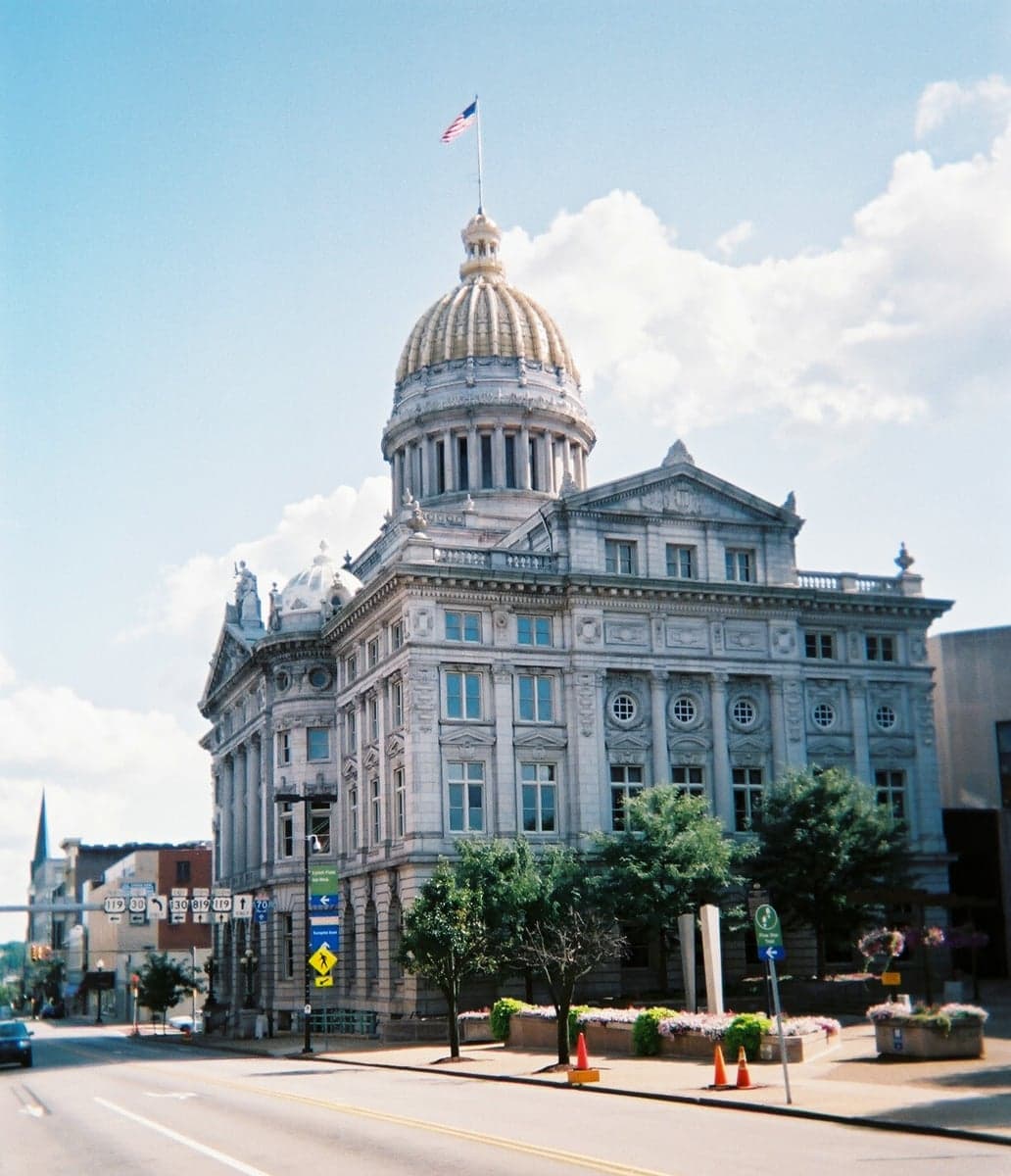
Photo: Wikipedia
Political ClimatePolitical Climate in Westmoreland County
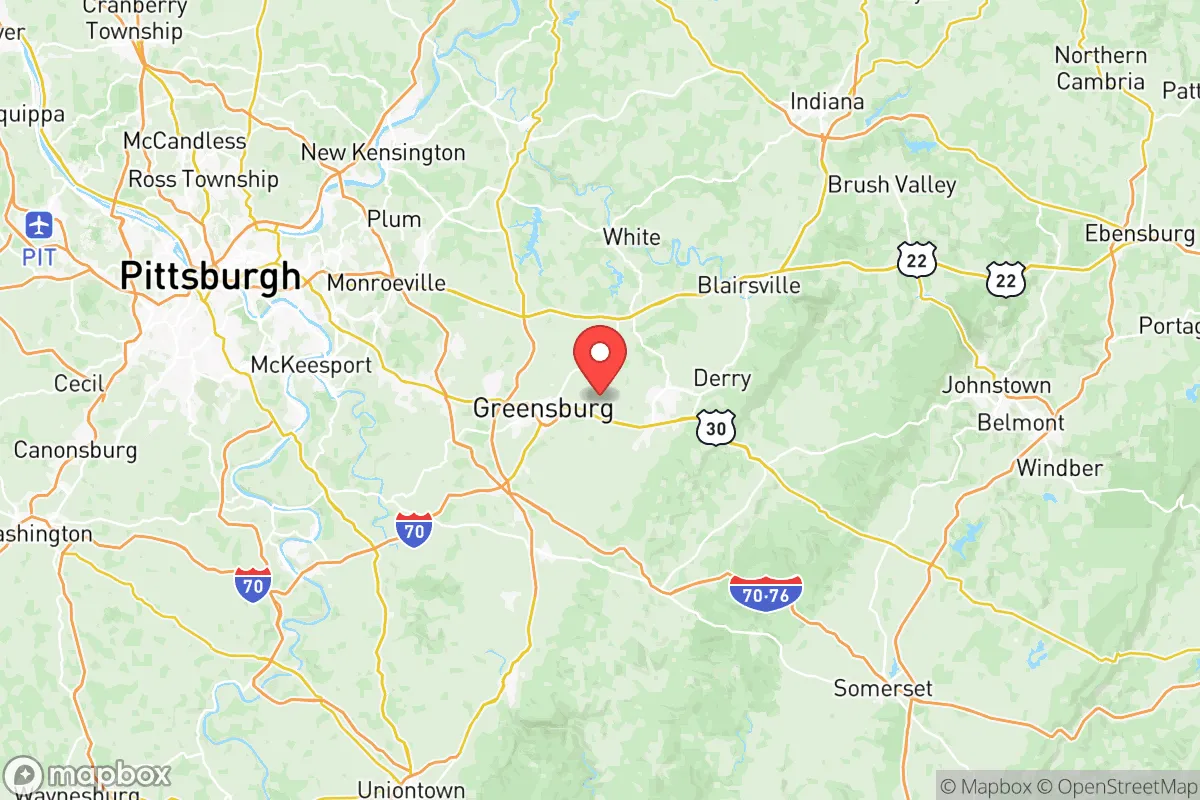
Showing district-level results — no local-only data available.
Local Political AnalysisPolitical Analysis of Westmoreland County
Westmoreland County is one of the most reliably Republican strongholds in Pennsylvania, carrying a Cook Partisan Voting Index (PVI) of R+17 — a stark contrast to the state's overall EVEN rating. This isn't a recent shift; the county has been trending red for decades, but the margin has widened considerably since the 2000s. In 2024, Donald Trump carried Westmoreland by roughly 30 points, a margin that has become the new normal. The GOP dominance is so baked in that Democratic presidential candidates haven't carried the county since 1964, and local offices are almost entirely held by Republicans. That said, the county isn't a monolith — there are real pockets of blue, especially in the more urbanized and college-educated areas, and the political culture varies noticeably from one end of the county to the other.
How it compares
Compared to Pennsylvania as a whole, Westmoreland County is an outlier. The state's PVI of EVEN reflects a true battleground, where Philadelphia and its suburbs pull left while the central and northern rural areas pull right. Westmoreland, sitting just east of Pittsburgh, is part of that rightward pull — but it's more conservative than even neighboring Washington County (R+14) or Fayette County (R+16). The difference is partly demographic: Westmoreland is older, whiter, and less college-educated than the state average, with a heavy concentration of union households that have shifted from blue-collar Democrat to Trump Republican over the past two decades. The county's political trajectory is also distinct: while Pennsylvania as a whole has become more competitive, Westmoreland has become more lopsided. In 2008, Barack Obama lost the county by only 6 points; by 2020, the GOP margin had ballooned to 27 points. That kind of shift isn't happening statewide — it's a local phenomenon driven by cultural and economic realignment.
What this means for residents
For conservative residents, Westmoreland County offers a political environment where their views are the default — local government, school boards, and law enforcement tend to align with conservative priorities, and there's little pressure to moderate. For liberal residents, the reality is more isolating. In towns like Greensburg (the county seat) and Latrobe, you'll find a modest Democratic presence, but it's a minority voice. The most reliably blue precincts are in Jeannette and parts of New Kensington, where older industrial communities still lean Democratic. The swing precincts — the ones that occasionally flip — are in the more suburban areas around Murrysville and Penn Township, where college-educated voters sometimes split tickets. For a liberal resident, daily life means being politically outnumbered, but not silenced; there are active Democratic committees and occasional protests, but they're small. For a conservative resident, it means seeing your values reflected in local policy — lower taxes, fewer regulations, and a general cultural alignment — without the friction you'd feel in a purple county.
Culturally, Westmoreland County's conservatism is rooted in a mix of rural independence and post-industrial pragmatism. The county is home to a strong gun culture, with many residents owning firearms for hunting and sport, and local politics often revolve around property rights, school funding, and energy policy — particularly natural gas drilling in the Marcellus Shale. The county's largest city, Greensburg, has a small but growing arts scene and a historic downtown, but it's still a conservative town at heart. The most notable policy distinction is the county's stance on energy: Westmoreland is deeply pro-fracking, and local officials have pushed back against state-level environmental regulations. That said, the county isn't uniformly hostile to all progressive ideas — there's a quiet but real support for public education funding and local infrastructure, even if it comes from a conservative framework. The political climate here is stable, predictable, and increasingly entrenched, but it's not without nuance for those who know where to look.

State Political ClimatePolitical Climate in Pennsylvania
State Political AnalysisPolitical Environment in the State
Pennsylvania is the ultimate swing state, with a Cook PVI of EVEN that perfectly captures its knife-edge balance. Over the last 20 years, it has shifted from a reliably blue-leaning state in presidential races to a true battleground, flipping from Obama (2008, 2012) to Trump (2016) to Biden (2020) and back to a razor-thin Trump win in 2024. The dominant coalitions are a shrinking union-and-urban Democratic base in Philadelphia and Pittsburgh versus a growing, energized Republican coalition in the exurbs, small towns, and vast rural stretches. For a relocator, this means your vote genuinely counts, but the state’s political identity is a constant tug-of-war between the progressive, post-industrial cities and the culturally conservative countryside.
Urban vs. rural divide
Pennsylvania’s political map is a tale of two extremes. Philadelphia and its collar counties (Montgomery, Delaware, Chester, Bucks) are the Democratic engine, delivering margins of 70-80% in the city itself. Pittsburgh and its Allegheny County base are similarly blue, though with a more moderate, union-heavy flavor. The rural T — the vast central and northern swath from Erie to the Poconos — is deeply red. Counties like Tioga, Potter, and Bradford routinely vote 70%+ Republican. The real action is in the suburbs and exurbs. Lancaster County, once a Republican stronghold, is now a key swing area, with its growing Hispanic population and Amish influence creating unpredictable outcomes. Erie County in the northwest is a bellwether — it voted for Obama, then Trump, then Biden, then Trump again. The Lehigh Valley (Allentown, Bethlehem, Easton) is another critical battleground, where suburban voters and warehouse workers are split nearly 50-50. The Scranton/Wilkes-Barre area in the northeast is a classic blue-collar region that has trended hard right over the past decade.
Policy environment
Pennsylvania’s policy landscape is a mixed bag that reflects its divided government. The state has a flat income tax of 3.07% — one of the lowest in the nation — and a sales tax of 6% (8% in Philadelphia and Pittsburgh). Property taxes are high, averaging around 1.5% of home value, but there is a homestead exemption for primary residences. The regulatory posture is moderate: environmental rules are stricter than the national average, especially around the Marcellus Shale gas drilling, but the state is still a major energy producer. Education policy is decentralized, with school funding heavily reliant on local property taxes, leading to wide disparities between wealthy suburbs like Lower Merion and struggling rural districts. Healthcare is a flashpoint: the state expanded Medicaid under the ACA, and there is a strong push for a public option, but private insurance dominates. Election laws are relatively accessible: no-excuse mail-in voting was passed in 2019 (Act 77), though it remains controversial and faces ongoing legal challenges. Voter ID is required for first-time voters but not for established ones.
Recent policy direction
The last few years have seen Pennsylvania lurch in both directions, depending on which party controls the governor’s mansion and legislature. Under Democratic Governor Josh Shapiro (elected 2022), the state has moved left on several fronts. Gun laws remain a key divide: the state has preemption laws preventing local gun ordinances, but Shapiro has pushed for universal background checks and red flag laws, which have stalled in the Republican-controlled legislature. Parental and education rights saw a major win for conservatives with the 2022 expansion of the Educational Improvement Tax Credit (EITC) program, which funds private school scholarships. Speech and privacy are generally protected, though the state has a strong shield law for journalists. Medical and bodily autonomy is a hot topic: abortion remains legal up to 24 weeks, with no major restrictions passed since Roe fell, but the issue is a constant campaign driver. Property rights are generally strong, though the state’s use of eminent domain for pipeline projects (like the Marcellus Shale infrastructure) has sparked local backlash. Taxation has been relatively stable, with no major income tax hikes. Voting and ballot access is the most contentious area: Act 77’s mail-in voting is under constant legal attack, and the state’s voter rolls are a frequent subject of election integrity debates. The 2024 election saw record turnout and a smooth process, but trust remains fractured.
Civil unrest & political movements
Pennsylvania has a long history of political activism, from the labor strikes of the early 20th century to the modern-day protests. The 2020 George Floyd protests in Philadelphia and Pittsburgh were large and occasionally violent, leading to property damage and a lasting distrust of city leadership among suburban and rural residents. On the right, the Second Amendment sanctuary movement has been strong, with over 30 counties passing resolutions declaring themselves sanctuaries from state gun laws they deem unconstitutional. The election integrity movement is particularly active, with groups like the Pennsylvania Election Integrity Network (PEIN) monitoring polling places and challenging mail-in ballot procedures. Immigration politics are less intense than in border states, but the influx of migrants to Philadelphia has created friction, especially around sanctuary city policies. The city’s status as a sanctuary city is a frequent target of Republican state legislators, though preemption efforts have failed. Secession or nullification rhetoric is rare, but there is a strong “state’s rights” sentiment in rural areas, particularly around energy regulation and gun laws. The most visible flashpoint for a new resident would be the constant political advertising — Pennsylvania is the most expensive media market in the country for campaign ads, and you will see them everywhere during election season.
Projection
Over the next 5-10 years, Pennsylvania is likely to remain a swing state, but the demographic trends are slowly favoring Democrats. The growth of the Philadelphia suburbs, the increasing diversity of the Lehigh Valley, and the influx of younger, more educated workers to Pittsburgh are all pushing the state slightly left. However, the rural areas are not shrinking as fast as in other states, and the Republican base is highly motivated. The key wildcard is the Lancaster and York county areas, where Hispanic population growth could shift the balance. In-migration is modest compared to Sun Belt states, but the people moving in tend to be from blue states like New York and New Jersey, bringing their politics with them. A relocator moving in now should expect a state that will be decided by a few thousand votes in a handful of counties for the foreseeable future. The policy environment will remain a stalemate — no major tax hikes, no major gun restrictions, and a constant battle over election laws. The state will not become reliably blue or red; it will stay purple, with all the gridlock and drama that entails.
For a new resident, the bottom line is this: Pennsylvania offers a low-tax environment with a high quality of life in its suburbs and small towns, but you will be living in a state that is perpetually at war with itself. If you are conservative, you will find your values reflected in the rural and exurban areas, but you will be frustrated by the power of Philadelphia and Pittsburgh in state government. If you are liberal, you will find your people in the cities and inner suburbs, but you will be constantly fighting against a Republican legislature that blocks your agenda. The practical takeaway is to choose your county carefully — your local government, school board, and property tax rate will vary wildly depending on whether you land in Bucks County (purple, affluent, divided) or Bedford County (deep red, rural, low taxes). The state as a whole is a mirror of the nation’s divisions, and living here means accepting that you will never get everything you want from your government.
* Values derived from national, state, county, city and local statistics and may differ in a specific area. Last updated: 2026-06-16T11:24:54.000Z
Narrative content on this page is AI-generated and may contain mistakes. Verify any details that matter before acting on them.
ReloMaps may earn a commission from affiliate links at no extra cost to you.

