Photo: Wikipedia
Quality of Life in Susquehanna County
A livable area that tracks near national norms for affordability, walkability, and neighborhood health.
What does Quality of Life tell us?
Quality of Life measures an area by evaluating factors like cost of living, nearby amenities, country club access, airport proximity, socioeconomic signals and neighborhood character. For large states, this is a general average — quality of life can vary dramatically between metro areas, suburbs, and rural communities within the same state.
What does this tell us?
Quality of Life measures an area by evaluating factors like cost of living, nearby amenities, country club access, airport proximity, socioeconomic signals and neighborhood character. For large states, this is a general average — quality of life can vary dramatically between metro areas, suburbs, and rural communities within the same state.
Cost of Living
24% below national average
113%
The Real Cost of Living in Susquehanna County for 2026
| Tier | Individual | Family (4) |
|---|---|---|
| Survival | $15k | $27k |
| Comfortable | $40k | $59k |
| Luxury | $121k+ | $187k+ |
| Elite (Top 5%) | $149k+ | $231k+ |
Quality-of-Life Analysis
Susquehanna County, Pennsylvania, offers a spectrum of quality-of-life options that range from compact, walkable boroughs to deeply rural, unincorporated hamlets, all within a county where the cost of living index sits at 76 (well below the US average of 100). The county’s character shifts noticeably from its largest town, Montrose, to smaller communities like Forest City and Hallstead, and then to the quiet, wooded pockets of Brooklyn Township and Harford. This diversity attracts a mix of remote workers seeking affordability, retirees drawn to low property taxes, and outdoor enthusiasts who value the county’s proximity to the Endless Mountains and the Delaware River.
Largest town(s) & population centers
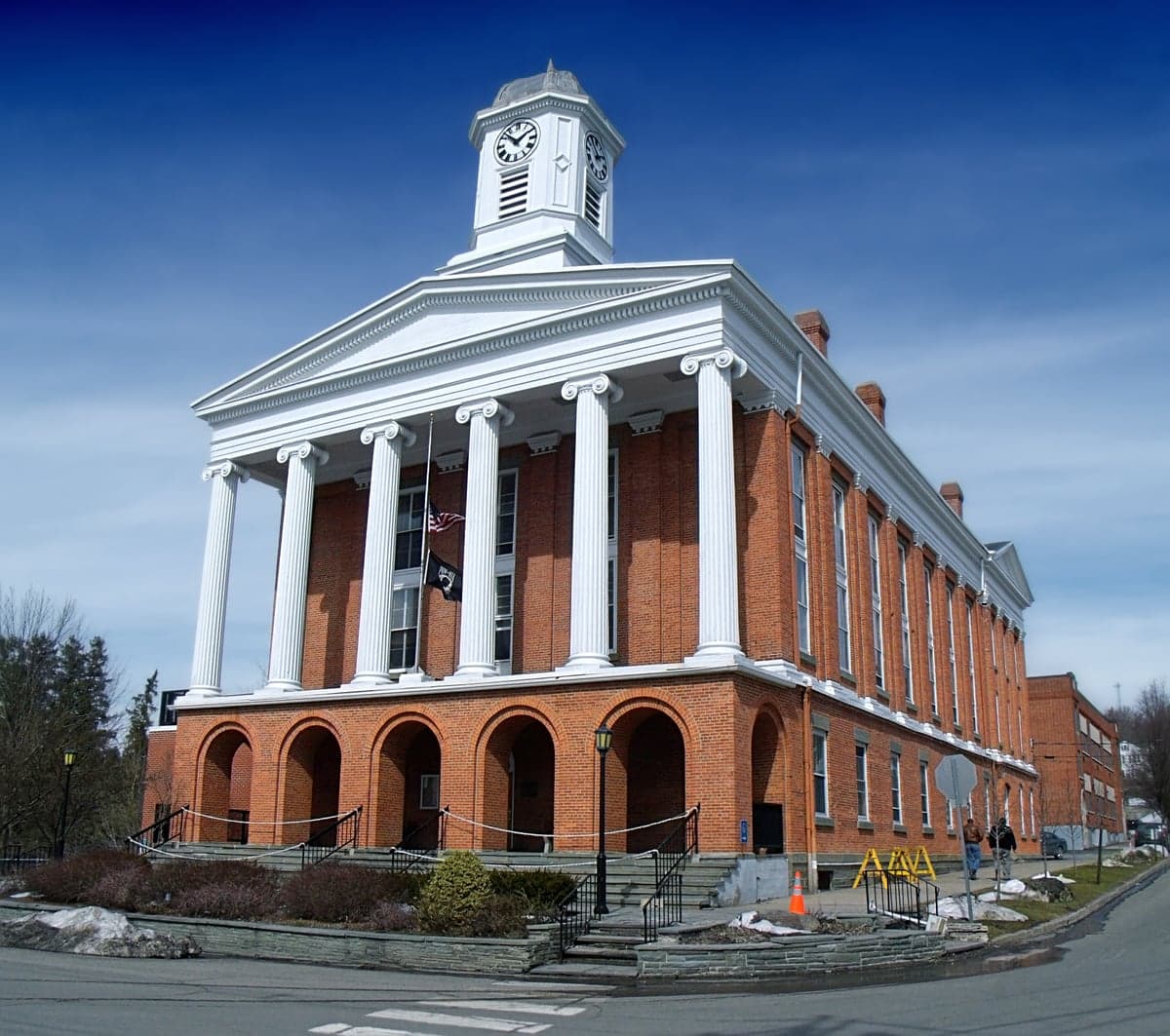
Montrose, the county seat with roughly 1,200 residents, is the undisputed hub of Susquehanna County. Daily life here revolves around the historic courthouse square, which hosts a seasonal farmers market and community events, and a walkable downtown with independent shops, the Montrose Diner, and the county library. The town is also home to the Montrose Area School District and a small satellite campus of Lackawanna College. Forest City, located in the county’s northeastern corner near the Wayne County line, is a former coal-mining borough of about 1,800 people. Its daily life is quieter than Montrose’s, anchored by the Forest City Regional School District and a handful of local businesses along Main Street. Hallstead and its twin borough Great Bend, situated along the Susquehanna River near the New York border, form a contiguous population center of about 2,500 residents. This area is more industrial in character, with rail infrastructure and the nearby Interstate 81 corridor providing access to Binghamton, New York (about 15 minutes north) for employment and shopping.
Smaller towns & rural pockets
Beyond these population centers, Susquehanna County is defined by its smaller boroughs and unincorporated communities. New Milford, a borough of about 850 people, sits along Route 11 and offers a post office, a few churches, and a volunteer fire company, with most residents commuting to jobs in Montrose or Binghamton. Harford, in the county’s southern tier, is a tiny village (population under 200) that serves as a gateway to the Harford Fair, one of the oldest agricultural fairs in Pennsylvania. Brooklyn Township, an unincorporated area, is almost entirely rural, with rolling farmland, scattered homes on acreage, and no commercial center — residents here drive 15–20 minutes to Montrose or to Laceyville in neighboring Wyoming County for groceries. Hop Bottom and Lanesboro are similarly small, each with fewer than 300 residents, offering little more than a general store and a post office but providing a quiet, low-cost lifestyle for those who value privacy over convenience.
Cost & lifestyle range
The cost of living and lifestyle options vary significantly across the county. At the lower end of the spectrum, Forest City and Hallstead offer the most affordable housing, with median home values around $150,000–$175,000 and median rents near the county average of $913. These areas are more working-class, with older housing stock and fewer local amenities, but they provide easy access to I-81 and Binghamton’s retail and healthcare. At the higher end, Montrose and the lakefront communities around Lake Montrose and Lake Carey command median home values closer to $250,000–$300,000, reflecting demand for historic homes, lake access, and walkability. The countywide median home value of $206,700 is roughly 30% below the Pennsylvania average, and the average commute of 26.7 minutes is manageable, though residents in rural townships like Harford or Brooklyn often face drives of 30–40 minutes to reach a supermarket or a primary care doctor. Property taxes are relatively low, with a county millage rate of about 12 mills, which keeps carrying costs down for homeowners.
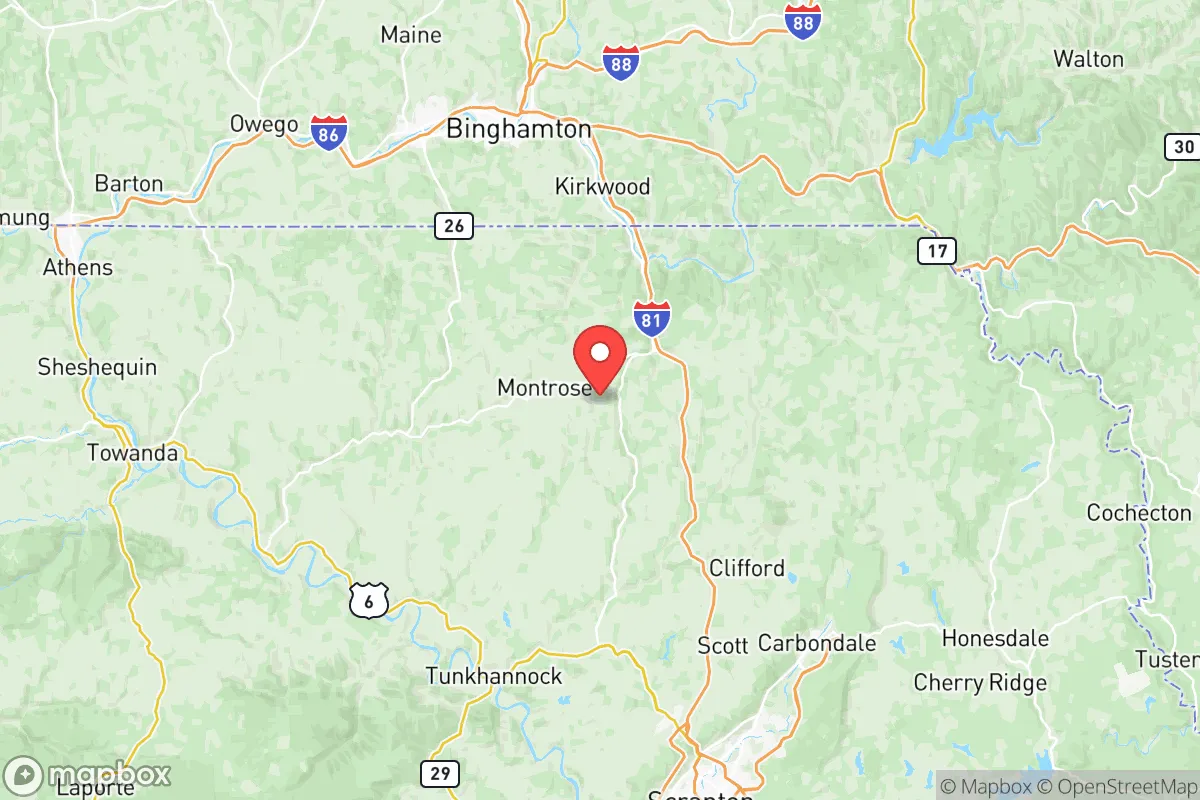
Susquehanna County is best suited for those who prioritize affordability, space, and a slower pace over urban amenities. Remote workers and retirees thrive in Montrose for its walkable core and community feel, while families and homesteaders are drawn to the rural townships for the low cost of land and the ability to live on acreage. The county’s location — within an hour of Scranton and 30 minutes of Binghamton — means that residents can access regional hospitals, airports, and big-box retail without sacrificing the quiet, low-tax lifestyle that defines this corner of northeastern Pennsylvania.

Crime in Susquehanna County
Generally safer than 57% of comparable U.S. locations.
Violent CrimeViolent Crime Analysis
Property CrimeProperty Crime Analysis
Crime Analysis
Susquehanna County, Pennsylvania, is a predominantly rural area in the Endless Mountains region that reports violent crime rates well below the national average, though property crime rates are closer to the national median. With a violent crime rate of 227.6 per 100,000 residents and a property crime rate of 1,338.3 per 100,000, the county presents a mixed safety profile that varies significantly between its small boroughs and unincorporated townships. The county's distance from major urban centers like Scranton and Binghamton, NY, contributes to its generally lower crime profile, though localized issues exist in certain communities.
Crime in context
Susquehanna County's violent crime rate of 227.6 per 100,000 is notably lower than the Pennsylvania state average of approximately 300 per 100,000 and significantly below the national rate of roughly 380 per 100,000. This positions the county as one of the safer rural areas in northeastern Pennsylvania for violent offenses, including homicide, rape, robbery, and aggravated assault. However, the property crime rate of 1,338.3 per 100,000 is slightly above the Pennsylvania average of about 1,200 per 100,000, driven largely by theft and burglary incidents in more populated areas. The county's crime statistics are compiled from the Pennsylvania State Police Uniform Crime Reporting system, which aggregates data from local departments and the state police barracks that patrol unincorporated areas. It is important to note that Susquehanna County does not have a large, progressive district attorney's office or a major urban court system that might contribute to lenient sentencing; the county's judicial approach is generally considered conservative, which can be a positive factor for residents concerned about recidivism and public safety.
What residents experience
Daily life in Susquehanna County is characterized by low rates of violent encounters, with most residents reporting feeling safe in their neighborhoods. The county's largest borough, Montrose, serves as the county seat and experiences the highest concentration of reported incidents, primarily property crimes like theft from vehicles and minor vandalism. Forest City and Susquehanna Depot (often called Susquehanna) also see elevated property crime rates compared to surrounding townships, though violent crime remains rare. In contrast, smaller communities like Brooklyn Township, Bridgewater Township, and Harford Township consistently report the lowest crime rates in the county, with many years seeing zero violent crimes. The Pennsylvania State Police provide primary law enforcement for most of the county, with only Montrose and Forest City maintaining their own small police departments. This state police coverage means response times can be longer in remote areas, but it also ensures consistent, professional law enforcement standards across the county.
Neighborhood-level variation
Crime in Susquehanna County is not evenly distributed, and prospective residents should consider specific townships when evaluating safety. The boroughs of Montrose and Susquehanna Depot account for a disproportionate share of the county's property crime, with theft and burglary rates roughly double those of surrounding townships. Conversely, the rural townships of Dimock, Springville, and Lathrop report crime rates that are a fraction of the county average, often with fewer than five total incidents per year. The county's proximity to the New York border means that some property crime is linked to transient populations traveling along Interstate 81 and U.S. Route 11, particularly in areas near the Great Bend and Hallstead exits. For families and retirees seeking the safest environments, the townships west of Montrose and south of the Susquehanna River generally offer the lowest crime rates, while those considering properties in the boroughs should take standard precautions like securing vehicles and outbuildings. Overall, Susquehanna County remains a safe choice for those prioritizing low violent crime and a conservative justice system, with property crime being the primary concern in its small commercial centers.
* Values derived from national, state, county, city and local statistics and may differ in a specific area. Last updated: 2026-11-18T06:27:31.000Z
Narrative content on this page is AI-generated and may contain mistakes. Verify any details that matter before acting on them.
ReloMaps may earn a commission from affiliate links at no extra cost to you.

