Photo: Wikipedia
Quality of Life in Mercer County
A livable area that tracks near national norms for affordability, walkability, and neighborhood health.
What does Quality of Life tell us?
Quality of Life measures an area by evaluating factors like cost of living, nearby amenities, country club access, airport proximity, socioeconomic signals and neighborhood character. For large states, this is a general average — quality of life can vary dramatically between metro areas, suburbs, and rural communities within the same state.
What does this tell us?
Quality of Life measures an area by evaluating factors like cost of living, nearby amenities, country club access, airport proximity, socioeconomic signals and neighborhood character. For large states, this is a general average — quality of life can vary dramatically between metro areas, suburbs, and rural communities within the same state.
Cost of Living
37% below national average
138%
The Real Cost of Living in Mercer County for 2026
| Tier | Individual | Family (4) |
|---|---|---|
| Survival | $13k | $24k |
| Comfortable | $30k | $44k |
| Luxury | $101k+ | $156k+ |
| Elite (Top 5%) | $118k+ | $183k+ |
Quality-of-Life Analysis
Mercer County, Pennsylvania, offers a distinct quality-of-life spectrum that ranges from walkable small cities with historic bones to quiet, unincorporated rural hamlets, all within a county where the cost-of-living index sits at 63 (37 percent below the national average). The county’s character shifts noticeably between its population centers and its backroads, drawing retirees and remote workers seeking affordability alongside families and agricultural workers who value space and lower taxes.
Largest town(s) & population centers
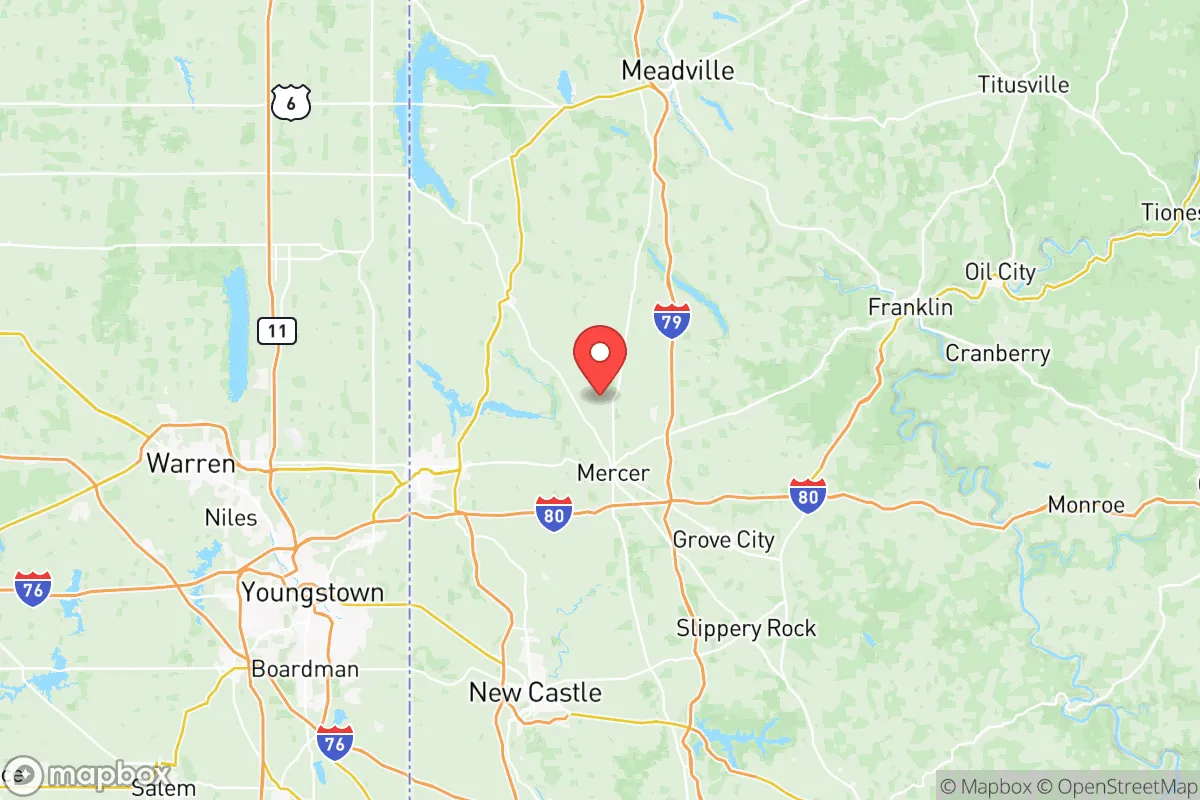
The county’s primary population anchors are Hermitage, Sharon, and Greenville, each with a distinct daily rhythm. Hermitage, the largest municipality by population, functions as a commercial and retail hub with big-box stores, chain restaurants, and the Sharon Regional Medical Center. Its residential neighborhoods are mostly suburban-style single-family homes on grid streets, and its median home value of $153,600 is slightly above the county average, reflecting newer housing stock and better-maintained infrastructure. Sharon, directly adjacent to the Ohio border, has a more compact downtown core with a handful of local cafes, a historic theater (the Sharon Opera House), and a working-class feel. Despite some commercial vacancies, Sharon’s lower rent—the countywide median is $808—attracts renters and first-time buyers. Greenville sits in the county’s southern half and centers on Thiel College, injecting a small college-town energy with coffee shops, a public library, and seasonal community events like the Greenville Pickle Festival. Daily life in these three towns typically involves driving: the average commute of 22 minutes is manageable, though Sharon and Hermitage residents often cross into Ohio for work, particularly to Youngstown or the Lordstown GM plant.
Smaller towns & rural pockets
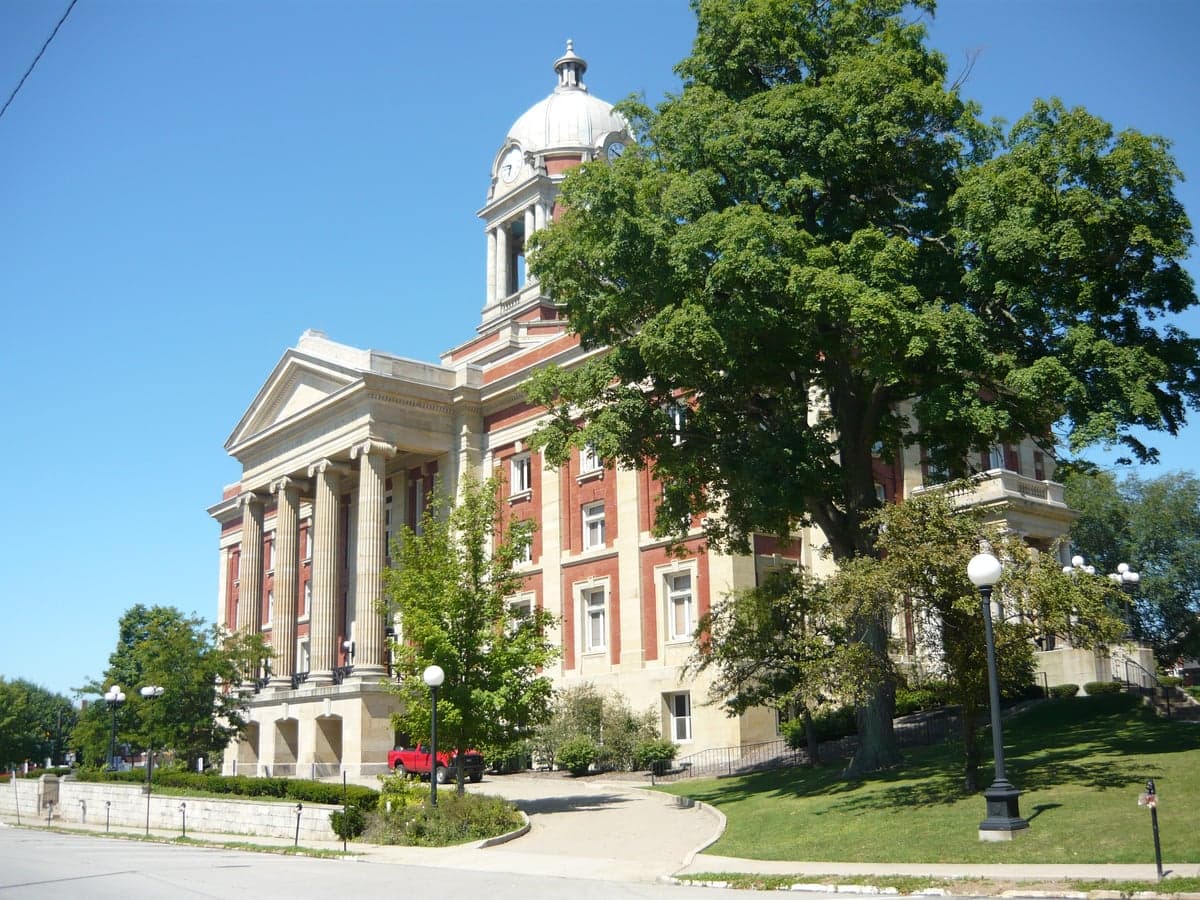
Stepping outside the main population centers reveals a network of unincorporated communities and small boroughs that define the county’s quieter side. Grove City, anchored by Grove City College and the massive Grove City Premium Outlets, blends rural tranquility with a college-town vibe; its downtown is compact but walkable, and the college’s presence keeps the housing stock in decent condition. Mercer, the county seat, is a small borough with a historic courthouse square, a handful of locally-owned restaurants (like The Vineyard at the Hershey Farm), and a population that hovers around 2,000—rural enough that deer sightings are routine, yet with enough civic services (a post office, a grocery) to feel neighborly rather than remote. Further west, Sharpsville and West Middlesex are small boroughs where homes often sit on larger lots and residents commuter shorter distances to Sharon or Hermitage. For those seeking true isolation, the Pymatuning Reservoir area in the county’s northwest corner offers lakefront cabins, seasonal cottages, and a smattering of year-round homes; Jamestown (population ~600) sits at the reservoir’s southern edge and is the most rural settlement with any retail (a gas station, a bait shop, a volunteer fire department).
Cost & lifestyle range
The cost spread across Mercer County is surprisingly narrow for a county spanning 680 square miles, but the lifestyle variance is real. At the pricier end, Hermitage sees median home values around $170,000–$190,000 in its newer subdivisions, such as those off Sharon-Hermitage Road, and rents of $900–$1,100 for a two-bedroom apartment. At the affordable end, Sharon and Sharpsville have homes under $100,000 and rents as low as $600–$700 for older duplexes or apartments above downtown storefronts. The rural hollows near Hadley and Stoneboro offer the cheapest land—raw acreage can be found under $5,000 per lot—but with zero walkability and spotty broadband, which is a trade-off for those who value privacy over convenience. Amenities follow the same gradient: Hermitage and Grove City have chain supermarkets, urgent-care clinics, and big-box retail; the rural pocket relies on Greenville’s UPMC Horizon Hospital (the only full-service hospital after Sharon Regional) and a handful of regional grocery stores like Giant Eagle and Save-A-Lot. Property taxes are low across the county—the effective millage rate averages 28 mills—but the trade-off is limited public transit and few entertainment options beyond high school sports, fishing at the reservoir, or a movie at Quaker Cinema in Sharon.
The resident who thrives in Mercer County is typically someone comfortable with a slower pace, affordable housing, and a 20-minute car trip for most errands. Remote workers, retirees on fixed incomes, and families seeking lower cost of living than Ohio’s Mahoning Valley or Pennsylvania’s greater Pittsburgh orbit find value here, especially in Hermitage’s suburban subdivisions or along the lake near the Pymatuning Reservoir. Those who need walkable nightlife, job density, or premium healthcare should look to larger metros—but for a quiet, low-cost life under $800 rent and a $150,000 home, Mercer County delivers a consistent, unglamorous baseline that many find genuinely appealing.

Crime in Mercer County
Generally safer than 57% of comparable U.S. locations.
Violent CrimeViolent Crime Analysis
Property CrimeProperty Crime Analysis
Crime Analysis
Mercer County, Pennsylvania, presents a mixed safety profile for potential residents, with property crime rates notably higher than national averages while violent crime remains below the state and national benchmarks. The county's overall violent crime rate of 226.5 incidents per 100,000 residents is roughly 20% lower than the Pennsylvania state average and about 35% lower than the U.S. national rate. However, property crime in Mercer County stands at 1,346.4 per 100,000, which exceeds both the state average (approximately 1,200 per 100,000) and the national rate (around 1,950 per 100,000), meaning residents face a higher-than-typical risk of theft, burglary, and vehicle break-ins.
Crime in context
When compared to the broader Commonwealth, Mercer County's violent crime rate is a relative bright spot. The county's figure of 226.5 per 100,000 is significantly lower than Pennsylvania's statewide rate of roughly 280 per 100,000 and the national rate of about 370 per 100,000. This is largely driven by low rates of homicide and aggravated assault in the county's smaller communities. Property crime, however, tells a different story. At 1,346.4 per 100,000, the county's property crime rate is about 12% higher than the Pennsylvania average of roughly 1,200 per 100,000, though still below the national rate. The most common property offenses are larceny-theft and motor vehicle theft, with the city of Sharon and the borough of Farrell consistently reporting the highest concentrations of these incidents. The county's rural townships, such as Hempfield Township and Pymatuning Township, generally see far fewer property crimes per capita.
What residents experience
For most residents, daily life in Mercer County does not involve frequent encounters with violent crime. The county's violent crime rate translates to roughly 2.3 incidents per 1,000 people annually, meaning the vast majority of neighborhoods are safe for walking, shopping, and raising families. The primary concern for residents is property crime, particularly in more urbanized areas. The city of Hermitage, for example, experiences a moderate property crime rate driven by retail theft at its shopping centers, while Greenville sees a mix of residential burglaries and vehicle break-ins. Residents in these areas commonly report taking precautions such as locking vehicles, installing outdoor lighting, and using security cameras. The county's District Attorney, Peter C. Acker, operates under a traditional law-and-order framework, which is a positive factor for public safety. Unlike some larger metropolitan areas with progressive prosecutors who may deprioritize certain property offenses, Mercer County's judicial approach emphasizes accountability, which helps deter repeat offenders and maintains a more predictable justice system for victims.
Neighborhood-level variation is significant across Mercer County. The safest areas are generally the rural townships and small boroughs in the northern and eastern parts of the county, such as Lake Township and Deer Creek Township, where crime rates are a fraction of the county average. In contrast, the urban core of Sharon and the adjacent borough of Farrell have the highest crime concentrations, driven by socioeconomic factors and a denser population. These areas see elevated rates of both violent and property crime, and prospective residents should research specific blocks and neighborhoods within these municipalities. The county's proximity to the larger, more progressive judicial districts of Youngstown, Ohio (just across the state line) is a notable concern. Youngstown's liberal-leaning prosecutorial policies have been linked to higher recidivism and a greater number of offenders circulating in the region, which can spill over into Mercer County's border communities. For those prioritizing safety, choosing a home in the county's more conservative, rural townships or in well-policed boroughs like Grove City is strongly recommended.
* Values derived from national, state, county, city and local statistics and may differ in a specific area. Last updated: 2026-07-07T07:11:25.000Z
Narrative content on this page is AI-generated and may contain mistakes. Verify any details that matter before acting on them.
ReloMaps may earn a commission from affiliate links at no extra cost to you.

