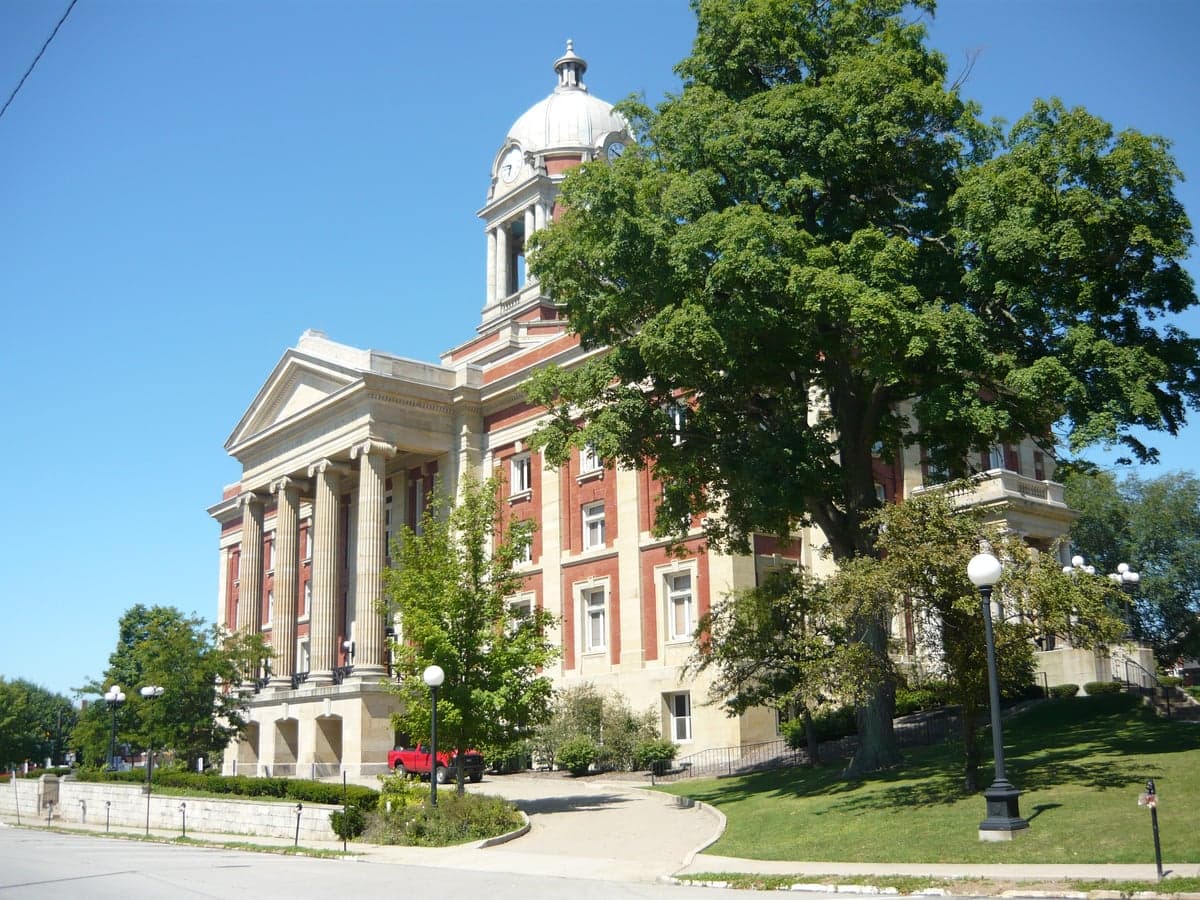
Photo: Wikipedia
Personal Sovereignty in Mercer County
Strong independent fundamentals that actively favor personal liberty and low regulation.
What does Personal Sovereignty tell us?
Personal Sovereignty measures your capacity for self-reliance and independence with minimal government friction. Higher scores mean fewer barriers between you and the way you want to live... but it assumes you have the space you need and good neighbors.
What does this tell us?
Personal Sovereignty measures your capacity for self-reliance and independence with minimal government friction. Higher scores mean fewer barriers between you and the way you want to live... but it assumes you have the space you need and good neighbors.
State Policy
Energy independence: Net exporter (150% of energy produced in-state)
Personal Liberty
Homesteading

Personal Liberty Analysis
Mercer County, Pennsylvania, offers a notably high degree of personal sovereignty compared to many areas in the northeastern United States, particularly for those who value self-reliance, limited government interference, and the freedom to live as they see fit. The county’s regulatory environment is light-touch, its tax burden is moderate, and its gun laws are among the most permissive in the nation, creating a strong foundation for individual autonomy. While not as libertarian-leaning as some rural western counties, Mercer County strikes a balance that appeals to families and individuals seeking to maximize personal freedom without complete isolation from urban amenities.
Tax burden and regulatory posture in Mercer County
Pennsylvania’s flat state income tax rate of 3.07% and its lack of a tax on retirement income (including Social Security, pensions, and 401(k) withdrawals) are major draws for those seeking to keep more of what they earn. Mercer County’s local tax structure is similarly restrained: the county’s real estate tax rate is approximately 5.5 mills, and municipalities like Hermitage and Sharon add their own millage, but overall property taxes remain well below the state average. Sales tax is a flat 6% statewide, with no additional county-level surcharge. The regulatory posture is business-friendly, with no county-level zoning overlay in unincorporated areas, though townships like Pymatuning and Hempfield have their own zoning ordinances. Compared to neighboring Ohio or New York, Mercer County’s permitting processes for home construction, small businesses, and land use are streamlined, with most approvals handled at the township level within weeks rather than months. The county’s lack of a local income tax (most municipalities rely on a 1% earned income tax, but some like Greenville have lower rates) further reduces the fiscal burden on residents.
Self-defense and gun law specifics in Mercer County
Pennsylvania is a “shall-issue” state for concealed carry permits, and Mercer County’s sheriff’s office processes applications efficiently, typically within 45 days. Open carry is legal without a permit for anyone 18 or older who can legally possess a firearm, though it is restricted in Philadelphia. The county has no additional local gun ordinances beyond state law, meaning no magazine capacity limits, no “assault weapon” bans, and no waiting periods for long gun purchases. Stand-your-ground principles apply under Pennsylvania’s Castle Doctrine, which presumes a reasonable fear of death or serious bodily injury when an intruder unlawfully enters a home, vehicle, or workplace. In towns like Sharpsville and West Middlesex, gun ownership is culturally embedded, with multiple gun shops and shooting ranges within a 20-minute drive. The county’s rural character means that firearm use for hunting and sport is common, and there is no social stigma attached to visible carry. For those moving from restrictive states like New York or New Jersey, Mercer County’s gun laws represent a significant expansion of personal sovereignty.
Self-reliance and homesteading viability in Mercer County
Mercer County’s agricultural zoning and relatively low land prices make it a strong candidate for homesteading and off-grid living. Minimum lot sizes in rural townships like Deer Creek and Findley are typically 1 to 2 acres, though many parcels of 5 to 10 acres are available for under $10,000 per acre. Off-grid feasibility is high: the county has no county-wide ban on rainwater collection, composting toilets, or solar panels, though individual township ordinances may require permits for septic systems and well drilling. In Jackson Center and Mercer borough, residents commonly keep chickens, goats, and even small livestock on residential lots, and there are no nuisance ordinances that restrict farm animals in most rural zones. The county’s growing season (roughly 150 days) supports vegetable gardens and small orchards, and the Amish and Mennonite communities in the area provide a network of knowledge and resources for self-sufficient living. Internet access can be spotty in the far northern townships, but Starlink is widely available, enabling remote work and online learning even in off-grid setups. For those seeking to reduce reliance on municipal utilities, Mercer County’s regulatory environment imposes few barriers.
Personal liberties in Mercer County: parental rights, medical autonomy, speech, and property
Pennsylvania law generally respects parental rights in education and medical decisions. The state does not mandate COVID-19 vaccines for school attendance, and parents can opt children out of sex education or specific health curricula without penalty. Mercer County’s school districts, including Mercer Area and Lakeview, have conservative school boards that have resisted controversial curriculum mandates, and parental notification policies for sensitive topics are standard. Medical autonomy is strong: the state has no vaccine passport system, and there are no county-level health orders that restrict personal medical choices. Free speech protections are robust, with no local hate speech ordinances or permit requirements for public gatherings beyond standard noise regulations. Property rights are well-protected: eminent domain is rarely used, and the county’s assessment appeals process is straightforward for homeowners who believe their property is overvalued. In Grove City, a strong private property ethos prevails, with few HOAs or restrictive covenants outside of planned developments. The county’s legal climate favors landowners in boundary disputes and easement issues, with courts generally deferring to original property lines and historical use.
Overall, Mercer County ranks as one of the more sovereignty-friendly areas in the Mid-Atlantic region, offering a combination of low taxes, permissive gun laws, homesteading viability, and respect for personal liberties that is rare east of the Mississippi. While it lacks the extreme libertarian environment of some western states like Idaho or Montana, it provides a practical, accessible option for families and individuals who want to maximize personal freedom within a stable, low-crime community. For those relocating from high-regulation states, the transition to Mercer County’s lighter-touch governance is immediate and tangible, making it a strong contender for anyone prioritizing autonomy in their relocation decision.

* Values derived from national, state, county, city and local statistics and may differ in a specific area. Last updated: 2026-07-07T07:11:25.000Z
Narrative content on this page is AI-generated and may contain mistakes. Verify any details that matter before acting on them.
ReloMaps may earn a commission from affiliate links at no extra cost to you.

