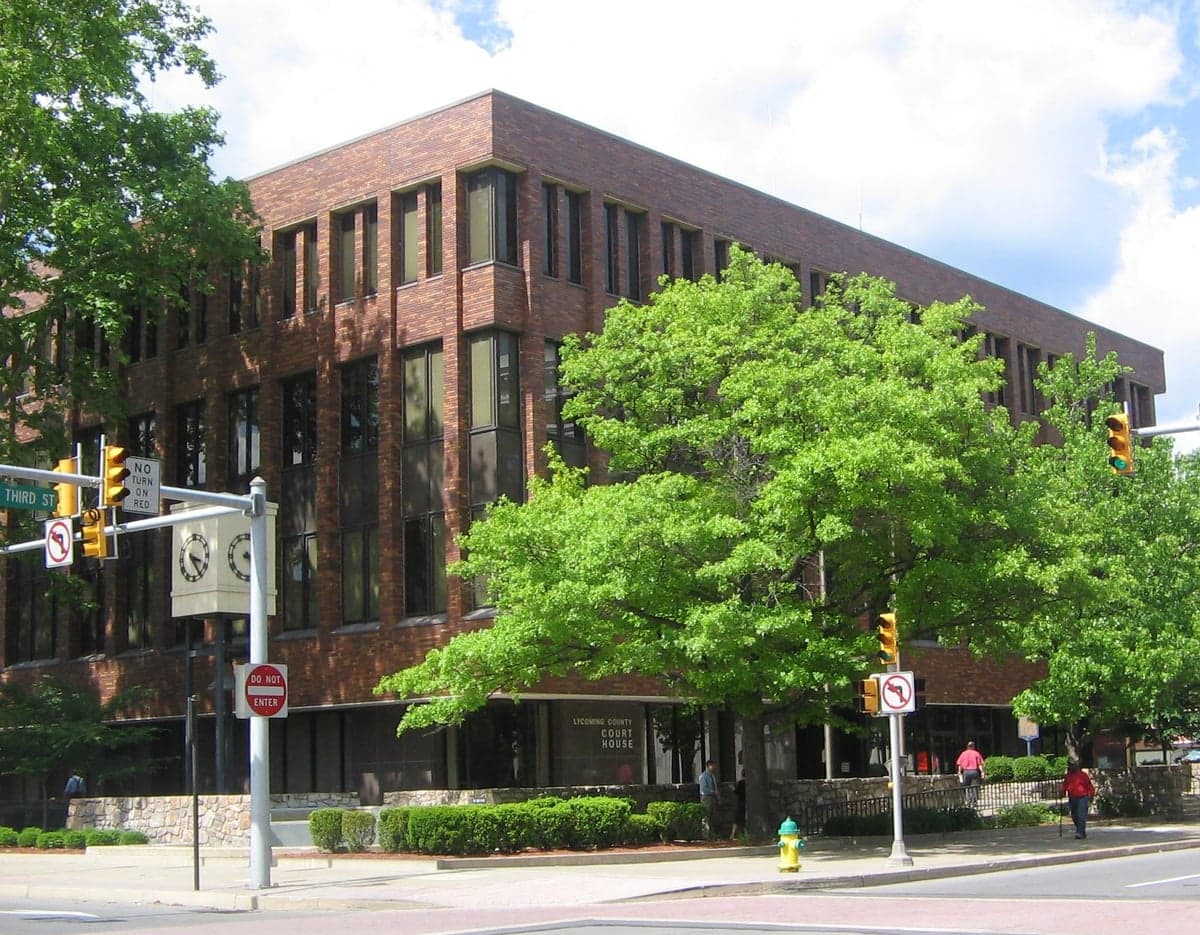
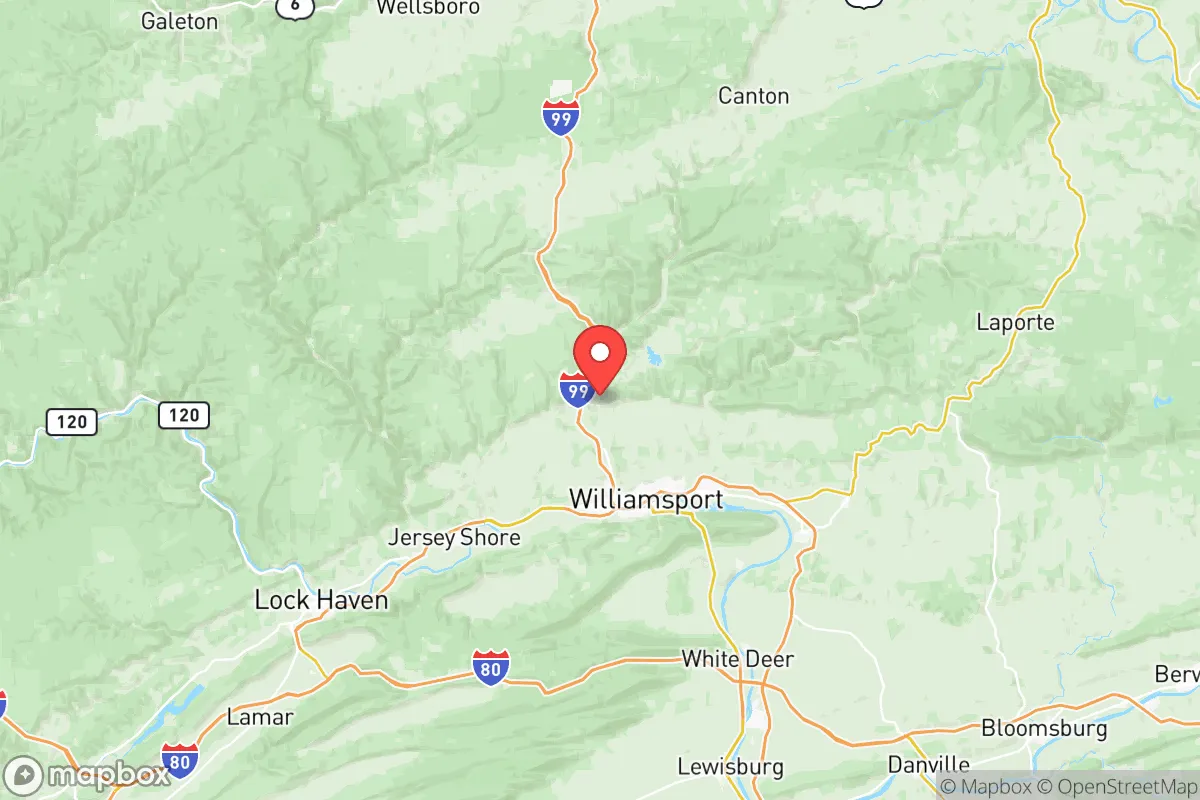
Photo: Wikipedia
Political ClimatePolitical Climate in Lycoming County
Showing district-level results — no local-only data available.
Local Political AnalysisPolitical Analysis of Lycoming County
Lycoming County is a reliably Republican stronghold in north-central Pennsylvania, with a Cook Partisan Voting Index of R+19, meaning it votes about 19 points more Republican than the nation as a whole. This stands in stark contrast to the state of Pennsylvania, which has a Cook PVI of EVEN, reflecting its status as a true battleground. The county hasn't voted for a Democratic presidential candidate since Lyndon B. Johnson in 1964, and in 2024, Donald Trump carried it by roughly 30 points. That said, the political landscape isn't a monolith—there are real pockets of blue, especially in the city of Williamsport and the college town of Muncy, while the rural townships like Loyalsock, Fairfield, and Lewis Township are deeply red. The swing precincts tend to be in the suburban fringe of Williamsport, like Armstrong Township, where ticket-splitting still happens in local races.
How it compares
Pennsylvania as a whole is a classic purple state, with its PVI of EVEN driven by the Democratic strongholds of Philadelphia, Pittsburgh, and their inner suburbs, balanced by the redder rural and exurban regions. Lycoming County is a prime example of that rural red—its R+19 lean is about 19 points more conservative than the state average. To put it in perspective, while Pennsylvania's statewide races are often decided by 1-3 points, Lycoming County consistently delivers margins of 20-30 points for Republican candidates. In the 2022 Senate race, Dr. Mehmet Oz won the county by 24 points, even as he lost the state by 5. The county's Republican tilt is amplified by its low population density and lack of a major urban center—Williamsport, the county seat, has about 27,000 people, and its Democratic lean (roughly D+10 in recent presidential elections) is easily overwhelmed by the surrounding townships. For comparison, the neighboring counties of Union (R+22) and Clinton (R+20) are even redder, while Centre County (home to Penn State) leans Democratic at D+5, creating a sharp political border just to the south.
What this means for residents
For conservative residents, Lycoming County feels like a safe harbor where their values are reflected in local policy—the county commissioners are reliably Republican, the sheriff's office is conservative, and gun rights are broadly supported. For liberal residents, it can feel isolating, but not hostile; Williamsport and Muncy provide small blue bubbles where progressive candidates can win local council seats and school board positions. The practical impact is that county-level decisions—like zoning, school funding, and law enforcement priorities—tend to lean conservative, but state and federal elections are where the real tension lives. A liberal resident here knows their vote for president or Senate is essentially a protest vote, but they can still make a difference in local races, especially in the city. The county's trajectory is slowly shifting rightward as rural areas nationwide trend redder, but the growth of remote work and the arrival of a few new residents from blue states has slightly softened the edges in places like the borough of South Williamsport.
Culturally, Lycoming County is a place where the Little League World Series brings the world to Williamsport every August, and that event is a rare moment of bipartisan pride. The county's policy distinctions are subtle but real: it's a Second Amendment sanctuary county, meaning local officials have pledged not to enforce certain state gun laws they deem unconstitutional. There's also a strong local push for natural gas development in the Marcellus Shale, which creates jobs but also sparks environmental debates. The county's politics are deeply rooted in its economy—manufacturing, healthcare, and energy—and that shapes everything from school board meetings to county budget hearings. For anyone moving here, the key takeaway is that Lycoming County is a place where your vote matters more in local races than national ones, and where the political climate is stable, predictable, and unapologetically conservative, with just enough blue to keep things interesting.

State Political ClimatePolitical Climate in Pennsylvania
State Political AnalysisPolitical Environment in the State
Pennsylvania is the ultimate swing state, with a Cook PVI of EVEN, meaning it votes almost exactly in line with the national average. Over the last 20 years, it has shifted from a reliably blue-leaning state in presidential races (voting for Kerry in 2004 and Obama twice) to a true toss-up, with Trump winning it in 2016 by 44,000 votes and Biden flipping it back in 2020 by just 80,000 votes. The state is a perfect 50/50 battleground, driven by a shrinking Democratic base in the industrial southeast and southwest, and a surging Republican vote in the sprawling exurbs and rural north and center.
Urban vs. rural divide
The political map of Pennsylvania is a textbook study in the urban-rural split. The Democratic strongholds are Philadelphia (which delivers about 500,000-vote margins for Democrats) and its immediate collar counties—Montgomery, Delaware, and Chester—which have become reliably blue suburbs. Pittsburgh and its Allegheny County base also lean Democratic, though less overwhelmingly than Philly. The Republican base is the vast "T" of the state: the northern tier along the New York border, the central spine from the Susquehanna Valley down through the Appalachians, and the southwestern counties like Washington and Westmoreland. The key battlegrounds are the "collar counties" around Philadelphia (Bucks, Chester, Delaware, Montgomery) and the Lehigh Valley (Allentown, Bethlehem, Easton). Bucks County, a classic swing county, voted for Biden in 2020 by 4 points, but in 2024 it shifted right, with Trump narrowing the margin to under 1 point, signaling a suburban realignment. Erie County in the northwest is another bellwether: it voted for Obama twice, then Trump in 2016, then Biden in 2020, and is now a pure toss-up. The state's political future hinges on whether the Philadelphia suburbs continue to drift left or whether the exurban and rural surge—places like Lancaster, York, and Cumberland counties—can outpace them.
Policy environment
Pennsylvania's policy environment is a mixed bag that reflects its divided government. The state has a flat income tax rate of 3.07%, one of the lowest in the nation, and a sales tax of 6% (8% in Philadelphia and Pittsburgh). Property taxes are high, averaging about 1.5% of home value, which is a major concern for homeowners. The state has no right-to-work law, and union membership remains strong, especially in the public sector and construction trades. Education policy is decentralized, with 500 school districts, but the state has seen a recent push for fair funding after a 2023 court ruling declared the current system unconstitutional. Healthcare is a mixed picture: Pennsylvania expanded Medicaid under the ACA, but the state has no public option. Election laws are relatively moderate: no-excuse mail-in voting was enacted in 2019 (Act 77), but it remains a partisan flashpoint, with Republicans pushing for voter ID requirements and Democrats defending mail-in access. Gun laws are a key differentiator: Pennsylvania is a "shall-issue" state for concealed carry, with no permit required for open carry, but it does have universal background checks for handgun purchases and a 48-hour waiting period. There is no "stand your ground" law, but the Castle Doctrine is strong, allowing deadly force in the home without a duty to retreat.
Recent policy direction
Over the past five years, Pennsylvania has moved in a moderately conservative direction on some fronts and a moderately liberal one on others, reflecting its divided government. On gun rights, the state passed preemption laws in 2014 and 2022 that prevent local municipalities from enacting their own gun ordinances, a win for gun owners. However, in 2023, Governor Josh Shapiro signed an executive order requiring universal background checks for all gun sales at gun shows and online, though it faces legal challenges. On education, the state passed a $100 million school safety grant program in 2023, but also saw a major push for school choice, with a proposed "lifeline scholarship" program for students in low-performing districts failing to pass. On abortion, Pennsylvania remains a relative island of access in the Northeast: abortion is legal up to 24 weeks, and the state has no mandatory waiting period or ultrasound requirement. However, the 2022 Dobbs decision did not trigger any new restrictions, as the state's 1982 Abortion Control Act remains in place. On election integrity, the state has been a battleground: Act 77 (no-excuse mail-in voting) survived a 2024 state Supreme Court challenge, but the legislature is considering a voter ID bill that would require photo identification for all voters. On property rights, the state has no statewide rent control, and the "eminent domain" debate is quiet, though the Marcellus Shale gas boom has created tensions over mineral rights and land use. On privacy and surveillance, Pennsylvania has no statewide ban on facial recognition, but Philadelphia and Pittsburgh have enacted local moratoriums. The state also has a "right-to-know" law that is relatively strong for government transparency.
Civil unrest & political movements
Pennsylvania has seen its share of political flashpoints. The 2020 election aftermath was intense: Trump's campaign filed multiple lawsuits in the state, and the "Stop the Steal" movement held rallies at the state capitol in Harrisburg. In 2021, the state saw a wave of school board meetings erupting over COVID-19 mandates and critical race theory, particularly in suburban districts like Central Bucks and Pennridge. The "parents' rights" movement has been strong in the Philadelphia suburbs, with groups like "Moms for Liberty" gaining traction. On the left, the Black Lives Matter protests in Philadelphia in 2020 were among the largest in the country, and the city has seen ongoing debates over police reform and defunding. Immigration politics are relatively quiet compared to border states, but Philadelphia is a sanctuary city, and the state has a "driver's license for all" bill that has stalled in the legislature. The most visible political movement in recent years has been the "election integrity" push, with Republican-led counties like Lancaster and York conducting "forensic audits" of the 2020 election, though no evidence of widespread fraud was found. The state also saw a secessionist movement in 2020, with several rural counties (including Bradford, Tioga, and Potter) passing resolutions to join a "Greater Idaho" movement, though it was purely symbolic. A new resident would notice the political polarization in the "yard sign wars" during election season, especially in swing counties like Northampton and Erie.
Projection
Over the next 5-10 years, Pennsylvania is likely to remain a toss-up, but the demographic trends favor the Republicans slightly. The state is losing population in the rural north and southwest, while the Philadelphia suburbs and the Lehigh Valley are growing. However, the growth is not uniformly Democratic: the exurbs of Lancaster and York are attracting conservative-leaning families from the Northeast, while the city of Philadelphia is losing population. The state's aging population (it has the third-oldest median age in the nation) tends to vote more Republican, but younger voters moving into Pittsburgh and Philadelphia are more liberal. The wild card is the Marcellus Shale gas industry: if energy prices remain high, the economic boost to rural and exurban areas could solidify the Republican base. The state's political future will also be shaped by the 2030 redistricting cycle, which could see the loss of a congressional seat due to slow population growth. A new resident moving in now should expect a state that remains deeply divided, with no single party dominating, and where every election will be a nail-biter. The practical implication is that your vote will genuinely matter, but you'll also have to live with constant political tension and a state government that often gridlocks on major issues.
For a new resident, the bottom line is that Pennsylvania offers a unique blend of low taxes and high property taxes, strong gun rights with some urban restrictions, and a political environment where your vote truly counts. If you're conservative, you'll find a welcoming home in the rural and exurban areas, but you'll have to contend with Democratic control of the governor's office and the state Supreme Court. If you're liberal, you'll feel at home in Philadelphia or Pittsburgh, but you'll be frustrated by the state's lack of a progressive income tax or stronger gun laws. The state is a microcosm of America's political divide, and living here means accepting that your neighbors may have very different views—and that every election will be a battle.
* Values derived from national, state, county, city and local statistics and may differ in a specific area. Last updated: 2026-07-25T17:20:41.000Z
Narrative content on this page is AI-generated and may contain mistakes. Verify any details that matter before acting on them.
ReloMaps may earn a commission from affiliate links at no extra cost to you.

