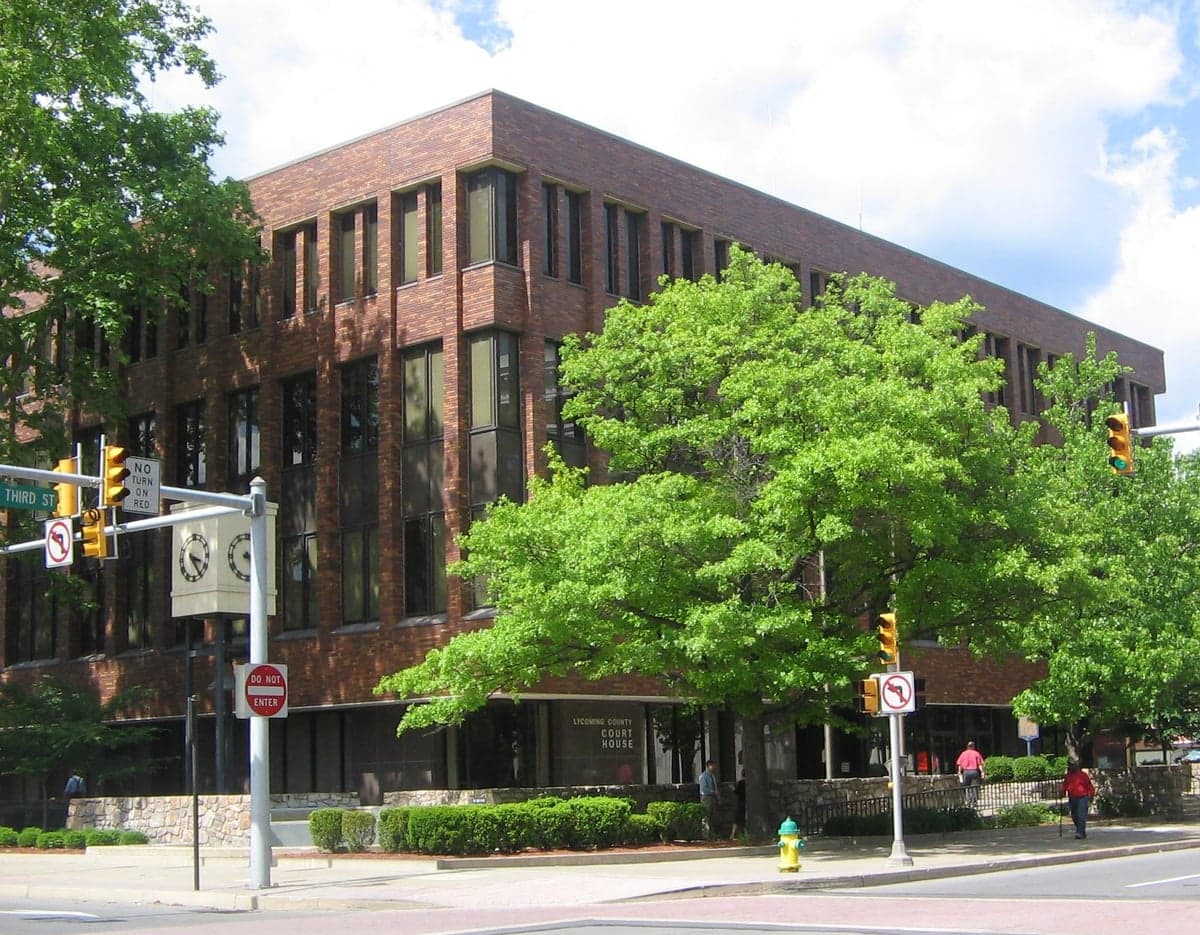
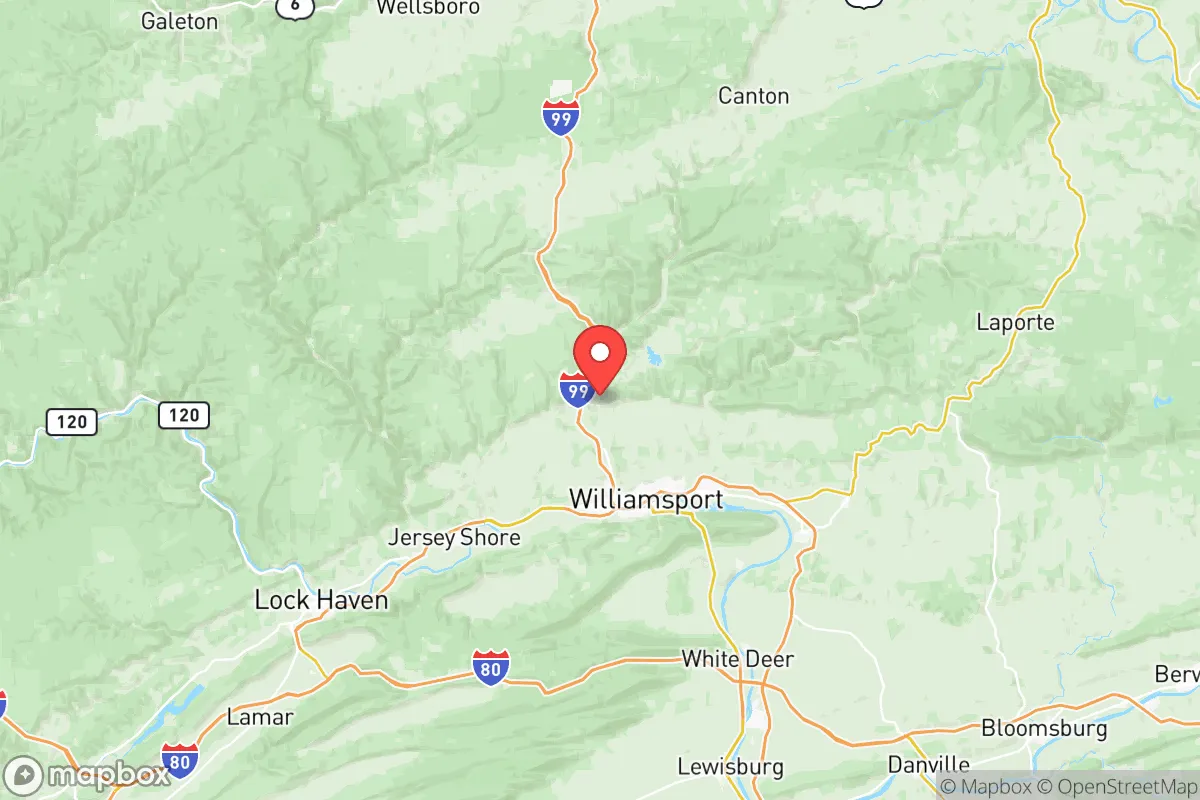
Photo: Wikipedia
Personal Sovereignty in Lycoming County
Strong independent fundamentals that actively favor personal liberty and low regulation.
What does Personal Sovereignty tell us?
Personal Sovereignty measures your capacity for self-reliance and independence with minimal government friction. Higher scores mean fewer barriers between you and the way you want to live... but it assumes you have the space you need and good neighbors.
What does this tell us?
Personal Sovereignty measures your capacity for self-reliance and independence with minimal government friction. Higher scores mean fewer barriers between you and the way you want to live... but it assumes you have the space you need and good neighbors.
State Policy
Energy independence: Net exporter (150% of energy produced in-state)
Personal Liberty
Homesteading

Personal Liberty Analysis
Lycoming County, Pennsylvania, offers a notably high degree of personal sovereignty, particularly for those who value low regulatory friction and a strong tradition of self-reliance. The county’s rural character, combined with Pennsylvania’s relatively permissive state-level framework on firearms, property rights, and taxation, creates an environment where individuals and families can exercise significant autonomy over their daily lives. While not a libertarian utopia—state and local taxes still apply, and zoning exists in certain pockets—the overall posture is one of light-touch governance, especially when compared to the Philadelphia or Pittsburgh metro areas. For a relocation-minded reader prioritizing independence, Lycoming County represents a solid middle ground between complete rural freedom and the conveniences of small-city life.
Tax burden and regulatory posture in Lycoming County
Pennsylvania’s tax structure is generally favorable for those seeking to keep more of their earnings. The state levies a flat 3.07% personal income tax—one of the lowest flat rates in the nation—and does not tax retirement income such as Social Security, 401(k) distributions, or pensions. Lycoming County itself imposes a modest county-level income tax of 2.0% (for most municipalities), and local school district taxes vary, typically ranging from 0.5% to 1.5%. Property taxes are the primary local revenue source, with effective rates averaging around 1.5% of assessed value, which is moderate for Pennsylvania. The regulatory posture is light in unincorporated areas and smaller boroughs like Jersey Shore, Montgomery, and Muncy, where zoning is minimal or nonexistent. In contrast, the city of Williamsport has more structured zoning and building codes, particularly in its historic districts. For a homesteader or small-scale entrepreneur, the county’s lack of county-wide business licensing and minimal occupational taxes (most townships have none) reduces bureaucratic overhead significantly. The overall environment is one where local government interference is the exception, not the rule.
Self-defense and gun law specifics in Lycoming County
Pennsylvania is a “shall-issue” state for concealed carry permits, and Lycoming County’s Sheriff’s Office processes applications efficiently, typically within a few weeks. The county has a strong gun culture, with multiple shooting ranges and gun shops in Williamsport, Montoursville, and Hughesville. Open carry is legal without a permit for anyone who can legally possess a firearm, though a permit is required for concealed carry. The state preempts local firearm ordinances, meaning municipalities like Loyalsock Township or South Williamsport cannot enact their own bans or restrictions. Stand-your-ground laws are in effect, with no duty to retreat in any place where the individual is legally present. Castle doctrine protections apply to homes and vehicles. The county’s rural nature means that firearm ownership is common, and there is no social stigma attached to carrying for self-defense. For those moving from restrictive states like New York or California, the legal environment here is a significant upgrade in personal sovereignty regarding self-defense.
Self-reliance and homesteading viability in Lycoming County
Lycoming County is one of the most viable areas in Pennsylvania for off-grid living and homesteading, thanks to its large tracts of undeveloped land and permissive zoning. In townships like Pine Creek, Cummings, and McHenry, minimum lot sizes for agricultural or rural residential use are often 2 to 10 acres, with many parcels available for under $5,000 per acre. Zoning in these areas is typically “agricultural/rural,” allowing for livestock, gardens, workshops, and accessory dwelling units without special permits. Off-grid feasibility is high: many properties have existing wells and septic systems, and solar panel installation is unrestricted in most townships. The county does not have a county-wide building code for unincorporated areas (though state codes apply for new construction), and inspections are minimal for owner-occupied structures. In Jersey Shore and Muncy, some boroughs have more restrictive codes, but the surrounding townships remain very permissive. For those seeking to reduce reliance on municipal utilities, the county’s abundant water resources (the Susquehanna River and Pine Creek) and relatively low population density make it a strong candidate for a self-sufficient lifestyle.
Personal liberties in Lycoming County
Parental rights are broadly respected in Lycoming County, with school districts in Williamsport, Montoursville, and Loyalsock Township generally deferring to parents on educational and medical decisions. Homeschooling is legal and straightforward under Pennsylvania’s Act 169, requiring only a notarized affidavit and annual portfolio review—no standardized testing mandates. Medical autonomy is somewhat constrained by state-level vaccine mandates for school attendance, but exemptions (medical and religious) are available and not aggressively contested. Free speech and property rights are strongly protected under Pennsylvania’s constitution, and the county has no history of local ordinances targeting political signs, yard displays, or religious expression. Property rights are robust: eminent domain is rarely used for private development, and the county’s comprehensive plan emphasizes voluntary conservation over regulatory takings. For those concerned about government overreach, Lycoming County’s local officials tend to be responsive to citizen concerns, and the county’s small population (around 114,000) means that personal relationships with elected officials are common.
Overall, Lycoming County offers a level of personal sovereignty that is well above the national average for a non-western state. It combines Pennsylvania’s favorable tax and gun laws with a rural culture that values self-reliance, minimal bureaucracy, and respect for individual choices. While it lacks the extreme libertarian ethos of some western counties (e.g., in Idaho or Montana), it provides a practical, accessible environment for families and individuals seeking to live with fewer constraints. For those coming from high-regulation states, the transition is straightforward: lower taxes, easier gun laws, and more land freedom. The county’s mix of small cities and vast rural areas means that one can choose their level of engagement with local government, from near-total independence in the deep woods of Pine Creek to a more conventional but still free existence in Williamsport’s suburbs. It is a solid, no-nonsense choice for the sovereignty-minded relocator.

* Values derived from national, state, county, city and local statistics and may differ in a specific area. Last updated: 2026-07-25T17:20:41.000Z
Narrative content on this page is AI-generated and may contain mistakes. Verify any details that matter before acting on them.
ReloMaps may earn a commission from affiliate links at no extra cost to you.

