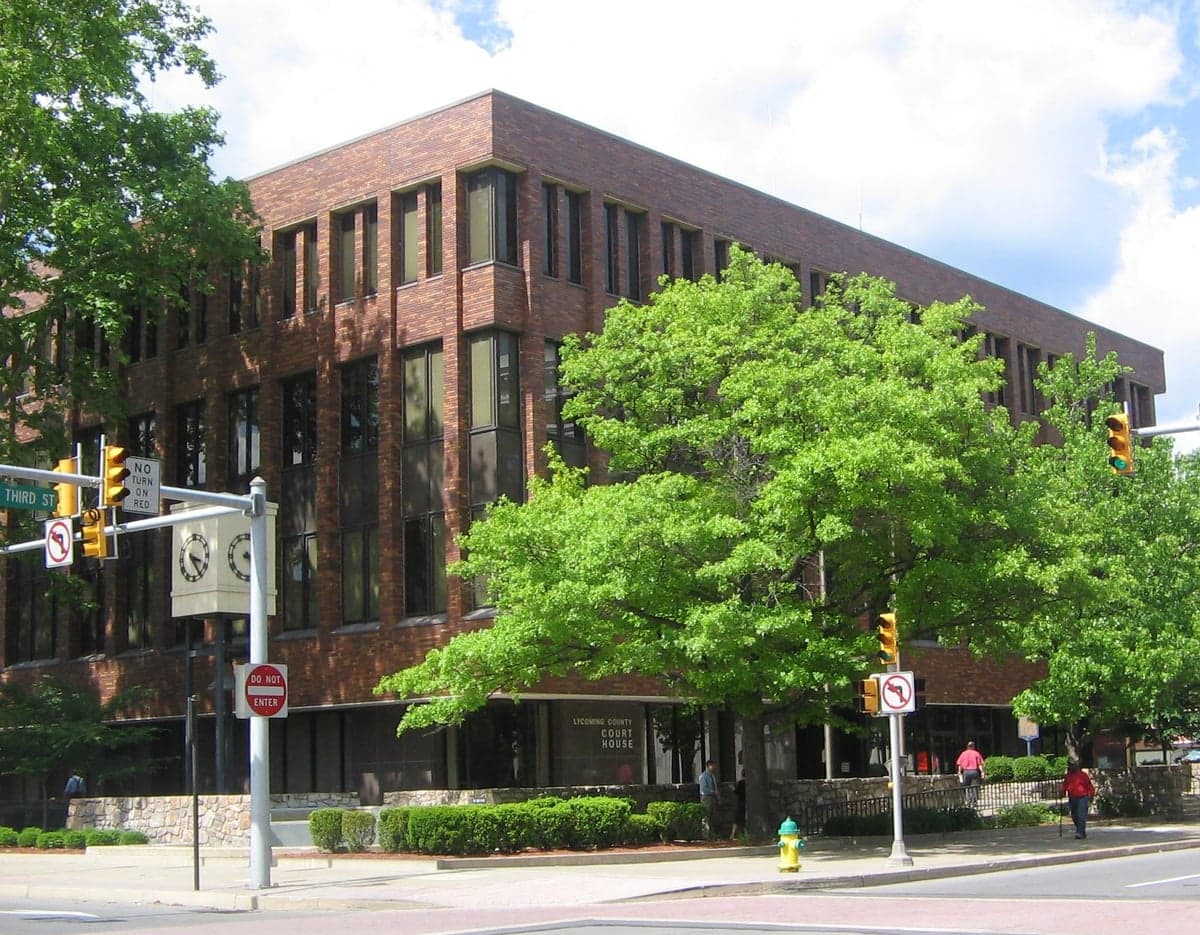
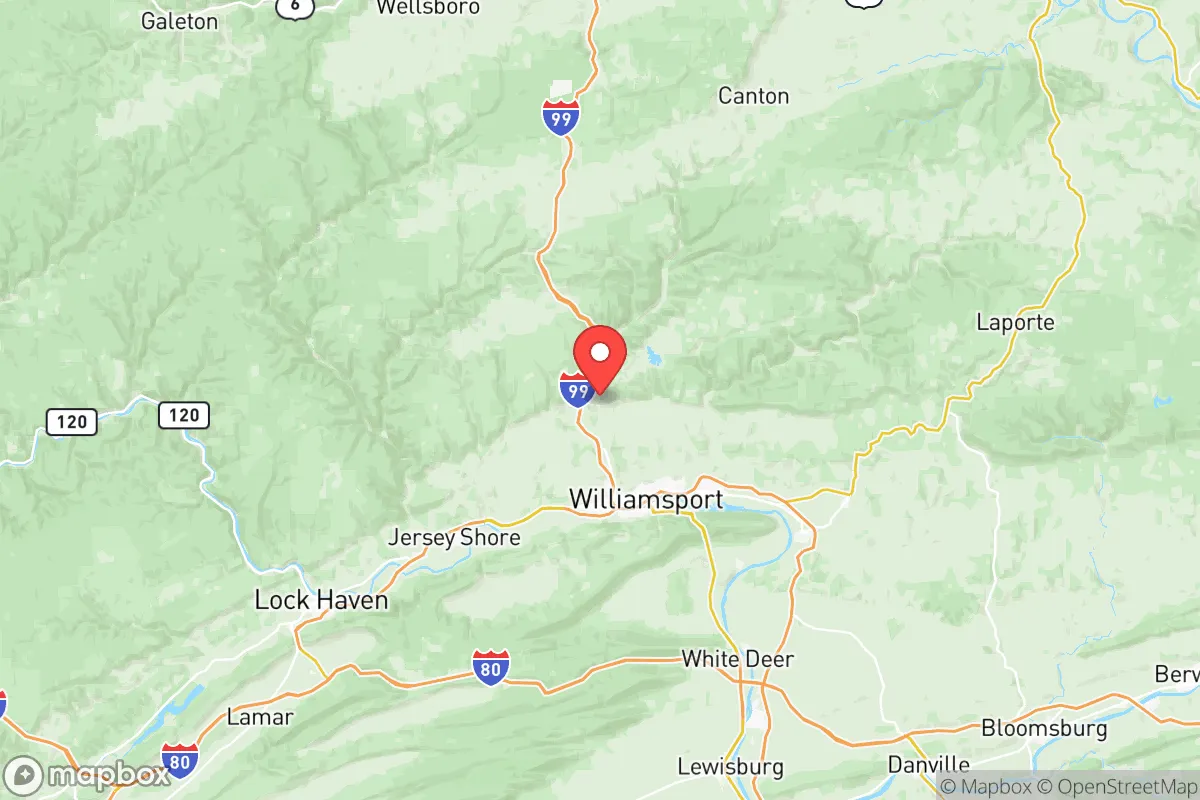
Photo: Wikipedia
Demographics of Lycoming County
Affluence Level in Lycoming County
A below-average socioeconomic profile. Incomes, home values, and educational attainment trail the U.S., with higher poverty and unemployment.
People of Lycoming County
Lycoming County, Pennsylvania, is home to roughly 113,570 residents, a population that is notably older and less diverse than the state average, with 88.6% identifying as white and a foreign-born share of just 0.9%. The county’s character is rooted in its Appalachian and industrial heritage, centered on the city of Williamsport, where a history of lumber, manufacturing, and small-town civic life has created a community that values self-reliance and tradition. While the county is overwhelmingly white and non-Hispanic, its small Hispanic (2.3%) and Black (4.2%) populations are concentrated in Williamsport and a few surrounding boroughs, giving the urban core a slightly more diverse feel than the rural townships. The county’s identity is shaped by a deep sense of place, a slower pace of life, and a population that has been remarkably stable in its ethnic composition for over a century.
Settlement & growth (pre-1960)
Long before European settlement, the region that is now Lycoming County was the homeland of the Susquehannock people, who were largely displaced or decimated by disease and warfare with the Iroquois Confederacy by the late 1600s. By the 18th century, the area was a hunting ground for the Six Nations of the Iroquois, with no permanent Native villages within the county’s modern borders. The first European settlers were Scots-Irish and German pioneers who pushed into the West Branch Susquehanna River valley after the Treaty of Fort Stanwix in 1768 opened the land to colonial settlement. These early arrivals, often subsistence farmers, founded the first permanent communities along the river, including Williamsport (laid out in 1795), Jersey Shore (settled in the 1770s), and Muncy (founded 1797). The region’s dense forests of white pine and hemlock soon became its economic engine, and by the mid-19th century, the lumber boom transformed Williamsport into the "Lumber Capital of the World."
The lumber industry drew a wave of immigrants from Germany and Ireland in the 1840s and 1850s, who worked in the sawmills and on the river rafts. These groups settled heavily in Williamsport’s working-class neighborhoods, such as the Newberry section, and in the mill towns of Montoursville and Hughesville. After the Civil War, the county’s industrial base diversified into manufacturing, including textiles, furniture, and later, aviation components. This second industrial phase attracted a smaller but notable wave of Italian and Polish immigrants between 1880 and 1910, who clustered in Williamsport’s east end and in the borough of South Williamsport. The county’s Black population, which stood at just 1.2% in 1900, grew modestly during the Great Migration as African Americans from the rural South moved north for factory work, settling primarily in Williamsport’s Vallamont and Hepburn Street neighborhoods. By 1960, Lycoming County’s population had peaked at roughly 109,000, and its ethnic character was firmly established: a white, largely Protestant majority of German and Scots-Irish descent, with smaller Catholic communities of Irish, Italian, and Polish heritage, and a tiny Black minority concentrated in the urban core.
Modern era (post-1965)
The 1965 Hart-Cellar Act, which opened immigration to non-European countries, had a minimal impact on Lycoming County. Unlike major metropolitan areas, the county did not experience a significant influx of new immigrant groups. The foreign-born population today is just 0.9%, far below the Pennsylvania average of 7.6%. The most notable post-1965 demographic shift has been the gradual growth of the Hispanic population, which rose from under 0.5% in 1980 to 2.3% today. This community is largely of Puerto Rican and Mexican descent, drawn by manufacturing and warehouse jobs in the 1990s and 2000s. They are concentrated in Williamsport, particularly in the Old City and Hepburn Street areas, and in the borough of Montoursville. The county’s Black population has grown modestly from 3.5% in 1990 to 4.2% today, a trend driven by domestic migration from larger Pennsylvania cities like Philadelphia and Harrisburg, as well as from New York and New Jersey, as families sought lower housing costs and a quieter lifestyle. This Black population is overwhelmingly concentrated in Williamsport, with smaller clusters in Jersey Shore and Muncy.
The county’s East/Southeast Asian population (0.8%) is small and primarily composed of Vietnamese and Korean families who arrived in the 1980s and 1990s, many as refugees or through family reunification. They are dispersed across Williamsport and Montoursville, with no distinct ethnic enclave. The Indian subcontinent population (0.1%) is negligible, consisting of a handful of professionals employed at the region’s largest private employer, the Williamsport Regional Medical Center, and at Pennsylvania College of Technology. The most significant domestic migration trend since 2000 has been the out-migration of young adults aged 18-34, who leave for college or job opportunities in larger cities, and the in-migration of retirees from the Mid-Atlantic and Northeast, drawn by low property taxes and a rural lifestyle. This has contributed to the county’s aging population, with a median age of 44.1, compared to the state median of 40.8. Suburbanization has been modest, with new single-family home construction concentrated in the townships surrounding Williamsport, such as Loyalsock Township and Fairfield Township, while the city itself has lost population since its 1950 peak of 45,000.
The future
Lycoming County’s population is projected to decline slightly over the next 20 years, driven by low birth rates and continued out-migration of young adults. The county is likely to become slightly more diverse, but at a very slow pace. The Hispanic population is expected to grow to around 4-5% by 2040, driven by natural increase and continued migration for manufacturing and logistics jobs. The Black population may stabilize or grow modestly, but will remain concentrated in Williamsport. The East/Southeast Asian and Indian populations are expected to remain very small, as the county lacks the professional job base and ethnic infrastructure to attract significant numbers. The county’s cultural identity will likely remain rooted in its white, working-class, and rural heritage, with the small urban core of Williamsport becoming somewhat more diverse. New residential development will continue to favor the townships, where land is cheaper and schools are perceived as stronger, reinforcing the city-suburb divide. For someone moving in now, Lycoming County offers a stable, affordable, and safe environment, but one with limited demographic change and a population that is aging in place.
Lycoming County is becoming a quieter, older, and slightly more diverse version of its 20th-century self, with the city of Williamsport serving as the primary locus of demographic change. For a family or individual seeking a low-cost, low-crime, and culturally traditional community, the county offers a strong fit, but those seeking a dynamic, multicultural environment or a growing job market will find it lacking. The county’s future is one of slow decline and modest diversification, with its character defined more by continuity than by change.

* Values derived from national, state, county, city and local statistics and may differ in a specific area. Last updated: 2026-07-25T17:20:41.000Z
Narrative content on this page is AI-generated and may contain mistakes. Verify any details that matter before acting on them.
ReloMaps may earn a commission from affiliate links at no extra cost to you.

