Photo: Wikipedia
Quality of Life in Lebanon County
A livable area that tracks near national norms for affordability, walkability, and neighborhood health.
What does Quality of Life tell us?
Quality of Life measures an area by evaluating factors like cost of living, nearby amenities, country club access, airport proximity, socioeconomic signals and neighborhood character. For large states, this is a general average — quality of life can vary dramatically between metro areas, suburbs, and rural communities within the same state.
What does this tell us?
Quality of Life measures an area by evaluating factors like cost of living, nearby amenities, country club access, airport proximity, socioeconomic signals and neighborhood character. For large states, this is a general average — quality of life can vary dramatically between metro areas, suburbs, and rural communities within the same state.
Cost of Living
12% below national average
118%
The Real Cost of Living in Lebanon County for 2026
| Tier | Individual | Family (4) |
|---|---|---|
| Survival | $17k | $33k |
| Comfortable | $44k | $65k |
| Luxury | $122k+ | $189k+ |
| Elite (Top 5%) | $144k+ | $223k+ |
Quality-of-Life Analysis
Lebanon County, Pennsylvania, offers a distinct quality-of-life spectrum that ranges from the walkable, historic core of its county seat to quiet, unincorporated crossroads and working farmland. The county’s overall cost of living index sits at 88 (well below the U.S. average of 100), with a median home value of $227,300 and median rent of $1,087, making it one of the more affordable options in south-central Pennsylvania. This range attracts a mix of commuters who work in Harrisburg or Hershey, families seeking lower housing costs, and retirees drawn to the region’s slower pace and Pennsylvania Dutch heritage.
Largest town(s) & population centers
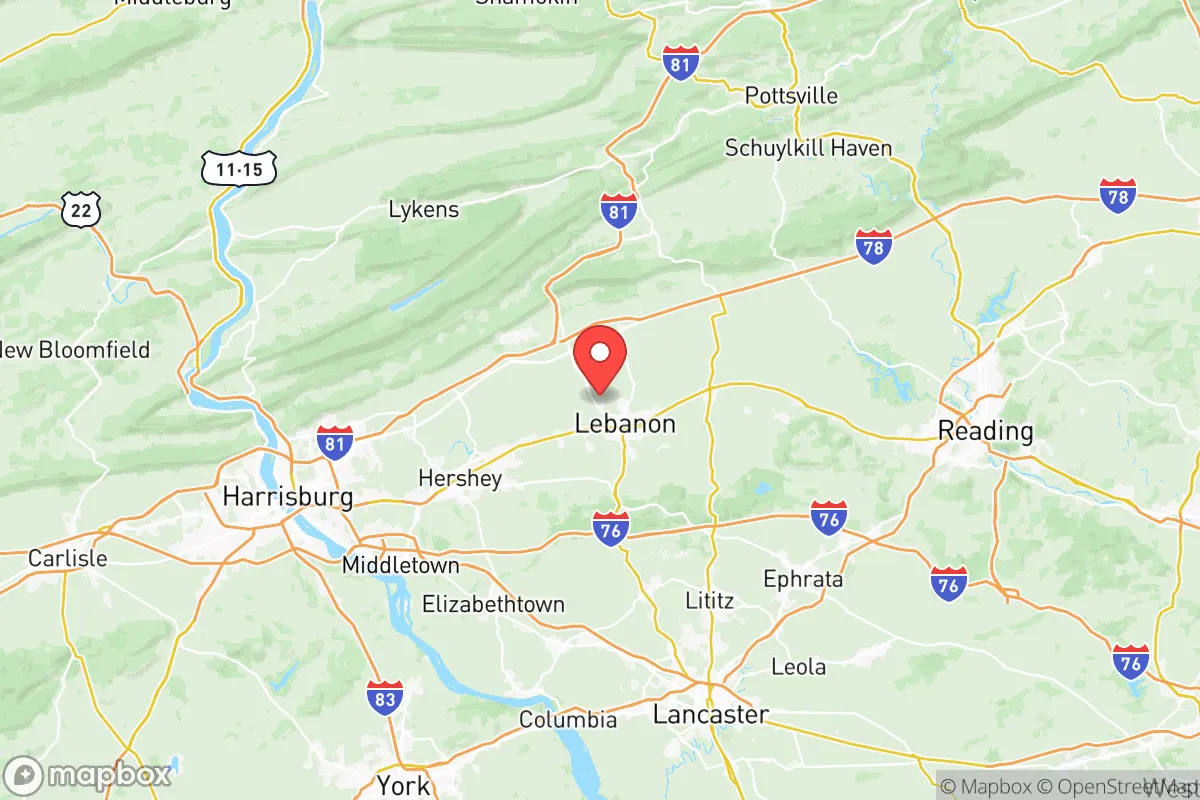
Lebanon City is the county’s largest municipality and its commercial and civic hub. Daily life here centers around a compact downtown with historic architecture, local diners, and the Lebanon Farmers Market. The city offers a mix of older rowhomes and single-family houses, with a median home value well below the county average. Residents have access to the Lebanon Valley Mall, the Lebanon VA Medical Center, and a handful of small parks. Palmyra, the second-largest borough, sits along the county’s western edge and feels more suburban, with newer housing developments, a strong school system, and easy access to Hershey’s employment base. Annville, home to Lebanon Valley College, has a small-town college atmosphere with a walkable main street, independent shops, and a younger demographic. These three towns together anchor the county’s population and provide the bulk of its retail, healthcare, and dining options.
Smaller towns & rural pockets
Beyond the population centers, Lebanon County is dotted with smaller boroughs and unincorporated communities that offer a quieter, more rural lifestyle. Myerstown and Richland are historic farm-service towns with modest housing stock and a strong sense of local identity. Jonestown, in the northern part of the county, sits near the base of Blue Mountain and attracts outdoor enthusiasts who hike or hunt in nearby State Game Lands. Cornwall is a small, historic borough known for the Cornwall Iron Furnace and its preserved 18th-century character. Unincorporated areas like Campbelltown, Fredericksburg, and Kleinfeltersville are essentially crossroads hamlets surrounded by active farmland, where residents often live on acreage and commute to Lebanon or Hershey for work. These areas lack municipal services like public water and sewer, but offer privacy and lower property taxes.
Cost & lifestyle range
The cost of living varies noticeably across the county. Palmyra and Annville sit at the higher end, with median home values closer to $260,000–$280,000 and rents averaging $1,200–$1,300. These towns offer better schools, more amenities, and shorter commutes to the Hershey/Harrisburg job corridor. At the lower end, Lebanon City itself has median home values around $170,000 and rents near $900, making it one of the most affordable urban centers in the region. The rural townships — North Londonderry Township, South Annville Township, and Bethel Township — fall in between, with home prices in the $200,000–$240,000 range but with larger lots and lower property tax rates. The average commute across the county is just over 22 minutes, which is notably short for a region where many residents work outside the county. This short commute, combined with the low cost of living, is a primary draw for families and professionals who want to avoid the higher prices of Dauphin or Lancaster counties.
Lebanon County is best suited for those who value affordability and a moderate pace of life over urban excitement. Commuters who work in Harrisburg, Hershey, or even northern Lancaster County find the 20–30 minute drive a fair trade for lower housing costs. Families with school-age children tend to gravitate toward Palmyra or Annville for their school ratings, while retirees and outdoor enthusiasts often choose the rural townships or small boroughs like Myerstown and Cornwall. The county’s mix of historic towns, working farmland, and suburban-style developments means that almost any lifestyle preference — from walkable downtown living to secluded acreage — can be found within a 15-minute drive of the county’s center.

Crime in Lebanon County
Generally safer than 57% of comparable U.S. locations.
Violent CrimeViolent Crime Analysis
Property CrimeProperty Crime Analysis
Crime Analysis
Lebanon County, Pennsylvania, presents a mixed safety picture that is heavily influenced by the policies of its local justice system. With a violent crime rate of 226.7 per 100,000 residents and a property crime rate of 1,347.3 per 100,000, the county is safer than the national average but faces challenges that are exacerbated by progressive judicial policies in its largest city, Lebanon City. The contrast between the county's more conservative rural towns and the liberal-leaning city court system creates a significant disparity in public safety outcomes.
Crime in context
Lebanon County's violent crime rate of 226.7 per 100,000 is 37% lower than the national average of 380 per 100,000 and roughly on par with the Pennsylvania state average of 240 per 100,000. Property crime, at 1,347.3 per 100,000, is 25% below the national rate of 1,800 per 100,000 but slightly above the state average of 1,200 per 100,000. These aggregate numbers, however, mask a stark divide. The county's rural townships—such as North Londonderry Township and South Annville Township—report crime rates far below the county average, while Lebanon City itself experiences rates that are 2-3 times higher. The city's progressive District Attorney, Pier Hess Graf, has implemented policies that prioritize diversion programs and reduced sentences for non-violent offenders, which critics argue has led to a revolving door for property criminals and a perception of lawlessness in downtown Lebanon.
What residents experience
Residents in Lebanon County's safer communities, like Palmyra and Campbelltown, report feeling secure, with low rates of burglary and vehicle theft. In these areas, law enforcement is proactive, and the local judiciary—often elected from the same conservative communities—imposes stricter sentences. In contrast, residents of Lebanon City, particularly in the downtown and northern neighborhoods, describe a different reality. Property crime, including theft from vehicles and package theft, is a daily nuisance, and violent incidents—while rare—are concentrated in areas near the city's public housing complexes and along the Route 422 corridor. The city's liberal judges have been criticized for releasing repeat offenders on low bail or no bail, a policy that has eroded trust in the justice system. A 2025 report from the Lebanon County District Attorney's office noted that 60% of property crime arrests in the city involved individuals with prior convictions, many of whom had been released early under progressive sentencing guidelines.
Neighborhood-level variation
The safety divide in Lebanon County is geographic and political. North Cornwall Township and West Lebanon Township are considered the safest areas, with violent crime rates below 100 per 100,000 and strong community policing. In contrast, the 17042 ZIP code (covering central Lebanon City) has a violent crime rate of approximately 450 per 100,000—double the county average. The city's progressive judicial district, which includes Lebanon City and parts of North Lebanon Township, has been a focal point for criticism. Progressive policies, such as the elimination of cash bail for most misdemeanors and a focus on restorative justice, have been linked to a 15% increase in property crime in the city since 2022, while surrounding townships with conservative judges saw a 5% decline. For potential residents, the choice is clear: the county's rural and suburban townships offer a safe, family-friendly environment, while Lebanon City itself requires caution, particularly after dark and in areas with high rental density. The county's overall safety is good, but it is a safety that is unevenly distributed and increasingly dependent on the political leanings of the local bench.
* Values derived from national, state, county, city and local statistics and may differ in a specific area. Last updated: 2026-07-23T11:52:47.000Z
Narrative content on this page is AI-generated and may contain mistakes. Verify any details that matter before acting on them.
ReloMaps may earn a commission from affiliate links at no extra cost to you.

