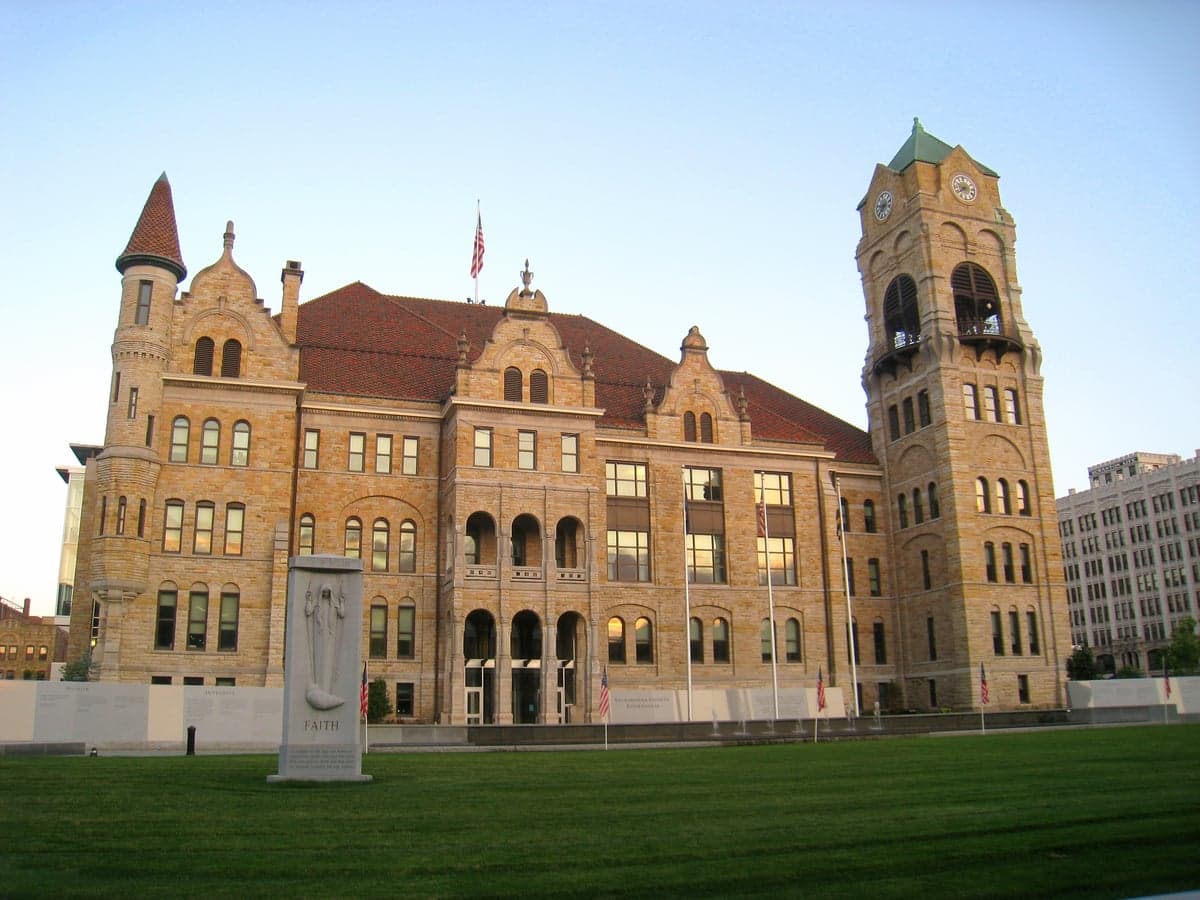
Photo: Wikipedia
Personal Sovereignty in Lackawanna County
Strong independent fundamentals that actively favor personal liberty and low regulation.
What does Personal Sovereignty tell us?
Personal Sovereignty measures your capacity for self-reliance and independence with minimal government friction. Higher scores mean fewer barriers between you and the way you want to live... but it assumes you have the space you need and good neighbors.
What does this tell us?
Personal Sovereignty measures your capacity for self-reliance and independence with minimal government friction. Higher scores mean fewer barriers between you and the way you want to live... but it assumes you have the space you need and good neighbors.
State Policy
Energy independence: Net exporter (150% of energy produced in-state)
Personal Liberty
Homesteading

Personal Liberty Analysis
Lackawanna County, Pennsylvania, offers a mixed but generally favorable environment for personal sovereignty, where a strong rural and small-town tradition of self-reliance coexists with the regulatory realities of a post-industrial Northeastern state. While Pennsylvania is not a libertarian stronghold like New Hampshire or Idaho, Lackawanna County’s specific mix of lower property taxes, a deeply rooted gun culture, and available land for homesteading makes it a viable option for individuals and families seeking greater autonomy than they would find in much of the coastal Northeast. The county’s autonomy environment is best described as pragmatic: the state sets a baseline of regulations, but local enforcement and cultural norms in towns like Dalton, Fleetville, and Jermyn often allow for a more hands-off lifestyle than the letter of the law might suggest.
Tax burden and regulatory posture in Lackawanna County
Pennsylvania’s tax structure is relatively favorable for those prioritizing financial sovereignty. The state levies a flat 3.07% personal income tax and a 6% sales tax (with no local sales tax add-ons in Lackawanna County), which is moderate compared to neighboring New York and New Jersey. The county’s real estate taxes are a key consideration: the average effective property tax rate in Lackawanna County is approximately 1.5% of assessed value, which is below the Pennsylvania state average of 1.58% and significantly lower than rates in Philadelphia’s collar counties. However, the county’s per capita earned income tax of 2.2% (levied by the school district and county) adds a notable layer. Regulatory posture is mixed: the county lacks the heavy-handed zoning of urban centers, but Pennsylvania’s Uniform Construction Code applies statewide, meaning new builds and major renovations require permits and inspections. Towns like Carbondale and Archbald have more permissive zoning for home-based businesses and accessory dwellings than the more suburban Clarks Summit, which enforces stricter setback and lot-size rules. For a relocation-minded reader, the key takeaway is that Lackawanna County’s tax burden is manageable for a Northeastern location, but the regulatory posture is not as light as in the Deep South or rural Midwest.
Self-defense and gun law specifics in Lackawanna County
Pennsylvania is a shall-issue state for concealed carry permits, meaning that if a resident passes a background check and completes the application process (including a fingerprint-based check), the county sheriff must issue the permit. Lackawanna County’s Sheriff’s Office processes applications efficiently, with typical turnaround times of 30 to 45 days. There is no permit required for open carry of a firearm, though it is prohibited in Philadelphia. The state preempts local firearm ordinances, meaning cities like Scranton cannot enact their own bans on carry in parks or other public spaces. Stand-your-ground law is not codified in Pennsylvania statute, but the state’s Castle Doctrine provides a legal presumption of reasonable fear of death or serious bodily injury when using force against an intruder in one’s home or vehicle. For a reader prioritizing self-defense rights, Lackawanna County is a solid choice: gun ownership is culturally accepted, ranges and gun shops are plentiful (especially around Moscow and Dickson City), and the legal framework is more protective than in New York or New Jersey. However, Pennsylvania does require a license to carry a concealed firearm, and the state’s background check system includes a check of mental health records, which is stricter than in some free-state jurisdictions.
Self-reliance and homesteading viability in Lackawanna County
Homesteading and off-grid living are viable in Lackawanna County, but feasibility varies sharply by location. The county’s rural northern and western townships—such as Fleetville, Dalton, and parts of Jefferson Township—offer 1- to 5-acre lots at prices well below the national median, often under $10,000 per acre. Zoning in these areas is generally agricultural or rural residential, allowing for livestock, gardens, and accessory structures without the bureaucratic hurdles found in more developed towns. Off-grid feasibility is constrained by Pennsylvania’s building codes: a dwelling must have a permanent heat source and a sanitary sewage system (septic or connection to public sewer). Solar panels are permitted, but net metering rules require connection to the grid for any surplus power; fully off-grid electrical systems are technically allowed but must meet the Uniform Construction Code. Water rights are not as generous as in the West—well permits are required, and the Susquehanna River Basin Commission regulates groundwater withdrawals for large-scale use. For a family seeking to raise chickens, grow vegetables, and reduce reliance on municipal services, Lackawanna County’s rural townships are a strong option. The county’s Agricultural Security Areas protect farmland from nuisance lawsuits, which is a practical benefit for those keeping livestock near residential neighbors.
Personal liberties in Lackawanna County
Pennsylvania law provides a solid foundation for personal liberties, though it is not as expansive as in states with explicit constitutional protections for medical autonomy or parental rights. Parental rights are protected under state law: parents have the authority to direct their children’s education, including homeschooling, which is regulated but not overly burdensome (requires a notarized affidavit and annual evaluation). Medical autonomy is limited: Pennsylvania has not enacted a right-to-try law for experimental treatments, and vaccine mandates for school attendance are enforced, though medical and religious exemptions are available. Property rights are generally respected, with the state’s Eminent Domain Code requiring just compensation and a public purpose, though local governments have used it for economic development projects. Free speech protections are robust under the state constitution, and Lackawanna County has no local ordinances restricting political expression or assembly. For a reader concerned about medical freedom, the county’s proximity to New York and New Jersey means that access to alternative healthcare providers is limited compared to states like Florida or Texas. However, the county’s strong Catholic and Protestant traditions have fostered a culture of respect for individual conscience, which translates into a generally tolerant environment for those who choose to opt out of certain public health measures.
Overall, Lackawanna County offers a moderate-to-strong level of personal sovereignty relative to other areas in the Northeastern United States. It is not a haven for radical autonomy—state-level taxes, building codes, and school vaccine mandates impose real constraints—but it provides a practical balance for individuals and families who want more freedom than they would find in New York City, Boston, or even Philadelphia’s suburbs. The county’s gun-friendly culture, affordable rural land, and manageable tax burden make it a compelling option for conservative-leaning relocators who value self-reliance but are not willing to move to the Deep South or the Mountain West. For those who prioritize personal sovereignty above all else, states like New Hampshire or Idaho offer a lighter regulatory touch, but for a Northeastern relocation that preserves access to employment in Scranton, Wilkes-Barre, or the New York metro area, Lackawanna County is a strong contender.

* Values derived from national, state, county, city and local statistics and may differ in a specific area. Last updated: 2026-10-03T23:41:37.000Z
Narrative content on this page is AI-generated and may contain mistakes. Verify any details that matter before acting on them.
ReloMaps may earn a commission from affiliate links at no extra cost to you.

