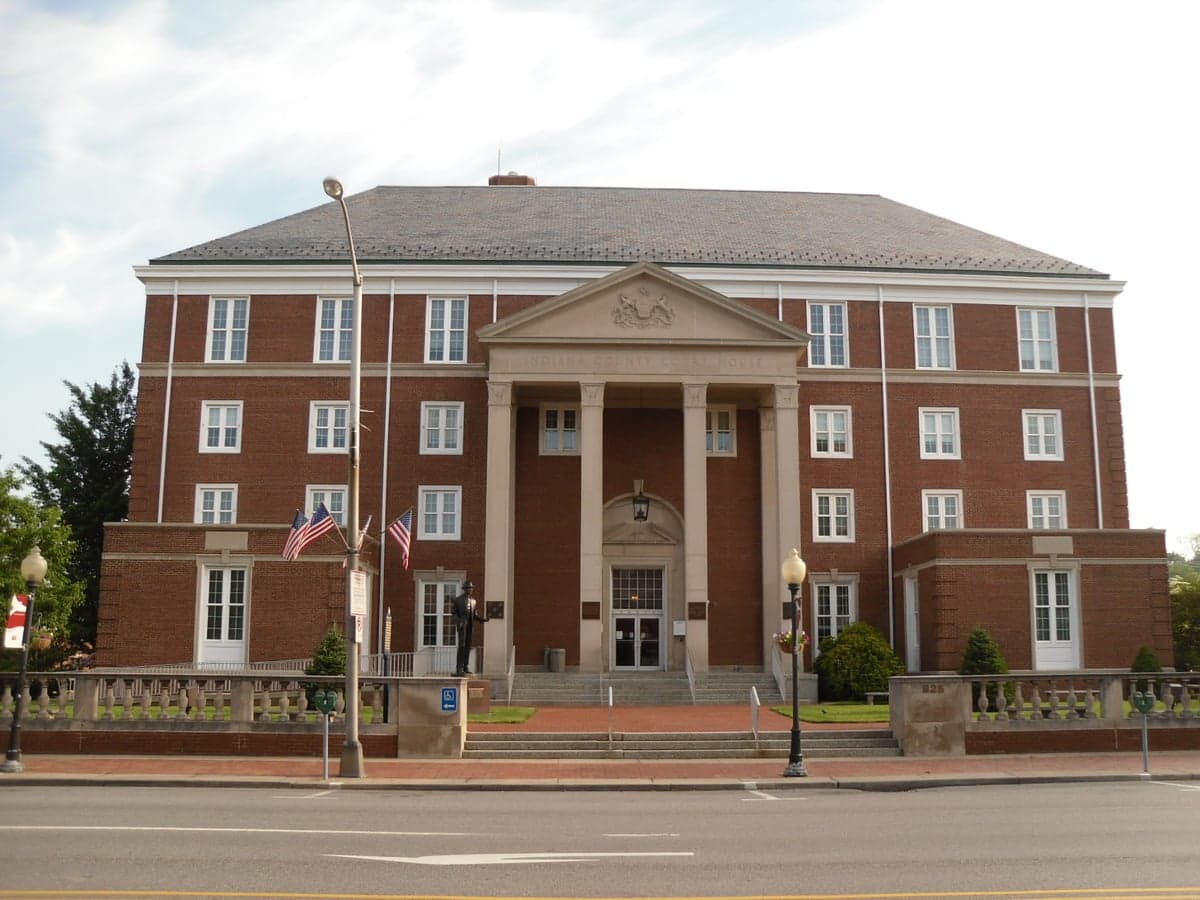
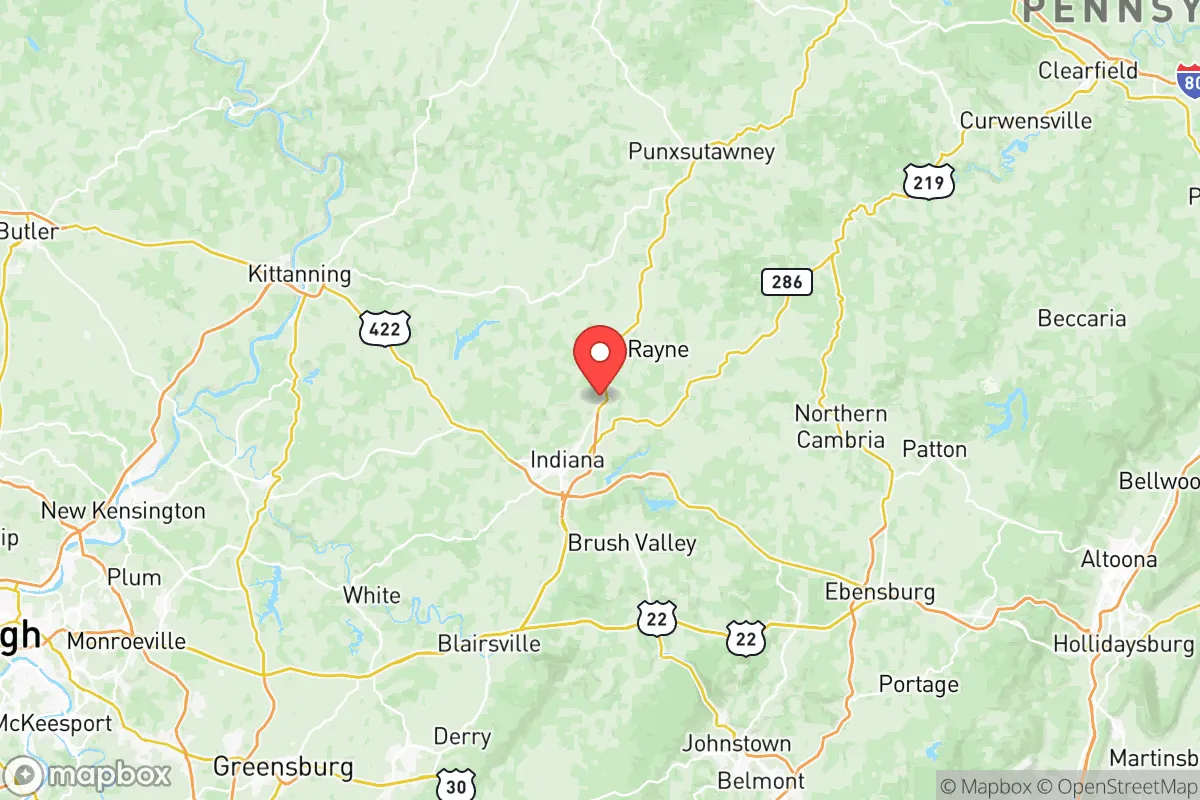
Photo: Wikipedia
Quality of Life in Indiana County
A livable area that tracks near national norms for affordability, walkability, and neighborhood health.
What does Quality of Life tell us?
Quality of Life measures an area by evaluating factors like cost of living, nearby amenities, country club access, airport proximity, socioeconomic signals and neighborhood character. For large states, this is a general average — quality of life can vary dramatically between metro areas, suburbs, and rural communities within the same state.
What does this tell us?
Quality of Life measures an area by evaluating factors like cost of living, nearby amenities, country club access, airport proximity, socioeconomic signals and neighborhood character. For large states, this is a general average — quality of life can vary dramatically between metro areas, suburbs, and rural communities within the same state.
Cost of Living
39% below national average
141%
The Real Cost of Living in Indiana County for 2026
| Tier | Individual | Family (4) |
|---|---|---|
| Survival | $13k | $24k |
| Comfortable | $28k | $42k |
| Luxury | $102k+ | $159k+ |
| Elite (Top 5%) | $120k+ | $187k+ |
Quality-of-Life Analysis
Indiana County, Pennsylvania, offers a broad quality-of-life spectrum that ranges from the walkable college-town energy of its county seat to the quiet, low-cost seclusion of its deep-rural townships. The county’s character is shaped by its dual identity as home to Indiana University of Pennsylvania (IUP) and as a historically coal-and-agriculture region, drawing students and faculty to its core while attracting retirees, remote workers, and outdoor enthusiasts to its smaller communities and farmlands. With a cost-of-living index of 61 (39% below the national average), a median home value of $145,400, and a median rent of $786, the county presents a distinctly affordable landscape where lifestyle choices are largely defined by proximity to campus versus access to open space.
Largest town(s) & population centers
The county’s primary population center is Indiana Borough (pop. ~13,000), the urbanized core anchored by IUP’s 10,000-student campus. Daily life here revolves around Philadelphia Street’s mix of independent coffee shops, bars, and student-oriented services, with the university’s performing arts center and the nearby Blue Spruce Park providing recreation. The borough’s walkability and rental-heavy housing stock (median rent $786) make it the natural choice for students, faculty, and young professionals who want a compact, pedestrian-friendly environment. Just east, White Township (pop. ~15,000) functions as the county’s commercial and retail hub, hosting the Indiana Mall, big-box stores along Route 422, and the Indiana Regional Medical Center. White Township offers a more suburban lifestyle with newer subdivisions and strip-mall convenience, appealing to families and commuters who work locally or at the county’s largest employers—IUP, the hospital, and the nearby Indiana County–Jimmy Stewart Airport industrial park. The average commute across the county is 25.2 minutes, slightly below the national average, reflecting the self-contained nature of the local economy.
Smaller towns & rural pockets
Moving outward, the county’s smaller towns and unincorporated areas offer distinctly quieter, more affordable alternatives. Blairsville (pop. ~3,200), located along the Conemaugh River in the county’s southern corner, retains a historic downtown with a pharmacy, a diner, and a small grocery, and is popular with retirees and commuters who work in nearby Latrobe or Greensburg. Homer City (pop. ~1,600), just south of Indiana Borough, is a compact former coal town with a walkable main street, a public library, and easy access to the Ghost Town Trail rail-trail. Further north, Clymer (pop. ~1,200) and Penn Run (unincorporated) sit in the rolling hills of the county’s rural interior, where homes on acre lots can be found for under $100,000. The Brush Valley area, stretching through Center and Brush Valley townships, is dotted with farmsteads and Amish households, offering a deeply rural lifestyle with minimal services—residents typically drive 20–30 minutes to Indiana Borough for groceries and medical care. These pockets are ideal for those seeking land, privacy, and the lowest possible housing costs, with some properties selling for under $80,000.
Cost & lifestyle range
The cost-of-living spread across Indiana County is wide but consistently affordable. At the higher end, White Township and newer subdivisions in Indiana Borough’s outskirts see median home values around $180,000–$200,000, with rents for two-bedroom apartments near campus reaching $900–$1,100. These areas offer the most amenities—grocery chains, fast food, medical offices, and the county’s only movie theater. At the lower end, rural townships like Green Township (near Penn Run) and West Wheatfield Township (near Blairsville) have median home values below $100,000, with some older single-family homes selling for $50,000–$70,000. Rent in these areas can drop to $500–$650 for a one-bedroom apartment or a small house. The trade-off is clear: lower costs come with longer drives to services, fewer employment options, and limited public transit (the county’s bus system, IndiGO, primarily serves the Indiana Borough–White Township corridor). Property taxes in Indiana County average 2.5% of assessed value, slightly above the Pennsylvania median, but the low base home values keep annual bills manageable—typically $1,500–$3,000 for most homes.
Indiana County is best suited for people who value affordability and a slower pace over urban density and career diversity. Students and academics thrive in the walkable core of Indiana Borough; families and commuters find stability in White Township’s suburban ring; and retirees, remote workers, and homesteaders can carve out a low-cost life in the rural townships of Brush Valley, Clymer, or Blairsville. The county’s trade-off is clear: you gain significant financial breathing room and access to outdoor recreation (the Ghost Town Trail, Yellow Creek State Park, and the West Penn Trail), but you sacrifice the dining, nightlife, and job-market breadth of a larger metro area. For those who prioritize space, quiet, and a dollar that stretches further, Indiana County delivers a genuine spectrum of livable options.

Crime in Indiana County
Generally safer than 57% of comparable U.S. locations.
Violent CrimeViolent Crime Analysis
Property CrimeProperty Crime Analysis
Crime Analysis
Indiana County, Pennsylvania, presents a mixed safety profile for prospective residents, with property crime rates that significantly exceed both state and national averages while violent crime remains notably below the national benchmark. The county recorded a violent crime rate of 226.5 incidents per 100,000 residents and a property crime rate of 1,346.4 per 100,000 in the most recent reporting period. These figures place Indiana County in a position where understanding local neighborhood dynamics and the specific policies of local judicial districts becomes essential for anyone evaluating relocation to the area.
Crime in context
When compared to broader benchmarks, Indiana County's violent crime rate of 226.5 per 100,000 sits well below the national average of approximately 380 per 100,000, offering a degree of reassurance for those concerned about personal safety. However, the property crime rate of 1,346.4 per 100,000 tells a different story, exceeding both the Pennsylvania state average of roughly 1,200 per 100,000 and the national average of about 1,950 per 100,000. This disparity means that while the risk of violent victimization is lower than in many parts of the country, residents face a meaningfully elevated risk of theft, burglary, and vehicle-related crimes. The borough of Indiana, the county seat and home to Indiana University of Pennsylvania (IUP), naturally concentrates a larger share of these property crimes due to its higher population density and transient student population. Smaller communities like Blairsville and Homer City tend to report lower overall crime volumes, though their rates can fluctuate year to year based on small population denominators.
What residents experience
Daily life for most Indiana County residents involves a heightened awareness of property security rather than a pervasive fear of violent confrontation. Theft from vehicles and burglaries of unoccupied homes or storage sheds are the most commonly reported incidents, particularly in areas near campus housing and along major transportation corridors like U.S. Route 422. The county's judicial system, operating under the 40th Judicial District, has historically taken a measured approach to property crime, though recent trends in neighboring counties toward progressive prosecution policies have raised concerns among residents who worry that lenient sentencing could embolden repeat offenders. In contrast, violent crimes such as assault and robbery are relatively rare and tend to be concentrated in specific, well-known contexts rather than random victimization. The presence of IUP brings a dedicated university police force that supplements local law enforcement in the borough of Indiana, providing an additional layer of security for students and faculty that is less available in outlying townships like White Township or Center Township.
Neighborhood-level variation
Safety conditions vary considerably across Indiana County's 38 municipalities, with the most pronounced differences emerging between the urbanized core and the rural townships. The borough of Indiana itself experiences the highest raw crime numbers, driven largely by property offenses tied to the student population and downtown commercial activity. Surrounding communities such as Armstrong Township and Rayne Township report significantly lower crime rates, benefiting from lower population density and stronger neighborhood watch dynamics. Prospective residents should also consider the influence of the district attorney's office, which sets prosecution priorities for the entire county. A district attorney focused on aggressive property crime enforcement can make a meaningful difference in communities like Black Lick or Cherry Tree, where a single burglary spree can dramatically alter a small town's annual statistics. For those prioritizing safety, the rural townships west of the borough of Indiana and the smaller boroughs along the Conemaugh River corridor generally offer the most secure living environments within the county.
* Values derived from national, state, county, city and local statistics and may differ in a specific area. Last updated: 2026-07-06T10:59:51.000Z
Narrative content on this page is AI-generated and may contain mistakes. Verify any details that matter before acting on them.
ReloMaps may earn a commission from affiliate links at no extra cost to you.

