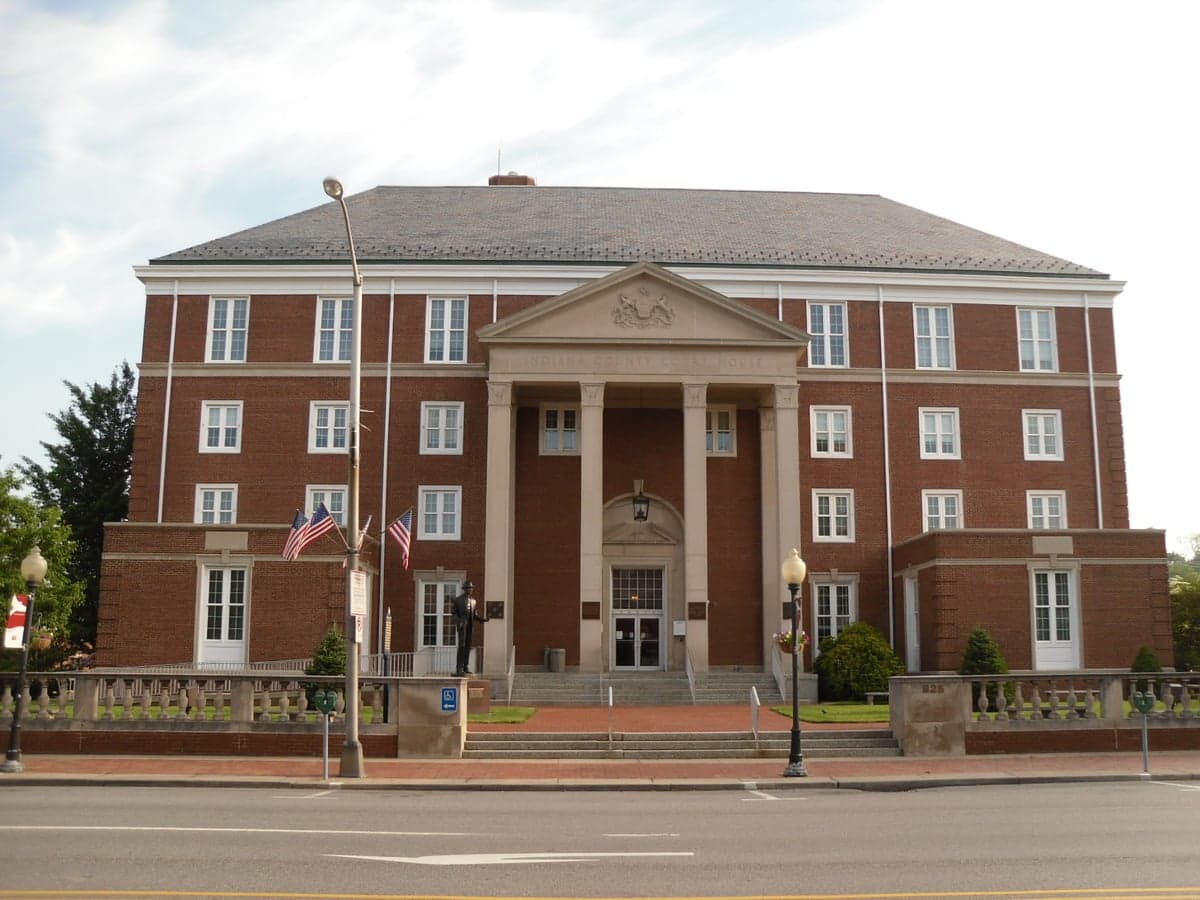
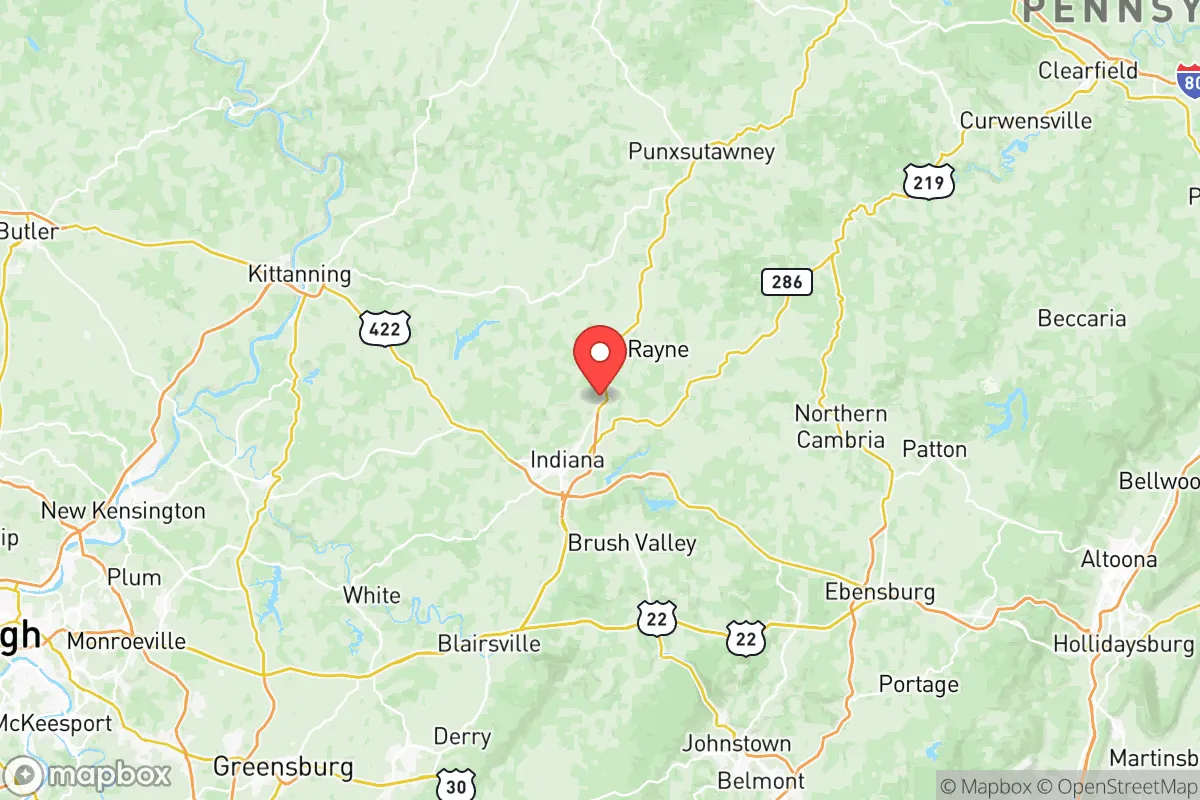
Photo: Wikipedia
Find The Best Places To Live in Indiana County
PRO TIP! You can paste a Zillow or Redfin link to get info on that property.
Best Places to Live in Indiana County
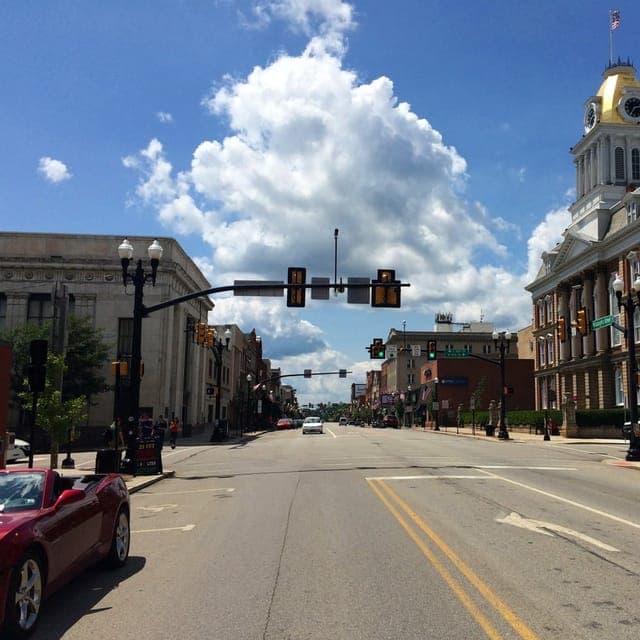
Cities & Towns in Indiana County
Cities in Indiana County
What It's Like Living in Indiana County, PA
Indiana County offers a slice of Pennsylvania life that feels a step removed from the frantic pace of Pittsburgh or State College, yet close enough to reach both in under an hour and a half. It’s a place where the rhythms of small cities like Indiana Borough and the university campus blend with the quiet stretches of farmland around Cherry Tree and Marion Center. For anyone considering a move here, the county delivers a lower cost of living that’s hard to beat, but it also demands a comfort with slower days and a reliance on driving.
Daily Rhythm: Small Cities, Rural Roots, and a University Anchor
The heart of the county is Indiana Borough, home to Indiana University of Pennsylvania (IUP), which employs thousands and brings a steady flow of students and events. On a typical weekday, you’ll see faculty grabbing coffee at Commonplace Coffee on Philadelphia Street and students biking between classes. Outside the borough, life shifts to a quieter gear. In Blairsville, the historic downtown has a handful of local shops and the popular Blairsville House Restaurant, a spot for homestyle dinners. The average commute here is about 25 minutes, which means most people drive to work in Indiana Borough, to the county’s hospitals, or to manufacturing jobs in places like Homer City, where the Homer City Generating Station is a major employer. Traffic is rarely a headache, though the two-lane roads can get slow behind farm equipment in spring and fall.
Schools play a central role in community life, especially in the smaller towns. The Marion Center Area School District and Homer-Center School District are points of pride, and Friday-night football in September draws families from across the county. The median age here is 39.5, reflecting a mix of young families, IUP students, and retirees who’ve stayed after careers in education or healthcare.
What’s There to Do: Festivals, Football, and the Outdoors
Sports are a big deal, though it’s mostly high school and college level. IUP’s Crimson Hawks football at George P. Miller Stadium is the biggest draw in the fall, with crowds that fill the bleachers for key games. High school rivalries between Indiana Area and Homer-Center are genuine—locals will tell you which gym you need to be in on a Friday night. There’s no pro sports team in the county, but Pittsburgh teams (Steelers, Pirates, Penguins) are universally followed. You’ll see more Terrible Towels than college flags in bars like The Coney in Indiana Borough, a classic spot for a burger and a beer after a game.
Outdoor life revolves around the Ghost Town Trail, a 46-mile rail-trail that cuts through the county, popular for biking and walking between Blairsville and Ebensburg (which is just over the border in Cambria County). Yellow Creek State Park, a few miles north of Indiana Borough, has a 720-acre lake for kayaking and fishing, and it’s stocked with trout in spring. The county also hosts the Indiana County Fair in late summer—a traditional mix of livestock judging, midway rides, and live music that draws from every corner of the county. For music and arts, IUP’s Lively Arts series brings visiting performers and theater to the Fisher Auditorium, though for major concerts, you’ll drive to the Bryce Jordan Center in State College or PPG Paints Arena in Pittsburgh.
Pros and Cons of Living Here: What You’ll Love and What Might Frustrate
The biggest draw is the cost of living. With a cost of living index of 61 (100 is the U.S. average), your housing dollar goes far. The median home value is $145,400, so a young family or a single person on a median income of $58,739 can actually buy a three-bedroom house in places like Cherry Tree or Ernest without being house-poor. Low property taxes relative to eastern Pennsylvania keep monthly costs manageable. The tradeoff is that only 26.9% of adults hold a bachelor’s degree, and job options outside of IUP, healthcare (like Indiana Regional Medical Center), and a few industrial plants are limited. Many residents commute to Armstrong County or Westmoreland County for work, which eats into the short average commute.
Crime is a mixed bag. The county’s violent crime rate of 226.5 per 100,000 is close to the national average, and most incidents are concentrated in a few blocks around the IUP campus. Property crime in Indiana Borough’s student-heavy neighborhoods is the bigger annoyance—bike thefts and car break-ins happen, but it’s not something that affects life in Homer City or Marion Center. Residents love the quiet winters (yes, you need snow tires) and the four distinct seasons, but the gray days between December and February can feel long. The biggest frustration locals voice is the lack of shopping and dining variety. There’s no major mall—most people drive to Altoona or Monroeville for Target, Cabela’s, or chain restaurants. The county does have solid local gems: Skatepark of Indiana for the younger crowd, and the McCormick House in Blairsville for upscale dining, but you won’t find a Trader Joe’s or a Chipotle within county lines.
The kind of person who fits here isn’t necessarily wealthy or highly educated. It’s someone who values affordability over convenience, who appreciates that a 20-minute drive leads to a trailhead or a quiet lake, and who doesn’t need a new restaurant every week. Families with kids in the Marion Center or Homer-Center districts tend to stay, while younger singles without a job at IUP or a local hospital often move to Pittsburgh for more opportunities. It’s a place where you know your neighbors, where the fair is the summer highlight, and where the biggest debate is whether Indiana Borough’s best pizza is at Nate’s Pizza or Sorrento’s. If that sounds like a trade you can live with, Indiana County might be a fit.

* Values derived from national, state, county, city and local statistics and may differ in a specific area. Last updated: 2026-07-06T10:59:51.000Z
Narrative content on this page is AI-generated and may contain mistakes. Verify any details that matter before acting on them.
ReloMaps may earn a commission from affiliate links at no extra cost to you.

