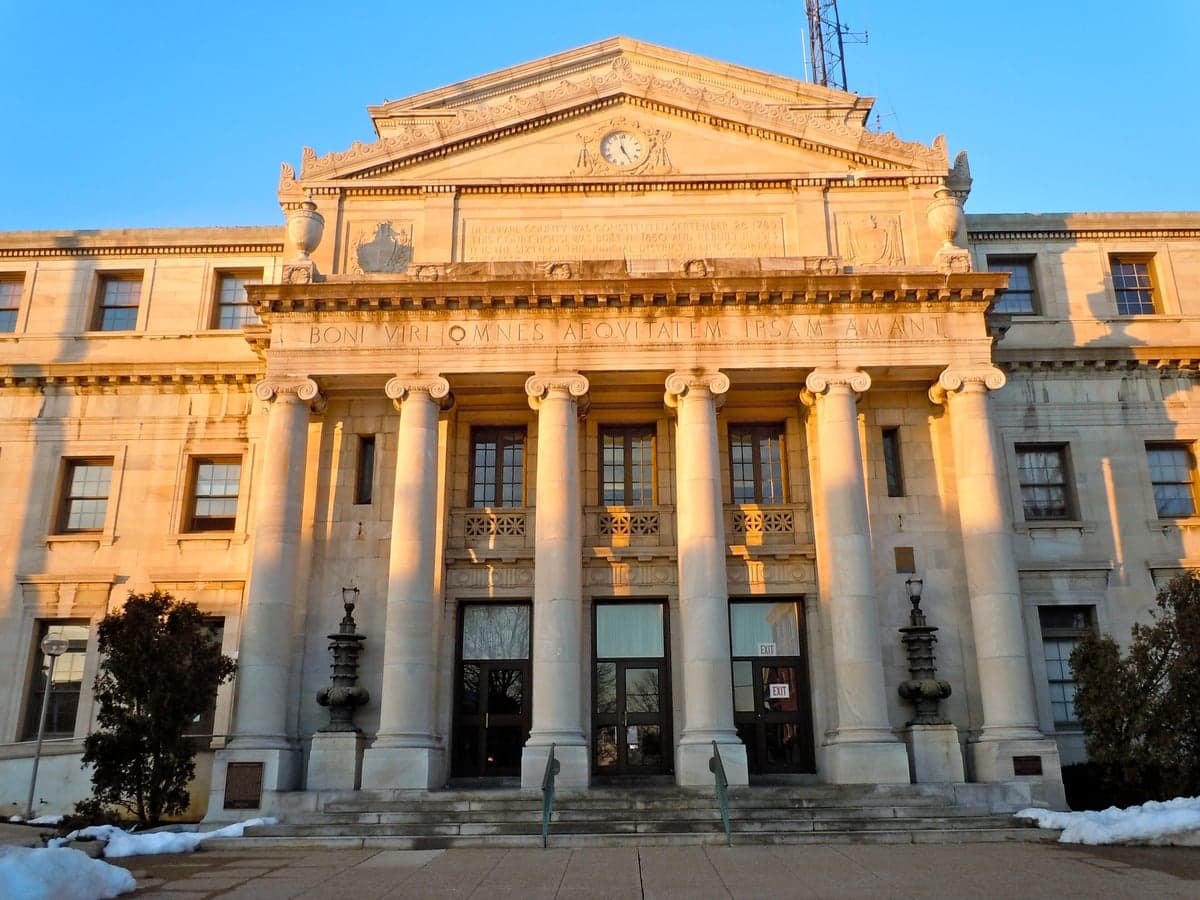
Photo: Wikipedia
Quality of Life in Delaware County
A livable area that tracks near national norms for affordability, walkability, and neighborhood health.
What does Quality of Life tell us?
Quality of Life measures an area by evaluating factors like cost of living, nearby amenities, country club access, airport proximity, socioeconomic signals and neighborhood character. For large states, this is a general average — quality of life can vary dramatically between metro areas, suburbs, and rural communities within the same state.
What does this tell us?
Quality of Life measures an area by evaluating factors like cost of living, nearby amenities, country club access, airport proximity, socioeconomic signals and neighborhood character. For large states, this is a general average — quality of life can vary dramatically between metro areas, suburbs, and rural communities within the same state.
Cost of Living
11% above national average
103%
The Real Cost of Living in Delaware County for 2026
| Tier | Individual | Family (4) |
|---|---|---|
| Survival | $21k | $39k |
| Comfortable | $59k | $86k |
| Luxury | $160k+ | $248k+ |
| Elite (Top 5%) | $211k+ | $328k+ |
Quality-of-Life Analysis
Delaware County, Pennsylvania, offers a broad spectrum of quality-of-life options, from dense, transit-connected boroughs to quiet, unincorporated rural hamlets, attracting everyone from Philadelphia commuters and young professionals to families seeking suburban school districts and retirees looking for small-town charm. The county’s character shifts noticeably as you move from its industrial-era river towns in the east to its more affluent, leafy Main Line suburbs in the west and the remaining agricultural pockets in the far southwest. With a cost-of-living index of 111 (above the U.S. average), a median home value of $302,400, and a median rent of $1,315, the county provides a range of housing affordability that correlates directly with its geographic and demographic diversity.
Largest town(s) & population centers
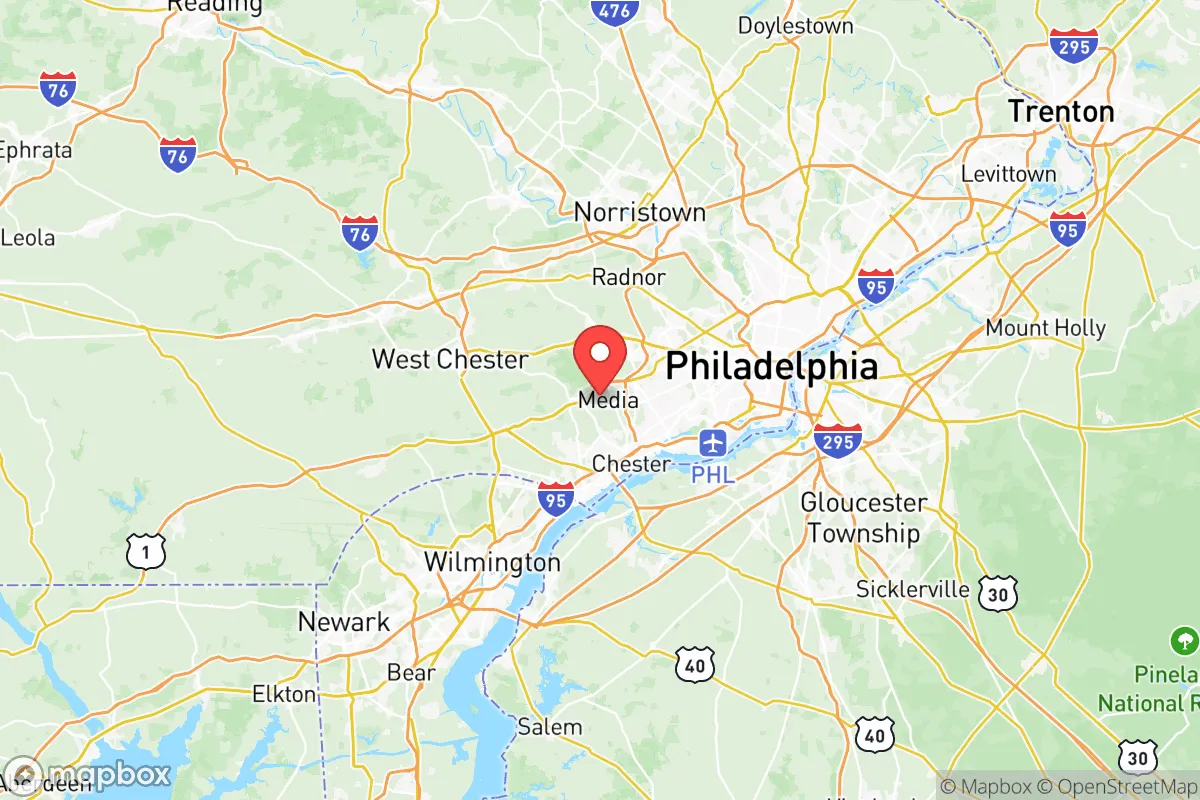
The county’s largest population centers are the city of Chester (roughly 33,000 residents) and the borough of Upper Darby (over 85,000 residents), though they represent vastly different lifestyles. Upper Darby, immediately adjacent to Philadelphia, is a dense, walkable, transit-rich community served by SEPTA’s Market-Frankford Line and numerous bus routes. Daily life here is urban and fast-paced, with a diverse population, a mix of rowhomes and apartments, and easy access to Center City Philadelphia in under 20 minutes. Chester, a historic river city, is undergoing a slow revitalization anchored by the Widener University campus and the Harrah’s Philadelphia Casino & Racetrack, but it still faces significant economic challenges and higher crime rates. For a more traditional suburban experience, Media (the county seat) offers a vibrant, walkable downtown with a courthouse square, independent shops, and a popular farmers market, while Springfield and Drexel Hill provide classic post-war suburban neighborhoods with strong school systems and ample parks.
Smaller towns & rural pockets
Beyond the population centers, Delaware County retains surprising rural character, particularly in its western and southern reaches. Chadds Ford, straddling the Brandywine River, is a historic village known for the Brandywine River Museum of Art and the legacy of the Wyeth family, offering a bucolic, estate-filled landscape with working farms and preserved open space. Glen Mills is a largely unincorporated area with rolling hills, country clubs, and large-lot homes, popular with families seeking more land. Rose Valley, a tiny borough of fewer than 1,000 residents, is a hidden gem of Arts and Crafts-style homes and wooded trails. In the far southwest, Chester Heights and Concord Township still contain active farmland, horse pastures, and the Brandywine Creek State Park system, offering hiking, fishing, and a slower pace of life that feels disconnected from the county’s urban core. The Ridley Creek State Park in Edgemont provides 2,600 acres of forest and meadows for outdoor recreation.
Cost & lifestyle range
The cost of living and lifestyle options vary dramatically across Delaware County. At the high end, the Main Line communities of Villanova, Radnor, and Wayne feature median home values well above the county average, often exceeding $600,000, with top-rated schools (Radnor and Tredyffrin-Easttown districts), country clubs, and easy commutes via SEPTA’s Paoli/Thorndale line. The average commute of 28.4 minutes is manageable from these areas. At the more affordable end, Chester and parts of Darby and Yeadon offer median home values closer to $150,000–$200,000, with lower rents and older housing stock, but often with higher property taxes relative to value and fewer local amenities. The middle ground is occupied by boroughs like Swarthmore (home to Swarthmore College, with a charming downtown and strong schools), Morton, and Ridley Park, where modest single-family homes and rowhomes are available in the $250,000–$350,000 range, and residents enjoy walkable downtowns, local parks, and direct SEPTA Regional Rail access. Renters find the most options in Upper Darby and along the Route 1 corridor, where apartments and duplexes are plentiful.
Delaware County’s diversity means that different residents thrive in different pockets. Young professionals and students gravitate toward Upper Darby and Media for transit access and nightlife. Families prioritize the suburban school districts of Radnor, Wallingford-Swarthmore, and Garnet Valley. Outdoor enthusiasts and those seeking space find their niche in Chadds Ford, Glen Mills, and Concord Township. Retirees on a budget often choose the quieter, lower-cost boroughs like Brookhaven or Aston. The county’s strength lies in its ability to offer a genuine rural retreat, a classic suburb, and an urban edge—all within a 30-minute commute of Philadelphia.

Crime in Delaware County
WARNING: The crime statistics are unreliable for this jurisdiction. Local authorities have either not reported or under reported their data to the FBI. This could be due to bad intentions, incompetence or technical issues. Regardless, we suggest skepticism.
Higher crime rates than 62% of comparable U.S. locations.
Violent CrimeViolent Crime Analysis
Property CrimeProperty Crime Analysis
Crime Analysis
Delaware County, Pennsylvania, presents a mixed safety picture where property crime rates significantly exceed national averages while violent crime remains below the state average. With a violent crime rate of 226.5 per 100,000 residents and a property crime rate of 1,346.4 per 100,000, the county’s overall risk profile is shaped by its dense suburban character and proximity to Philadelphia. Residents in communities like Media, Swarthmore, and Rose Valley generally report lower crime experiences, while higher-density areas such as Chester City and parts of Upper Darby see elevated incident numbers, particularly in property offenses.
Crime in context
Delaware County’s violent crime rate of 226.5 per 100,000 is roughly 40% below the Pennsylvania state average of 377 per 100,000 and significantly lower than the national rate of 380 per 100,000. However, the property crime rate of 1,346.4 per 100,000 is about 10% above the national average of 1,220 per 100,000. This divergence is typical of older, inner-ring suburban counties where theft, vehicle break-ins, and burglary are more common than violent confrontations. The county’s location adjacent to Philadelphia means that property crime patterns often mirror regional trends, with larceny and motor vehicle theft being the most frequent offenses. The District Attorney’s office, currently led by progressive Jack Stollsteimer, has faced criticism for policies that some argue prioritize diversion programs over incarceration, potentially contributing to repeat property offenses in areas like Darby and Yeadon.
What residents experience
Daily life for most Delaware County residents involves low exposure to violent crime, but property crime is a tangible concern. In towns like Media and Swarthmore, residents report occasional package thefts and car break-ins, while Chester City experiences higher rates of aggravated assault and robbery, concentrated in specific neighborhoods. The county’s progressive judicial approach, including bail reform and reduced sentencing for non-violent offenders, has been linked to a perception of leniency that frustrates victims. For example, in Upper Darby, a township with over 80,000 residents, property crime rates are notably higher than in neighboring Radnor or Newtown Square, where community policing and higher property values correlate with lower incident reports. Residents in Haverford and Marple townships generally feel safe walking at night, but they remain vigilant about securing vehicles and homes, as theft from autos is the most common crime across the county.
Neighborhood-level variation is pronounced. The safest areas—such as Rose Valley, Bryn Mawr, and Villanova—report violent crime rates below 100 per 100,000, while Chester City and parts of Darby Borough see rates exceeding 600 per 100,000. Property crime is more evenly distributed but still clusters in commercial corridors and transit-adjacent neighborhoods. The county’s reliance on progressive criminal justice reforms, including the "Delaware County Reentry Coalition" and reduced prosecution of low-level offenses, has drawn concern from residents who feel these policies undermine public safety. For those considering relocation, choosing a township with a strong local police presence—like Radnor or Newtown Square—can significantly reduce risk, while areas with higher rental density and proximity to Philadelphia may require greater caution.
* Values derived from national, state, county, city and local statistics and may differ in a specific area. Last updated: 2026-06-17T05:13:55.000Z
Narrative content on this page is AI-generated and may contain mistakes. Verify any details that matter before acting on them.
ReloMaps may earn a commission from affiliate links at no extra cost to you.

