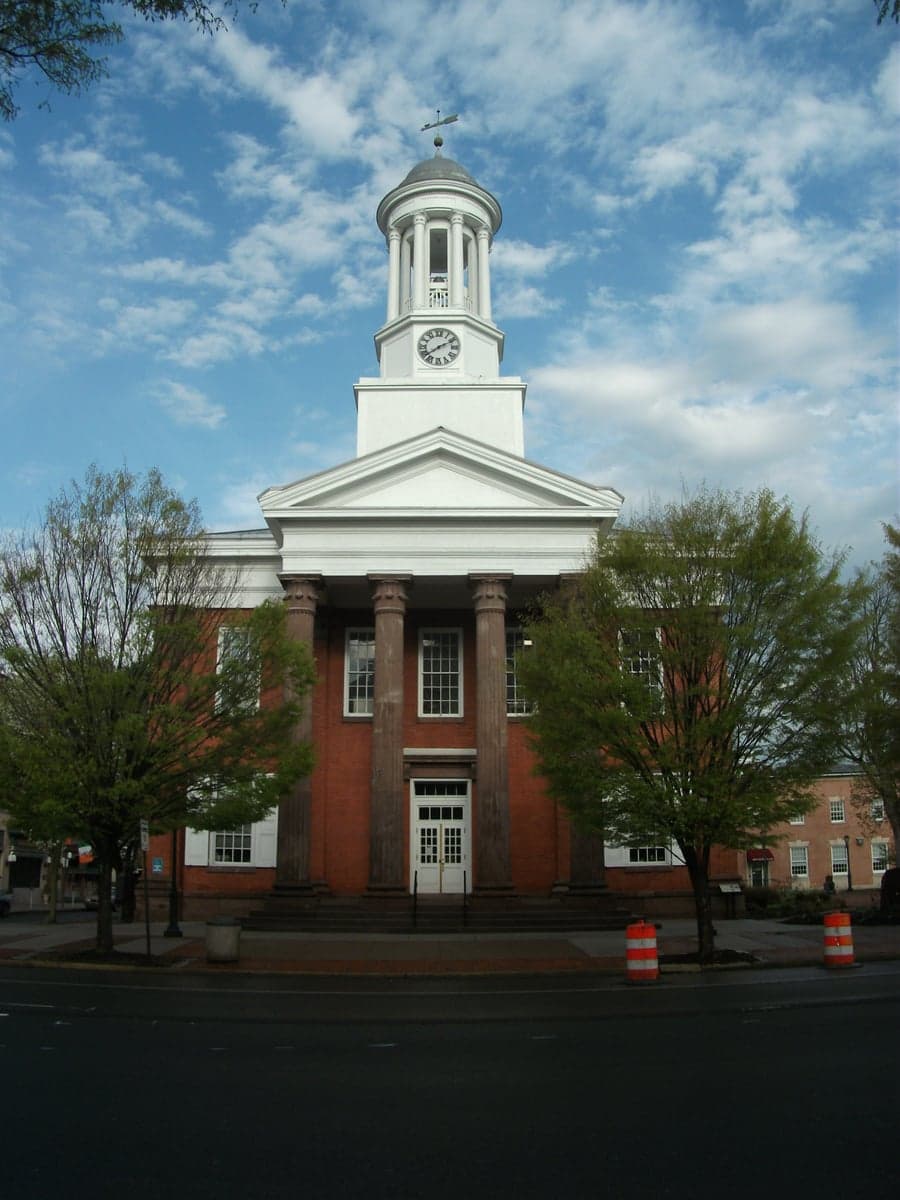
Photo: Wikipedia
Political ClimatePolitical Climate in Cumberland County
Showing district-level results — no local-only data available.
Local Political AnalysisPolitical Analysis of Cumberland County
Cumberland County, Pennsylvania, has long been a reliable Republican stronghold, but the political ground is shifting underfoot. With a Cook Partisan Voting Index (PVI) of R+3, the county leans to the right of the nation as a whole, but it's notably more moderate than the deeply red counties to its west. This R+3 rating means that in a typical statewide election, a Republican candidate would be expected to win the county by about three percentage points more than their national average. However, the real story is the county's trajectory: while it was once a lock for the GOP, the growing influence of the Harrisburg suburbs and the influx of new residents from bluer states are slowly nudging it toward the center. This makes Cumberland County a fascinating bellwether for the broader political evolution of Pennsylvania, a state with a Cook PVI of EVEN, meaning it's a perfect national toss-up.
How it compares
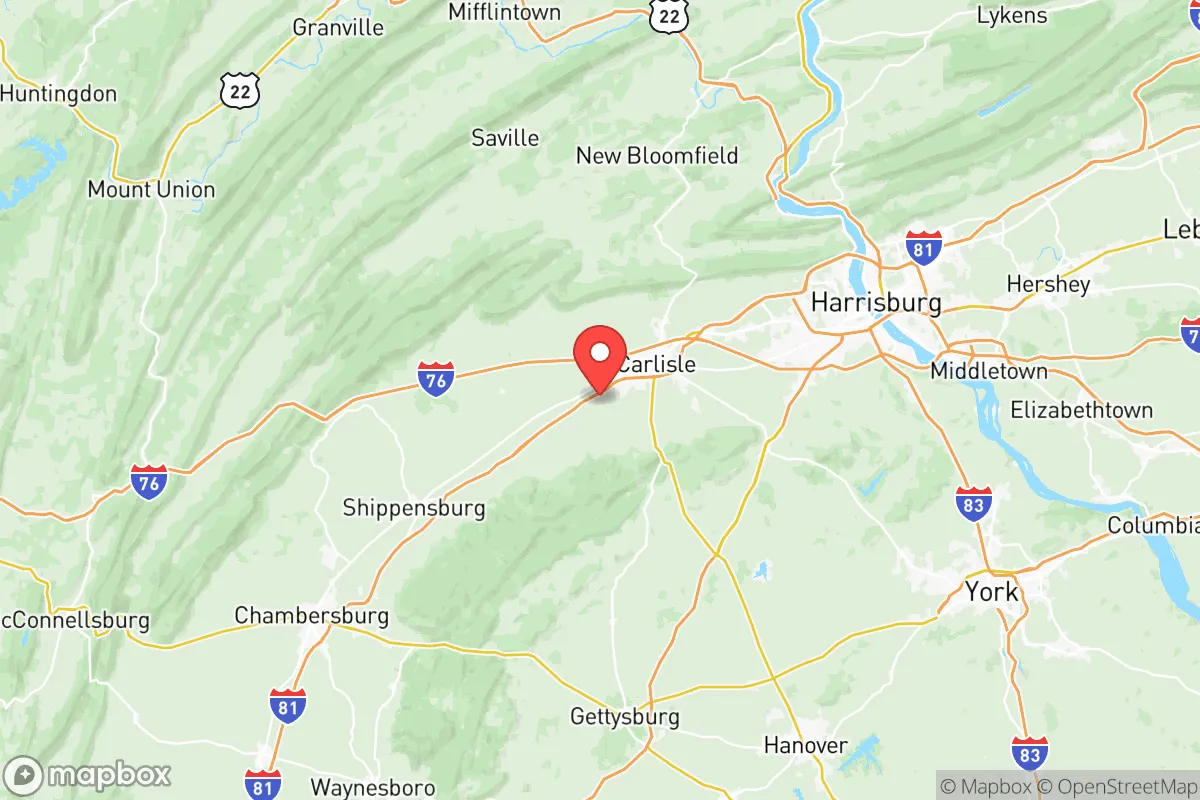
The contrast between Cumberland County and Pennsylvania as a whole is a tale of two political realities. The state's EVEN rating reflects its razor-thin margins in presidential elections, with Philadelphia and its suburbs pulling one way and the rural west pulling the other. Cumberland County, sitting in the south-central part of the state, is a microcosm of that tension, but with a distinct local flavor. The county's political geography is not uniform. The northern and western townships—places like Carlisle (the county seat) and Shippensburg—still lean reliably red, with deep roots in agriculture and conservative values. But the southeastern corner, particularly the towns of Camp Hill, Mechanicsburg, and New Cumberland, are increasingly purple. These are the bedroom communities for Harrisburg and the state capital's professional class, and they've seen a steady influx of younger, more moderate voters. The swing precincts are often found in these suburban areas, where a local school board race or a county commissioner contest can be decided by a few dozen votes. In the 2024 election, for example, while the county overall went for the Republican candidate, the margin in Camp Hill was much tighter than in the rural townships, reflecting this internal divide.
What this means for residents
For conservative residents, the R+3 lean means they still hold the majority on the county commission and in most local offices, but the margin for error is shrinking. They can expect to see their values reflected in county-level policies, such as a focus on lower taxes and limited government, but they must also contend with a growing, vocal minority that pushes for more progressive stances on issues like environmental protection and public transit. For liberal residents, the political climate can feel like a constant uphill battle, but it's not a lost cause. They have real, winnable races in the southeastern townships and can find like-minded neighbors in the more urbanized areas. The practical effect is that local politics are often more pragmatic than ideological. A Republican commissioner from Carlisle might need to work with a Democratic board member from Camp Hill to get a road project funded, and that necessity for compromise is the defining feature of life here. It's not a place of political warfare, but of persistent, low-grade negotiation.
Culturally, this political balance creates a distinct atmosphere. You'll find a strong sense of local pride that transcends party lines, especially around institutions like the Carlisle Barracks (home of the U.S. Army War College) and Dickinson College. The county's policy distinctions are subtle but real: it has a reputation for being more fiscally conservative than socially conservative, meaning you're less likely to see culture-war battles dominating local news than you would in, say, Franklin County to the west. The biggest policy fights tend to be over land use and development—how to manage growth without losing the rural character that many residents, regardless of party, value. Looking ahead, the long-term trend is clear: the county will continue to moderate as the Harrisburg suburbs expand. The R+3 rating might slip to R+1 or even EVEN within a decade, making Cumberland County a true swing county in a swing state. For anyone moving here, the takeaway is simple: you'll find your people, but you'll also have to learn to talk to the other side. That's just how it works around here.

State Political ClimatePolitical Climate in Pennsylvania
State Political AnalysisPolitical Environment in the State
Pennsylvania is the ultimate swing state, with a Cook PVI of EVEN that perfectly captures its knife-edge balance. Over the past 20 years, the state has shifted from a reliably blue-leaning battleground to a true toss-up, driven by the collapse of Democratic support in the rural southwest and northern tier, even as the Philadelphia and Pittsburgh suburbs have become deeply blue. The result is a state that feels like two different countries sharing a border, where statewide elections are decided by a handful of votes in a handful of counties, and where the political mood can flip from one cycle to the next.
Urban vs. rural divide
The political map of Pennsylvania is a textbook study in the urban-rural chasm. Philadelphia and its collar counties — Montgomery, Delaware, Chester, and Bucks — are the engine of the Democratic vote, delivering margins that can offset huge Republican wins everywhere else. Pittsburgh and its immediate suburbs (Allegheny County) are also reliably blue, though less overwhelmingly so. The rest of the state is a sea of red. The "T" — the vast rural expanse from the northern tier down through the center and into the southwest — votes Republican by 30, 40, even 50 points in some counties. The key battlegrounds are the "collar counties" around Philadelphia (especially Bucks and Chester) and the smaller cities like Erie, Allentown, Bethlehem, and Scranton. These places have been trending toward Democrats in recent cycles, but they still have enough conservative-leaning voters to keep races tight. A place like Lancaster is a microcosm: the city itself is blue, but the surrounding county is deeply red, making it a bellwether for the state's overall mood.
Policy environment
Pennsylvania's policy environment is a mixed bag that reflects its divided government. The state has a flat income tax rate of 3.07%, which is relatively low and popular with conservatives. Property taxes are high, however, and vary wildly by school district, which is a major pain point for homeowners. There is no state sales tax on groceries or clothing, but the overall sales tax rate is 6% (higher in Philadelphia and Pittsburgh). The regulatory posture is moderate — not as business-friendly as Texas or Florida, but not as onerous as New York or California. On education, the state has a robust system of public schools, but also a strong charter school law and a growing school choice movement. Governor Josh Shapiro, a Democrat, has pushed for increased education funding, while the Republican-controlled legislature has focused on tax cuts and regulatory reform. Election laws are relatively straightforward: no-excuse mail-in voting was expanded in 2019 (Act 77), but it remains a flashpoint. Voter ID is required for first-time voters, but not for established ones, which is a compromise that satisfies neither side fully.
Recent policy direction
The last few years have seen Pennsylvania lurch in different directions depending on the issue. On gun rights, the state is a patchwork: it has preemption laws that prevent local municipalities from enacting their own gun control, but it also has universal background checks for handguns and a "red flag" law that was proposed but not passed. The state is a "shall issue" for concealed carry, which is a win for gun owners. On parental rights and education, the debate has been intense. The state has no "Don't Say Gay" law, but there have been heated school board battles over curriculum and library books, particularly in conservative counties like York and Cumberland. On abortion, the state remains a legal haven in the region: abortion is legal up to 24 weeks, and Governor Shapiro has vowed to veto any restrictions. This makes Pennsylvania a destination for women from Ohio and West Virginia. On voting and ballot access, Act 77 (no-excuse mail-in voting) remains law, but it has been the subject of constant legal challenges and political attacks. The state also has same-day voter registration, which is a plus for turnout. On property rights, the state has a strong tradition of local control, but there have been fights over pipeline construction and renewable energy siting, particularly in rural areas. On privacy and surveillance, Pennsylvania has no comprehensive data privacy law, but it does have strict wiretapping laws (two-party consent).
Civil unrest & political movements
Pennsylvania has seen its share of political heat. The 2020 election aftermath was particularly intense here, with Lancaster County becoming a center of election integrity activism. There were large "Stop the Steal" rallies in Harrisburg and Philadelphia, and the state was ground zero for legal challenges to the election results. On the left, the Black Lives Matter protests in Philadelphia in 2020 were large and sometimes violent, leading to a lasting debate over policing and public safety. The state also has a strong labor movement, particularly in the building trades, which often flexes political muscle in both parties. Immigration politics are less heated than in border states, but there have been fights over "sanctuary city" policies in Philadelphia, which has a formal "Welcoming City" ordinance. There is no serious secession or nullification movement, but there is a strong rural-urban cultural divide that sometimes feels like a cold civil war. A new resident in State College (home to Penn State) will experience a very different political reality than someone in Johnstown, just 60 miles away.
Projection
Over the next 5-10 years, Pennsylvania is likely to remain a toss-up, but the trends are not favorable for Republicans. The Philadelphia suburbs are getting bluer as educated professionals move in, and the Pittsburgh area is also trending left. The rural areas are getting redder, but they are also losing population. The wild card is in-migration: Pennsylvania is gaining people from New York and New Jersey, who tend to be more moderate or liberal, and losing people to the Sun Belt. This demographic shift suggests the state will become slightly more Democratic over time, but the margin will remain razor-thin. The key battleground will be the "collar counties" and the Lehigh Valley (Allentown, Bethlehem, Easton), where suburban voters will decide the state's future. A new resident moving in now should expect a decade of close elections, divided government, and intense political debate — but also a state that is fundamentally stable and functional, unlike some of its neighbors.
For a new resident, the bottom line is that Pennsylvania offers a genuine swing-state experience. If you are conservative, you will find plenty of like-minded communities in the rural areas and small towns, but you will also have to contend with a state government that is often controlled by Democrats. If you are liberal, you will feel at home in the cities and inner suburbs, but you will be reminded constantly that half the state disagrees with you. The practical takeaway is that your day-to-day life will be shaped more by your local county and municipality than by the state as a whole. Choose your town carefully, and you can find a political environment that suits you — but you will never be able to escape the fact that Pennsylvania is a state perpetually at war with itself.
* Values derived from national, state, county, city and local statistics and may differ in a specific area. Last updated: 2026-06-28T20:45:54.000Z
Narrative content on this page is AI-generated and may contain mistakes. Verify any details that matter before acting on them.
ReloMaps may earn a commission from affiliate links at no extra cost to you.

