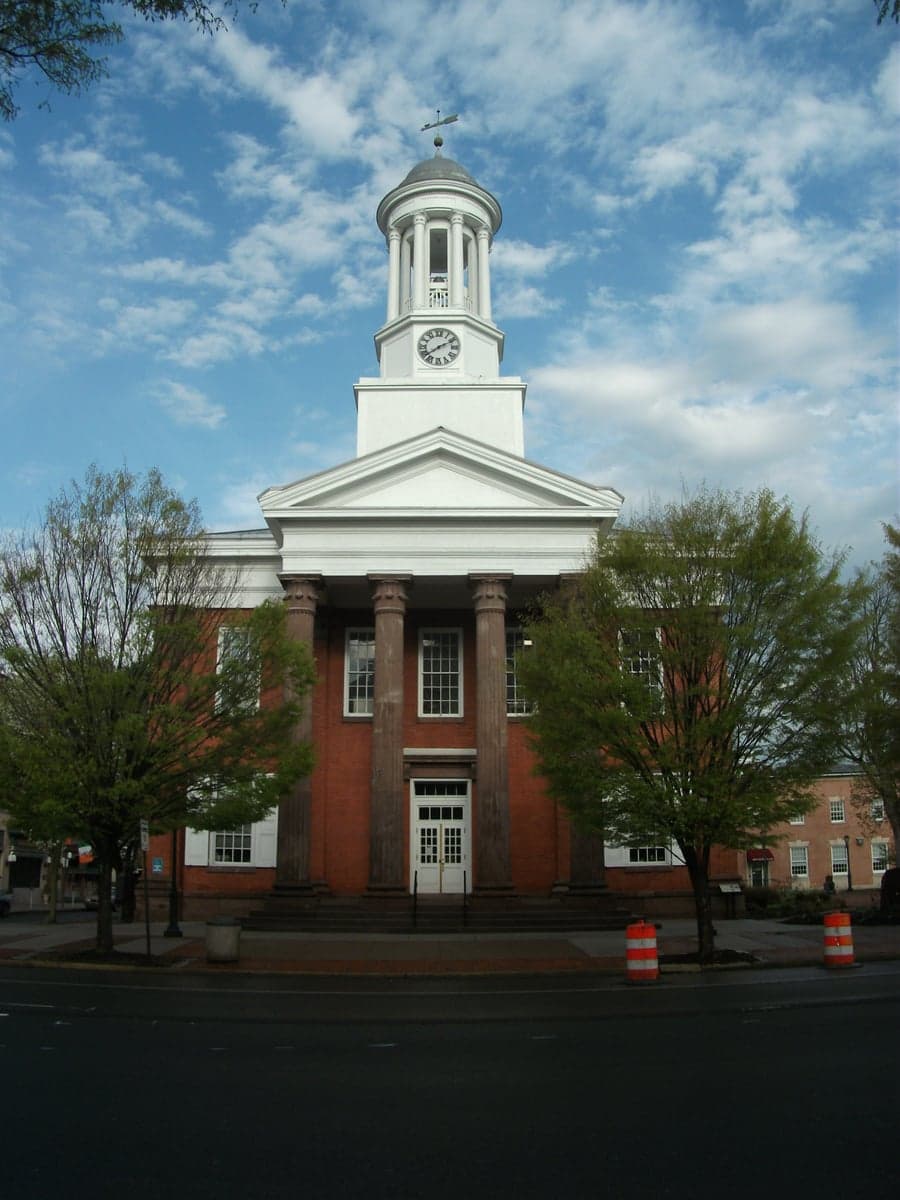
Photo: Wikipedia
Personal Sovereignty in Cumberland County
Strong independent fundamentals that actively favor personal liberty and low regulation.
What does Personal Sovereignty tell us?
Personal Sovereignty measures your capacity for self-reliance and independence with minimal government friction. Higher scores mean fewer barriers between you and the way you want to live... but it assumes you have the space you need and good neighbors.
What does this tell us?
Personal Sovereignty measures your capacity for self-reliance and independence with minimal government friction. Higher scores mean fewer barriers between you and the way you want to live... but it assumes you have the space you need and good neighbors.
State Policy
Energy independence: Net exporter (150% of energy produced in-state)
Personal Liberty
Homesteading

Personal Liberty Analysis
Cumberland County, Pennsylvania offers a notably high degree of personal sovereignty relative to many suburban counties in the Northeast, with a regulatory environment that generally favors individual choice in areas like taxation, self-defense, and property use. The county's political culture, shaped by a mix of rural traditions and fiscally conservative suburban growth, creates a framework where residents enjoy significant autonomy in daily life, though certain state-level constraints remain. For individuals and families prioritizing personal freedom, the area presents a balanced environment where local governance tends to be light-touch, while still operating within Pennsylvania's broader legal structure.
Tax burden and regulatory posture: How Cumberland County compares to surrounding areas
Cumberland County maintains a relatively low tax burden compared to neighboring counties like Dauphin or York, with a combined state and local sales tax rate of 6% (the state's standard 6% with no local add-ons) and property tax rates averaging around 1.5% of assessed home value. The county's regulatory posture is generally permissive, particularly in unincorporated townships like South Middleton Township and Silver Spring Township, where zoning codes are less restrictive than in the county seat of Carlisle or the borough of Mechanicsburg. Business licensing is straightforward, with no county-level occupational privilege tax for most small operations, and home-based businesses are typically allowed by right in residential zones as long as they don't generate excessive traffic or noise. The county's comprehensive plan emphasizes "managed growth" rather than heavy-handed control, meaning property owners in rural areas like Newburg or Newville face fewer bureaucratic hurdles for building additions, fences, or agricultural structures than in more urbanized parts of the state.
Self-defense and gun law specifics: What Pennsylvania's framework means for Cumberland County residents
Pennsylvania is a "shall-issue" state for concealed carry permits, and Cumberland County's sheriff's office processes applications efficiently, typically within 45 days, with no requirement for a permit to open carry. The county's gun culture is robust, with multiple indoor and outdoor ranges including the Carlisle Sportsmen's Club and West Shore Sportsmen's Association in Camp Hill, and firearm ownership is common across both rural and suburban areas. State law preempts local firearm ordinances, meaning municipalities like Carlisle or Shippensburg cannot enact their own restrictions on possession or carry, preserving uniformity across the county. Castle Doctrine protections apply to both the home and vehicle, with no duty to retreat in any place where the individual has a legal right to be. For residents concerned about self-defense, the legal environment is favorable, though Pennsylvania does require a license to carry a firearm concealed in a vehicle, and private firearm sales between individuals do not require a background check under state law.
Self-reliance and homesteading viability: Lot sizes, zoning, and off-grid feasibility across Cumberland County
Homesteading and self-reliance are viable in Cumberland County, particularly in its western and northern townships, where lot sizes of 1 to 5 acres are common and agricultural zoning allows for livestock, gardens, and small-scale farming. In West Pennsboro Township and Upper Frankford Township, residents can keep chickens, goats, and even a few head of cattle without special permits, and the county's soil quality supports productive vegetable gardens. Off-grid living is feasible but requires navigating state building codes: Pennsylvania allows composting toilets and rainwater collection for non-potable uses, though a drilled well and septic system are typically required for new construction. Solar panels are permitted by right in most townships, with net metering available through the local utility, PPL Electric Utilities. However, in more suburban boroughs like Boiling Springs or Mount Holly Springs, zoning restrictions on accessory structures, livestock, and home businesses are tighter, making true self-reliance more challenging. For those seeking maximum autonomy, the rural townships west of Carlisle offer the most permissive environment, with minimal interference from county code enforcement.
Personal liberties: Parental rights, medical autonomy, speech, and property protections
Pennsylvania law provides strong protections for parental rights, including the right to direct a child's education, medical care, and religious upbringing, with no state-level mandate for COVID-19 vaccines in schools as of 2026. Cumberland County's school districts, including Carlisle Area School District and Big Spring School District, generally defer to parental decisions on curriculum opt-outs and medical exemptions, though some districts have more conservative policies than others. Medical autonomy is supported by the state's lack of a vaccine passport system and the availability of direct primary care practices in Mechanicsburg and Enola, which operate outside insurance networks. Free speech protections are robust, with no county-level restrictions on political signage or public assembly, and property rights are reinforced by Pennsylvania's strong eminent domain protections, which require just compensation and public use. The county's courts have a reputation for upholding property owner rights in zoning disputes, particularly in cases involving agricultural or recreational land use.
Overall, Cumberland County offers a level of personal sovereignty that is notably higher than in neighboring Dauphin County or the Philadelphia suburbs, but slightly lower than in more rural counties like Perry or Juniata to the north. The balance of low taxes, permissive gun laws, and viable homesteading opportunities makes it an attractive option for freedom-oriented individuals and families, particularly those who choose to settle in the less regulated townships west of Carlisle. While state-level constraints on issues like medical choice and off-grid utilities remain, the county's local governance structure consistently favors individual autonomy over bureaucratic control, creating an environment where self-reliant living is both practical and legally protected.

* Values derived from national, state, county, city and local statistics and may differ in a specific area. Last updated: 2026-06-28T20:45:54.000Z
Narrative content on this page is AI-generated and may contain mistakes. Verify any details that matter before acting on them.
ReloMaps may earn a commission from affiliate links at no extra cost to you.

