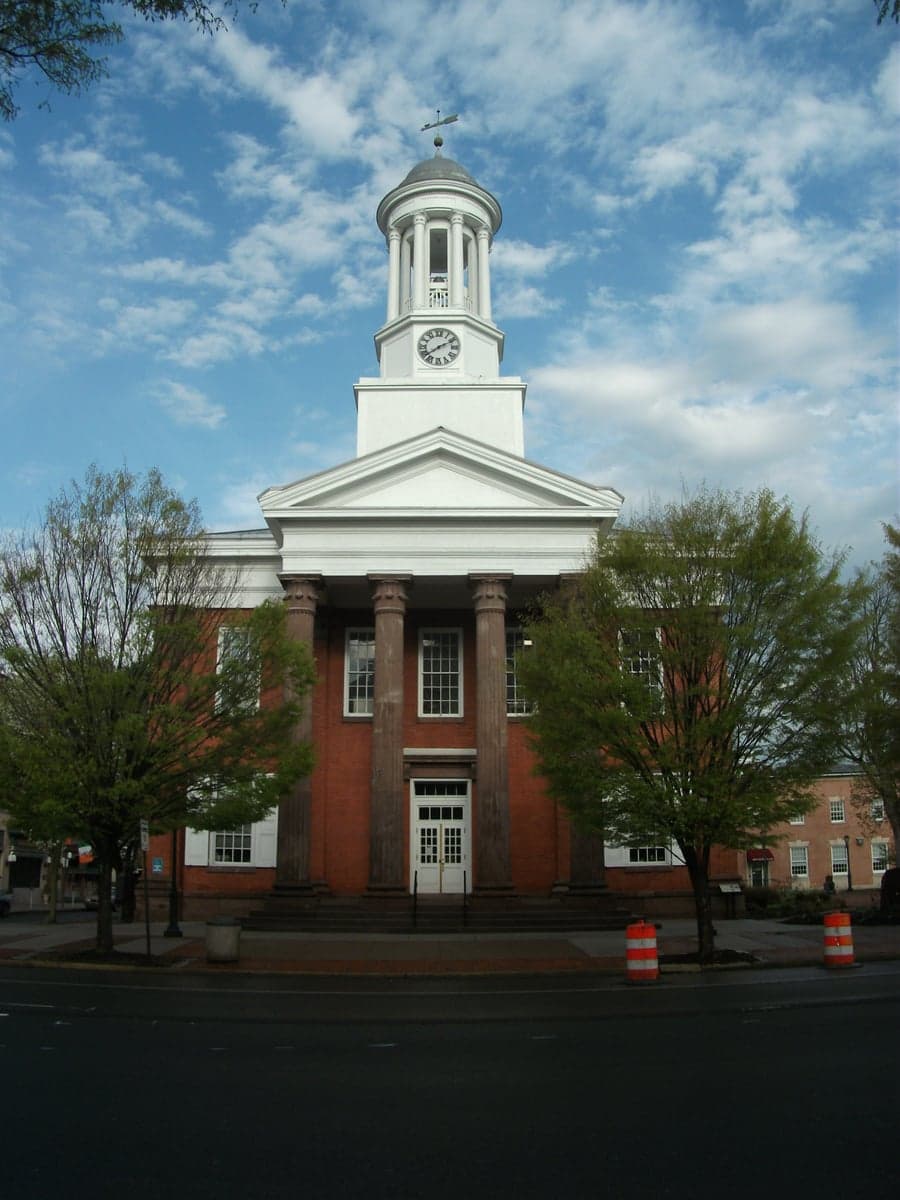
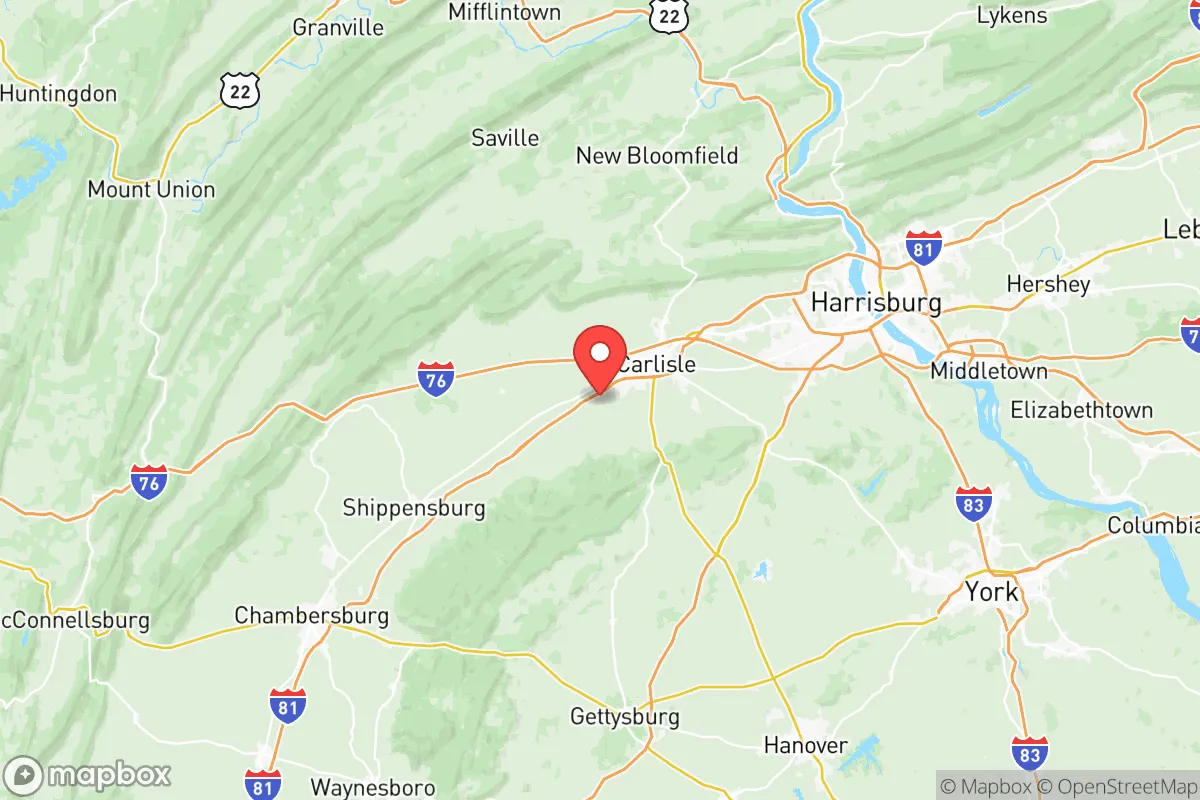
Photo: Wikipedia
Demographics of Cumberland County
Affluence Level in Cumberland County
A middle-class area roughly in line with national averages across income, home values, education, and employment.
People of Cumberland County
The people of Cumberland County, Pennsylvania today number 264,422, forming a predominantly white (81.9%) but gradually diversifying population centered around the county seat of Carlisle and the growing borough of Mechanicsburg. The county retains a distinctly Pennsylvania Dutch and Scots-Irish cultural foundation, visible in its historic town squares, agricultural fairs, and a conservative-leaning political character that has moderated with the influx of professionals commuting to Harrisburg and the Hershey medical corridor. With a foreign-born population of just 3.1% and a college-educated rate of 39.6%, Cumberland County is a relatively homogeneous, well-educated region where newcomers are often drawn by affordable housing, low crime rates, and proximity to the state capital.
Settlement & growth (pre-1960)
Before European settlement, the area now known as Cumberland County was inhabited by the Susquehannock people, who controlled the fertile valleys along the Susquehanna River until disease and warfare with the Iroquois Confederacy dispersed them in the late 1600s. By the early 1700s, the Iroquois had claimed the region as a hunting ground, and European colonists began pushing westward from Philadelphia along the Great Wagon Road. The first permanent European settlers were Scots-Irish Presbyterians, who arrived in the 1720s and 1730s, founding the town of Carlisle in 1751 as a frontier outpost and county seat. These settlers were drawn by the promise of cheap, fertile land in the Cumberland Valley, a broad limestone-rich plain ideal for wheat and livestock farming.
German-speaking immigrants, primarily from the Palatinate region, followed closely behind the Scots-Irish, settling in the northern and eastern parts of the county. They established farming communities such as Mechanicsburg (founded 1792) and Shippensburg (originally laid out in 1730), where their Pennsylvania Dutch dialect and Lutheran and Reformed church traditions persisted well into the 20th century. The Germans brought advanced agricultural techniques and a strong tradition of craftsmanship, which helped turn the county into a breadbasket for the growing Philadelphia market. By the time of the first U.S. Census in 1790, Cumberland County's population was overwhelmingly of British and German stock, with a small number of enslaved African Americans — slavery was legal in Pennsylvania until gradual abolition began in 1780.
The 19th century brought the Cumberland Valley Railroad, completed through the county in 1837, which connected Carlisle and Mechanicsburg to Harrisburg and points west. This rail link spurred the growth of small industrial towns like Newville and Mount Holly Springs, where iron forges, gristmills, and later shoe factories provided employment. The county's population grew steadily, reaching roughly 50,000 by 1900, but remained overwhelmingly rural and white. The African American population, concentrated in Carlisle and Mechanicsburg, grew modestly after the Civil War as freedmen moved north seeking work on railroads and in domestic service, but never exceeded 3% of the total population before 1960. The 20th century saw the rise of the Carlisle Indian Industrial School (1879–1918), a federally funded boarding school that forcibly assimilated Native American children from dozens of tribes; its legacy remains a complex and painful chapter in the county's history, with the former campus now part of the U.S. Army War College.
Suburbanization began in earnest after World War II, as returning veterans used GI Bill mortgages to buy new homes in developments around Mechanicsburg and Camp Hill. The construction of the Pennsylvania Turnpike and Interstate 81 in the 1950s and 1960s made Cumberland County a convenient bedroom community for Harrisburg and the expanding federal government workforce. By 1960, the county's population had reached 124,000, still overwhelmingly white and native-born, but increasingly suburban and middle-class in character.
Modern era (post-1965)
The 1965 Hart-Cellar Act had a limited immediate effect on Cumberland County, which lacked the industrial job base or ethnic enclaves that attracted immigrants to larger cities. However, the county did see a gradual influx of East/Southeast Asian professionals — particularly from China, South Korea, and Vietnam — starting in the 1980s, drawn by positions at the U.S. Army War College in Carlisle, the Carlisle Regional Medical Center, and the expanding logistics sector along the I-81 corridor. Today, East/Southeast Asian communities make up 2.2% of the county's population, with modest concentrations in Carlisle and the suburban township of Silver Spring, where Asian-owned restaurants and small businesses have appeared.
A more notable post-1965 development has been the growth of the Indian subcontinent population, which now stands at 3.0% of the county — larger than the East/Southeast Asian share. This community is overwhelmingly composed of highly educated professionals — doctors, engineers, and information technology workers — employed at the Penn State Health Milton S. Hershey Medical Center just across the county line in Derry Township, as well as at the U.S. Army War College and the growing number of defense contractors in the Carlisle area. Indian families have concentrated in the Mechanicsburg and Camp Hill school districts, drawn by strong public schools and proximity to Hershey. The Indian community has established cultural organizations, including the Hindu Temple of Central Pennsylvania in nearby Harrisburg, and annual Diwali celebrations in Carlisle.
The Hispanic population, now 4.9% of the county, grew primarily through domestic migration from other parts of Pennsylvania and the Northeast rather than direct immigration. Many Hispanic residents are of Puerto Rican origin, drawn by warehouse and distribution center jobs in the I-81 corridor, particularly around Carlisle and Shippensburg. The Black population, at 4.1%, has remained relatively stable, with historic communities in Carlisle and Mechanicsburg supplemented by a small number of African immigrants, including families from Liberia and Somalia, who have settled in Carlisle's lower-cost neighborhoods. The county's overall foreign-born share remains low at 3.1%, reflecting the region's limited history as an immigrant destination compared to Philadelphia or Pittsburgh.
Domestic migration has been the primary driver of population change since 1970. Cumberland County has attracted retirees and families from the Philadelphia and New York metropolitan areas, seeking lower taxes, lower housing costs, and a slower pace of life. The county's population grew from 158,000 in 1970 to 264,000 in 2024, with the fastest growth occurring in the suburban townships surrounding Mechanicsburg and Carlisle — Hampden Township, Silver Spring Township, and Lower Allen Township have seen extensive new housing developments. This growth has been overwhelmingly white and native-born, reinforcing the county's demographic character even as its absolute diversity has increased modestly.
The future
Cumberland County is projected to continue growing slowly, reaching roughly 280,000 by 2035, driven primarily by domestic migration from higher-cost regions of the Northeast. The county's racial and ethnic composition is expected to shift gradually: the white share is projected to decline from 81.9% to the mid-70% range by 2040, while the Hispanic and Indian subcontinent populations are likely to grow the fastest. The Hispanic share could reach 7-8% as existing families grow and new migrants are drawn by warehouse and logistics jobs, while the Indian community will likely expand as the Hershey medical complex continues to recruit internationally trained physicians and researchers.
New immigrant settlement is expected to remain dispersed rather than concentrated in ethnic enclaves, given the county's suburban character and the professional nature of most immigration. The East/Southeast Asian population may grow modestly as the county's technology and defense sectors expand, but is unlikely to approach the shares seen in Philadelphia's suburbs. The Black population is projected to remain stable or grow slightly, with some new arrivals from other parts of Pennsylvania and the Northeast. The foreign-born share, while still low by national standards, could rise to 5-6% by 2040 as the county becomes a more established destination for skilled immigrants working in central Pennsylvania's growing healthcare and logistics clusters.
Culturally, Cumberland County is likely to remain a predominantly white, conservative-leaning region with a strong Pennsylvania Dutch and Scots-Irish heritage, but with increasing exposure to diversity through its professional immigrant communities and suburban newcomers from the Northeast. The county's political character may moderate slightly as the Mechanicsburg and Camp Hill suburbs attract more moderate-leaning professionals, while the rural townships and boroughs like Newville and Shippensburg retain a more traditional conservative orientation.
For someone moving to Cumberland County now, the region offers a stable, safe, and relatively affordable environment with good schools and access to Harrisburg's job market, but with limited racial and ethnic diversity compared to much of the United States. The county is becoming more diverse at a gradual pace, driven by professional immigration and domestic migration, but its cultural identity remains firmly rooted in its historic Pennsylvania German and Scots-Irish foundations. New residents — whether from the Indian subcontinent, Latin America, or other parts of the U.S. — will find a welcoming but largely homogeneous community where integration into existing social and civic structures is the norm rather than the formation of distinct ethnic enclaves.

* Values derived from national, state, county, city and local statistics and may differ in a specific area. Last updated: 2026-06-28T20:45:54.000Z
Narrative content on this page is AI-generated and may contain mistakes. Verify any details that matter before acting on them.
ReloMaps may earn a commission from affiliate links at no extra cost to you.

