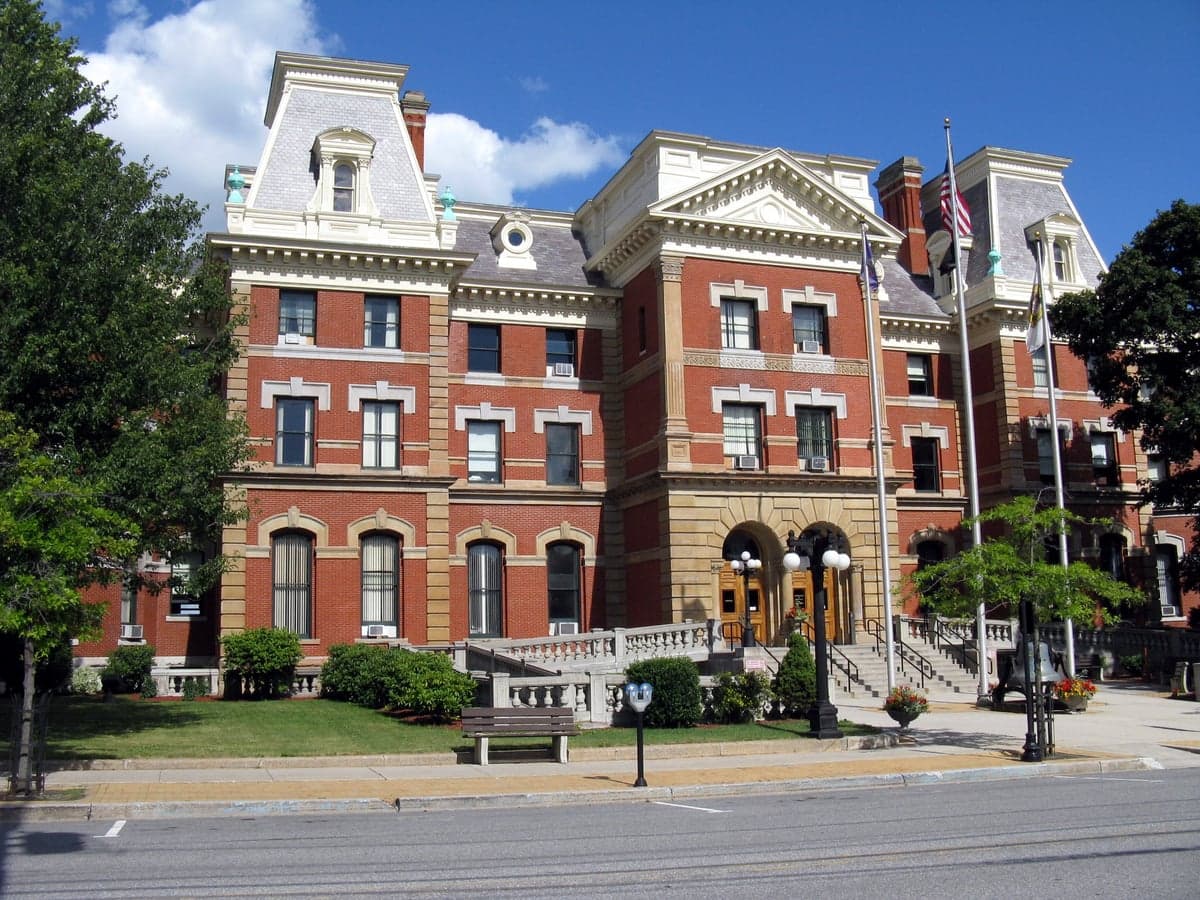
Photo: Wikipedia
Political ClimatePolitical Climate in Cambria County
Showing district-level results — no local-only data available.
Local Political AnalysisPolitical Analysis of Cambria County
Cambria County is a solidly Republican stronghold in west-central Pennsylvania, carrying a Cook Partisan Voting Index of R+23 — meaning it votes about 23 points more Republican than the national average. This stands in stark contrast to the state of Pennsylvania as a whole, which sits at EVEN on the Cook PVI, making it one of the most closely watched swing states in the country. The county has trended redder over the past two decades, driven by a combination of population loss in its historically Democratic-leaning industrial towns and a steady shift among rural and exurban voters toward the GOP. In 2020, Donald Trump carried Cambria County by a margin of roughly 67% to 32%, a gap that has widened since 2016 and is now nearly double what it was in 2012.
How it compares
Pennsylvania’s statewide EVEN rating reflects its razor-thin margins in presidential elections — Biden won by just over 80,000 votes in 2020, and Trump by about 44,000 in 2016. Cambria County, by contrast, is a deep-red outlier even within the state’s conservative interior. The county’s political geography is not monolithic, however. The city of Johnstown, the county seat and largest municipality, leans Democratic — it voted for Biden by a narrow margin in 2020 — but its influence is diluted by the surrounding townships and boroughs. Places like Ebensburg and Portage are reliably Republican, while Northern Cambria and Hastings in the northern part of the county show more competitive, swing-like behavior, often flipping between parties depending on the race. The rural precincts in West Taylor Township and East Carroll Township are among the most conservative in the county, regularly delivering 75% or more of their votes to Republican candidates. This internal variation means that a Democratic candidate can still win local offices in Johnstown and a few surrounding boroughs, but countywide races — such as for commissioner or district attorney — are almost always won by Republicans.
What this means for residents
For conservative residents, Cambria County’s political climate is largely affirming. Local government, school boards, and law enforcement tend to reflect Republican priorities, and there is little friction in daily life around political expression. Gun rights are broadly supported, and the county’s Second Amendment sanctuary status — adopted in 2020 — is a point of pride for many. For liberal residents, the reality is more isolating. While Johnstown provides a small blue enclave, progressive voices are often outnumbered in countywide debates, and issues like environmental regulation or public transit funding can face an uphill battle. The county’s strong Republican lean also shapes its relationship with state government: Cambria County often votes against the party that controls Harrisburg, which can limit its influence in securing state funding for infrastructure or economic development projects. That said, the county’s political homogeneity means less partisan gridlock at the local level — decisions are made quickly, and there is broad consensus on fiscal conservatism and limited government.
Culturally, Cambria County’s politics are deeply tied to its economic history. The decline of coal and steel in the late 20th century left a legacy of skepticism toward both big government and big corporations, and many residents view the GOP’s message of local control and energy independence as a natural fit. The county is also home to a strong Catholic and Protestant tradition, which influences social conservatism on issues like abortion and marriage. Unlike some parts of Pennsylvania where fracking or pipeline debates are hot-button, Cambria County’s energy conversation is quieter — most of the coal mines are closed, and natural gas development has been modest. The result is a political culture that feels more stable than combative, where the biggest fights are often over property taxes and school funding rather than national culture wars. For anyone moving here, the takeaway is clear: if you lean right, you’ll feel at home; if you lean left, you’ll find community in Johnstown but will need to adjust to being in the minority in most countywide conversations.

State Political ClimatePolitical Climate in Pennsylvania
State Political AnalysisPolitical Environment in the State
Pennsylvania is the ultimate swing state, with a Cook PVI of EVEN that perfectly captures its razor-thin margins in recent presidential elections — Trump won it in 2016 by less than a point, Biden flipped it back in 2020 by about 1.2 points, and the 2024 race was again decided by under two points. The state’s political identity is a tug-of-war between the heavily Democratic urban crescent stretching from Philadelphia through the Lehigh Valley to Scranton, and the vast, Republican-leaning rural and exurban expanse covering the rest of the commonwealth. Over the past two decades, the old industrial base has hollowed out, turning once-reliable Democratic strongholds in the southwest (Pittsburgh suburbs) and northeast (Lackawanna County) into competitive or even red-leaning territory, while the Philly suburbs have moved sharply left, creating a geographic stalemate that makes Pennsylvania the nation’s most watched battleground.
Urban vs. rural divide
The political map of Pennsylvania is a story of two worlds. Philadelphia and its collar counties — Montgomery, Delaware, Chester, and Bucks — deliver a Democratic margin of roughly 500,000 votes, enough to offset GOP gains everywhere else. Pittsburgh, while smaller, adds another 100,000-vote cushion for Democrats, though its surrounding Allegheny County suburbs have trended redder in recent cycles. The rural heartland, stretching from the northern tier (Tioga, Bradford, Susquehanna counties) down through the central spine (Huntingdon, Mifflin, Juniata) and into the southwest (Fayette, Greene, Washington counties), votes Republican by 30-40 points. The key battlegrounds are the "collar counties" around Philadelphia — Bucks and Chester, once reliably red, now lean blue — and the northeastern counties like Luzerne and Lackawanna, where working-class voters have flipped from blue to red. Erie County on Lake Erie is another bellwether, voting for the winner in every presidential race since 2008. The I-78 and I-81 corridors, connecting the Philly suburbs to Harrisburg and Scranton, are where campaigns spend the most money and time.
Policy environment
Pennsylvania’s policy landscape reflects its divided government. The state has a flat income tax of 3.07%, one of the lowest in the nation, and a sales tax of 6% (8% in Philadelphia and Allegheny County). Property taxes are high, averaging about 1.5% of home value, and vary wildly by district — a key concern for relocators. The regulatory posture is moderate: Pennsylvania is not a right-to-work state, but it’s also not a union stronghold like it was in the 1970s. Education policy is decentralized, with 500 school districts setting their own curricula and property tax rates; there’s no statewide school choice program, though charter schools and cyber charters are widely used. Healthcare is dominated by UPMC in the west and Jefferson Health in the east, with Medicaid expansion in place under the Affordable Care Act. Election laws are relatively accessible: no-excuse mail-in voting was enacted in 2019 (Act 77), though it remains a partisan flashpoint, with Republicans pushing for voter ID requirements and Democrats defending mail-in access. The state has no voter ID law for in-person voting, but first-time voters must show ID.
Recent policy direction
Pennsylvania’s recent legislative trajectory is a mixed bag that reflects its purple status. On gun rights, the state is a preemption state — local governments cannot pass their own gun laws — and it has a "shall issue" concealed carry system, though a permit is required. In 2022, the legislature passed a bill to allow permitless carry, but Governor Josh Shapiro vetoed it. On education, the 2023 Commonwealth Court ruling in William Penn v. Pennsylvania declared the state’s school funding system unconstitutional, leading to a $1.1 billion funding boost for underfunded districts in 2024, but no voucher or school choice expansion. On energy, Pennsylvania is the second-largest natural gas producer in the U.S., and the Shapiro administration has pursued a carbon pricing scheme (the Regional Greenhouse Gas Initiative, or RGGI), though it’s been tied up in court. On abortion, the state has no trigger law; abortion is legal up to 24 weeks, and Shapiro has pledged to veto any restrictions. On election integrity, Act 77’s mail-in voting remains controversial, with ongoing litigation over undated ballots and signature verification. On property rights, the state has no statewide zoning reform, though Philadelphia and Pittsburgh have passed modest upzoning measures. On privacy, there’s no comprehensive data privacy law, though a bill is pending. For a conservative relocator, the key takeaway is that the state’s direction is uncertain — a single election could flip the governorship or legislature and dramatically shift policy on guns, taxes, and education.
Civil unrest & political movements
Pennsylvania has seen its share of political flashpoints. The 2020 election aftermath was particularly intense in Philadelphia, where Trump supporters protested outside the convention center during the vote count, and in rural counties where "Stop the Steal" rallies drew thousands. The state was a key target for election integrity activists, with Republican-led audits in counties like Tioga and Fulton. Immigration politics are less visible than in border states, but sanctuary city policies in Philadelphia have drawn criticism from conservatives, especially after several high-profile incidents involving undocumented immigrants charged with violent crimes. The anti-fracking movement has been active in the Marcellus Shale region, with protests in Pittsburgh and Harrisburg, but natural gas extraction remains a major economic driver. On the right, the Pennsylvania Freedom Caucus has gained influence in the state House, pushing for school choice, election integrity, and gun rights. On the left, the Working Families Party and progressive Democrats have focused on rent control, public transit funding, and criminal justice reform. A new resident in Philadelphia would notice the city’s strong union presence and occasional protests over police reform; in rural areas, the dominant political expression is the ubiquitous "Trump 2024" signage and gun rights rallies at county courthouses.
Projection
Over the next 5-10 years, Pennsylvania is likely to remain a toss-up, but demographic trends suggest a slow shift toward the Democrats. The Philadelphia suburbs are growing and diversifying, while rural counties are aging and shrinking. In-migration from New York and New Jersey is accelerating this trend, particularly in the Lehigh Valley (Allentown, Bethlehem, Easton) and the Poconos. However, the GOP is making gains among working-class voters in the southwest and northeast, and the state’s electoral map is becoming more polarized by education level. The 2026 gubernatorial race will be critical — if a Republican wins, expect a push for school vouchers, permitless carry, and voter ID. If a Democrat holds the governorship, the status quo continues. The state’s energy policy will be a major battleground, with natural gas interests fighting carbon pricing and renewable mandates. For a relocator, the bottom line is that Pennsylvania offers no political certainty — you’ll live in a state where your vote truly matters, but where policy can swing wildly depending on who’s in charge. The practical takeaway: if you’re conservative, you’ll find your people in the rural and exurban areas, but you’ll be fighting an uphill battle on state-level policy; if you’re liberal, the cities and suburbs will feel like home, but you’ll need to accept that the state as a whole is deeply divided.
For a new resident, the most important thing to understand is that Pennsylvania’s political climate is not a monolith — it’s a collection of fiercely independent regions that happen to share a state government. Your experience will depend almost entirely on where you live. In Philadelphia or Pittsburgh, you’ll be in a blue bubble with progressive policies on housing, transit, and policing. In the rural north or central counties, you’ll find a red community where gun rights, low taxes, and local control are paramount. The suburbs are the battlegrounds, where your neighbors might have competing yard signs and where local school board meetings can get heated. If you’re moving here, pick your location based on your political comfort zone, and be prepared for the fact that state-level politics will always be a coin flip. That’s the Pennsylvania bargain: you get low income taxes, a diverse economy, and beautiful geography, but you also get a political environment that never settles down.
* Values derived from national, state, county, city and local statistics and may differ in a specific area. Last updated: 2026-07-09T07:46:54.000Z
Narrative content on this page is AI-generated and may contain mistakes. Verify any details that matter before acting on them.
ReloMaps may earn a commission from affiliate links at no extra cost to you.

